Amla (Amalaki): The Fruit Ayurveda Says Is the Closest Thing to a Universal Tonic

The information in this article is provided for educational purposes and reflects traditional Ayurvedic knowledge. It is not intended as medical advice and should not replace consultation with a qualified healthcare professional.

In brief: Amalaki (Emblica officinalis, known as Amla or Indian gooseberry) is described in the Charaka Samhita as the best single Rasayana substance in the classical pharmacopoeia. It is appropriate for all three doshas, forms the heart of both Triphala and Chyawanprash, and has an unusual nutritional profile centred on exceptionally stable vitamin C. This guide covers the full classical context and practical guidance for daily use.

Amla (Amalaki): The Fruit Ayurveda Says Is the Closest Thing to a Universal Tonic

The Charaka Samhita contains a passage in its Rasayana chapter that ranks Amalaki - the Indian gooseberry, Emblica officinalis - above all other single substances in the classical Rasayana category. This is not a passage that is often cited in marketing material for Amla supplements, perhaps because the full context makes it impossible to reduce to a simple health claim. The classical text is saying something more specific and more interesting: that among the many hundreds of medicinal substances described in Ayurvedic literature, this small, sour fruit from the Indian subcontinent has a range of action on the body's tissues that no other single substance matches.

That claim warrants examination. This article takes it seriously - exploring what the classical text actually says, why Amalaki has the properties it does in the Ayurvedic framework, what makes it unusual from a modern nutritional standpoint, and how to use it as part of a considered daily practice.

What Makes Amalaki a Rasayana Above All Others

Rasayana is one of the eight classical branches of Ayurvedic medicine. The Charaka Samhita devotes an entire chapter - the Rasayana Adhyaya within the Chikitsa Sthana - to this category. Rasayana preparations are those described as supporting the quality of all seven dhatus (body tissues), promoting longevity and mental clarity, and renewing the body's resources over a sustained period. This is a technical classification with specific criteria, not a marketing category.

Within the Rasayana category, the texts describe a hierarchy. Some Rasayanas act primarily on specific tissues; others act across multiple systems; a few are described as acting on all seven dhatus simultaneously. Amalaki is placed in the latter group - described as having an action on all seven dhatus that makes it the most broadly applicable single substance. The classical explanation is that Amalaki contains five of the six tastes recognised in Ayurveda (sweet, sour, pungent, bitter, and astringent - only salt is absent), and that this unusual breadth of taste is directly correlated with its broad physiological range.

The taste is primarily sour - the Sanskrit word amla means sour, and the fruit's name is derived from this defining quality. Normally in classical Ayurvedic pharmacology, sour taste is associated with a warming virya (potency), which would make it aggravating for Pitta dosha. Amalaki's critical distinction is that it has a cooling virya despite its predominantly sour taste. This is described in the classical texts as specifically unusual - most sour substances increase Pitta; Amalaki, alone among the prominent sour foods and herbs, has a cooling quality that makes it genuinely beneficial for Pitta. This is the specific reason it can be classified as tridoshic - beneficial for all three doshas - when most sour substances are limited in their use for Pitta types.

Amalaki as the Foundation of Classical Compound Preparations

The most practical demonstration of Amalaki's significance in classical Ayurveda is its centrality to the two most important compound preparations in the tradition.

Triphala - the three-fruit compound described in the Charaka Samhita and Ashtanga Hridayam as appropriate for all three doshas and all body tissues - is composed of equal parts Haritaki, Amalaki, and Bibhitaki. Among the three, Amalaki provides the primary Rasayana and tridoshic action. The other two fruits address more specific doshic patterns (Haritaki for Vata and elimination; Bibhitaki for Kapha and excess moisture), while Amalaki contributes the broad-spectrum tissue-renewing action that makes Triphala so widely applicable. See our complete guide to Triphala.

Chyawanprash - the classical compound Rasayana preparation described in the Charaka Samhita's Chikitsa Sthana as appropriate for all ages and constitutions - uses Amalaki as its primary and most abundant ingredient. The formula incorporates over thirty supporting herbs, ghee, honey, and sesame oil into an Amalaki base. The Charaka Samhita's description of Chyawanprash's effects - supporting all seven dhatus, promoting vitality and longevity, and being particularly relevant for respiratory health and general tissue renewal - reflects Amalaki's core Rasayana properties amplified and directed by the supporting herbs.

That the two most universally recommended compound preparations in the entire classical tradition both use Amalaki as their foundational ingredient reflects the degree to which the classical physicians considered it central to any serious approach to preventive and restorative care.

Amalaki's Nutritional Profile: What Modern Science Has Found

The most frequently cited fact about Amalaki in modern contexts is its vitamin C content, which is among the highest of any known food source. The numbers given vary considerably across sources, partly because the measurement methodology used for Amalaki does not always distinguish between ascorbic acid and the tannin-bound forms of vitamin C present in the fruit. What is consistently established is that dried Amalaki powder retains meaningful vitamin C potency far better than most other vitamin C sources when subjected to processing and storage.

The reason is that Amalaki's vitamin C is bound with specific tannins - including emblicanins unique to Emblica officinalis - that protect ascorbic acid from oxidative degradation. This is the property that makes Amalaki's vitamin C more heat-stable than isolated ascorbic acid: the tannin matrix acts as a protective structure. This is a plausible nutritional mechanism for the classical observation that Amalaki processed in heat - as it is in Chyawanprash - retains its Rasayana properties, whereas an equivalent dose of synthetic vitamin C would be largely destroyed by the same processing.

Beyond vitamin C, Amalaki contains substantial quantities of gallic acid, ellagic acid, and the fruit-specific emblicanin compounds. These polyphenols have been examined in laboratory settings for their antioxidant activity, with consistent findings of meaningful radical scavenging capacity. Several clinical studies have examined Amalaki's effect on oxidative stress biomarkers in human populations, with findings suggesting measurable antioxidant effects at dietary doses.

The connection between these nutritional properties and the classical Rasayana concept is imperfect - the classical framework operates in entirely different theoretical terms - but the correspondence between Amalaki's measured antioxidant activity and the classical description of its tissue-renewing properties is more than superficial. Vitamin C's role in collagen synthesis, which underlies the integrity of every connective tissue in the body, provides one plausible bridge between the nutritional data and the classical observations about Amalaki's effect on tissue quality over sustained use.

How to Take Amalaki: Classical Method and Practical Options

The classical preparation for standalone Amalaki use is churna (powder) in warm water or warm milk. The Charaka Samhita references Amalaki churna in doses of approximately three to six grams - roughly one to two teaspoons of powder - taken in the morning. Warm milk is the preferred carrier when the focus is on the nourishing Rasayana aspect of Amalaki's action; warm water is appropriate for general daily use.

The taste of fresh Amalaki churna is distinctively sour and slightly astringent - it is not an easy taste for those unaccustomed to it. Mixing a small amount of honey into warm water with the churna is a classical approach to improving palatability without compromising the preparation's properties. Honey should be added to warm water, not hot water - classical Ayurvedic texts note that heated honey changes its properties in ways considered unfavourable.

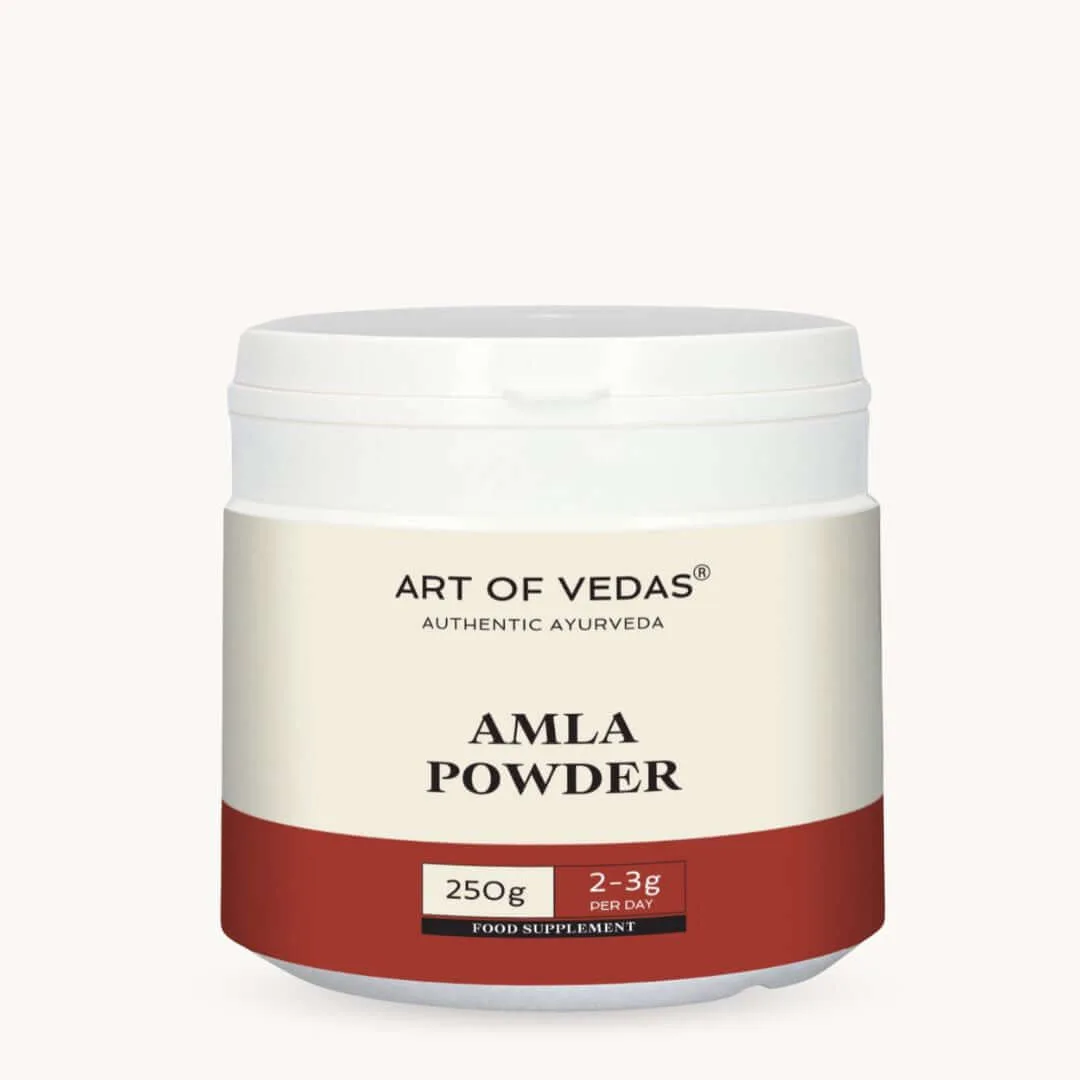
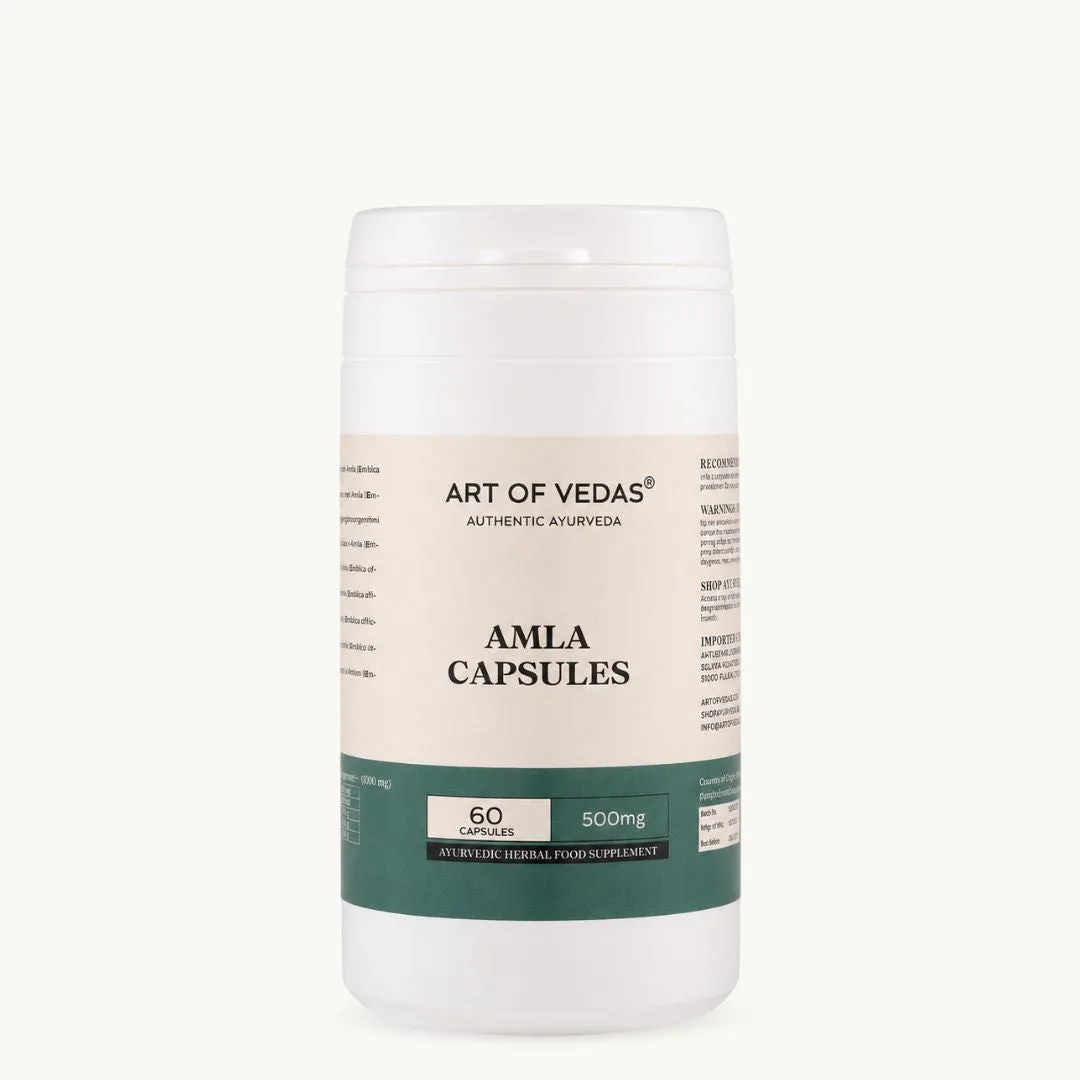
Capsule forms of Amalaki are widely available and offer convenience without the taste challenge. The trade-off is the same as with other Ayurvedic herbs: capsules bypass the immediate taste interaction with the digestive system that classical pharmacology considers meaningful. For those who can maintain a consistent powder practice, it is closer to the classical preparation; for those who find capsules more sustainable daily, they are a practical and effective alternative.

For a combined Amalaki preparation with the complementary Rasayana actions of Haritaki and Bibhitaki, Triphala is the classical choice. For those who prefer the compound Rasayana approach, Chyawanprash provides Amalaki's core properties within the full classical formula.

Browse the Art of Vedas supplements collection for Amalaki, Triphala, and Chyawanprash.

Frequently Asked Questions

Why does Ayurveda consider Amalaki the best Rasayana?

The Charaka Samhita places Amalaki above other single Rasayana substances because of its tridoshic appropriateness and broad action on all seven body tissues. The classical explanation centres on its unusual combination of five Ayurvedic tastes and, most distinctively, its cooling potency despite being primarily sour. Most sour substances are warming and limited for Pitta types. Amalaki's cooling quality makes it genuinely appropriate for all three doshas - a distinction shared by very few other single substances.

What is the difference between Amla and Amalaki?

Amla and Amalaki refer to the same plant - Emblica officinalis, the Indian gooseberry. Amla is the common name used across India and European supplement marketing. Amalaki is the classical Sanskrit name used in Ayurvedic texts. The supplement market also uses the botanical name Phyllanthus emblica, the current preferred Latin nomenclature for the species.

Can I take Amalaki every day?

Yes - daily use is consistent with classical Ayurvedic guidance. The Charaka Samhita describes Amalaki as appropriate for sustained practice, and both Triphala and Chyawanprash - the compound preparations based on it - are referenced as suitable for regular daily use across age groups. Amalaki has a mild laxative effect in some individuals at higher doses; starting with a smaller amount and adjusting is advisable if this is a concern.

Is Amalaki better than vitamin C supplements?

Not a simple comparison. Amalaki provides vitamin C within a complex matrix of tannins and polyphenols that appears to protect it from oxidative degradation better than isolated ascorbic acid. It also provides gallic acid, ellagic acid, and emblicanins not present in synthetic vitamin C. The classical framework does not recognise vitamin C as a concept - the recommendation for Amalaki is based on its tridoshic Rasayana properties as a whole food, not its vitamin C content specifically.

Explore Amalaki and Rasayana Supplements at Art of Vedas

Browse our supplements collection for Amalaki, Triphala, and Chyawanprash sourced from India. Related reading: Amalaki superfruit guide, Triphala complete guide, classical Rasayana, and Ayurvedic immunity guide.

This product is a food supplement and not intended to diagnose, treat, cure or prevent any disease.

Explore more in this series