This article is part of our Ayurvedic Herbs: A Guide to Classical Plants guide series.
Ayurvedic massage is among the oldest and most thoroughly documented self-care practices in the world. In Ayurveda, massage is not considered a luxury - it is an essential component of the daily health routine known as Dinacharya. The Charaka Samhita, one of the foundational classical texts of Ayurveda, describes regular oil massage as a practice that supports strength, endurance, and vitality.
This guide gives you a comprehensive overview of the most important Ayurvedic massage techniques, explains the classical basis of each method, and shows how to bring some of these rituals into your everyday life.
What makes Ayurvedic massage different?
Western massage techniques often focus on relieving muscular tension or treating physical discomfort. Ayurvedic massage starts from a different premise. At the centre are the three Doshas - Vata, Pitta, and Kapha - the constitutional forces that, according to Ayurveda, shape every individual. The choice of oil, technique, pressure, and timing is guided by the person's constitution and the purpose of the treatment.
Another key distinction is the central role of oil. Ayurvedic massages are performed almost exclusively with medicated oils called Thailams (from the Sanskrit word Taila, meaning sesame). These oils are prepared according to classical formulations described in texts such as the Ashtanga Hridayam (approx. 7th century CE) and the Sahasrayogam. They contain herbal extracts worked into the base oil during a traditional preparation process.
The most important Ayurvedic massage techniques
Abhyanga - the classical full-body oil massage
Abhyanga is the most well-known and widely practised Ayurvedic massage. It is a complete full-body massage with warm medicated oil, performed with long flowing strokes along the body's axes and circular movements at the joints. The Charaka Samhita recommends Abhyanga as a daily morning practice - especially for people with Vata constitution or Vata imbalance.
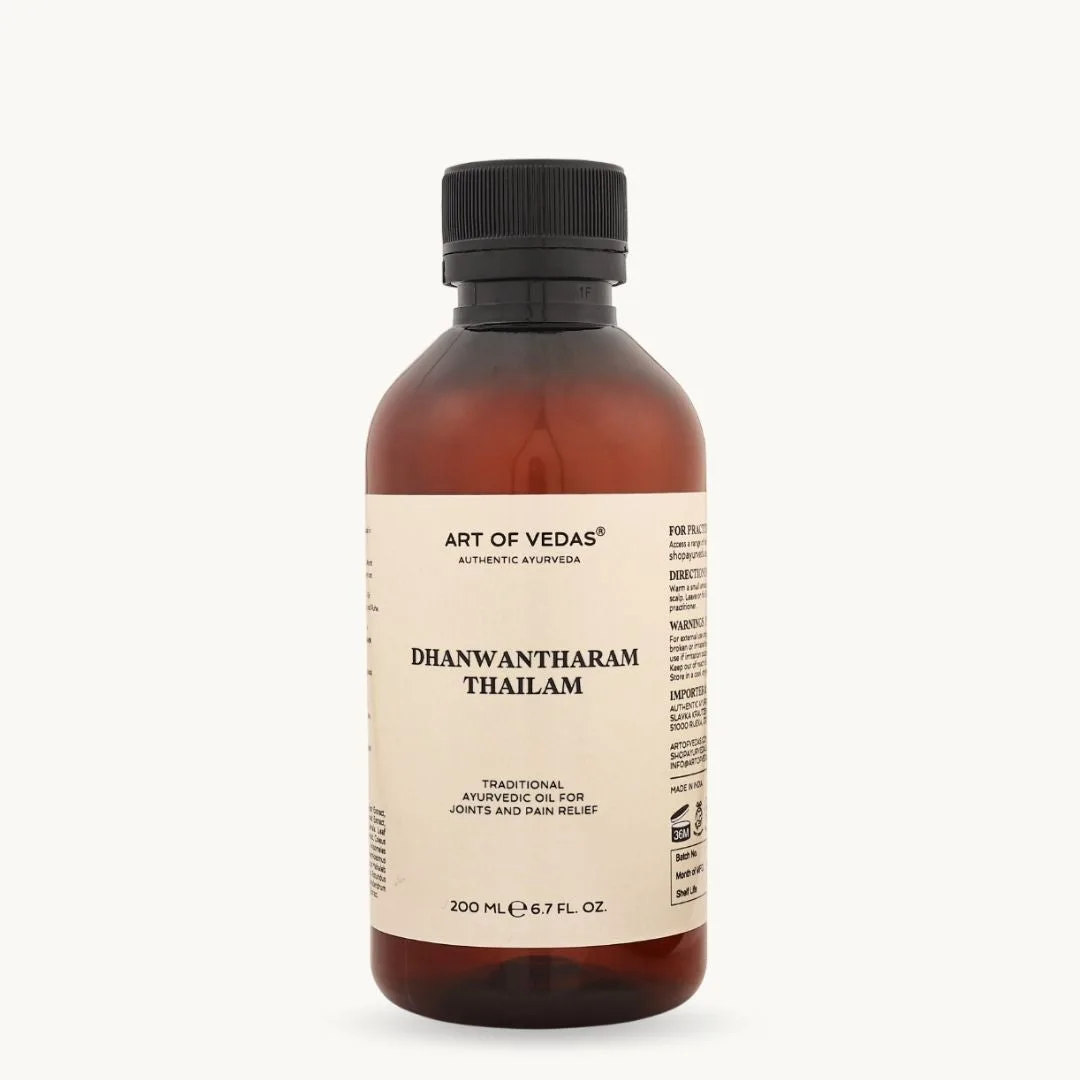
For home practice, classical massage oils such as Mahanarayana Thailam (a complex Vata-balancing oil prepared from 57 herbs) or Dhanwantharam Thailam (one of the most established classical oils for joints and muscles) are excellent choices. The oil is gently warmed and applied with calm, even pressure.
Shirodhara - continuous stream of oil on the forehead
Shirodhara (from Sanskrit: Shiro = head, Dhara = stream) is a treatment in which a continuous warm stream of oil is poured onto the forehead. This technique is traditionally administered during Panchakarma programmes or as a standalone treatment by trained Ayurvedic therapists. Shirodhara is not suitable for home use and should only be performed by qualified practitioners.
Shiro Abhyanga - head massage with oil
Shiro Abhyanga is the Ayurvedic head and hair massage, well suited to daily self-care. Oil is massaged into the scalp with gentle pressure applied to specific Marma points (vital energy points of the body). Suitable oils include Brahmi Coconut Oil, Neelibhringadi Thailam, and Bhringraj oil. This practice is traditionally associated with the care of scalp and hair.
Mukha Abhyanga - Ayurvedic facial massage
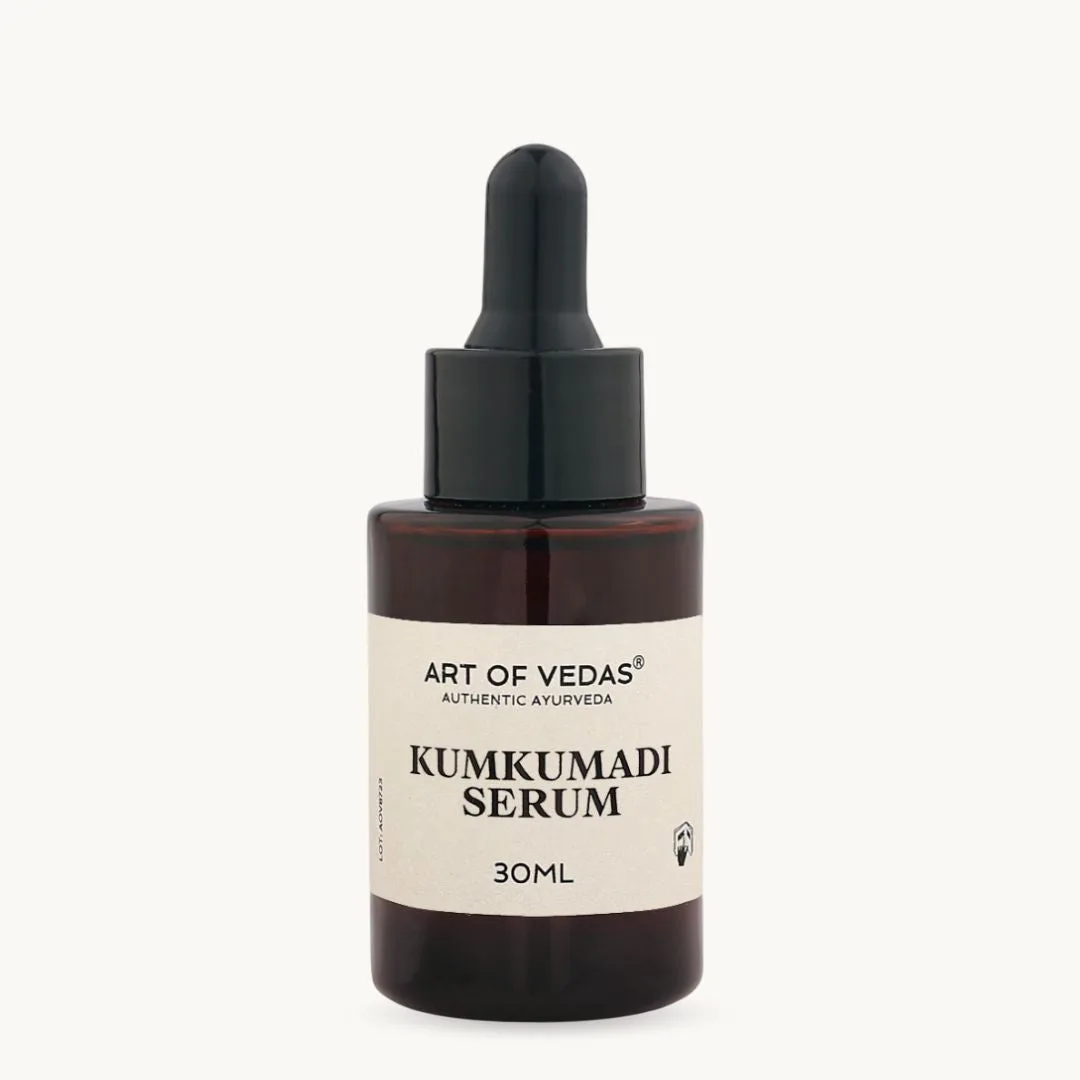
Mukha Abhyanga is the classical Ayurvedic facial massage. It is performed with small circular movements that incorporate specific Marma points of the face. Kumkumadi Serum and Eladi Thailam are classical oils for this practice. The Kansa Wand - a massage tool made from the traditional bronze alloy Kansa - is often used alongside, as bronze is regarded in Ayurveda as a harmonising metal.
Padabhyanga - foot massage with oil
Padabhyanga is the Ayurvedic foot massage. The Ashtanga Hridayam describes regular foot massage as a practice supporting sleep and vitality - particularly recommended for those with elevated Vata. Traditionally, a Kansa Vatki Bowl (a bronze bowl) is used to work the oil into the feet with circular movements.
Garshana - dry brush massage
Garshana differs from other Ayurvedic massage techniques in that it is performed without oil. It is a dry brushing or glove massage traditionally described as a stimulating practice - particularly recommended for Kapha constitutions and often performed before Abhyanga as a preparatory step.
Choosing the right Ayurvedic massage oil
In Ayurveda, the choice of massage oil is guided by individual constitution and the purpose of the massage:
-
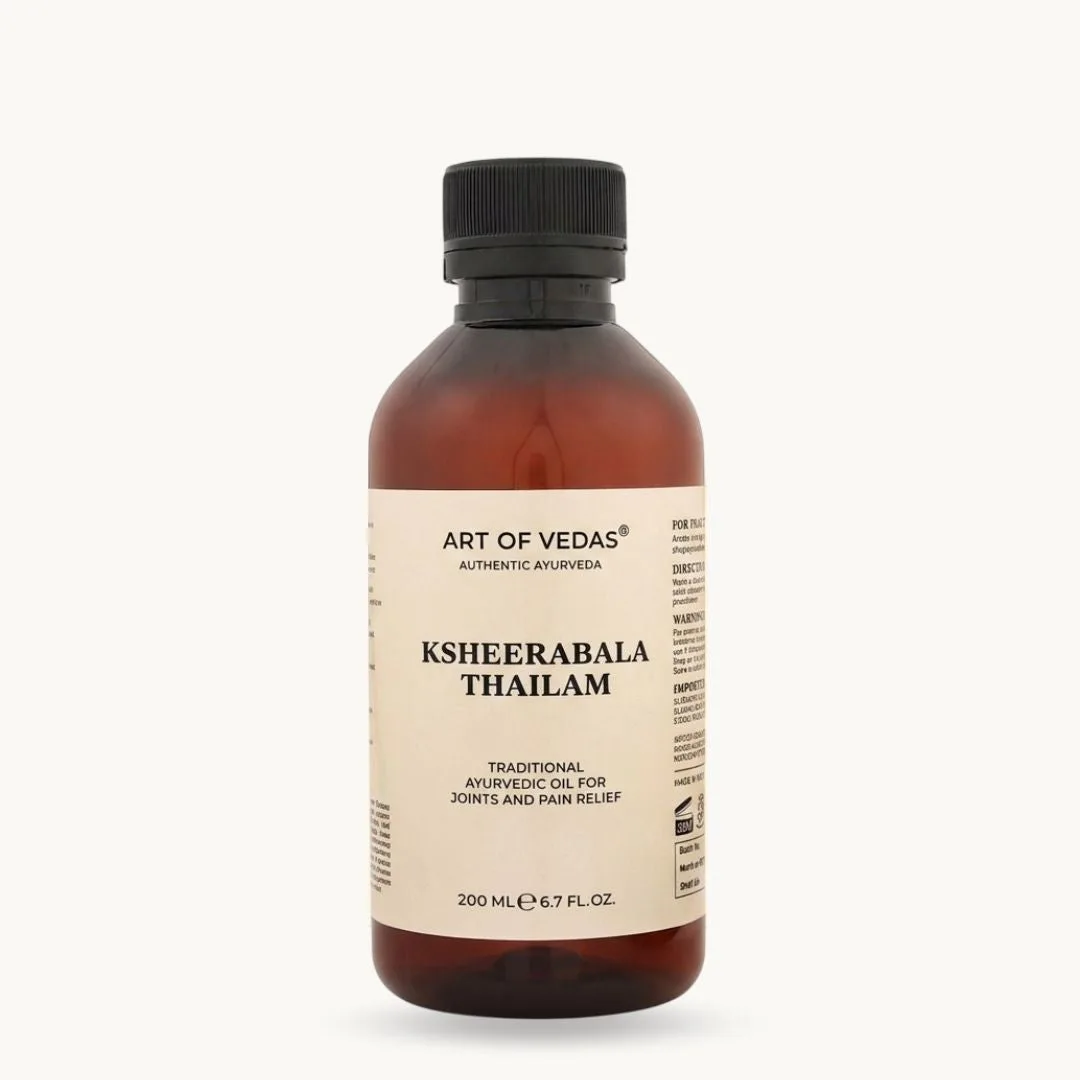
For Vata constitution or Vata imbalance: Mahanarayana Thailam, Dhanwantharam Thailam, Ksheerabala Thailam - warming, nourishing oils prepared from classical Vata-balancing herbs.
-
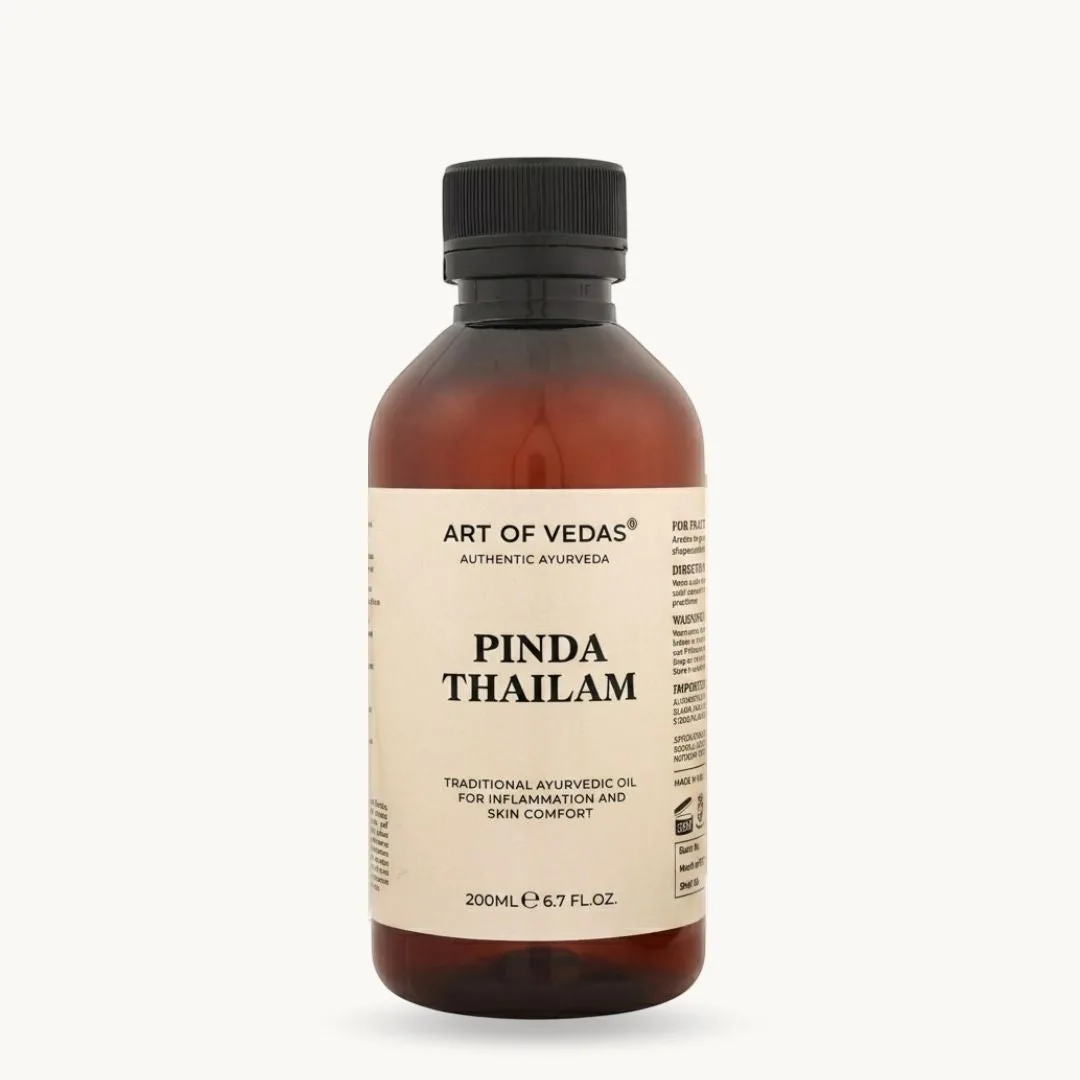
For Pitta constitution or Pitta imbalance: Pinda Thailam, Eladi Thailam - cooling, soothing oils.
-
For the face: Kumkumadi Serum, Eladi Thailam, Nalpamaradi Cream - classical facial oils for Mukha Abhyanga.
-
For head and hair: Neelibhringadi Thailam, Brahmi oil - traditional oils for head massage.
A good base oil for all constitutions is sesame oil (Tila Taila). Ayurveda considers sesame the optimal carrier oil for massage - warming, deeply penetrating, and suitable as the foundation for almost all classical formulations.
Abhyanga at home: a simple guide
Ayurvedic massage does not need to be complicated. The daily Abhyanga practice can be integrated into your morning routine in a few simple steps:
-
Choose and warm the oil: Pour the massage oil into a small bottle and stand it briefly in warm water until the oil reaches body temperature or slightly warmer.
-
Begin at the head: Massage the oil into the scalp and hairline with circular movements.
-
Face: Gentle circular movements across cheeks, forehead, and jaw.
-
Body with long strokes: Long, flowing strokes along the arms and legs (always moving towards the heart).
-
Joints in circular movements: Shoulders, elbows, knees, and ankles are massaged in circular motion.
-
Rest time: Allow the oil to remain on the skin for at least 10, 20 minutes before showering.
In Ayurveda, regularity matters more than duration: a daily 10-minute Abhyanga brings more benefit than an occasional, extended session.
Ayurvedic massage in a professional setting
Many classical Ayurvedic treatments - such as Shirodhara, Kizhi (herbal bolus massage), or Pizhichil (continuous oil treatment) - belong to the therapeutic repertoire of trained Ayurvedic therapists and Panchakarma specialists. If you are looking for a professional Ayurvedic treatment, we recommend consulting a qualified practitioner.
For daily home care, Abhyanga, Shiro Abhyanga, Mukha Abhyanga, and Padabhyanga are all excellent as independent practices.
Art of Vedas offers a selection of classical Ayurvedic massage oils prepared according to traditional formulations - including Mahanarayana Thailam, Dhanwantharam Thailam, Ksheerabala Thailam, Mahamasha Thailam, and others. All oils are carefully made using classical methods and are intended for use as part of a daily self-care routine.
Note: Ayurvedic massage oils are personal care products and are not a substitute for medical treatment. Please consult a qualified healthcare professional for any health concerns.