How to Use Mahanarayana Thailam: A Complete Abhyanga Guide for Europe
This article is part of our Abhyanga: The Complete Guide to Ayurvedic Self-Massage guide series.
Last Updated: February 8, 2026 | Reading Time: 25 minutes
Transform your wellness routine with the ancient practice of Abhyanga - warm oil self-massage using Mahanarayana Thailam. This complete guide provides step-by-step instructions, timing recommendations, and practical adaptations for European lifestyles, helping you incorporate this deeply nourishing Ayurvedic ritual into your daily or weekly self-care.
The practice of Abhyanga - traditional Ayurvedic oil massage - has been valued for thousands of years as one of the most effective methods for balancing Vata dosha, supporting joint comfort, and promoting overall vitality. While the concept is simple (applying warm oil to the body), the specific techniques, timing, and approach can significantly impact the benefits you experience.
This guide focuses specifically on using Mahanarayana Thailam for Abhyanga practice. With its 57-herb formulation designed for joint support, muscle relaxation, and Vata pacification, Mahanarayana Thailam has particular application protocols that maximize its therapeutic potential. Whether you're completely new to Ayurvedic oil massage or looking to refine your existing practice, this article provides the practical knowledge you need.
We'll cover everything from oil warming techniques and stroke directions to frequency recommendations based on constitution, European bathroom logistics, integration with modern schedules, and seasonal adjustments. By the end, you'll have a clear, actionable protocol for incorporating this classical Ayurvedic practice into your life in a way that fits European climates, living spaces, and daily routines.
Table of Contents
- Understanding Abhyanga: More Than Just Oil Massage
- What You Need: Gathering Your Supplies
- Step-by-Step: The Complete Abhyanga Protocol
- Localized Application: Targeted Use for Specific Areas
- Frequency Recommendations: How Often Should You Practice?
- Timing: When to Practice Abhyanga
- European Lifestyle Adaptations
- Combining Abhyanga with Other Practices
- Troubleshooting Common Challenges
- Advanced Techniques and Variations
- Cleaning and Maintenance
- Conclusion: Making Abhyanga Your Own
Understanding Abhyanga: More Than Just Oil Massage
Before diving into the how-to, it helps to understand what Abhyanga is and why it's practiced.
Abhyanga (pronounced ah-b'yahn-gah) is a Sanskrit term meaning "oil application" or "rubbing with oil." In classical Ayurveda, it refers to the practice of massaging the body with warm oil, typically as a daily or regular self-care ritual. The Ashtanga Hridayam, one of the foundational Ayurvedic texts, describes Abhyanga as promoting strength, nourishing the skin, supporting healthy aging, and calming the nervous system.
The practice works on multiple levels:
Physical - The mechanical action of massage stimulates circulation, supports lymphatic drainage, and helps release muscle tension. The oil itself provides deep moisturization and nourishment to the skin.
Energetic - In Ayurvedic understanding, warm oil massage pacifies Vata dosha (the principle governing movement, dryness, and irregularity). The grounding, warming, and nourishing qualities of oil directly counter Vata's cold, dry, light, and mobile nature.
Psychological - The ritual itself provides a calming, meditative experience. Taking dedicated time for self-care, the sensory experience of warm oil, and the rhythmic massage movements all support nervous system regulation and stress relief.
Transdermal - Ayurvedic tradition holds that medicated oils like Mahanarayana Thailam, when properly prepared and applied, can deliver herbal constituents through the skin to deeper tissue layers. While modern science is still exploring the extent of transdermal absorption from oil massage, sesame oil (the base of Mahanarayana Thailam) is known to have good skin penetration properties.
When you practice Abhyanga with Mahanarayana Thailam specifically, you're combining these general benefits with the targeted actions of 57 herbs selected for joint support, muscle relaxation, and structural nourishment.
What You Need: Gathering Your Supplies
Setting up for Abhyanga is straightforward and requires minimal equipment.
Essential Supplies
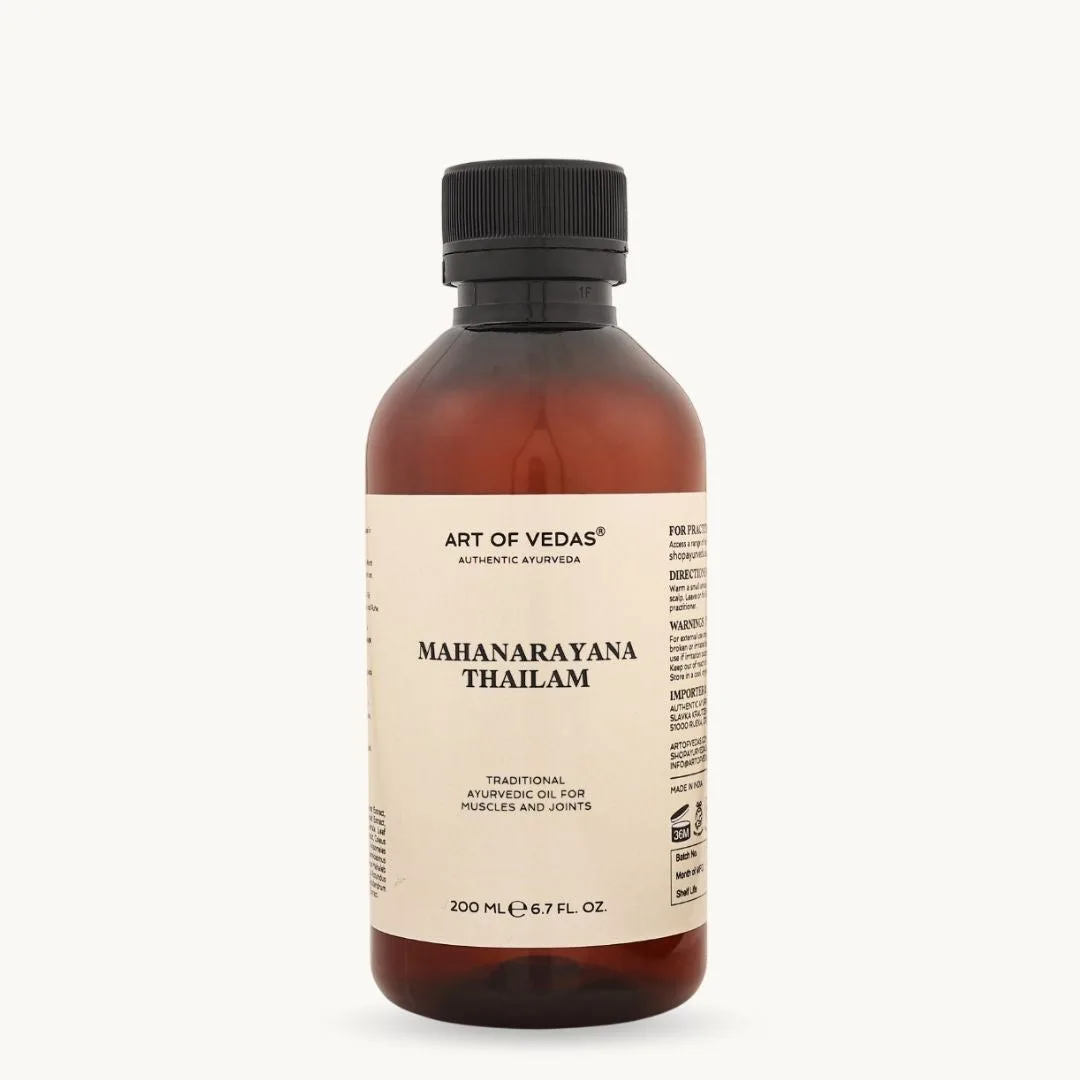
Mahanarayana Thailam - Your primary supply. For full-body massage, one 200ml bottle typically provides 2-4 applications depending on body size and how generously you apply. For localized use (just knees, feet, lower back), a bottle lasts much longer.
Small glass bottle for warming - A 100-150ml glass bottle with a cap (like a small juice bottle or dedicated oil warming bottle). Glass is essential - never use plastic for warming oil.
Bowl or container for hot water - Large enough to hold the glass bottle. A soup bowl or small cooking pot works well.
Dedicated towel - Mahanarayana Thailam will stain fabric (the turmeric and other herbs give it a golden color). Keep one or two old towels specifically for oil massage that you don't mind getting stained.
Non-slip mat or towel for the floor - For safety, especially if your bathroom floor is tile. The oil can make floors slippery.
Optional but Helpful
- Timer - To track your absorption time without constantly checking the clock
- Soft bathrobe or wrap - To wear during the absorption period if you're moving around your home
- Gentle, natural soap - Chickpea flour (besan), Ayurvedic soap, or very mild natural soap for bathing afterward. Harsh soaps can strip the beneficial oil too aggressively.
- Small hand towel - For wiping excess oil from your palms during application if needed
European Apartment Adaptations
If you're living in an apartment with a small bathroom:
- Consider using a folding bath mat or yoga mat that you can easily store
- Keep your Abhyanga supplies in a dedicated basket or container for easy setup
- Use a small electric kettle in the bathroom for warming water (keeps everything contained in one space)
- Consider a shower stool if you want to perform the massage sitting down in a shower/tub
Step-by-Step: The Complete Abhyanga Protocol
The traditional Abhyanga sequence follows a specific order, moving from head to feet, using different stroke patterns for different body parts.
Step 1: Prepare and Warm Your Oil
Never apply Mahanarayana Thailam cold. The warming quality is essential for Vata pacification and comfort.
Pour your desired amount into the small glass bottle:
- Full-body massage: 60-100ml (approximately 1/4 to 1/2 cup)
- Localized application: 10-30ml depending on area
Fill your bowl with hot water from the tap or kettle - not boiling, but quite hot (the temperature you'd use for tea). Place the glass bottle in the water bath and let it sit for 5-10 minutes.
Test the oil temperature before applying by putting a small drop on your inner wrist. It should feel comfortably warm and pleasant, not hot. If it's too hot, wait a minute or two. If it's not warm enough, refresh the hot water.
Important: Never microwave Ayurvedic oils. Microwaving can create hot spots, damage therapeutic properties, and heat the oil unevenly.
Step 2: Set Up Your Space
While the oil is warming:
- Lay your towel or mat on the bathroom floor
- Have your bathrobe or wrap nearby if using
- Set your timer if you're tracking absorption time
- Create a calm environment - you might dim lights, light a candle, or play soft music if desired
- Make sure the room is comfortably warm (not cold, as you'll be partially undressed)
Step 3: The Massage Sequence
The traditional order is head to toe, though you can modify based on your preferences and time available.
Head and Scalp (Optional - see note below)
If including the head:
- Pour a small amount of warm oil on the crown of your head (the Brahma Randhra point)
- Massage the oil into your scalp using firm circular motions with your fingertips
- Work from the crown outward to cover the entire scalp
- Spend 2-3 minutes on this area
- Massage is firmer than when washing hair but still comfortable
Note on head oiling: Traditional full-body Abhyanga includes the head, but many people skip this step, especially on busy mornings or if they don't want to wash their hair afterward. Both approaches are valid. If you skip the head, start with the face and ears.
Face and Ears
- Apply oil to your face using gentle upward and outward strokes
- Use light pressure - the facial skin is delicate
- Massage the forehead with horizontal strokes from center outward
- Use circular motions on the temples (this area is particularly good for calming)
- Massage the cheeks with upward strokes
- Give attention to the jaw area (where many people hold tension)
- Massage the ear lobes and behind the ears with circular motions - ears are considered particularly important in Ayurveda for calming Vata
- Don't forget the neck, using upward strokes on the front and circular motions on the sides
Time: 2-3 minutes
Shoulders and Upper Back
- Apply generous oil to your shoulders
- Use firm circular motions on the shoulder joints
- For the upper back, reach behind as far as comfortable and use firm strokes
- Pay extra attention to any areas of tension
- If you have a partner, this is a good area to ask for help reaching
Time: 2-3 minutes
Arms and Hands
Apply oil to one arm at a time:
- Use long, flowing strokes on the long bones (upper arm, forearm) - strokes should follow the length of the bone
- Use circular motions on the joints (shoulder, elbow, wrist)
- Massage the hands thoroughly, including each finger
- Use circular motions on the finger joints
- Massage the palm using your opposite thumb in circular motions
- Don't rush this - the hands work hard and appreciate attention
Repeat on the other arm.
Time: 3-4 minutes total for both arms
Chest and Abdomen
- Apply oil to the chest using gentle, heart-opening strokes from center outward
- For the abdomen, use clockwise circular motions (following the direction of the colon)
- The abdominal massage should be gentle and comfortable
- If you're menstruating, you can skip or lighten the abdominal massage if it feels uncomfortable
Time: 2-3 minutes
Back and Spine
- The back is difficult to reach fully on your own
- Do what you can, using long strokes along the spine and circular motions on the lower back
- Pay special attention to the lower back (sacrum area) - this is a key Vata site
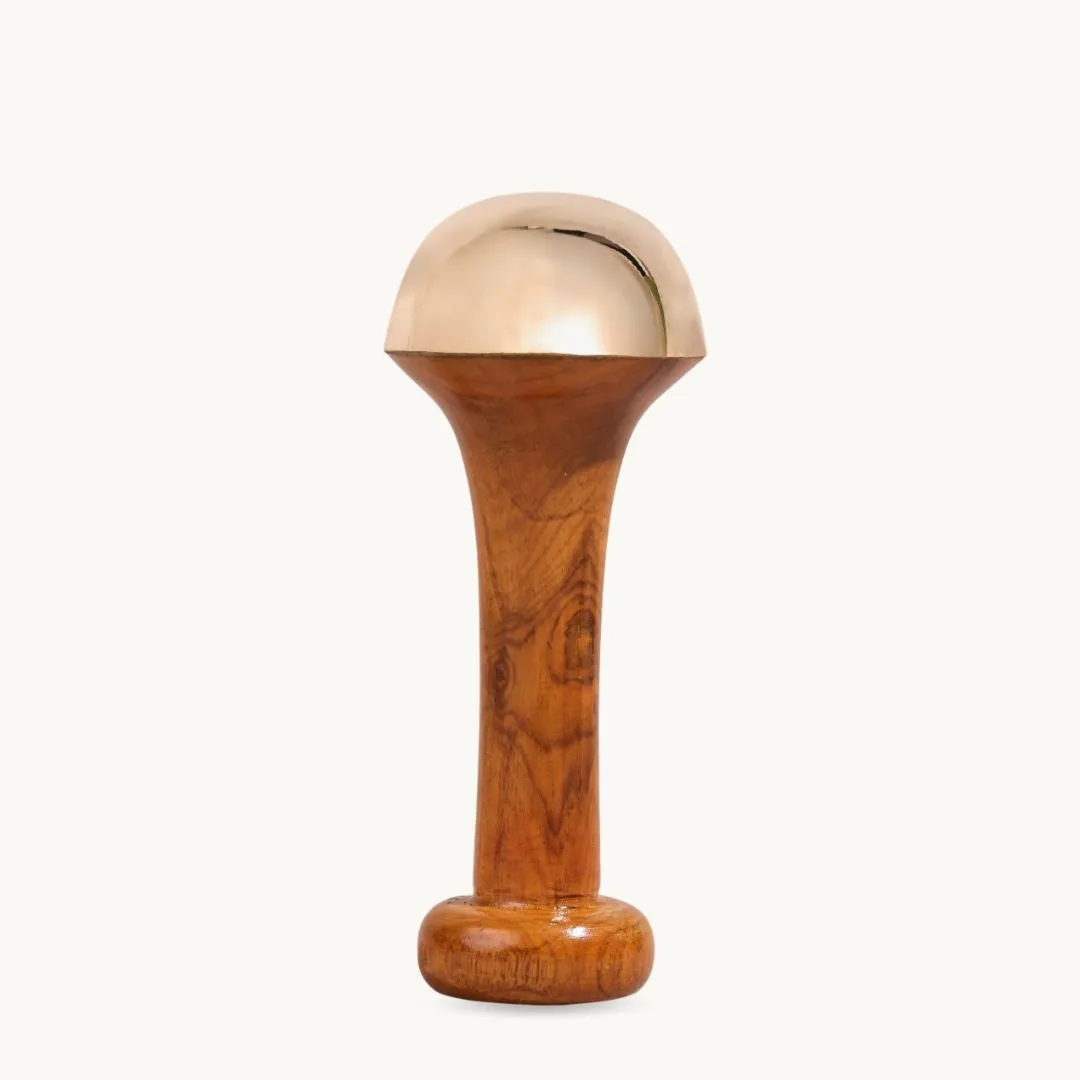
- If you have a massage tool or can reach, firm pressure along the spine feels excellent
- If you have a partner available, this is the area where assistance is most valuable
Time: 2-3 minutes
Legs and Feet
Apply oil to one leg at a time:
- Use long, flowing strokes on the thighs and calves (following the length of the bone)
- Use circular motions on the joints (hip, knee, ankle)
- Give extra attention to the knees - use generous oil and firm circular motions, as Mahanarayana Thailam is particularly valued for joint support
- Don't neglect the back of the legs
For the feet:
- Apply generous oil to the entire foot
- Use firm pressure on the sole (feet have many marma points and can handle firm touch)
- Massage each toe individually
- Use circular motions on the ankle
- Pay attention to the heel and arch
- The feet are considered particularly important in Ayurveda and can handle a lot of oil and attention
Repeat on the other leg.
Time: 5-7 minutes total for both legs and feet
Step 4: Additional Attention for Specific Areas
After completing the full sequence, return to any areas that need extra attention:
- Stiff joints - Apply additional oil and spend 2-3 more minutes with circular massage
- Lower back tension - Additional time with firm circular motions
- Tight shoulders - More time and pressure as comfortable
- Tired feet - Extended foot massage is always beneficial
This is where Mahanarayana Thailam's specific therapeutic properties come into play - the areas you focus on will receive the concentrated benefits of the 57-herb formulation.
Step 5: Absorption Time - The Critical Phase
After completing the massage, the oil needs time to absorb. This is not optional - it's a crucial part of the practice.
Minimum absorption time: 15 minutes
Ideal absorption time: 30-45 minutes
If very short on time: Even 10 minutes provides some benefit
During this time:
- Wrap yourself in your bathrobe or use a towel
- Keep warm (put on socks if your feet are cold)
- Relax, meditate, read, or do gentle stretching
- Avoid strenuous activity or anything that causes sweating
- Some people use this time for pranayama (breathing exercises) or meditation
- You can also make tea, prepare breakfast, or do other calm activities
The warmth of the oil and your body heat during this resting period allows the oil to penetrate deeper. This is when the therapeutic action is happening.
Step 6: Bathing After Abhyanga
The traditional recommendation is to bathe with warm water after oil absorption time.
Why bathe after, not before? The heat from bathing drives the oil deeper into tissues. It also removes excess oil from the surface while leaving a thin, nourishing layer on the skin.
Bathing protocol:
- Use warm (not hot) water - hot water can be drying
- You don't need to scrub aggressively or remove all the oil
- A small amount of chickpea flour (besan), Ayurvedic herbal soap, or very mild natural soap is sufficient
- Focus soap on areas that feel excessively oily (face, hands, feet, groin area)
- Let warm water rinse the oil from most of your body without soap
- Your skin should feel soft and slightly moisturized after bathing, not stripped
- Pat dry gently - vigorous rubbing removes the beneficial oil layer
If you prefer showering: The same principles apply. Let the warm water work on the oil. Light soap only where needed.
Managing the golden color: Mahanarayana Thailam contains turmeric and other herbs that give it a golden hue. This can leave slight temporary color on very pale skin. It fades quickly and is not permanent. If concerned, use slightly more soap in the bathing phase.
Localized Application: Targeted Use for Specific Areas
You don't always need to do full-body Abhyanga. Mahanarayana Thailam is excellent for localized application to specific areas.
Knee Application (Janu Abhyanga)
For knee stiffness or discomfort:
- Warm 10-15ml of oil
- Sit comfortably with the leg extended or slightly bent
- Apply generous oil directly to the knee
- Massage with firm circular motions for 3-5 minutes
- Cover all angles - front, sides, back of knee, below and above the kneecap
- Allow 20-30 minutes absorption time
- You can cover the knee with an old cloth during absorption
- Bathe normally afterward
This can be done daily for ongoing knee support or 2-3 times weekly for general maintenance.
Lower Back Application (Kati Abhyanga)
For lower back stiffness or tension:
- Warm 15-20ml of oil
- Stand or lie on your side
- Apply generous oil to the entire lower back area
- Massage with firm circular motions, paying attention to the sacrum
- Use firm pressure as comfortable
- Spend 5-7 minutes on this area
- Lie down on your back or side for 20-30 minutes absorption
- Place an old towel under you to protect bedding
- Bathe afterward
Particularly beneficial during Vata season or after long periods sitting.
Shoulder and Neck Application
For shoulder and neck tension (common with desk work):
- Warm 10-15ml of oil
- Apply to shoulders, upper back, and neck
- Use circular motions on shoulders
- Firm strokes on accessible areas of upper back
- Gentle to moderate pressure on neck (avoid pressing on the front of the neck/throat)
- Spend 5-7 minutes
- Allow 20-30 minutes absorption
- Bathing afterward is optional for localized shoulder work - you can simply wipe excess with a towel if preferred
Foot Massage (Pada Abhyanga)
An excellent practice before bed:
- Warm 10ml of oil
- Sit comfortably where you can reach your feet easily
- Apply generous oil to one foot
- Massage thoroughly with firm pressure, especially on the sole
- Spend 3-5 minutes per foot
- Include ankles, heels, arches, and each toe
- You can wear socks afterward to protect bedding
- No need to bathe - leave the oil on overnight
Particularly calming for the nervous system and promotes better sleep.
Frequency Recommendations: How Often Should You Practice?
The ideal frequency depends on several factors: your constitution, the season, your current state of balance, and your schedule.
By Dosha Type
Vata Constitution (dry skin, variable digestion, active mind, sensitivity to cold):
- Ideal: Daily Abhyanga
- Minimum: 4-5 times per week
- Focus: Full-body application, generous oil, longer absorption time (30-45 minutes)
Pitta Constitution (warm body temperature, strong digestion, focused mind, sensitivity to heat):
- Ideal: 3-4 times per week
- Can reduce to: 2 times per week during hot months
- Modifications: Can use room-temperature oil rather than heavily warmed in summer months
Kapha Constitution (solid build, slow digestion, calm mind, cold extremities):
- Ideal: 2-3 times per week
- Modifications: More vigorous massage, less oil quantity, shorter absorption time (15-20 minutes)
If you don't know your constitution: Start with 2-3 times per week and adjust based on how you feel. If your skin is dry, you feel scattered or anxious, or you're very sensitive to cold, increase frequency. If you feel sluggish or heavy after oil massage, reduce frequency or oil quantity.
By Season (European Climate)
Autumn (September-November) - Peak Vata Season:
- Increase frequency regardless of constitution
- This is the most important time for Abhyanga
- Cool, dry, windy weather strongly aggravates Vata
- Even Pitta and Kapha types benefit from more frequent oil massage during this season
Winter (December-March) - Continued Vata Season:
- Maintain high frequency (4-7 times per week for Vata types, 3-4 times for others)
- Cold, dark months create ideal conditions for regular warming oil massage
- Particularly valuable in Northern European climates with very limited daylight
Spring (March-May) - Kapha Season Transition:
- Can reduce frequency slightly
- As weather warms and daylight increases, Vata naturally decreases
- Reduce to 2-3 times per week for most people
Summer (June-August) - Pitta Season:
- Reduce to 1-2 times per week for most people
- Can use room-temperature oil instead of warming it
- Or substitute lighter oils during peak summer months
- Mahanarayana Thailam's warming nature makes it less ideal for very hot weather - this is when you might alternate with cooling oils
By Current State
Beyond constitution and season, adjust based on current experience:
Increase frequency when:
- You're experiencing joint stiffness or muscle tension
- You're feeling scattered, anxious, or ungrounded
- Your skin is very dry
- You're going through high-stress periods
- You're experiencing irregular sleep
- You're traveling (travel strongly increases Vata)
- You're recovering from illness
Reduce frequency when:
- You're feeling heavy or lethargic after oil massage
- Weather is very hot and humid
- You're experiencing skin reactions
- You have an active infection or fever (avoid during acute illness)
Timing: When to Practice Abhyanga
The time of day you practice can affect the benefits you experience.
Morning Abhyanga (Traditional Recommendation)
Traditional Ayurvedic practice recommends morning Abhyanga, ideally before your morning bath/shower.
Benefits of morning practice:
- Provides grounding and calm energy for the day
- Helps counter the naturally increased Vata in early morning hours
- Fits well into the traditional Dinacharya (daily routine) sequence
- The warmth and nourishment feel particularly good in cold mornings
- Sets an intentional, self-care tone for the day
Practical morning sequence:
- Wake up
- Eliminate (use the bathroom)
- Warm oil while doing other morning tasks
- Perform Abhyanga (15-30 minutes including massage and absorption)
- Shower/bathe
- Continue with breakfast, meditation, etc.
Morning challenges in Europe:
- Requires waking 30-60 minutes earlier
- Can feel rushed if you have strict work schedules
- Cold bathrooms in winter can be off-putting
- May require significant schedule restructuring
Solutions:
- Start with weekend morning practice when you have more time
- Begin with localized applications (just feet, or knees, or face) that take 10 minutes
- Do full Abhyanga only 1-2 mornings per week and shorter applications other days
- Prepare oil the night before so it's ready
- Pre-warm the bathroom with a heater
Evening Abhyanga (Practical Alternative)
Evening practice is perfectly acceptable and often more realistic for modern European lifestyles.
Benefits of evening practice:
- More relaxed timing - not rushed
- Promotes better sleep (particularly foot massage)
- Bathroom is often warmer after a day of indoor heating
- Can take full absorption time without rushing
- Deeply relaxing after a stressful day
- Easier to fit into actual schedules
Practical evening sequence:
- Come home from work
- Change into comfortable clothes
- Warm oil
- Perform Abhyanga
- Rest/relax during absorption time (read, meditate, gentle stretching)
- Shower/bathe
- Dinner or evening activities
Evening considerations:
- Practice at least 1 hour before bed to avoid feeling overly energized
- Foot massage specifically can be done right before bed and is excellent for sleep
- Some people find full-body Abhyanga energizing rather than calming - if this is you, stick to morning or do localized evening applications
Weekend Long Practice
If daily or frequent practice doesn't fit your schedule:
Consider one thorough weekend session:
- 60-90 minute total time including preparation, massage, absorption, and bathing
- Full-body application with generous oil
- Extended absorption time (45-60 minutes)
- Treat it as a weekly self-care ritual
- Combine with other wellness practices (meditation, yoga, sauna, etc.)
Even weekly practice provides significant benefits, particularly if you do brief localized applications (feet, knees) during the week.
European Lifestyle Adaptations
Living in European apartments and following European schedules requires some adaptations to traditional Ayurvedic practice.
Small Bathroom Solutions
Challenge: Many European apartments have compact bathrooms with limited floor space.
Solutions:
- Use a small folding mat or towel - you don't need much space
- Sit on the edge of the bathtub or on a shower stool for the massage
- Focus on localized applications that require less oil and mess
- Keep supplies minimal and organized in a small basket
- Consider practicing in your bedroom with a yoga mat, then moving to bathroom for shower
- Some people stand in the shower stall itself during the massage (with water off)
Temperature Management
Challenge: European homes, especially older buildings, can be quite cold, particularly in bathrooms.
Solutions:
- Use a small space heater to warm the bathroom before starting
- Wear a bathrobe immediately after massage to stay warm during absorption time
- Massage in a warmer room (bedroom or living room on a mat), then go to bathroom only for bathing
- Practice during the warmest part of the day if your home is very cold
- In winter, this is actually perfect timing for Abhyanga - the internal warmth counters external cold
Staining and Laundry
Challenge: Mahanarayana Thailam contains turmeric and will stain fabrics golden.
Solutions:
- Designate specific old towels for oil massage that you don't mind staining
- These can be any color - dark colors hide staining better
- Wash oil-stained items separately
- Sun exposure naturally bleaches turmeric stains
- Accept that some staining is part of the practice - it's worth it for the benefits
- Use old bedding if resting on a bed during absorption time
Integration with European Bathing Culture
Europeans often have established bathing routines. Abhyanga integrates beautifully:
With morning showers:
- Perform brief Abhyanga (10-15 minutes) before your usual morning shower
- Even 10 minutes of absorption provides benefits
With evening baths:
- Do Abhyanga before your evening bath
- The absorption time becomes relaxation time before bathing
- Bath temperature should be warm, not very hot
- Consider adding Epsom salts to the bath
With sauna practice (common in Nordic countries, Germany, Austria):
- Apply oil after sauna when skin is warm and pores are open
- Absorption is enhanced by the body warmth from sauna
- Light massage post-sauna is pleasant and effective
- Can skip the post-massage bath since you've already bathed before sauna
Work Schedule Integration
Challenge: Most Europeans work standard hours that don't easily accommodate extended morning routines.
Solutions:
For morning people:
- Wake 45-60 minutes earlier 2-3 days per week
- Do full Abhyanga these days
- Other days, just foot massage or face massage (5 minutes)
For evening practice:
- Make it your transition ritual from work to home
- Helps separate work stress from evening relaxation
- More sustainable long-term for many people
For weekend-focused practice:
- Extended weekend Abhyanga sessions
- Brief localized applications during the work week
- Still provides significant cumulative benefit
Combining Abhyanga with Other Practices
Abhyanga integrates beautifully with other wellness practices.
With Yoga
Sequence 1: Abhyanga, absorption time, yoga practice, then bathe
- The oil makes you slightly more flexible
- Warmth from yoga helps drive oil deeper
- Excellent weekend combination
Sequence 2: Yoga practice, then Abhyanga and bathe
- Warm muscles from yoga make massage more pleasant
- Good for evening practice
With Meditation
- Use the absorption time for meditation practice
- The grounding quality of oil massage naturally supports meditation
- You may find your meditation deeper after Abhyanga
With Pranayama (Breathing Exercises)
- Excellent during absorption time
- The oil's calming effect supports breathing practice
- Particularly effective for nervous system regulation
With Sauna
As mentioned, sauna and Abhyanga combine well:
- Sauna first, then oil massage on warm skin, skip post-massage bath
- Or: light oil massage, sauna, more substantial oil application after
With Other Ayurvedic Practices
If you're following a broader Ayurvedic routine:
- Abhyanga fits between wake-up elimination and breakfast
- Can be combined with tongue scraping, oil pulling, nasal washing
- Part of comprehensive Dinacharya (daily routine)
Troubleshooting Common Challenges
"I don't have time"
Start smaller:
- 10-minute foot massage before bed (no bath needed)
- 10-minute knee and lower back application while coffee brews
- Weekend-only practice with full protocol
- Quality over quantity - even brief practice brings benefits
"My bathroom is too cold"
- Use a space heater
- Practice in a warmer room, shower in bathroom
- Make peace with brief discomfort - the practice generates internal warmth
- Do it during the warmest part of the day
"The oil feels too heavy/greasy"
- You may be using too much - try reducing quantity
- Ensure adequate absorption time before bathing
- Use warm water in bathing to emulsify excess oil
- You may have a Kapha constitution - reduce frequency or oil amount
- Try more vigorous massage to stimulate circulation
"I feel energized, not relaxed after"
Some people experience Abhyanga as energizing:
- This is normal and fine
- Practice in the morning rather than evening
- The "energized" quality is still grounded and balanced (different from caffeine energy)
- Use absorption time for gentle activity rather than rest
"My skin gets a golden tint from the turmeric"
- This fades within hours
- Use slightly more soap during bathing if concerned
- Avoid white clothing immediately after if some oil remains
- The color is temporary and harmless
- Accept it as part of the practice
"I'm not sure I'm doing it right"
- There's no single "right" way
- The basic principle is: warm oil, massage, absorption time, bathe
- Don't overthink the stroke directions - what feels good is generally correct
- Regular practice teaches you what your body needs
- Even imperfect practice brings benefits
Advanced Techniques and Variations
Once comfortable with basic Abhyanga, you can explore variations.
Garshana Before Abhyanga
Garshana is dry brushing before oil application:
- Use a natural bristle brush or raw silk gloves
- Brush the body briskly in the same sequence as oil massage
- Creates friction and warmth
- Opens pores for better oil absorption
- Particularly good for Kapha types or in spring
- Then proceed with oil massage as usual
Extended Absorption with Heat
For deeper penetration:
- After oil application, use a heating pad on specific areas (knees, lower back)
- Or take a warm bath instead of shower (but not too hot)
- Or sit in sauna briefly with oil on
- Heat drives oil deeper into tissues
Marma Point Focus
Marma points are specific energetic points on the body:
- With experience, you can focus extra attention on key marma points
- Knee marmas, shoulder marmas, foot marmas receive extended circular massage
- This is an advanced practice - basic Abhyanga already stimulates marma points naturally
Partner Massage
Having a partner perform Abhyanga on you (or trading):
- Allows for better back coverage
- Deeper pressure where needed
- Can be a beautiful shared practice
- Particularly valuable for areas you can't reach well yourself
Cleaning and Maintenance
Cleaning Oil Stains
From towels and fabrics:
- Pre-treat with dish soap before washing
- Wash in hot water with regular detergent
- Sun drying naturally bleaches turmeric stains
- Accept some permanent golden tinge as part of the practice
From floors:
- Wipe up any spills immediately with paper towels
- Use hot water and dish soap for thorough cleaning
- Oil can make tiles very slippery - clean thoroughly for safety
From the bathtub/shower:
- A little oil residue is normal
- Wipe down after bathing with hot water
- Use bathroom cleaner weekly to prevent buildup
- The golden tinge will fade with regular cleaning
Storage of Oil
- Keep Mahanarayana Thailam in a cool, dark place
- Avoid direct sunlight
- Keep the cap tightly closed
- The oil has a shelf life of 1-2 years if properly stored
- If the oil develops an off smell, it has oxidized - time to replace
Conclusion: Making Abhyanga Your Own
The ancient practice of Abhyanga with Mahanarayana Thailam is remarkably adaptable to modern European life. While the core principles remain constant - warm oil, massage, absorption time, bathing - the specific implementation can and should be tailored to your schedule, living situation, constitution, and preferences.
The most important factor is consistency. A brief, simple practice done regularly provides far more benefit than an elaborate practice done occasionally. Start with what feels manageable - perhaps weekend morning Abhyanga or nightly foot massage. As the practice becomes familiar and you experience the benefits, you'll naturally find ways to expand or deepen it.
Remember that even the classical texts acknowledged that not everyone could perform daily full-body Abhyanga. The emphasis was always on doing what you can, regularly, with attention and care. A five-minute localized application with genuine presence is more valuable than a rushed, distracted full-body practice.
Mahanarayana Thailam's 57-herb formulation is specifically designed for the kinds of support many Europeans need - joint comfort in cold climates, muscle relaxation from sedentary work, Vata balance during dark winters, and overall structural nourishment. By learning to apply it skillfully through Abhyanga practice, you transform a simple bottle of oil into a powerful tool for daily wellness.
May your Abhyanga practice bring you comfort, grounding, and vitality through all seasons.
Continue Your Mahanarayana Thailam Journey
Ready to begin your Abhyanga practice? Get Mahanarayana Thailam from Art of Vedas - authentic traditional preparation, available throughout Europe.
Want to understand the oil itself better? Read: The Complete Guide to Mahanarayana Thailam
Wondering if this is the right oil for you? Explore: Comparing Ayurvedic Oils: Which Thailam Is Right for You?
Interested in seasonal adjustments? Coming soon: Seasonal Wellness with Mahanarayana Thailam
Looking for joint-specific guidance? Coming soon: Mahanarayana Thailam for Joint Comfort and Mobility
Discover your constitution: Take Our Dosha Quiz
This article provides educational information about traditional Ayurvedic practices. The content is not medical advice. For medical concerns, always consult qualified healthcare providers.