


Kansa Vatki Foot Massage: The Classical Ayurvedic Bowl Ritual for Grounding and Sleep
This article is part of our Kansa Vatki: The Classical Bowl Massage Tool Guide guide series.
For external use only. Not a substitute for professional medical advice.
What Is a Kansa Vatki?
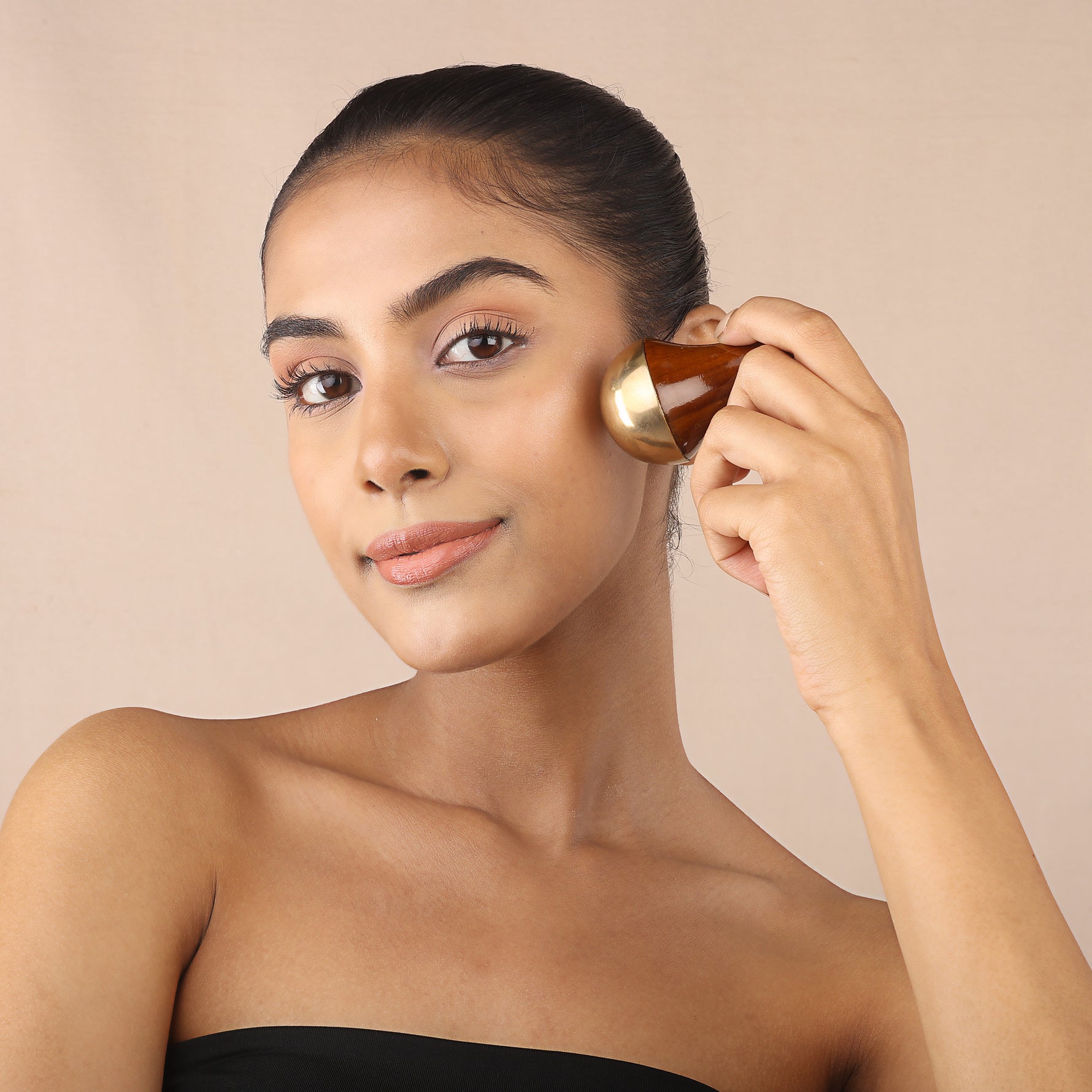
A Kansa Vatki is a small dome-shaped bowl made from Kansa metal - a specific bronze alloy of copper and tin that has been used in Ayurvedic practice for centuries. The word Vatki means small bowl or vessel. Unlike the Kansa Wand (designed for facial massage), the Kansa Vatki is specifically shaped for foot massage. Its rounded dome fits perfectly into the arch of the foot and the curves around the ankle bones, making it an ideal tool for one of the most important practices in classical Ayurveda: Padabhyanga (foot massage with oil).
The Charaka Samhita (Sutrasthana Ch.5) places extraordinary emphasis on foot care, stating that diseases do not affect one who massages the feet regularly with oil. The Ashtanga Hridayam goes further, describing the feet as the root of the body's energy channels - the starting point from which vitality flows upward. The Kansa Vatki is the traditional tool designed to make this practice more effective than hands alone.
Why Kansa Metal Specifically?
The choice of Kansa (bronze) is not aesthetic. Classical Ayurvedic texts describe specific properties of metals used in therapeutic practice. Kansa metal is traditionally understood to have a balancing effect on the body's bioelectrical field. When Kansa is rubbed against oiled skin, it creates a gentle friction that is qualitatively different from the friction of hands or steel tools. Practitioners describe it as having a grounding, Pitta-pacifying quality - which makes it particularly suited to foot work, where the goal is to draw excess heat and energy downward.
A secondary effect: Kansa reacts with the oil and acidic residues on the skin surface, sometimes producing a greyish discolouration. This is the metal interacting with toxins on the skin surface. It washes off easily and is traditionally interpreted as a sign that the tool is working.
The Classical Foot Massage Method
Preparation
You will need: your Kansa Vatki bowl, warm Dhanwantharam Thailam or plain sesame oil, a towel, and 15-20 minutes of quiet time. Evening is ideal - the Ashtanga Hridayam describes foot oiling before sleep as one of the most important practices for healthy sleep and grounded energy.
Apply a generous amount of warm oil to one foot - enough that the skin is slippery. The oil serves two purposes: it provides the lubrication for the Kansa bowl to glide smoothly, and it delivers its own therapeutic properties through the highly absorbent skin of the feet.
The Technique: Sole of the Foot
Hold the Kansa Vatki in your palm with the dome facing downward. Place the dome on the centre of the sole (the arch area). Using medium, steady pressure, make slow circular motions - clockwise, then anticlockwise. Cover the entire sole: the heel, the arch, the ball of the foot, and the area beneath the toes. The pressure should be firm enough to feel deeply relaxing but not painful.
The sole of the foot contains marma points that the classical texts associate with every major organ system. The most significant is the Talahridaya marma, located in the centre of the sole, which is traditionally connected to heart function and emotional regulation. Spend extra time on this point with the Kansa bowl - gentle, sustained circular pressure.
The Technique: Ankle and Sides
Move the bowl around the ankle bones (malleoli) with gentle circular motions. These are Gulpha marma points - associated with reproductive and urinary function in the classical marma maps. Massage the sides of the foot and the Achilles tendon area. The dome shape of the Vatki fits naturally into the contours around the ankle.
The Technique: Toes
Use the edge of the bowl to gently massage between and around each toe. The spaces between the toes are often overlooked but contain energy channels that classical practitioners consider important for maintaining peripheral circulation and sensory function in the feet.
Repeat on the Other Foot
Complete one foot fully before moving to the other. Apply fresh oil as needed - the foot should remain well-lubricated throughout. The total time per foot is approximately 7-10 minutes.
What You Will Feel
The immediate effect of Kansa Vatki foot massage is a profound sense of grounding and calm. Most people report that the mind quietens noticeably during the practice - the classical texts describe this as the excess Vata energy in the head being drawn downward through the marma channels to the feet. After the massage, a warm heaviness in the legs and a clear, settled feeling in the mind are common. Sleep that follows a Kansa Vatki session is typically deeper and more restorative.
Over regular practice (daily or several times per week), people report improved sleep quality, reduced restless leg sensations, warmer feet (Vata types often have chronically cold feet), and a general sense of being more grounded and less anxious. These are all consistent with the classical description of Padabhyanga benefits.
When to Use It
Best time: 15-30 minutes before bed. This leverages the calming, sleep-promoting effects described in the Ashtanga Hridayam. Combine with our Abhyanga for sleep protocol for the full classical evening routine.
Also beneficial: After long periods of standing or walking. After travel (especially air travel, which aggravates Vata). During periods of anxiety or mental restlessness. During seasonal transitions when Vata tends to increase.
Avoid: On broken skin, open wounds, or inflamed areas. During active fever. Immediately after a heavy meal.
Caring for Your Kansa Vatki
After use, wipe the bowl clean with a dry cloth. If the metal darkens over time, restore it by rubbing with lemon juice and salt, then rinsing and drying. Do not use chemical metal polishes - they leave residues that should not contact skin. Store in a dry place. Kansa is a durable alloy that will last a lifetime with basic care.
The Art of Vedas Kansa Collection
Art of Vedas offers a full range of Kansa ritual tools made from traditional bronze alloy: the Kansa Vatki for foot massage, the Kansa Wand for facial massage, the Kansa Gua Sha for facial contouring, the Kansa Scalp Massager for Shiro Abhyanga, and the Kansa Abhyanga Wand for body massage. Each tool is designed for a specific classical practice.
For the oil to use with your Kansa Vatki, Dhanwantharam Thailam is the standard recommendation. For those with Pitta-dominant constitutions or during summer, Ksheerabala Thailam provides a cooling alternative.
Frequently Asked Questions
Can I use the Kansa Vatki on other parts of the body?
The dome shape is specifically designed for the contours of the feet. For body massage, the Kansa Abhyanga Wand is more appropriate. For facial work, the Kansa Wand is the classical choice. Each tool in the Art of Vedas Kansa collection is shaped for its specific application.
Why does my skin turn grey during the massage?
This is the Kansa metal reacting with oils and acidic residues on your skin surface. It is normal, harmless, and washes off with soap and water. Classical practitioners interpret stronger grey discolouration as an indicator of higher toxin accumulation on the skin surface. The reaction typically decreases with regular practice as the skin becomes cleaner.
How often should I do Kansa Vatki foot massage?
The classical recommendation is daily, as part of the evening Dinacharya routine. In practice, 3-5 times per week provides significant benefit. Even once weekly gives noticeable results for sleep quality and foot comfort. Consistency matters more than frequency - a regular twice-weekly practice produces better cumulative results than sporadic daily use.
Is Kansa Vatki massage good for restless legs?
Restless leg sensations are a classic Vata disturbance - excess movement energy trapped in the lower extremities. The grounding, downward-directing quality of Kansa foot massage directly addresses this Vata pattern. Many people with restless leg experiences report significant improvement with regular evening Kansa Vatki practice combined with warm Dhanwantharam Thailam application.


