This article is part of our Basti in Ayurveda: Classical Enema Therapy and Local Basti Procedures guide series.
Kati Basti is one of the most clinically specific classical Ayurvedic therapies - a targeted treatment in which warm medicated oil is pooled and retained directly over the lumbar spine and lower back within a dough dam, delivering sustained, deep oleation precisely where Vata accumulation in the lower back is most classically significant.
The name describes the therapy exactly: Kati (the lower back, lumbar region) and Basti (retention, holding). Together they define an approach that is both beautifully simple and clinically precise - using warm oil and time to directly nourish and settle the Vata accumulated in the Kati region and the structures it governs.
The Classical Understanding of Lower Back and Vata
In classical Ayurvedic anatomy, the lower back (Kati) is described as one of the primary seats of Vata in the body - specifically Apana Vata, the sub-dosha governing the lower body, the pelvic region, the function of the kidneys and large intestine, and the general downward movements of the body. The lumbar spine and the sacral region are described as Vata-rich areas where Vata tends to accumulate and where the consequences of Vata excess are directly felt in the musculoskeletal structures.
When Vata accumulates in the Kati region - through cold exposure, dryness, irregular routines, overexertion, or aging - the classical presentation is the familiar pattern of lower back tension, stiffness on rising, discomfort that improves with movement and warmth, and the characteristic Vata quality of instability and irregularity in the lower back. Kati Basti addresses this pattern directly through the sustained warmth and oleation of the oil.
The Kati Basti Procedure
The Dough Dam
The defining technical element of Kati Basti is the dough dam (constructed from black gram or wheat flour dough) that is formed in a ring directly on the lower back, creating a reservoir over the lumbar spine. The dam must be leak-proof - constructed with care to maintain the oil pool throughout the treatment duration. The dough itself becomes warm and saturated with oil during the treatment and can be applied over the area at the end of the session as an additional Lepa (warm poultice).
Oil Selection and Temperature
The oil for Kati Basti is selected based on the classical indication and the individual's constitution. The oil must be maintained at a consistent warm temperature throughout the session - typically replaced every few minutes from a warming vessel to prevent it from cooling. Classical oils for Kati Basti:
-
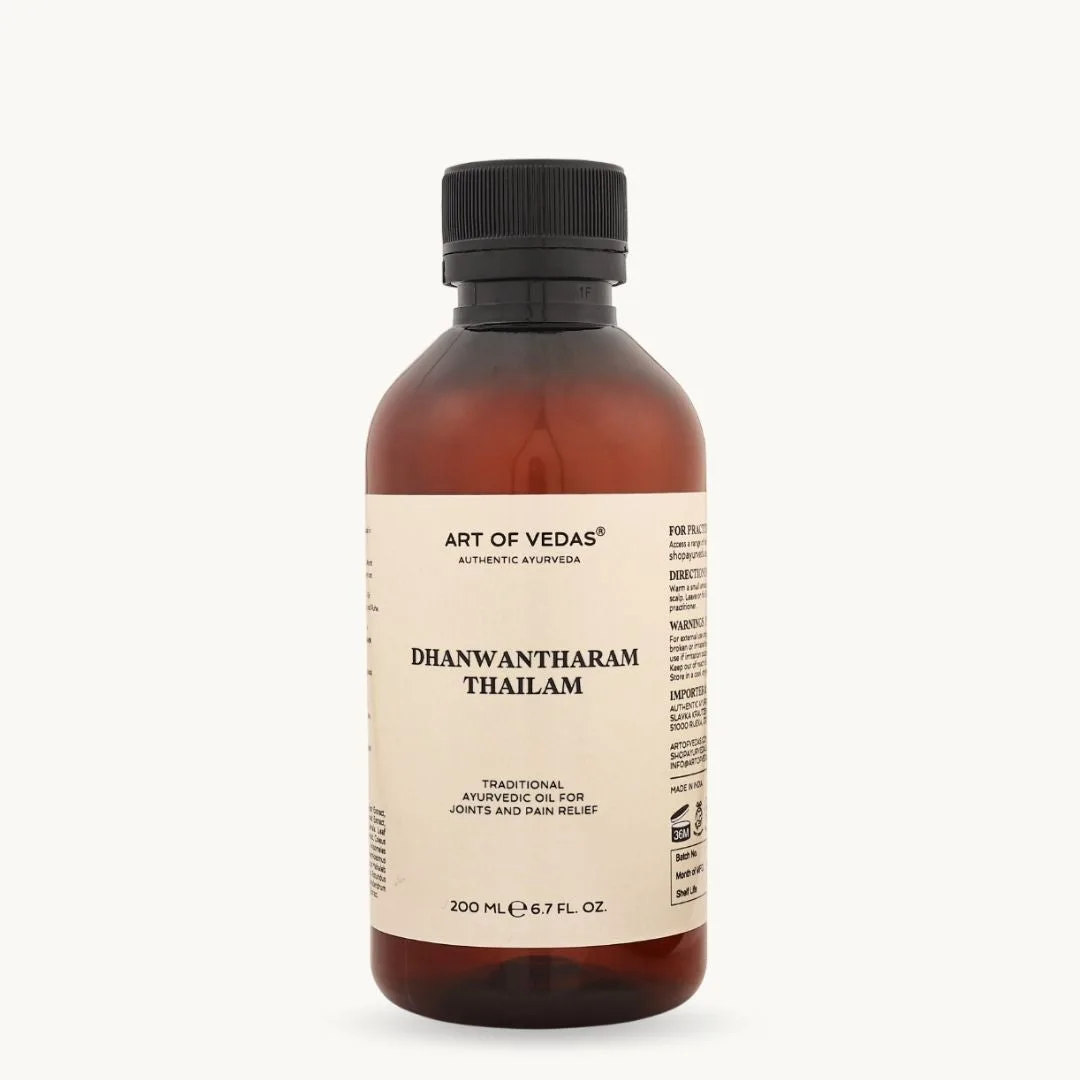
Dhanwantharam Thailam: The primary classical Kati Basti oil - its broad Vata-balancing, Brimhana, and musculoskeletal-supporting properties make it the most widely applicable choice for lower back Vata conditions. See our Dhanwantharam guide.
-
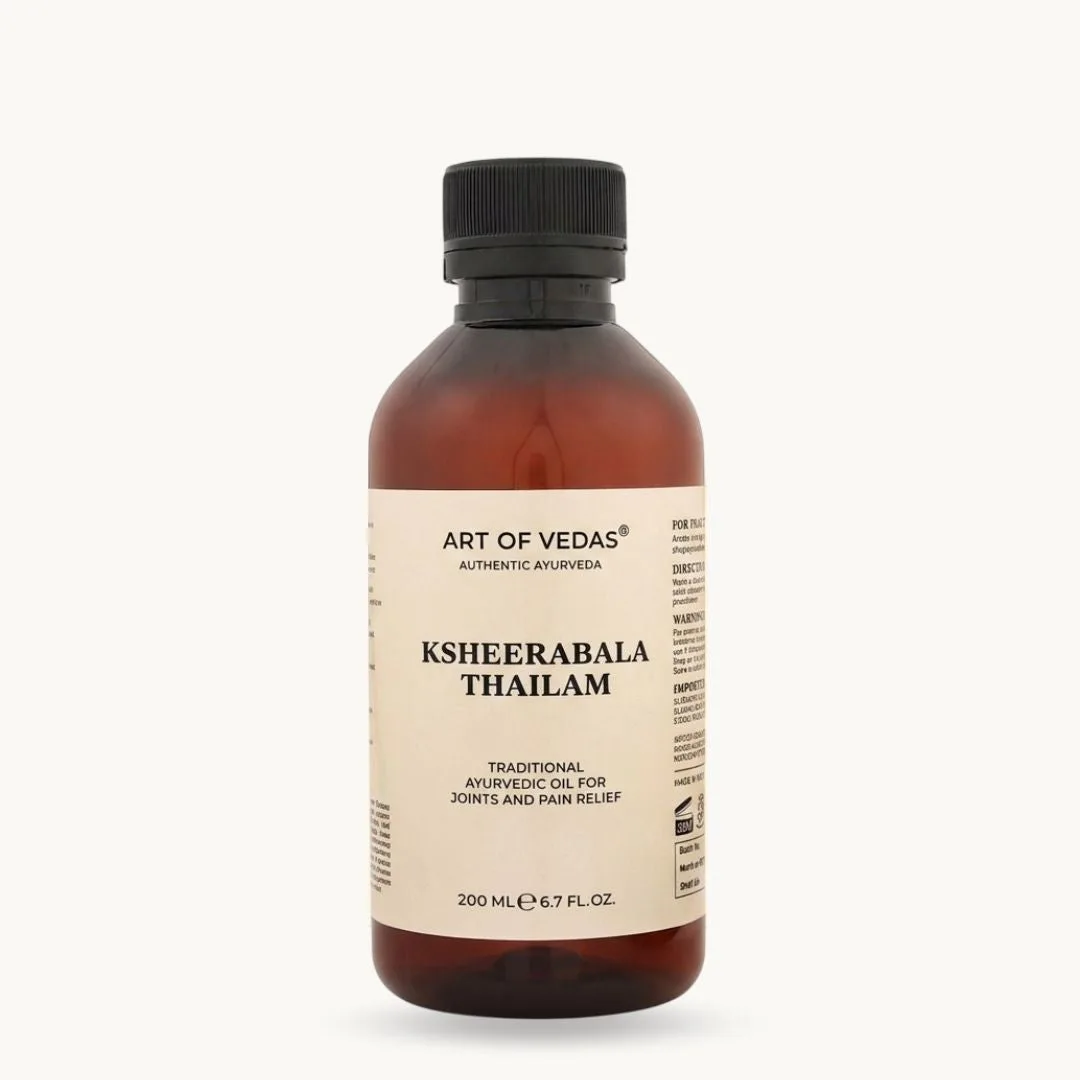
Ksheerabala Thailam: For Vata conditions with a nervous-system component or additional involvement of the nervous structures in the lumbar region. See our Ksheerabala guide.
-
Sahacharadi Thailam: The classical lower-body and limb Vata oil - particularly relevant for Kati Basti when the lower back involvement extends to the legs. See our Sahacharadi guide.
-
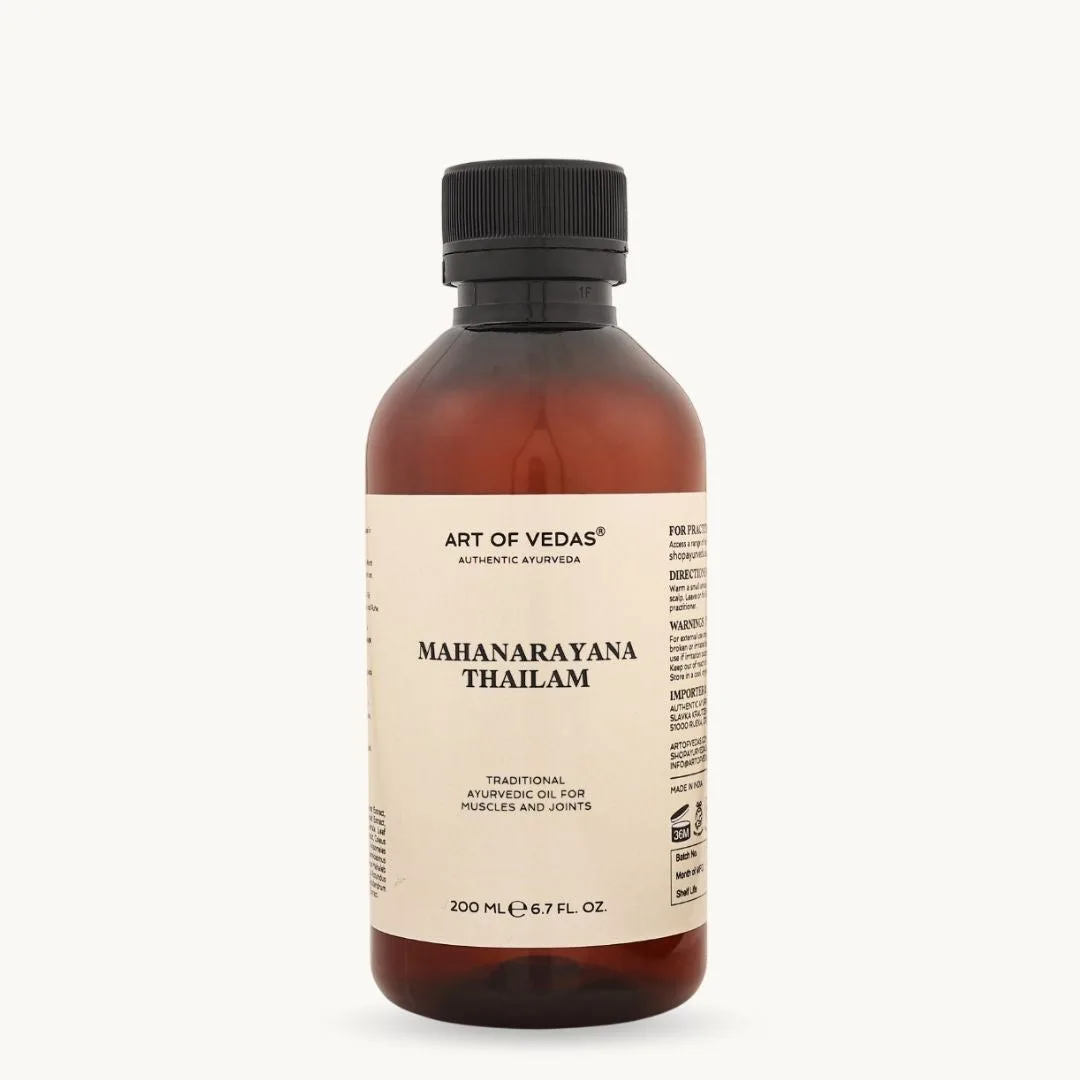
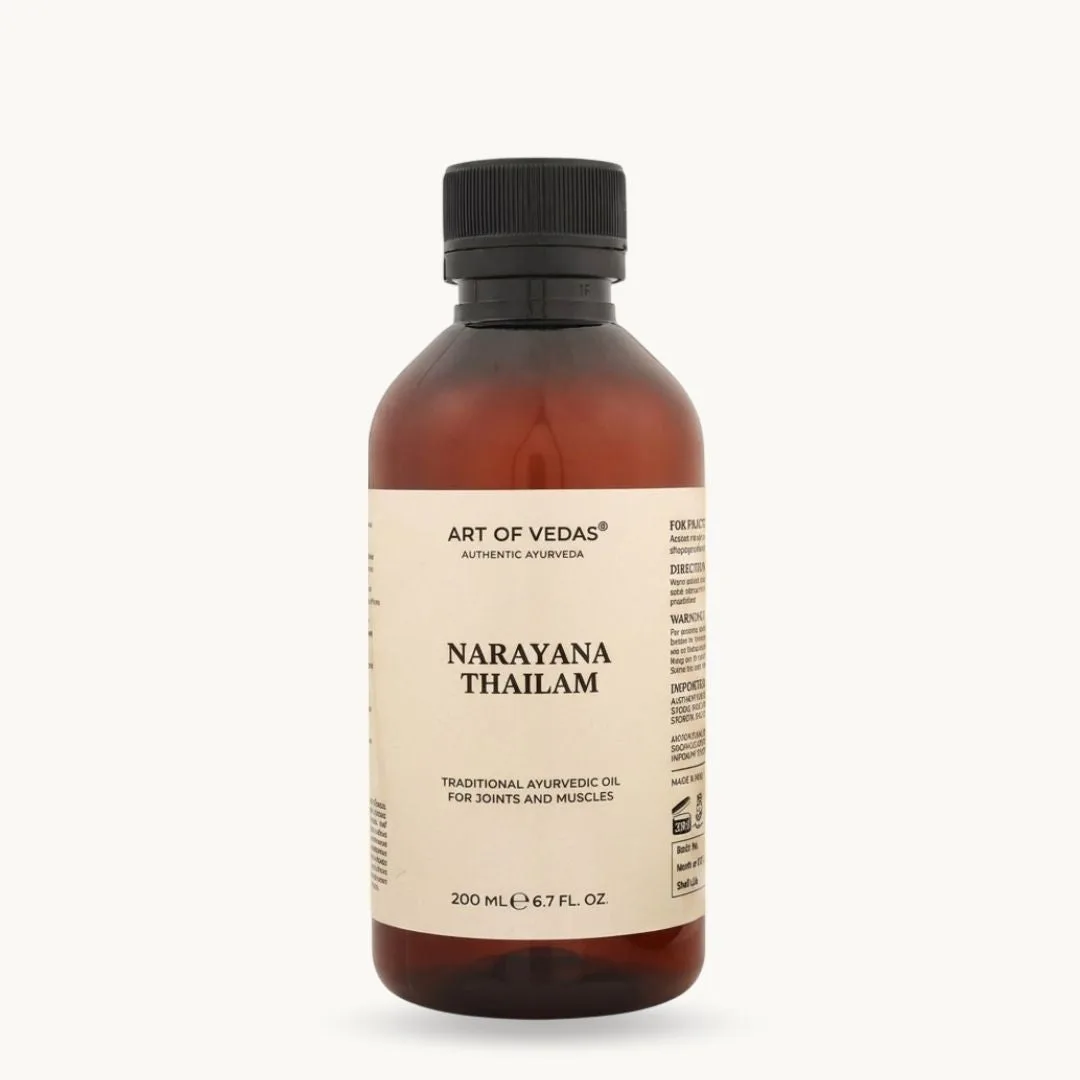
Mahanarayana Thailam: For comprehensive Sarva Vata hara when lower back involvement is part of broader musculoskeletal Vata accumulation. See our Narayana guide.
Duration and Course
A single Kati Basti session lasts thirty to forty-five minutes. In the classical Panchakarma context, Kati Basti is administered daily over a course of seven to fourteen days. The classical texts describe a clear progression of benefit over the course - the initial sessions providing immediate warmth and relief, with deeper structural benefit accumulating over the full course as the oil's nourishing properties penetrate progressively deeper into the Asthi (bone) and Majja (marrow/nervous tissue) Dhatus of the lumbar spine.
Kati Basti in the Basti Family of Therapies
Kati Basti belongs to a family of classical "Basti" therapies - all characterised by the retention of warm oil in a dough dam over a specific anatomical region. The same principle applied to different areas of the body produces related therapies:
-
Janu Basti: Oil retention over the knee joints - for Vata in the Janu (knees)
-
Greeva Basti: Oil retention over the cervical spine - for Vata in the neck and upper back
-
Hrid Basti: Oil retention over the chest and heart region - for Vata and Pitta in the Hridaya (heart region)
-
Netra Basti: Oil retention over the eyes - for Vata and Pitta in the Netra (eyes)
Each uses the same fundamental principle - warm oil retained in contact with a specific region - with the location and oil selection tailored to the specific Dhatu, Marma points, and dosha pattern of that area.
Preparing for Kati Basti
Classical preparation for Kati Basti:
- A full Abhyanga before the Basti treatment - preparing the channels and opening the tissue layers for deeper oil penetration
- A brief Swedana (sudation) before or after - steam or warm compress over the lower back to open the skin channels and enhance oil absorption
- Rest after the session - lying quietly for twenty to thirty minutes, allowing the oil to continue penetrating the tissues
- Warm covering - protecting the lower back from cold drafts after the session, which can counteract the Vata-settling effect of the treatment
Frequently Asked Questions
What is Kati Basti?
Kati Basti is a classical Ayurvedic therapy in which warm medicated oil is pooled and retained over the lower back and lumbar spine within a dough dam. It is the primary classical therapy for Vata accumulation in the lower back - addressing the cold, dry, contracting quality of Vata in the Kati region through sustained warmth and oleation of the lumbar structures.
How is Kati Basti different from a regular back massage?
A regular back massage uses physical manipulation of the muscles and soft tissue - its primary action is mechanical. Kati Basti works through sustained, deep oleation - the warm oil penetrating progressively through the skin into the muscle, joint, and ultimately bone and nervous tissue layers over an extended period of contact. The classical texts describe this as more deeply effective for Vata in the deep tissue layers than surface massage alone.
Which oil is used for Kati Basti?
Dhanwantharam Thailam is the most widely used classical Kati Basti oil, suited for most lower back Vata presentations. Ksheerabala Thailam, Sahacharadi Thailam, and Mahanarayana Thailam are used for more specific indications. The choice depends on the individual's constitution and the specific pattern of Vata in the lower back and surrounding structures.
Can Kati Basti be done at home?
A simplified version of Kati Basti can be adapted for home use with a supportive partner - constructing the dough dam and maintaining warm oil for a shorter duration. Full clinical Kati Basti as described in the classical texts is administered by a trained Ayurvedic therapist. For home Vata-settling practice for the lower back, consistent warm oil application with Abhyanga strokes over the lumbar region is the most practical equivalent.
Related Therapies and Oils
See our complete Abhyanga guide for the foundational oil massage practice. For the full range of classical Vata-addressing oils relevant to Kati Basti, browse our Ayurvedic Thailam collection. For related Basti therapies, see our Janu Basti guide and Greeva Basti guide.
This article is for informational and educational purposes only. Kati Basti is a classical Ayurvedic therapy that in a therapeutic context should be administered by a qualified Ayurvedic practitioner. The information provided here does not constitute medical advice and is not a substitute for professional guidance.