Among the classical Vatahara Thailams - the family of Ayurvedic medicated oils whose primary action is the balancing of Vata Dosha - Ksheerabala occupies a distinctive position. It is not the most widely known preparation in this family (Dhanwantharam and Mahanarayana are more commonly encountered in general wellness contexts), but it is among the most classically significant for specific applications. The combination of three components that define it - sesame oil, Bala root, and milk - produces a preparation with a particular classical affinity for the musculoskeletal system, the peripheral nervous tissue, and the deeper nourishing tissues that Vata, when elevated, tends to deplete.
The Name and Its Meaning
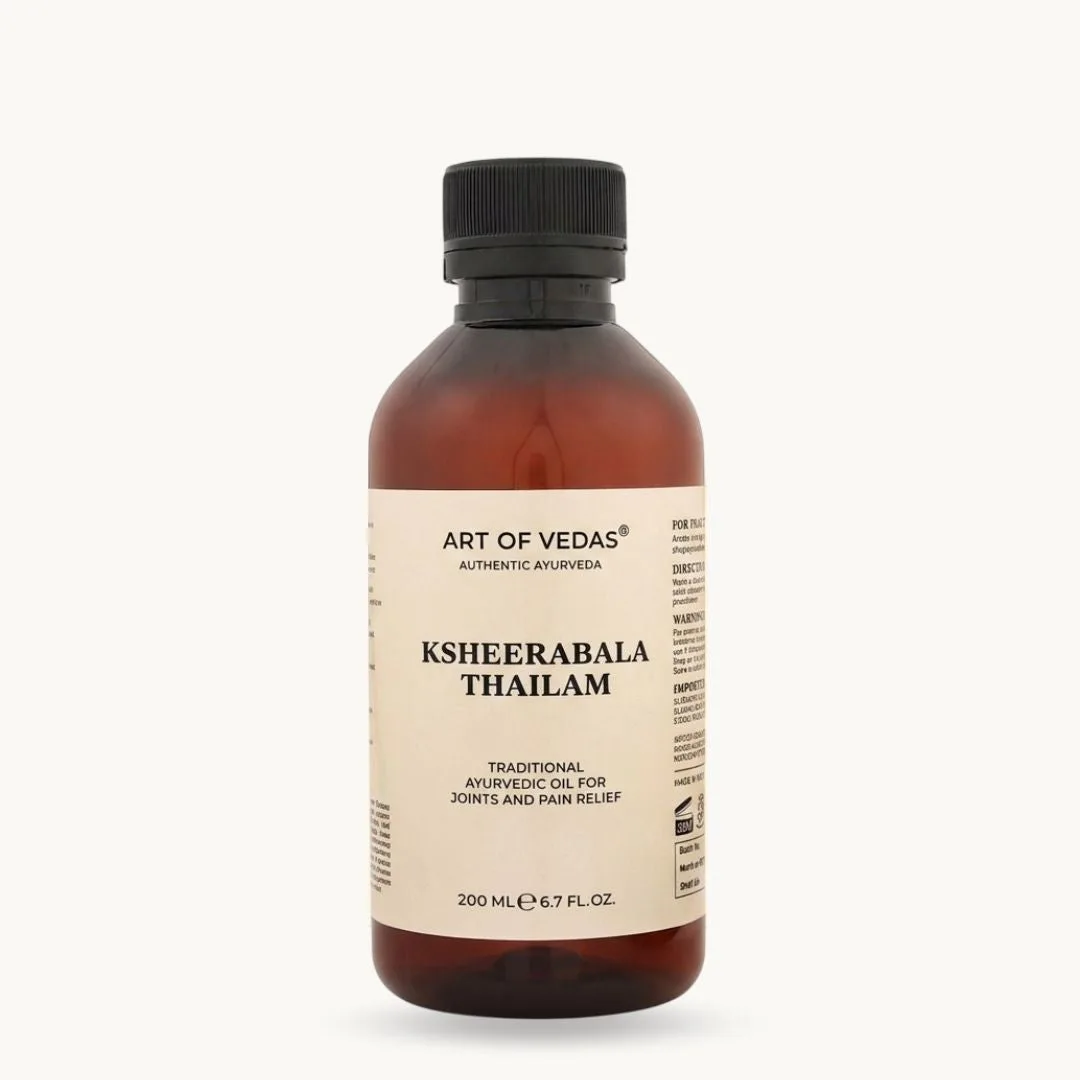
Ksheerabala is composed of two Sanskrit elements: Ksheera (milk) and Bala (Sida cordifolia - a classical Ayurvedic herb). The name describes the two defining features of this preparation beyond its sesame base: it is milk-processed, and its primary herbal component is Bala root.
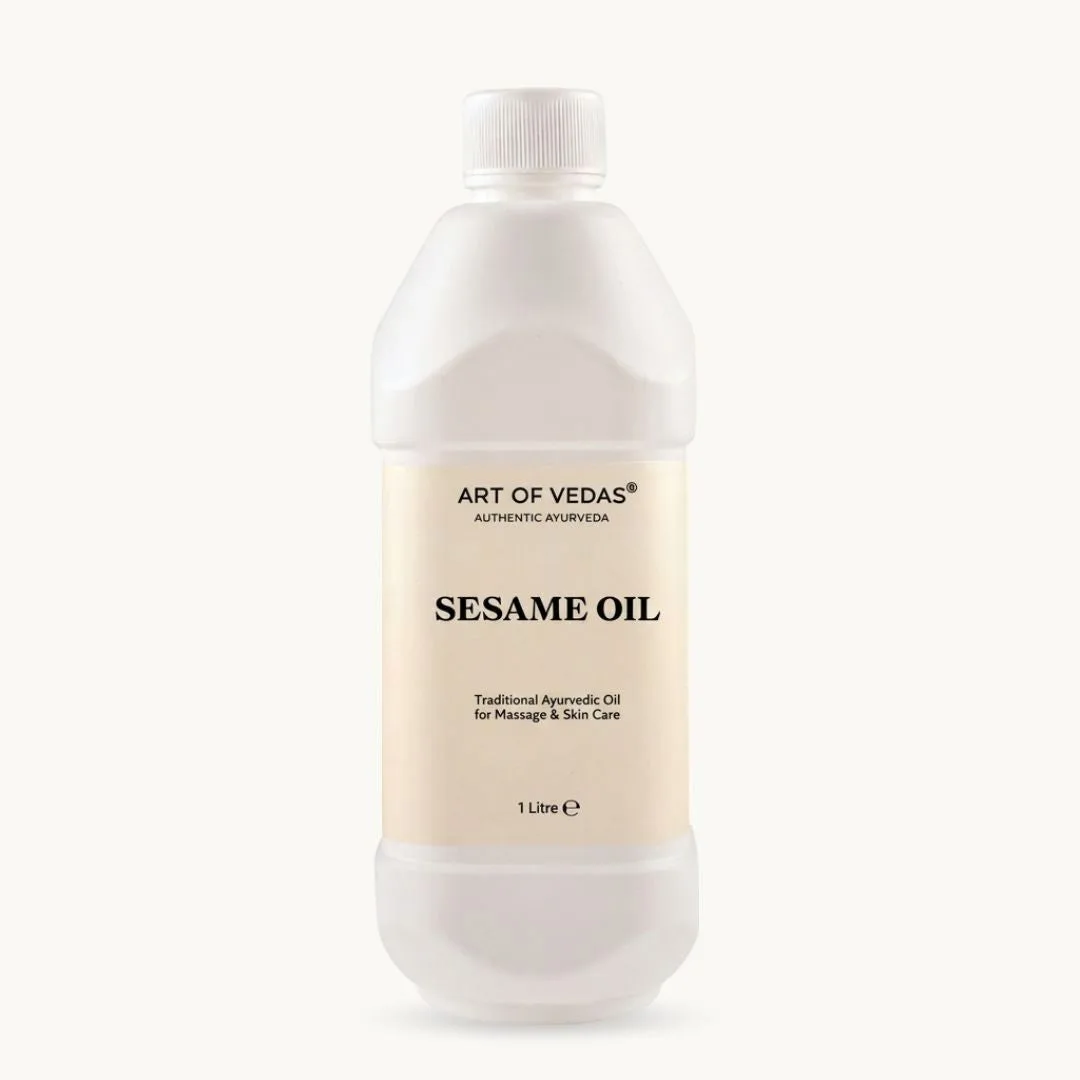
The Ksheera designation indicates a specific class of Thailam preparation - Ksheera Taila - in which milk is added as a fourth component alongside the decoction (Kashayam), the herbal paste (Kalka), and the sesame oil base. Milk (Go Ksheera -, in classical preparation) contributes its own Ayurvedic properties to the finished preparation: nourishing (Brimhana), building (Sandhaniya), cooling in its secondary effect, and particularly associated with the building and sustaining of deeper body tissues (Dhatus). The Sneha Paka process integrates these properties of milk into the oil during the extended cooking, producing a preparation qualitatively different from a standard sesame-herb Thailam.
The complete explanation of how classical Thailams are prepared - including the Sneha Paka process and what distinguishes a genuine classical preparation from a simple herbal oil - is in the Thailam guide.
Bala Root: The Primary Herb
Bala - Sida cordifolia in botanical Latin, sometimes called Country Mallow - is one of the classical Brimhana herbs in Ayurvedic pharmacology. Brimhana refers to a specific therapeutic action: the nourishing, building, and strengthening of body tissues. It is the opposite of Langhana (lightening, reducing, depleting).
Classical Ayurvedic texts describe Bala's properties as: sweet taste (Madhura Rasa), sweet post-digestive effect (Madhura Vipaka), cold energy (Sheeta Virya) in its direct action - though when processed into a sesame-based Thailam through Sneha Paka, the overall preparation becomes warming. Bala is classified as Vatahara and Tridoshahara - capable of balancing all three Doshas, but with its primary strength in addressing Vata-related depletion and weakness.
In classical texts including the Ashtanga Hridayam and Charaka Samhita, Bala is consistently cited for conditions involving weakness, depletion, and loss of tissue integrity - what classical Ayurveda describes as Kshaya (wasting or reduction) of the body's structural tissues. Its combination with the nourishing property of milk in Ksheerabala Thailam amplifies this tissue-building action and targets it specifically toward the areas most vulnerable to Vata depletion: the musculoskeletal system, the connective tissues, and the peripheral nervous tissue.
Classical Indications and Applications
Classical Ayurvedic texts reference Ksheerabala Thailam across a range of Vata-related conditions. Presented here as traditional classical knowledge, not as medical claims:
Musculoskeletal Vata conditions. The classical Ayurvedic understanding of Vata's action in the musculoskeletal system describes elevated Vata as drying out the synovial fluids, reducing the nourishment of the joint structures, and producing the stiffness, reduced mobility, and discomfort associated with Vata-dominant joint conditions. Ksheerabala's nourishing, tissue-building quality - delivered through the penetrating medium of sesame oil - makes it one of the primary classical external preparations referenced for musculoskeletal Vata conditions. It is applied both locally (to specific joints or areas) and as a full-body Abhyanga preparation.
Vata-related muscle weakness and depletion. Beyond the joints, Ksheerabala is referenced in classical texts for conditions involving depletion of muscle tissue (Mamsa Kshaya) and the weakness, fatigue, and reduced physical capacity that accompany pronounced Vata elevation in the muscular system. Its Brimhana quality, rare among oils primarily known for their Vatahara action, makes it particularly appropriate for recovery contexts.
Nervous system support. Classical Ayurvedic anatomy describes Majja Dhatu - the nerve tissue - as particularly susceptible to Vata depletion. Ksheerabala's combination of deeply penetrating sesame, nourishing milk-processing, and the tissue-sustaining action of Bala root gives it a classical affinity for the peripheral nervous system. This is one reason it is referenced in classical texts alongside conditions involving Vata Vyadhi - the broad category of disorders arising from Vata derangement affecting the nervous and structural systems.
Shirodhara and head treatments. Ksheerabala Thailam is among the classical oils used in Shirodhara (the sustained head oil stream treatment) and Shirobasti (oil held in a well on the head), particularly where the treatment intention involves nervous system support and deep Vata balancing. Its nourishing quality suits the head and brain context, and its sesame base ensures adequate penetration through the scalp. The classical context of Shirodhara is covered in the broader Panchakarma guide.
Sleep support. Classical Ayurvedic texts note the relationship between Vata elevation in the head and sleep disturbance - particularly the early waking (2am, 6am, the classical Vata time) and difficulty returning to sleep pattern characteristic of elevated Prana Vata. Ksheerabala applied warm to the scalp and soles of the feet in an evening Pada Abhyanga practice is referenced in classical contexts as particularly supportive for this pattern. The Ayurvedic sleep guide covers the full Vata sleep pattern and approaches in detail.
How Ksheerabala Compares with Other Vatahara Thailams
Understanding where Ksheerabala sits relative to Dhanwantharam and Mahanarayana - the other primary classical Vatahara oils - helps clarify when to use which preparation.
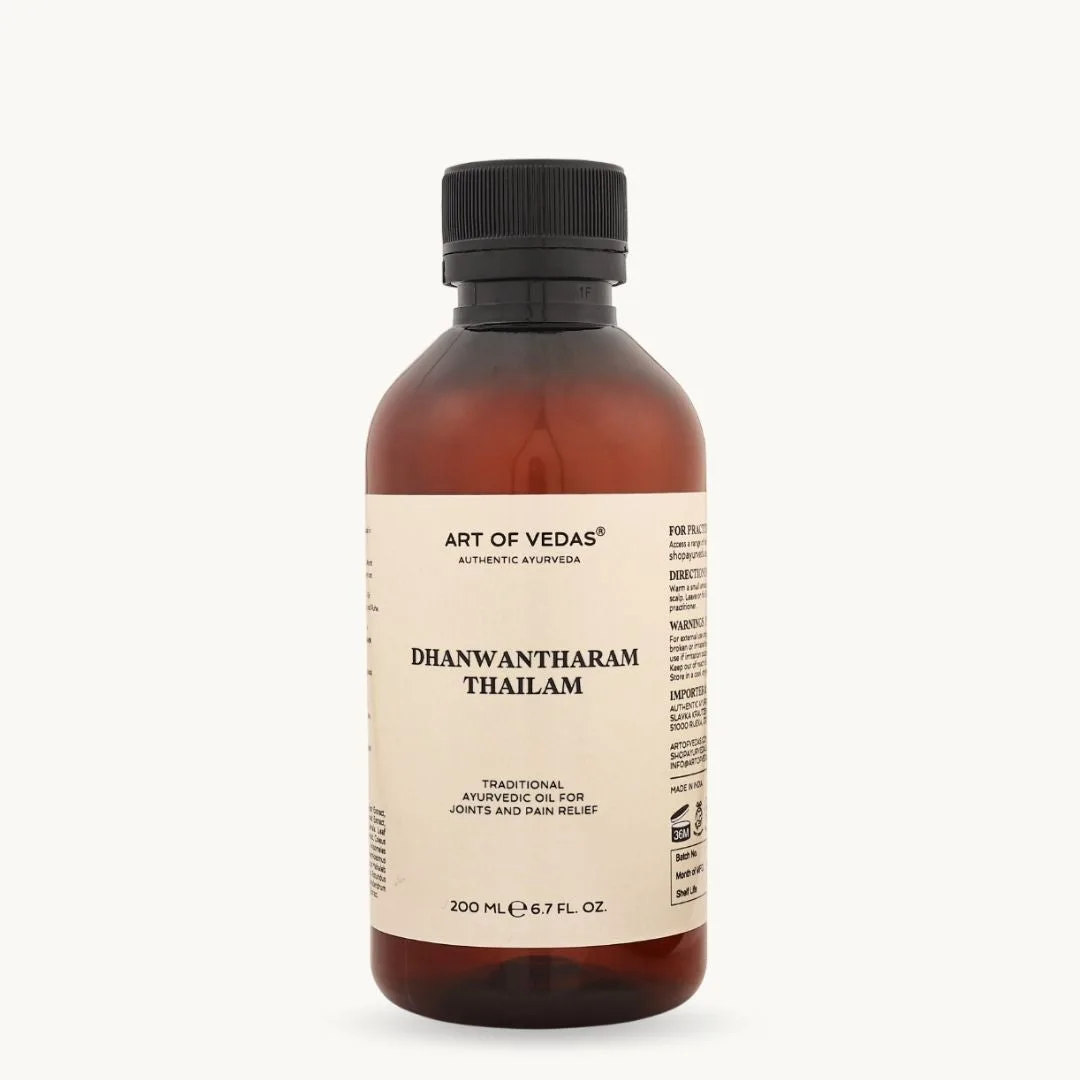
Dhanwantharam Thailam is the most broadly applicable classical Vata oil: gently warming, deeply nourishing, appropriate for daily full-body Abhyanga across most constitutions, and suited to most seasons. It is the classical starting point for regular oil massage practice. Read more in the Dhanwantharam guide.
Ksheerabala Thailam is more specifically targeted - its milk-processing and Bala root base give it a particular affinity for the structural tissues (musculoskeletal system, connective tissue, peripheral nerve) and a more pronounced Brimhana quality than Dhanwantharam. Where Dhanwantharam is the general daily Vata-balancing oil, Ksheerabala is more specifically suited to contexts of tissue depletion, musculoskeletal Vata, and recovery. It can be used in full-body Abhyanga, but is also well suited to localised application on specific areas.
Mahanarayana Thailam is the most potent Vatahara preparation of the three - complex, deeply warming, more aggressive in its Vata-clearing action. Where Ksheerabala works through building and nourishing the tissues, Mahanarayana works more broadly across the entire musculoskeletal and nervous system with greater warming intensity. Mahanarayana is most appropriate for pronounced Vata conditions, cold seasons, and higher-intensity therapeutic use. The Mahanarayana guide and the warming oils guide cover these distinctions in full.
In practice, these oils are sometimes used in combination or alternated by season - Dhanwantharam as the daily baseline, Ksheerabala for targeted musculoskeletal work, Mahanarayana during peak Vata seasons or periods of pronounced imbalance.
Using Ksheerabala at Home
Ksheerabala Thailam is appropriate for home practice as an external massage oil. The basic principles follow classical Abhyanga guidance:
Warm the oil. Place the bottle in a cup of hot water for 5, 10 minutes before use. The oil should feel comfortably warm - not hot - when tested on the inner wrist. Warm application is specified in classical texts as essential for effective Sneha penetration into the tissues.
Full body or local application. Ksheerabala can be used for full-body Abhyanga following the standard technique (the complete Abhyanga guide and the at-home Abhyanga guide cover method in detail). For targeted musculoskeletal application, apply warm oil generously to the specific area and massage with firm circular and longitudinal strokes for 10, 15 minutes. Cover with a cloth if possible to maintain warmth during the absorption period.
Allow absorption time. After Abhyanga, classical texts describe a rest period before bathing - ideally 20, 30 minutes. This period allows deeper absorption of the oil's properties into the tissues.
Evening application for sleep support. For Vata-pattern sleep disturbance, warm Ksheerabala applied to the scalp (particularly the crown - Adhipati marma) and the soles of the feet in an evening Pada Abhyanga practice is particularly effective. The Ayurvedic sleep guide covers this practice in full context.
Frequency. Daily use is appropriate for those with a Vata constitution or significant Vata elevation. 3, 4 times per week is a good starting point for most people. Consistent use over weeks and months produces the deeper tissue-nourishing effects that classical texts associate with sustained Snehana practice.
For Practitioners
Ksheerabala Thailam is one of the primary classical oils used in professional Panchakarma and Ayurvedic clinical settings for conditions involving Vata in the musculoskeletal and nervous systems. It is used in Abhyanga, Pizhichil (oil bath therapy), Shirodhara, and as a Nasya preparation in specific classical contexts.
Art of Vedas supplies Ksheerabala Thailam as part of its professional Ayurvedic oil range for practitioners, Panchakarma centres, yoga studios, and Ayurvedic clinics across Europe.
For personalised guidance on whether Ksheerabala is appropriate for your constitution and circumstances - and how it compares with other classical preparations - an Ayurvedic consultation with one of our AYUSH-certified Ayurvedic doctors provides a complete classical assessment.
Ksheerabala Thailam is a classical Ayurvedic preparation for external use. It is intended for general wellbeing as part of a traditional self-care routine and is not a medicine. It is not intended to diagnose, treat, cure or prevent any disease. For personalised guidance on its use, consult a qualified AYUSH-certified Ayurvedic doctor.