Triphala: How to Take It, What It Does, and Classical Use
Triphala - literally "three fruits" in Sanskrit - is one of the most widely used classical formulations in Ayurveda. Described in the Charaka Samhita, Ashtanga Hridayam, and Sahasrayogam, it is among the few preparations explicitly recommended for long-term, daily use across all three Dosha types. Its Sanskrit name captures its entire composition: Tri (three) + Phala (fruits), referring to the three dried fruits that form the formula - Haritaki, Bibhitaki, and Amalaki.
This guide explains what Triphala is, what the classical texts say about its use, the different forms available, how to take it, and what to expect from regular use.
The three fruits of Triphala
Each of the three fruits in Triphala is a significant classical Ayurvedic herb in its own right. Together, they are described in the classical texts as complementary - each addressing a different Dosha while the combination balances all three:
Haritaki (Terminalia chebula)
Haritaki is described in the Charaka Samhita as one of the most important single herbs in Ayurveda - the text states that just as a mother will not harm her own child, Haritaki does not harm the body. It is classified as Tridosha Shamaka (balancing for all three Doshas) with a particular affinity for Vata. Haritaki is described as Rasayana - one of the classical rejuvenating preparations - and is associated with supporting digestive function, clarity of the senses, and long-term vitality.
Bibhitaki (Terminalia bellirica)
Bibhitaki is described as particularly Kapha-pacifying. In classical texts it is associated with supporting respiratory health, elimination, and the health of the eyes and hair. It is classified as Tridoshic but with the strongest action on Kapha excess.
Amalaki (Emblica officinalis / Phyllanthus emblica)
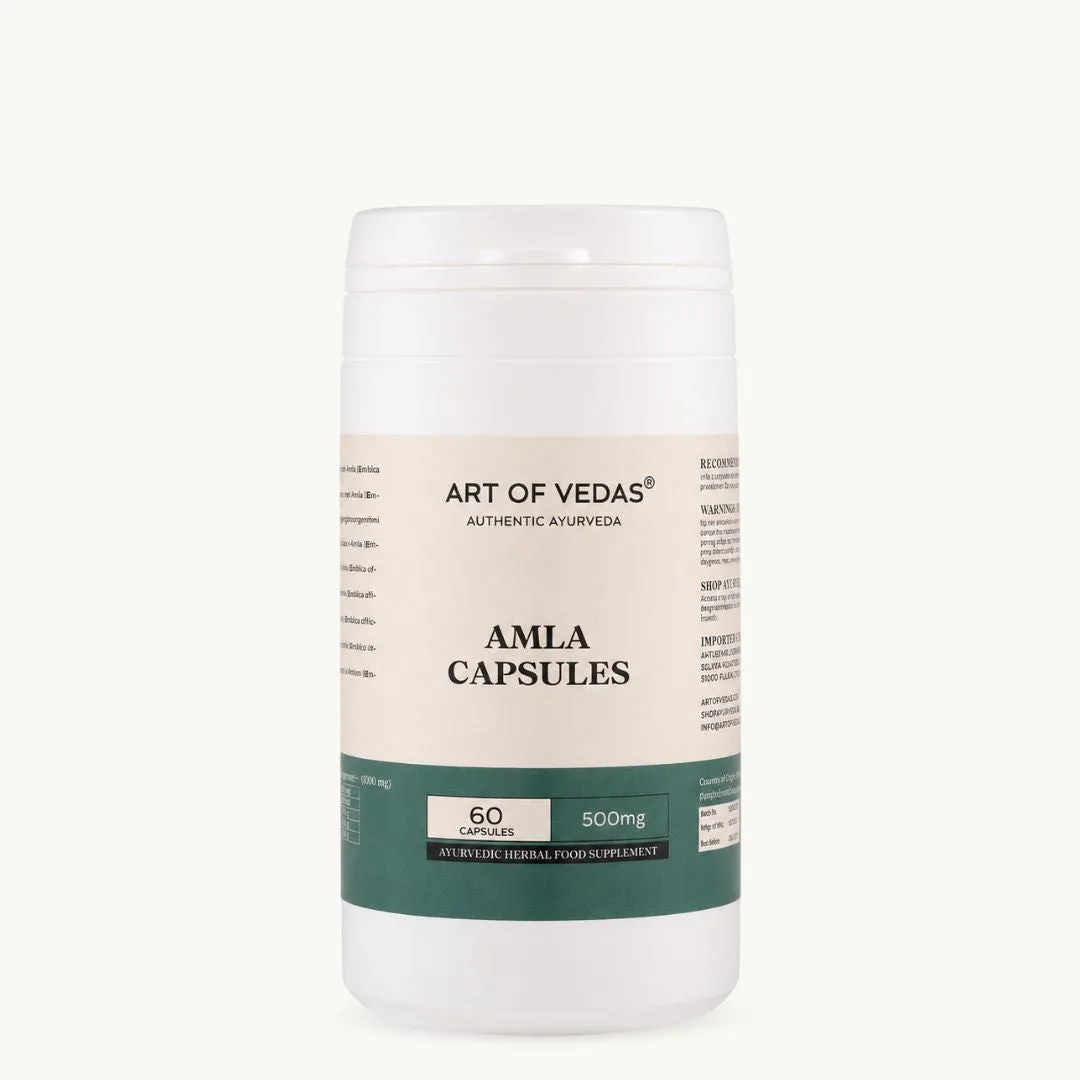
Amalaki - also known as Indian Gooseberry or Amla - is the Pitta-pacifying component of Triphala and one of the richest known natural sources of Vitamin C. The Ashtanga Hridayam describes Amalaki as the foremost among Rasayana herbs - classical rejuvenating preparations for long-term vitality. It is described as Tridoshic but with particular benefit for Pitta constitution. Amalaki is also available as a standalone supplement - see our Amalaki Capsules.
What Triphala is used for in classical Ayurveda
Classical Ayurvedic texts describe Triphala's primary sphere of action as the digestive system and the channels of elimination (Srotas). The Charaka Samhita and Ashtanga Hridayam both reference Triphala in the context of:
- Supporting regular, healthy bowel function - Triphala is described as a gentle Anulomana rather than a harsh purgative
- Supporting the health of the eyes (Chakshushya) - this is one of the most consistently cited traditional uses across multiple classical texts
- Long-term Rasayana use - Triphala is described as suitable for daily use over extended periods as a general tonic preparation
- Supporting the body's natural cleansing processes - classical texts reference Triphala in the context of Ama (undigested residue) clearance and supporting Agni (digestive function)
- Supporting skin quality - particularly through its Amalaki component
Triphala is one of the few classical formulations explicitly described as suitable for all three Dosha types (Tridoshic). The Ashtanga Hridayam uses the phrase "Tridoshaghnam" in reference to Triphala - beneficial for all three Doshas.
Forms of Triphala available
Triphala is available in several forms, each with slightly different characteristics in terms of convenience, onset, and traditional usage:
Triphala Churnam (powder)
The classical form of Triphala is the Churnam - the dried, powdered combination of the three fruits. This is the form referenced in classical texts for both internal use and occasional external applications. Triphala Churnam has a distinctive, complex flavour - astringent, slightly bitter, sour, and pungent. This is not incidental: Ayurveda describes taste (Rasa) as part of the action of a herb, and the taste experience of Churnam is considered part of its benefit.
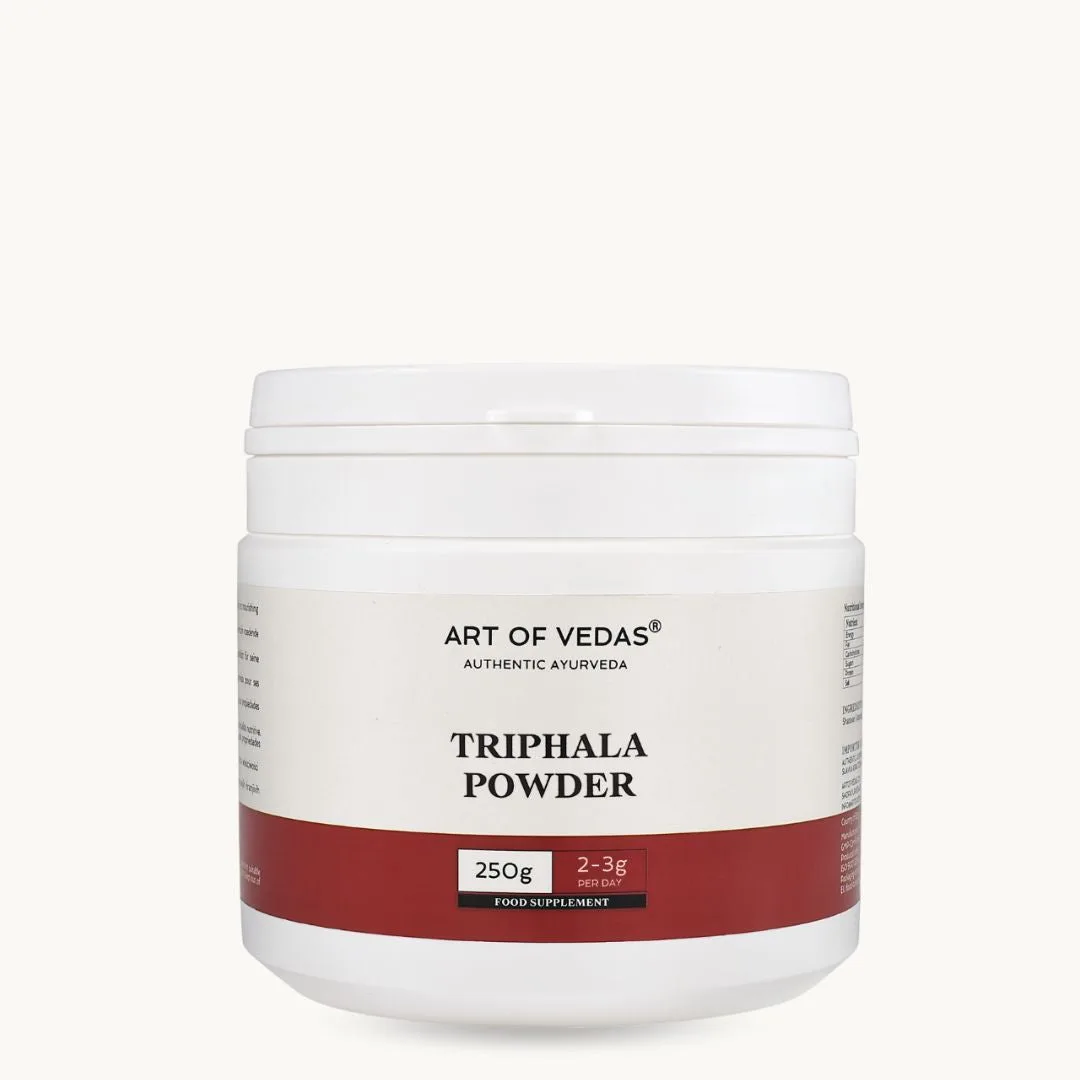
Our Triphala Churnam powder is prepared from classical-quality dried fruit and is suitable for direct mixing with warm water or honey.
Triphala Capsules
For those who prefer convenience or find the powder flavour difficult, Triphala capsules provide the same classical formula in an easy daily form. Our Triphala Capsules contain the classical Churnam ratio enclosed in vegetable capsules.
Triphala Vati (tablets)
Triphala Vati (compressed tablets) is a traditional solid form of the formula used when a specific tablet preparation is preferred.
How to take Triphala: dosage and timing
Classical Ayurvedic texts provide specific guidance on the use of Triphala. The following reflects traditional practice - always check the label of your specific product and consult a practitioner for personalised guidance:
Powder (Churnam)
- Classical dosage: approximately 3, 6 grams of Churnam per day (roughly half to one teaspoon)
- Mix with warm water - some classical texts also mention honey as a carrier (Anupana) for certain purposes
- Timing: classically taken at bedtime or in the evening on an empty stomach for digestive support; in the morning for Rasayana purposes
- For eye support, some classical texts describe the preparation of a mild Triphala wash, though this requires specific classical guidance
Capsules
- Typical dosage: 1, 2 capsules (500mg each) once or twice daily, as per product label
- Take with warm water
- Evening or bedtime is traditional for digestive support; morning for Rasayana use
Important notes on Triphala use
- Triphala is described in classical texts as mild and suitable for long-term use - it is not a strong laxative and should not be expected to produce immediate purgative effects at standard dosage
- Classical texts recommend starting with a smaller amount and building up gradually
- Triphala is considered contraindicated during pregnancy in classical texts - consult your practitioner
- If you are taking medication, consult your doctor before adding any food supplement
Triphala as a Rasayana: long-term use
One of the most distinctive aspects of Triphala in the classical literature is its status as a Rasayana preparation - a category of formulations described as supporting long-term vitality, strength, and resilience. The Charaka Samhita describes specific extended Rasayana protocols using Triphala, typically taken over weeks or months in progressively increasing doses with specific carriers (Anupana) such as honey, ghee, or warm water.
For most purposes, a simple daily maintenance dose of Triphala Churnam or capsules with warm water is the most practical approach to incorporating this classical formula into a regular routine. Consistency over time is more important than dose size in classical Rasayana practice.
Triphala and the Ayurvedic herbs collection
Triphala sits within the broader tradition of classical Ayurvedic herb and supplement use. For a wider overview of classical Ayurvedic herbs and their traditional roles, see our guide to Ayurvedic herbs. For the full supplements range including Triphala Churnam, Triphala Capsules, Ashwagandha, and Amalaki, see our Ayurvedic Supplements collection.
Triphala products from Art of Vedas are food supplements. They are not medicines and do not replace consultation with a physician or qualified Ayurvedic practitioner. Do not exceed the recommended daily intake.