This article is part of our Ayurvedic Hair Care: The Classical Guide to Shiro Abhyanga and Hair Oils guide series.
Ayurvedic Hair Oil Massage: Classical Shiro Abhyanga Guide
In the classical Ayurvedic Dinacharya, oiling the hair and scalp - Shiro Abhyanga - is not a once-a-week hair treatment. It is a daily practice, described in the Ashtanga Hridayam as one of the foundational components of the morning routine alongside tongue cleaning, oil pulling, and nasal oil application. The classical text describes its benefits in terms that encompass far more than hair appearance: Indriya prasadam (clarity of the sense organs), Nidra (quality of sleep), Kesha (hair health and lustre), Bala (physical strength), and the settling of Vata in the head region.
Understanding why oil on the scalp produces these effects - and how to do it with authentic classical oils in the appropriate classical manner - is the purpose of this guide.
The Classical Rationale for Scalp Oiling
In classical Ayurvedic anatomy, the scalp is one of the body's most Vata-prone regions. The head (Shiras) is described as the supreme Marma - the most vital region of the body - and as a primary seat of Prana Vata, the sub-dosha governing sensory perception, mental processing, and the relationship between the physical and subtle bodies. The scalp channels are directly connected to the underlying nervous structures through the skin and fascia of the head.
Oil application to the scalp addresses this Vata-prone region through multiple mechanisms simultaneously:
- Direct Snehana (oleation) of the scalp skin and hair follicles - nourishing Bhrajaka Pitta and Rasa Dhatu at the scalp surface
- Through the scalp skin, providing Tarpana (nourishment) to the underlying Majja Dhatu (nervous tissue) - the classical understanding that sustained oil contact on the scalp penetrates to the deeper tissue layers over time
- Stimulation of the scalp Marma points - particularly Adhipati (crown), Shankha (temples), and Krikatika (skull base) - through the massage component
- Settling of Prana Vata through the warmth and oil contact of the head region
Hair in the Classical Dhatu Framework
Hair is understood in classical Ayurveda as a by-product (Mala or Upadhatu) of Asthi Dhatu - the bone tissue layer. The quality of the hair therefore reflects the condition of Asthi Dhatu: its strength (Bala), its nourishment (through Rasa Dhatu reaching Asthi), and the quality of Vata in the bone tissue channels. This classical understanding explains why hair care in Ayurveda involves not just topical oil application but also internal support through appropriate Rasayana herbs, diet, and the maintenance of Asthi Dhatu quality.
The Kesha (hair) is simultaneously nourished from within (through the blood and lymph that feed the hair follicles) and protected from without (through the oil that coats and protects the hair shaft). Classical Shiro Abhyanga addresses the outer protection and scalp nourishment dimension; internal herbs like Brahmi, Shatavari, and Amalaki address the inner Dhatu nourishment dimension.
Selecting the Appropriate Classical Hair Oil
Classical Ayurveda matches the hair oil to the constitution and the current scalp condition:
For Vata Scalp and Hair
Vata hair is dry, fine, prone to static, and the scalp tends toward dryness and sensitivity. The classical approach is warming, Brimhana, and deeply nourishing:
-
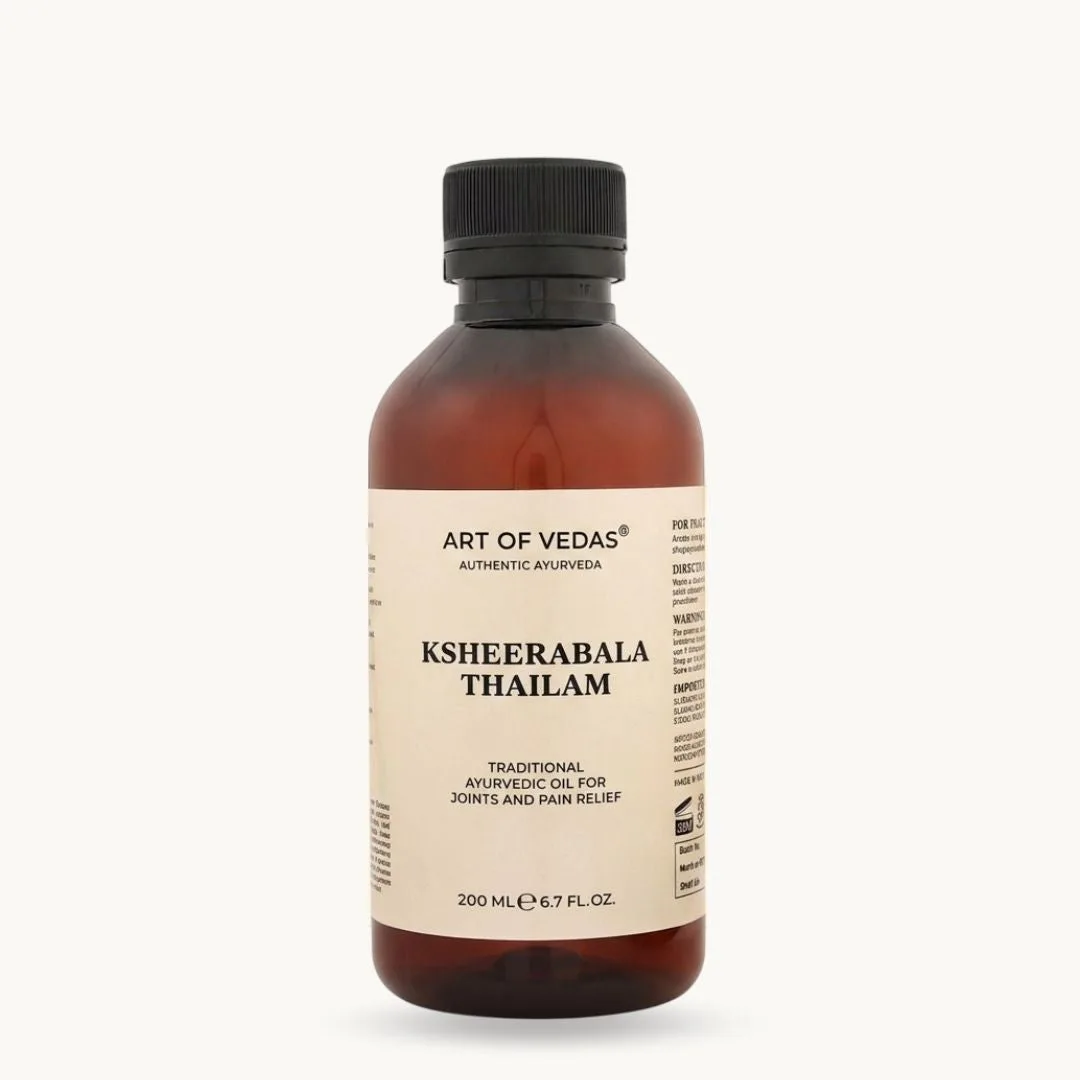
Ksheerabala Thailam: The finest classical Vata-nourishing head oil - its milk-based processing provides a deeply nourishing, Majja Dhatu-directed action ideal for Vata scalp conditions. See our Ksheerabala guide.
-
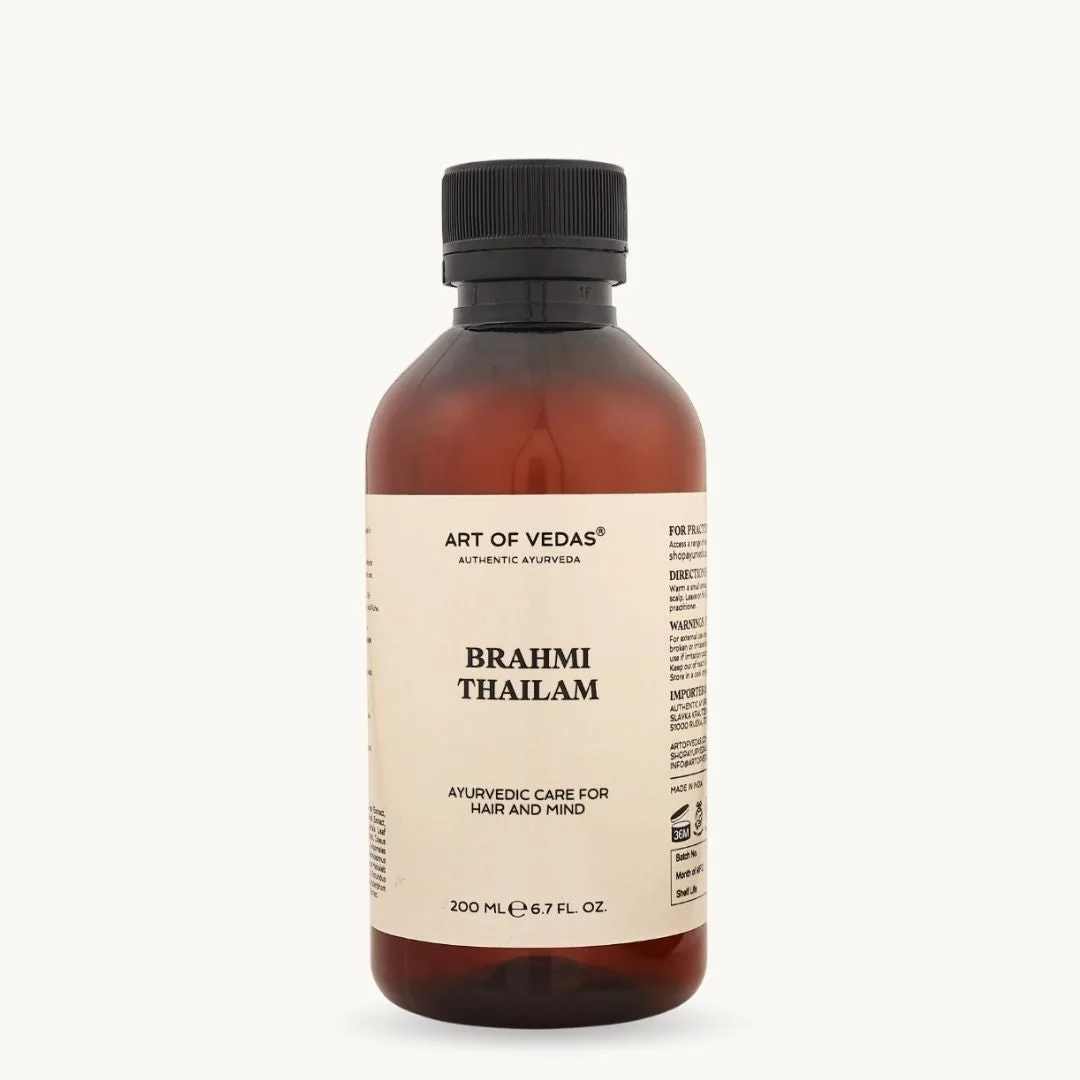
Brahmi Thailam: Medhya and Vata-Pitta-settling - specifically cooling and nourishing for the head region. See our Brahmi Thailam guide.
-
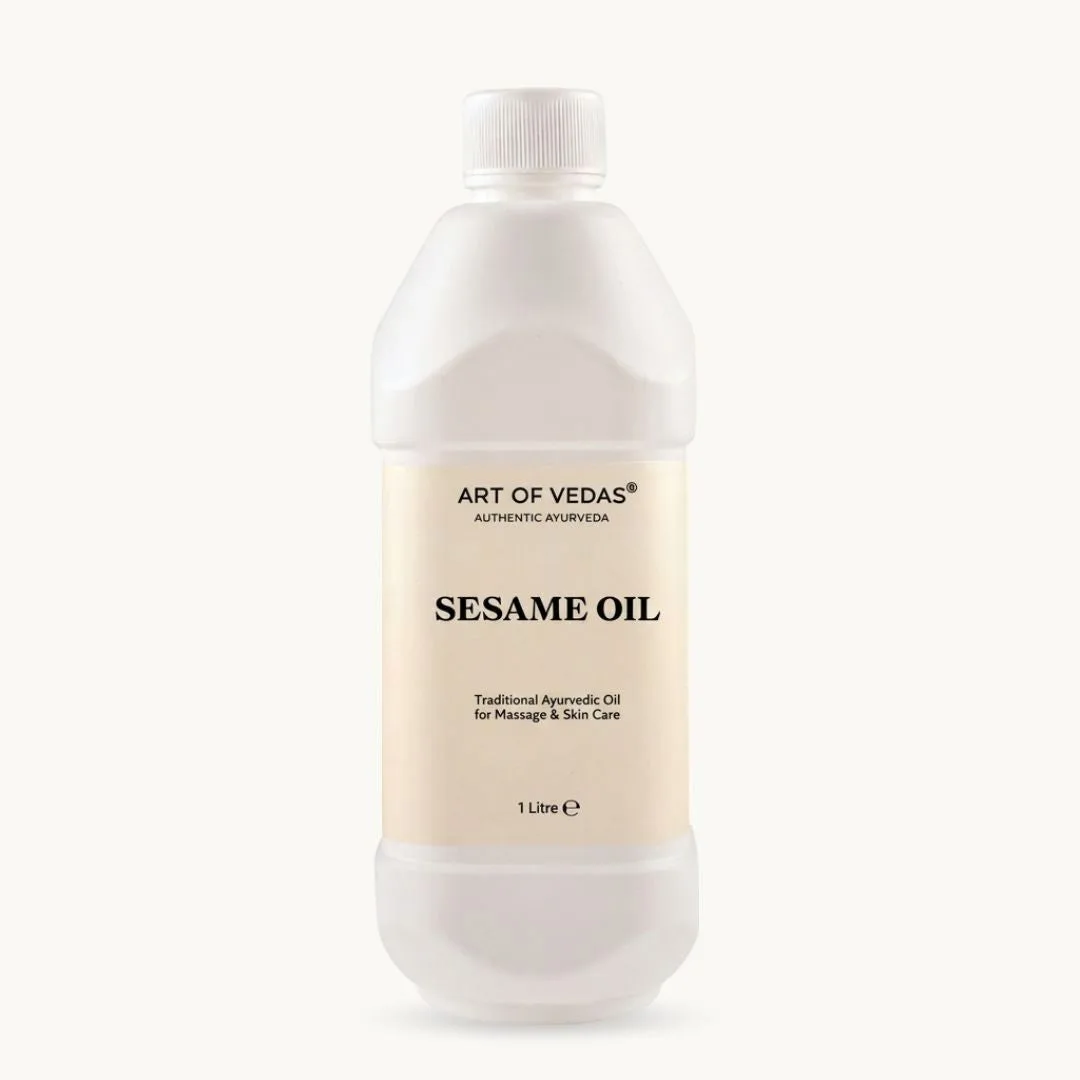
Sesame oil (plain): The classical Vata-base oil - warming, heavy, and deeply nourishing for the scalp as a daily foundational oil
For Pitta Scalp and Hair
Pitta hair tends toward thinning, and the scalp tends toward heat sensitivity and reactivity. The classical approach is cooling and Pitta-clearing:
-
Brahmi Thailam: Sheeta virya (cooling) and Medhya - the primary classical Pitta-cooling head oil
-
Neelibhringadi Keram (coconut base): The classic coconut-based hair oil combining Indigo leaf (Neeli), Bhringraj, and other Kesha-specific herbs in a cooling coconut base - ideal for Pitta scalp
-
Coconut oil (plain): The classical Pitta base oil - cooling, light, and appropriate for warm-season daily use
For Kapha Scalp and Hair
Kapha hair tends toward heaviness and excess oil, and the scalp may produce excess sebum. The classical approach is lighter and more stimulating:
-
Bhringamalakadi Thailam: Classical North Indian hair oil combining Bhringraj and Amalaki in a sesame base - Kesha-nourishing with a lighter overall character suitable for Kapha hair
-
Light sesame base with Haridra and Neem: A simple classical preparation for Kapha scalp using warming, channel-clearing herbs in a lighter sesame base
The Classical Shiro Abhyanga Technique
-
Warm the oil: Always apply warm oil - cold oil aggravates Vata. Warm a small quantity in a bowl of hot water until it reaches a comfortable temperature above body heat.
-
Begin at the crown: Apply a small quantity of oil to the Adhipati Marma at the crown of the head - the most significant Marma point of the head. Work the oil into the scalp with the fingertips using small circular motions.
-
Work systematically: From the crown, move outward to the temples (Shankha Marma), to the hairline, and to the nape of the neck (Krikatika Marma). Cover the entire scalp with the same circular fingertip technique.
-
Oil the hair length: After covering the scalp, apply any remaining oil down the hair shafts - particularly the ends, which are most prone to Vata dryness.
-
Retention time: The classical standard is at least thirty minutes before washing. Daily practice: apply in the morning before bathing. Weekly deep treatment: apply in the evening and allow overnight retention.
-
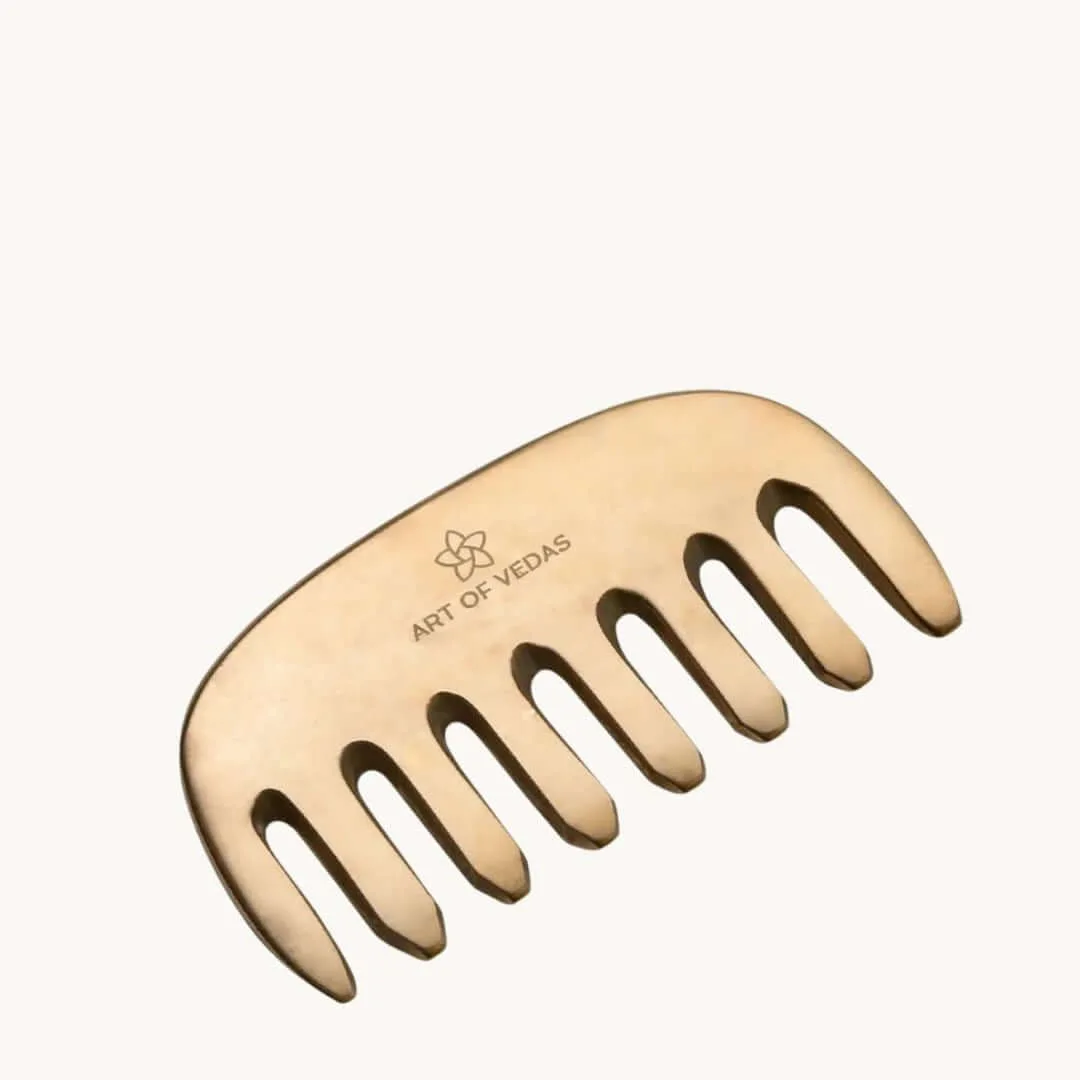
Use a Kansa scalp massager: For enhanced Marma stimulation and the Pitta-cooling benefit of the Kansa metal, see our Kansa scalp massager guide.
Frequently Asked Questions
How often should I oil my hair in Ayurveda?
The Ashtanga Hridayam describes daily scalp oiling as part of the classical Dinacharya - the morning routine. For those starting the practice, three to four times per week is a practical beginning; daily practice is the classical ideal. For the deepest nourishing benefit, an overnight oil application once per week is classical for all constitutions.
Which oil is best for Ayurvedic hair oiling?
The appropriate oil depends on constitution. Ksheerabala Thailam and Brahmi Thailam are the most deeply nourishing classical head oils for Vata and Pitta respectively. For Kapha, lighter preparations are more appropriate. Plain sesame or coconut oil are the foundational classical bases that can be used when specific medicated oils are not available.
How long should I leave oil in my hair?
The classical minimum is thirty minutes before bathing. The classical ideal for a deep treatment is overnight retention. The longer the oil remains in contact with the scalp, the more deeply its properties penetrate through the skin toward the underlying tissue layers - the classical principle of Snehana requiring both appropriate oil and adequate time.
Why does Ayurveda recommend oiling at the crown first?
The Adhipati Marma at the crown of the head is described in the Sushruta Samhita as the most significant Marma in the entire body - the seat of Prana itself. Beginning oil application at the crown acknowledges this primacy and allows the oil's Tarpana action to begin at the most important point before spreading to the rest of the scalp.
Related Guides and Products
For the Kansa scalp massage tool, see our Kansa scalp massager guide and our Kansa comb guide. For the classical oil preparations, see our Brahmi Thailam guide and our Ksheerabala guide. Browse our hair care collection at Art of Vedas.
This article is for informational and educational purposes only. The practices described are for general wellbeing and self-care. They are not medical treatments and are not intended to diagnose, treat, cure, or prevent any medical condition.