In brief: Ayurvedic treatment covers the classical external and internal therapies of Ayurveda: oil treatments such as Abhyanga (full body oil massage), Shirodhara (oil stream on the forehead), Pinda Sweda (herbal bolus massage) and Kati Basti (oil pool on the back), and the five purification procedures of Panchakarma, carried out by Ayurvedic doctors. Every treatment is chosen by constitution and season. Some, such as Abhyanga, Shiroabhyanga and Padabhyanga, are meant as daily self-care at home with a suitable oil; see our classical Thailams and Abhyanga oils.
This article is part of our Ayurvedic Herbs: A Guide to Classical Plants guide series.
Ayurvedic treatments encompass a broad range of external and internal therapies that have been applied within the classical Indian medical system for thousands of years. From daily self-massage to multi-day Panchakarma programmes, Ayurveda offers therapeutic methods suited to every stage of life and every constitution.
This guide gives you a structured overview of the most important Ayurvedic treatments - their classical foundations, their application, and which ones are suited to home practice.
External Ayurvedic treatments
Abhyanga - oil massage
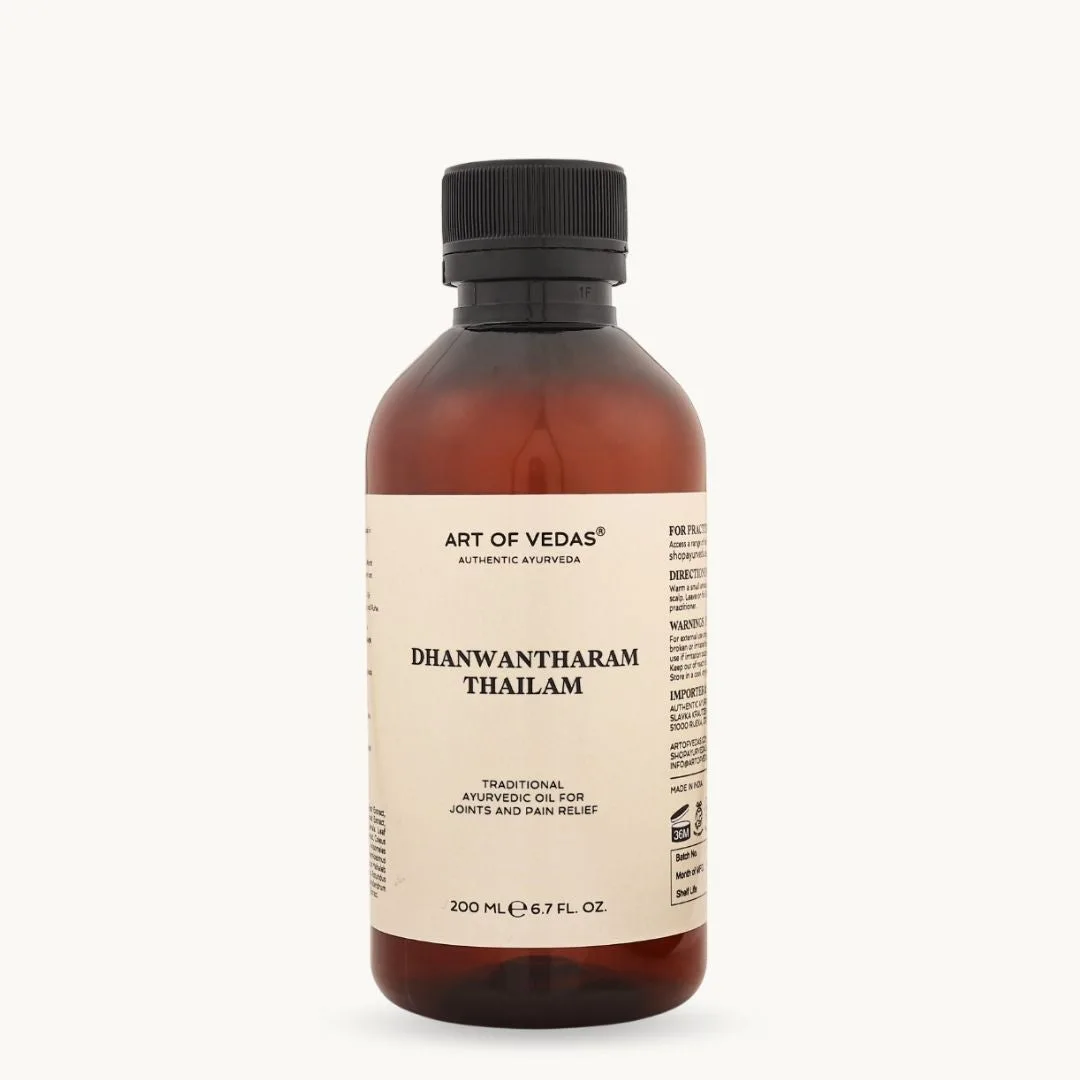
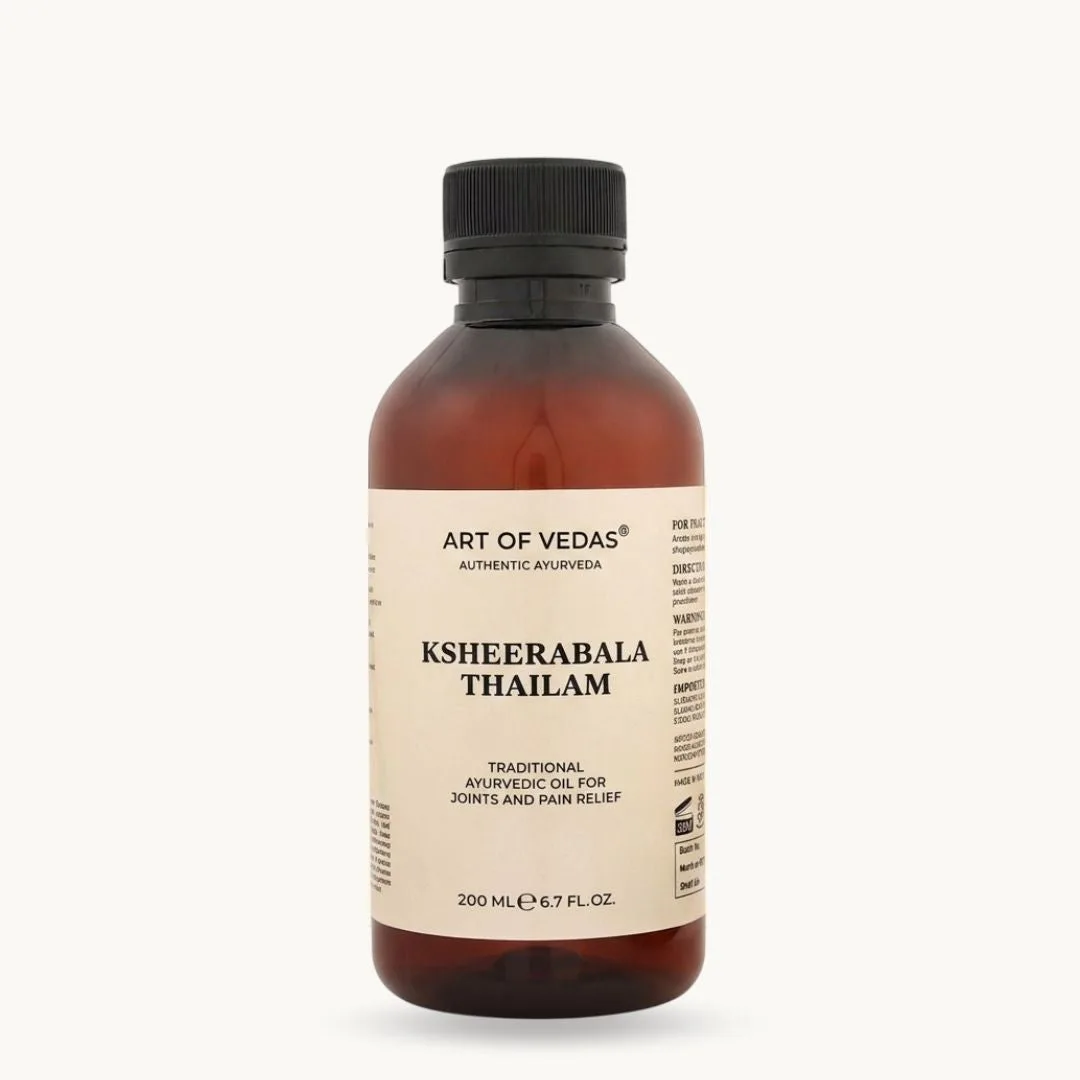
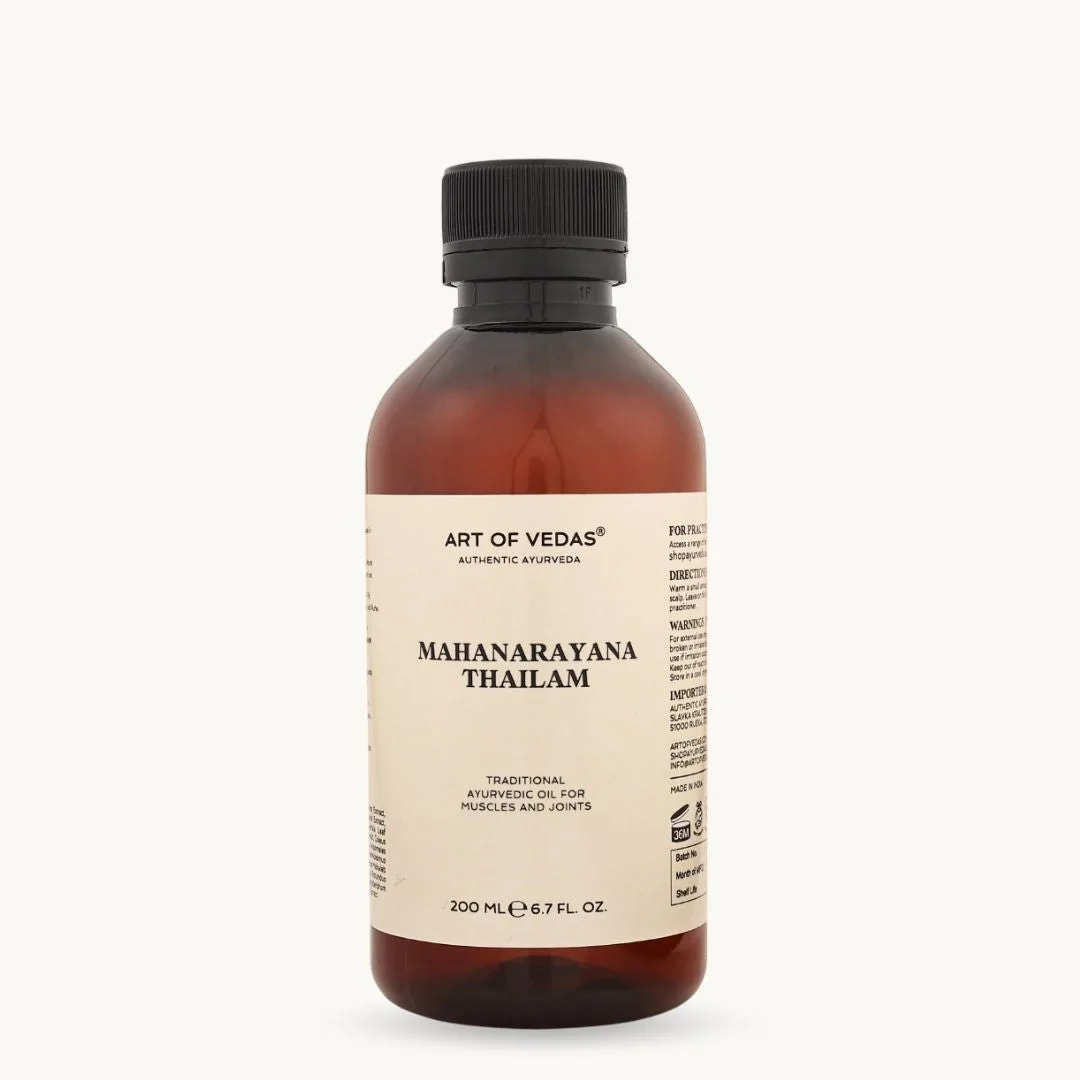
Abhyanga is the classical Ayurvedic full-body massage with herbal oil (Thailam). It forms part of the recommended daily routine (Dinacharya) and is described in detail in the Charaka Samhita. Abhyanga is practised both as a home self-massage and as a professional treatment. For home use, classical oils such as Mahanarayana Thailam, Dhanwantharam Thailam, or Ksheerabala Thailam are excellent choices.
Shirodhara - forehead oil stream
In Shirodhara, a continuous stream of warm oil is poured across the forehead. This treatment is performed exclusively by trained Ayurvedic therapists and forms a central part of many Panchakarma programmes. Brahmi-based oils or classical head oils are commonly used.
Kizhi (Pinda Sweda) - herbal bolus massage
Kizhi refers to treatments in which herb-filled cloth boluses are applied to the body. The warmed herbal bolus is gently pressed onto the skin and glided across specific body areas. Different variants are used depending on the goal and constitution: Ela Kizhi (fresh herbs), Njavara Kizhi (Njavara rice bolus), and others.
Pizhichil - continuous oil treatment
Pizhichil, sometimes called "the king of Ayurvedic treatments", is an intensive treatment in which warm oil is poured over the entire body while being simultaneously massaged in. It requires a professional setting with qualified therapists.
Nasya - nasal therapy
Nasya is the nasal therapy of Ayurveda. It involves the introduction of oil into the nasal passages to traditionally support the upper respiratory tract and head region. For home practice, classical nasal oils such as Anu Thailam - described in the Ashtanga Hridayam - are suitable. Nasya is counted as part of the daily morning Ayurvedic routine.
Basti treatments - localised oil pools
Basti treatments refer to the application of warm oil within a sealed area of the body. Well-known variants include Kati Basti (lower back), Janu Basti (knee), and Greeva Basti (neck). A ring of dough is placed on the skin, filled with warm oil, and left for a set period. These treatments are performed by Ayurvedic therapists.
Garshana - dry massage
Garshana is a dry massage technique performed with a coarse glove or brush. In Ayurveda it is traditionally described as a stimulating practice - particularly recommended for Kapha constitutions as a preparatory step before Abhyanga or as a standalone morning routine.