Products
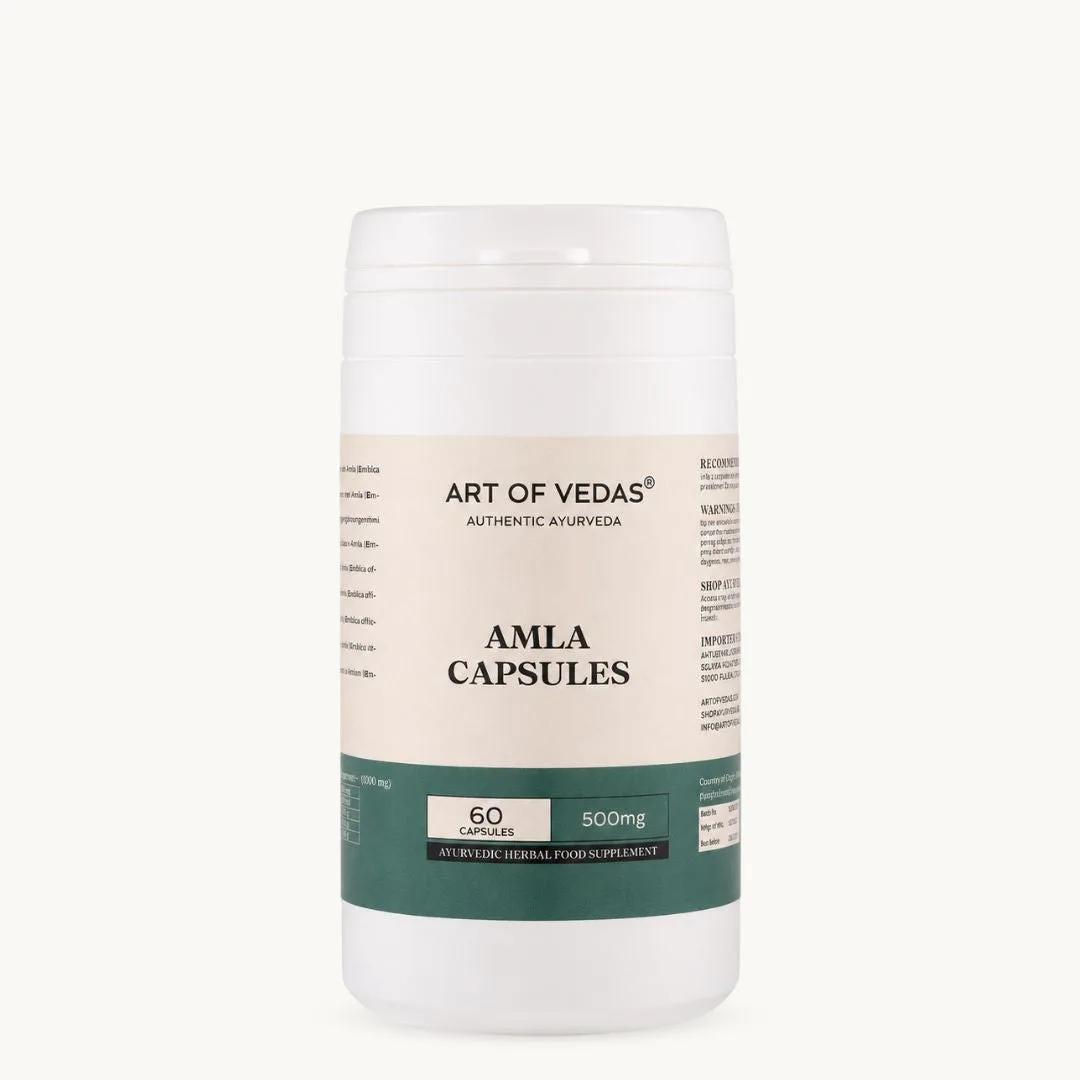
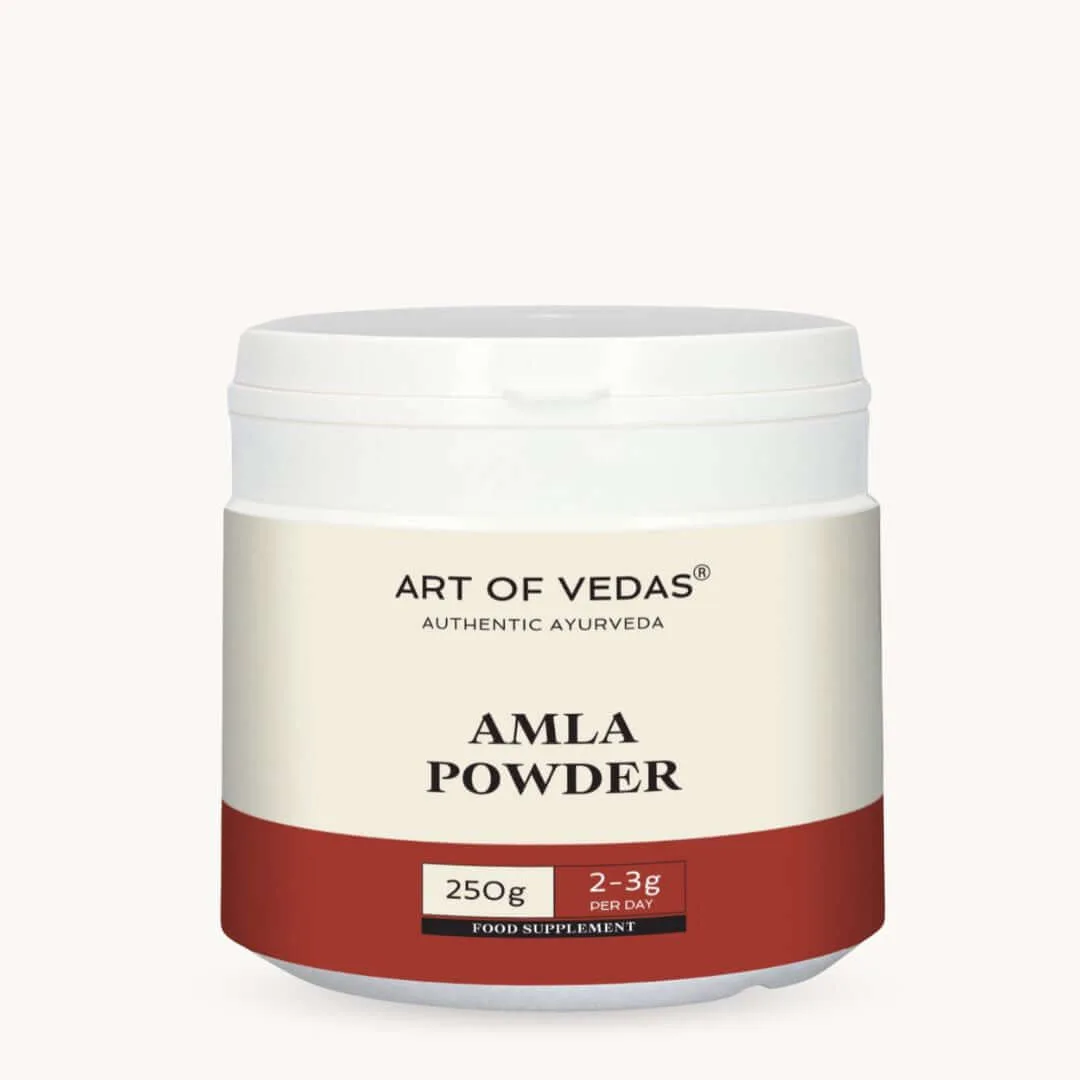
Amla Churnam (Emblica officinalis), also known as Amalaki, is described in the Charaka Samhita as the single most important Rasayana fruit in Ayurveda. It possesses five of the six tastes (all except salty), giving it an extraordinarily broad and balanced action across all three Doshas.
Amalaki is the primary ingredient in Triphala and the base of Chyavanaprasha. Its cooling Virya and sweet Vipaka make it one of the rare Rasayanas that nourishes deeply without aggravating Pitta. Classical texts classify it as Vayasthapana (age-defying), Chakshushya (vision-supporting) and one of the richest natural sources of Vitamin C.
Take 1/2 to 1 teaspoon (2-3g) mixed with warm water or honey, once or twice daily. Can also be used externally as a hair mask when mixed with water to form a paste.
This product is a food supplement. Not intended to diagnose, treat, cure or prevent any disease. Consult a qualified practitioner before use if pregnant, breastfeeding or taking medication.
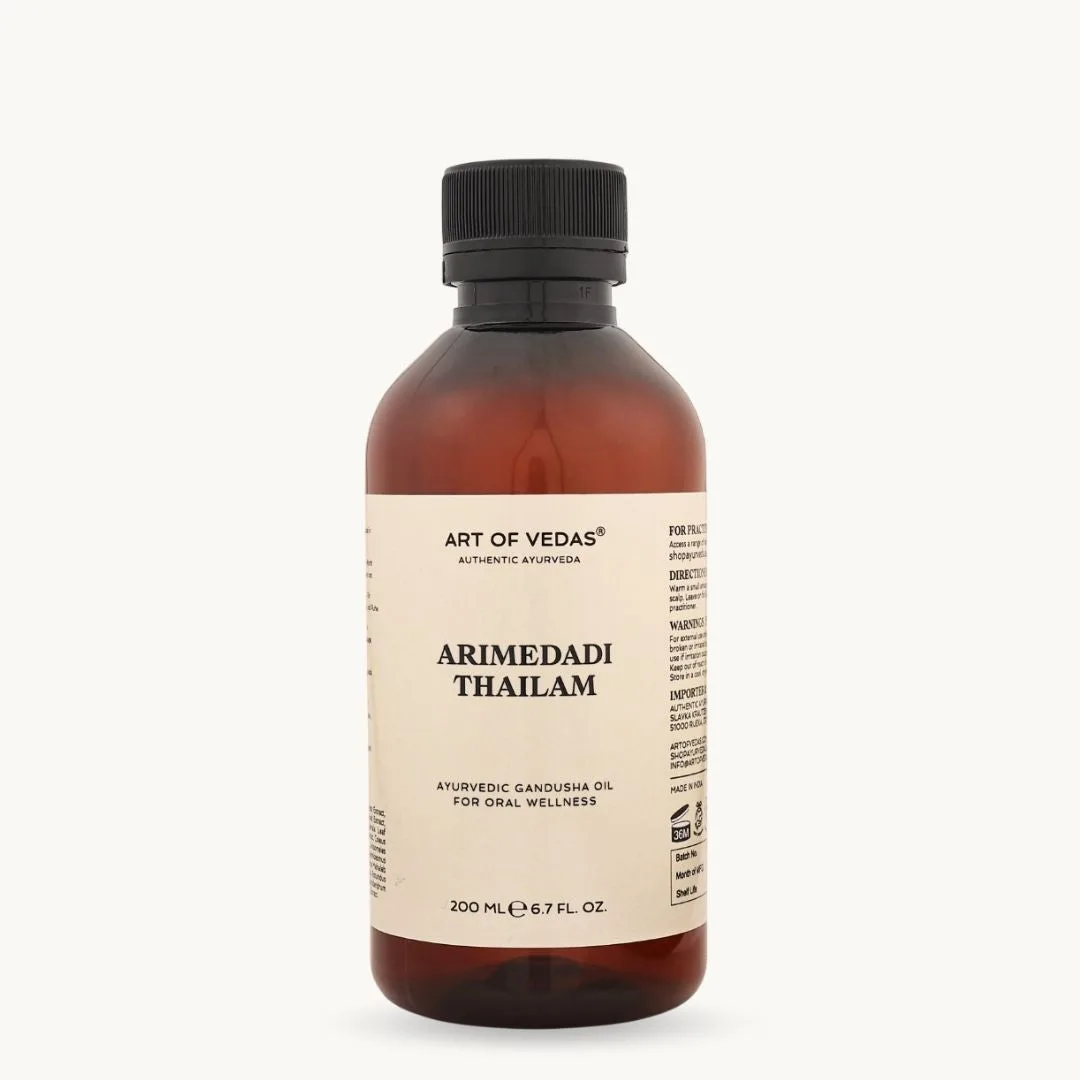
Arimedadi Thailam is a classical Ayurvedic oil formulated specifically for Gandusha (oil pulling) and oral care. Referenced in the Ashtanga Hridayam under Mukha Roga Chikitsa (oral health management), this traditional formula combines 31 potent herbs in a sesame oil base to support healthy gums, strengthen teeth, freshen breath, and promote overall oral hygiene.
The formulation is built around Arimeda (White Acacia) and Khadira (Cutch Tree), two of Ayurveda's most valued astringent herbs for oral wellness, combined with Triphala for gentle cleansing and aromatic spices like Clove, Nutmeg, and Camphor for freshness and purification. Used daily as part of Dinacharya (Ayurvedic morning routine), Arimedadi Thailam offers a natural, time-tested approach to maintaining a healthy mouth and supporting the body's first line of defence.
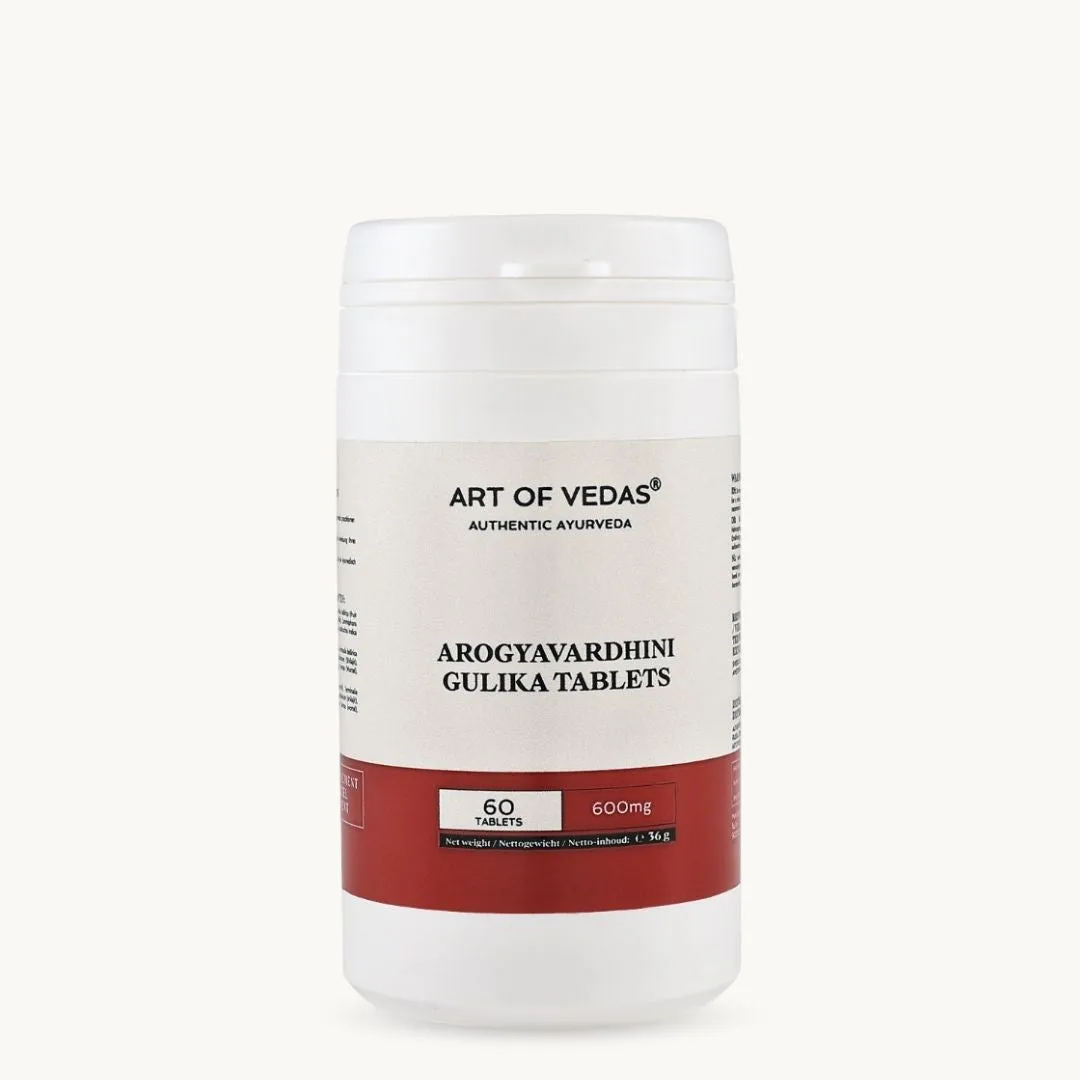
Arogyavardhini Gulika (also known as Arogyavardhini Vati) is a classical compound described in the Rasaratna Samuchayam and Bhaishajya Ratnavali. The name means "that which enhances health." It is one of the most widely referenced formulations in Rasa Shastra, combining herbo-mineral ingredients with Triphala, Chitrak, Kutki and purified Guggulu.
Arogyavardhini addresses Agni and Pitta balance simultaneously. Classical texts describe it as Deepana (appetite-kindling), Pachana (digestion-supporting) and Pittashamaka (Pitta-calming). The combination of warming digestive herbs with cooling Kutki creates balanced action that supports both digestive comfort and Pitta regulation.
Take 1 tablet, 2 times daily with water, or as advised by your Ayurvedic practitioner. Store in a cool, dry place.
This product is a food supplement. Not intended to diagnose, treat, cure or prevent any disease. Do not exceed the recommended daily dose. Not recommended during pregnancy or breastfeeding. Keep out of reach of children.
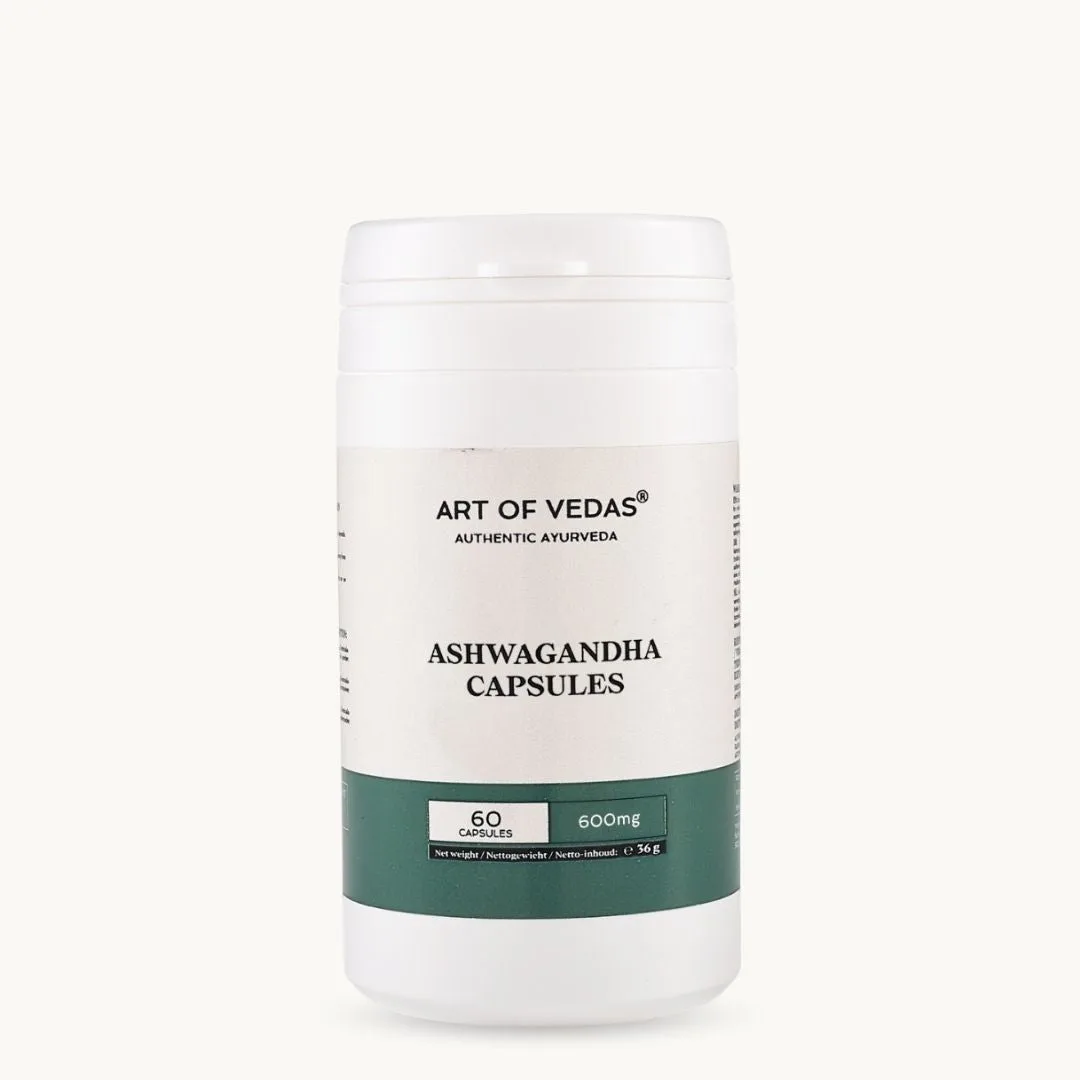
Ashwagandha (Withania somnifera) is one of the most revered Rasayana herbs in Ayurveda, referenced in the Charaka Samhita and Ashtanga Hridayam. The name means "the smell of a horse," reflecting the vitality and stamina it traditionally imparts. With a warming Virya and sweet post-digestive effect, it is especially suited for Vata and Kapha constitutions.
Classical texts describe Ashwagandha as Balya (strength-promoting), Rasayana (rejuvenative) and Vrishya (vitality-enhancing). One of the finest adaptogenic herbs in the Ayurvedic pharmacopoeia, ideal for autumn and winter routines. Take 2 capsules daily with warm water, or as advised by your healthcare professional.
This product is a food supplement. Not intended to diagnose, treat, cure or prevent any disease. Not suitable for children, pregnant or breastfeeding women.
Ashwagandha Churnam (Withania somnifera) is one of the most revered herbs in classical Ayurveda, celebrated as a premier Rasayana and Balya (strength-promoting) formulation. The Charaka Samhita classifies it as a Medhya Rasayana, and the name literally means "the smell of a horse," referring to the vitality and stamina it traditionally imparts.
With a warming Virya and sweet post-digestive effect, Ashwagandha is especially suited for Vata and Kapha imbalances. It is traditionally valued for its grounding, nourishing qualities and is one of the finest adaptogenic herbs in the Ayurvedic pharmacopoeia. Ideal for autumn and winter routines when the body seeks deeper nourishment.
Take 1/2 to 1 teaspoon (2-3g) mixed with warm milk or water, preferably in the evening or before bed. May also be taken with ghee and honey (in unequal proportions) for enhanced absorption.
This product is a food supplement. Not intended to diagnose, treat, cure or prevent any disease. Consult a qualified practitioner before use if pregnant, breastfeeding or taking medication.
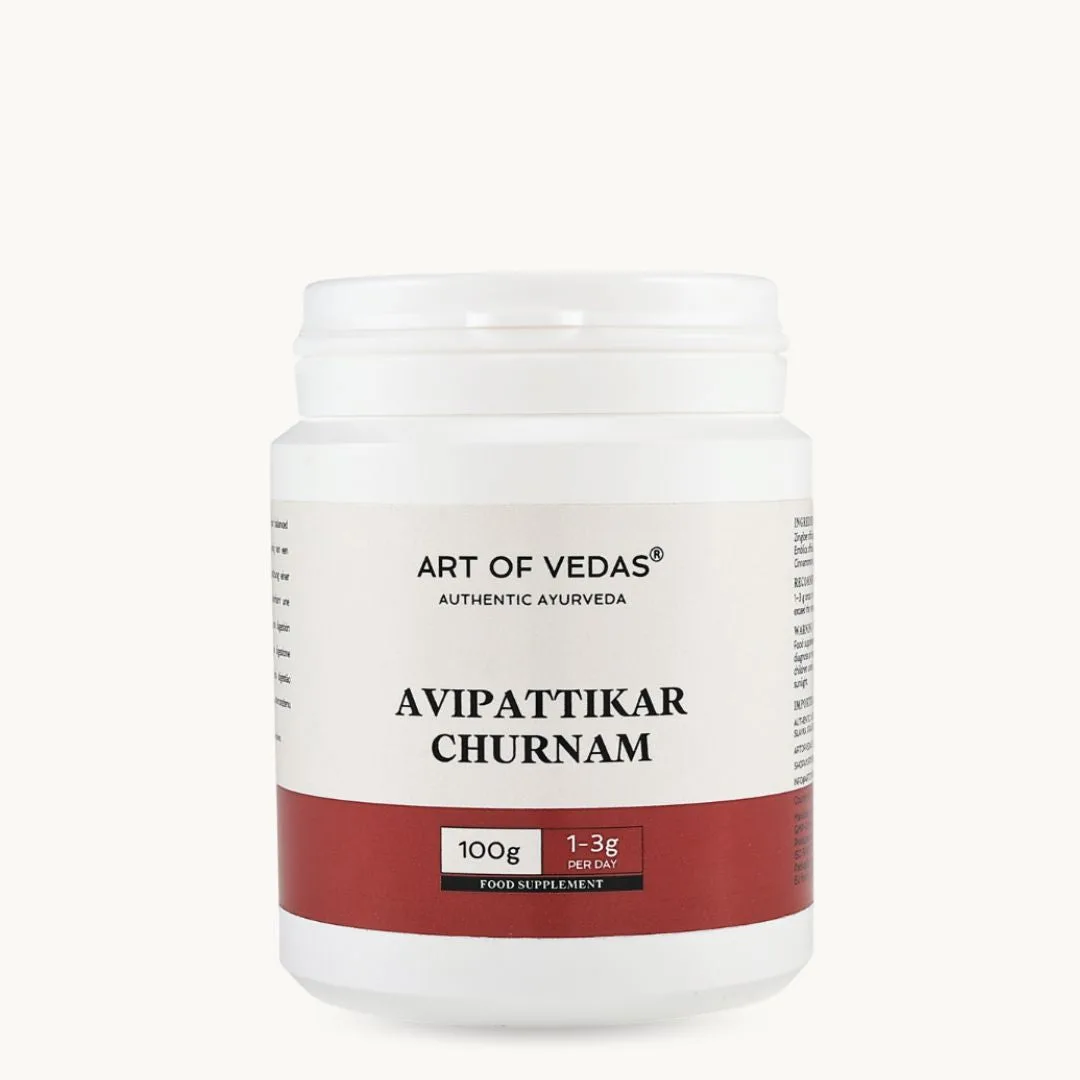
Avipattikar Choornam is a classical compound formulation described in the Bhaishajya Ratnavali and Sharangadhara Samhita. It is among the most widely prescribed Pitta-balancing digestive powders, combining cooling, carminative and gently laxative herbs into a single harmonious blend. The name suggests a formulation that prevents "Vipatti" (disorder) in the digestive tract.
The compound includes Trikatu (ginger, black pepper, long pepper), Triphala, Musta, Vidanga and Ela (cardamom) with Mishri (rock sugar). The warming Trikatu stimulates Agni while the cooling majority of the formula pacifies excess Pitta. Both Deepana (appetite-kindling) and Anulomana (gently downward-moving).
Take 1/2 to 1 teaspoon (2-3g) with warm water or buttermilk, after meals. Traditionally taken after lunch and dinner for optimal digestive support.
This product is a food supplement. Not intended to diagnose, treat, cure or prevent any disease. Consult a qualified practitioner before use if pregnant, breastfeeding or taking medication.
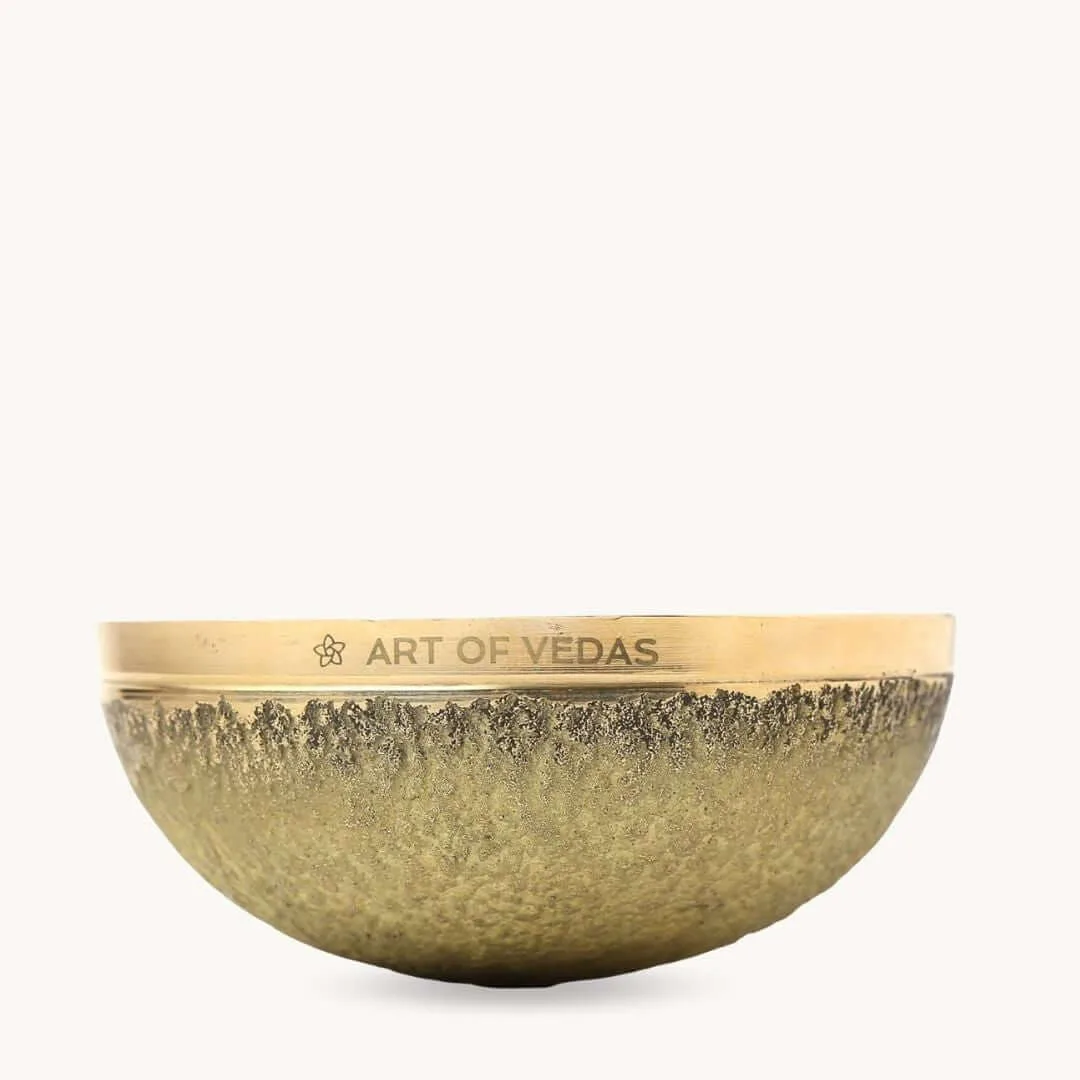
A hand-cast Kansa bronze bowl for Padabhyanga, the classical Ayurvedic foot massage. The bowl's deliberately uneven, textured surface is what sets it apart — as it moves across the sole, it reaches into the natural contours of the foot, applying varied pressure across the arch, heel and Marma points that a smooth surface cannot replicate. Traditionally valued in Ayurveda for pacifying Pitta and grounding Vata through the soles of the feet.
This is where the ritual ends. After your face oil, after your Kansa wand, you press this in and you are done.
A traditional Ayurvedic face cream built on Varnya herbs: Saffron, Manjishtha, Nalpamaradi Oil, and Sandalwood. Rich in consistency, but it absorbs cleanly and leaves no residue. Your skin feels soft, nourished, and settled, not coated.
It works morning or evening, but it earns its place most in the evening ritual. Apply it as the final step after your oil and Kansa massage, when the skin is warm and ready to absorb. A small amount is enough. Press it in, don't rub.
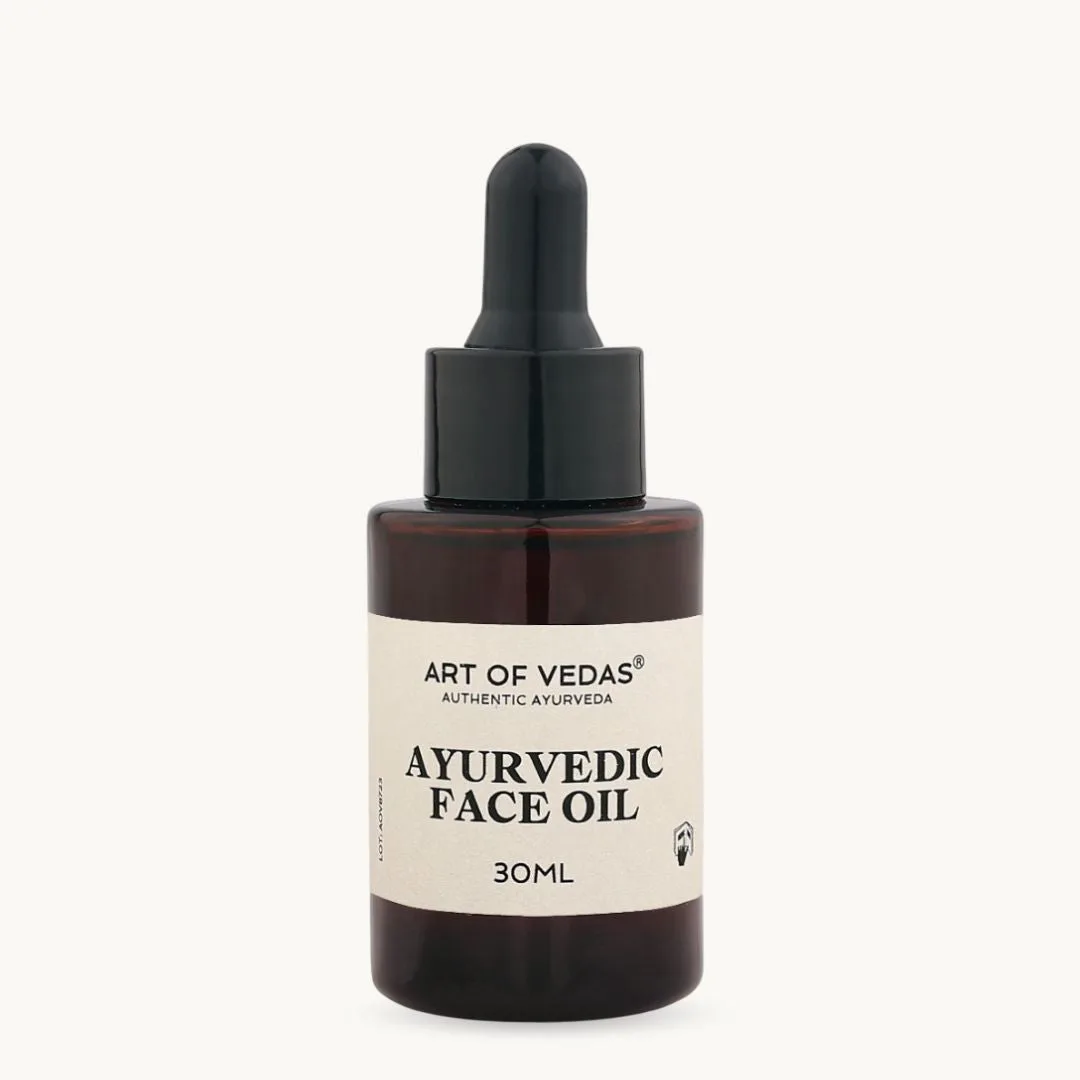
Pressed into clean skin, this face oil leaves a grounded, balanced feeling — noticeably softer with a calm, even tone. It absorbs without heaviness and works well for skin that benefits from cooling, nourishing daily care.

The formula is built on Panchavalkala, the classical five-bark group of Ficus trees used in Ayurvedic skin preparations for centuries. Combined with Triphala (Amalaki, Haritaki, Bibhitaki), Manjistha, Chandana (sandalwood) and Ushira (vetiver), all infused in cold-pressed sesame oil, this is a Mukhalepa-style preparation traditionally referenced in Ayurvedic texts for supporting a clear, even complexion.
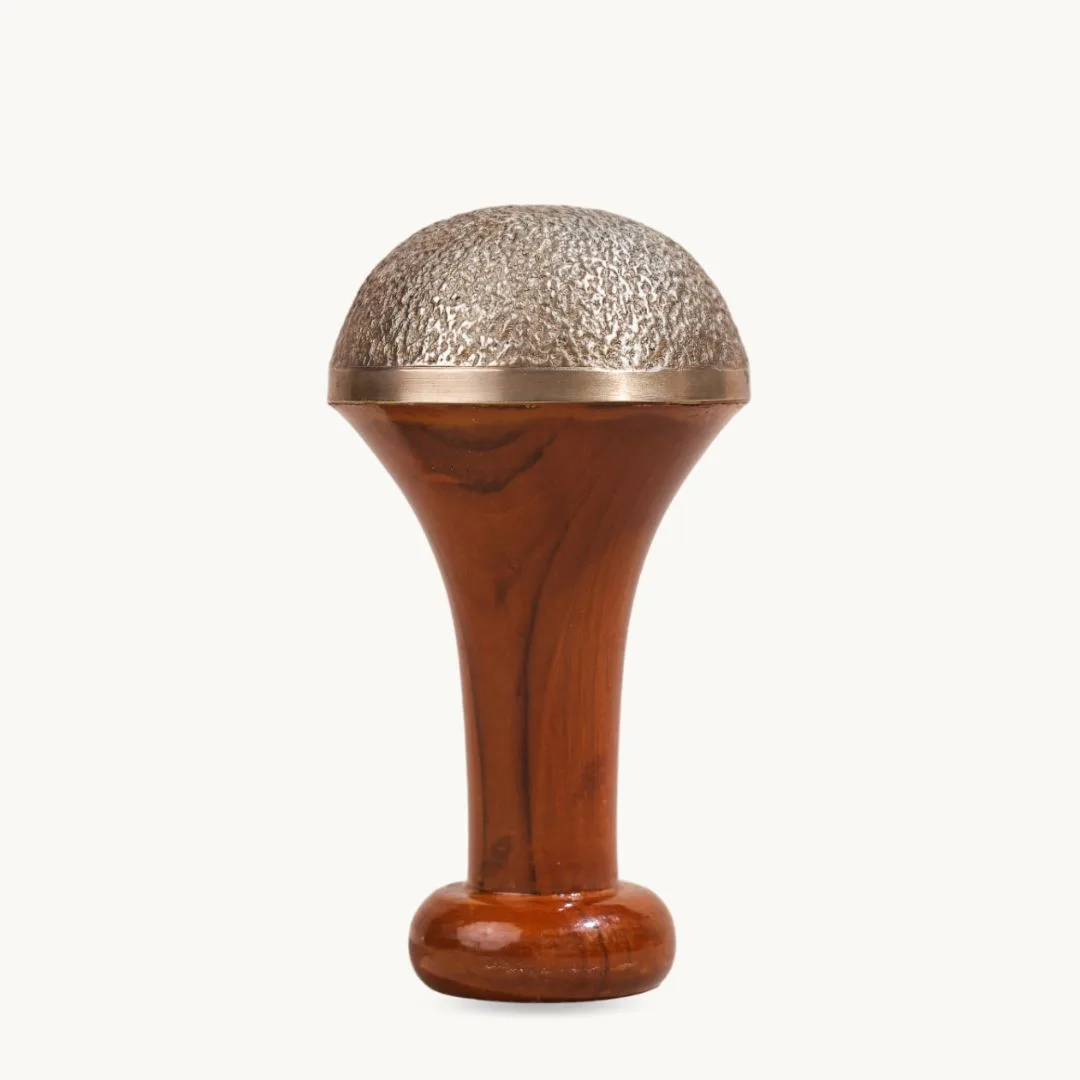
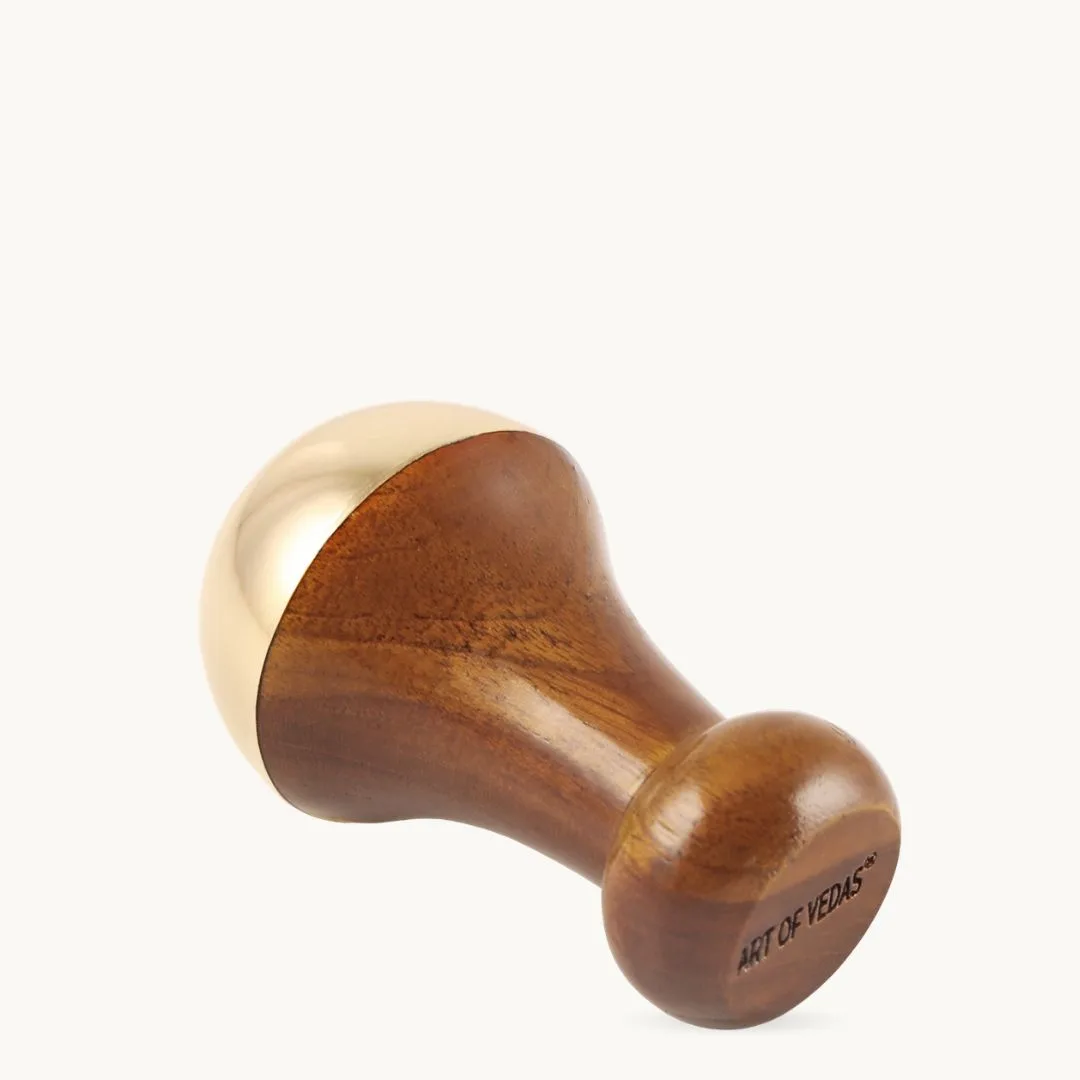
Well suited to normal, combination and Pitta-type skin, particularly those who tend toward redness or uneven tone. Use as a daily face oil left on after cleansing, or as a pre-bath treatment applied 15 to 20 minutes before washing. Compatible with the Kansa Wand.
For external use only. Not a substitute for professional medical advice.
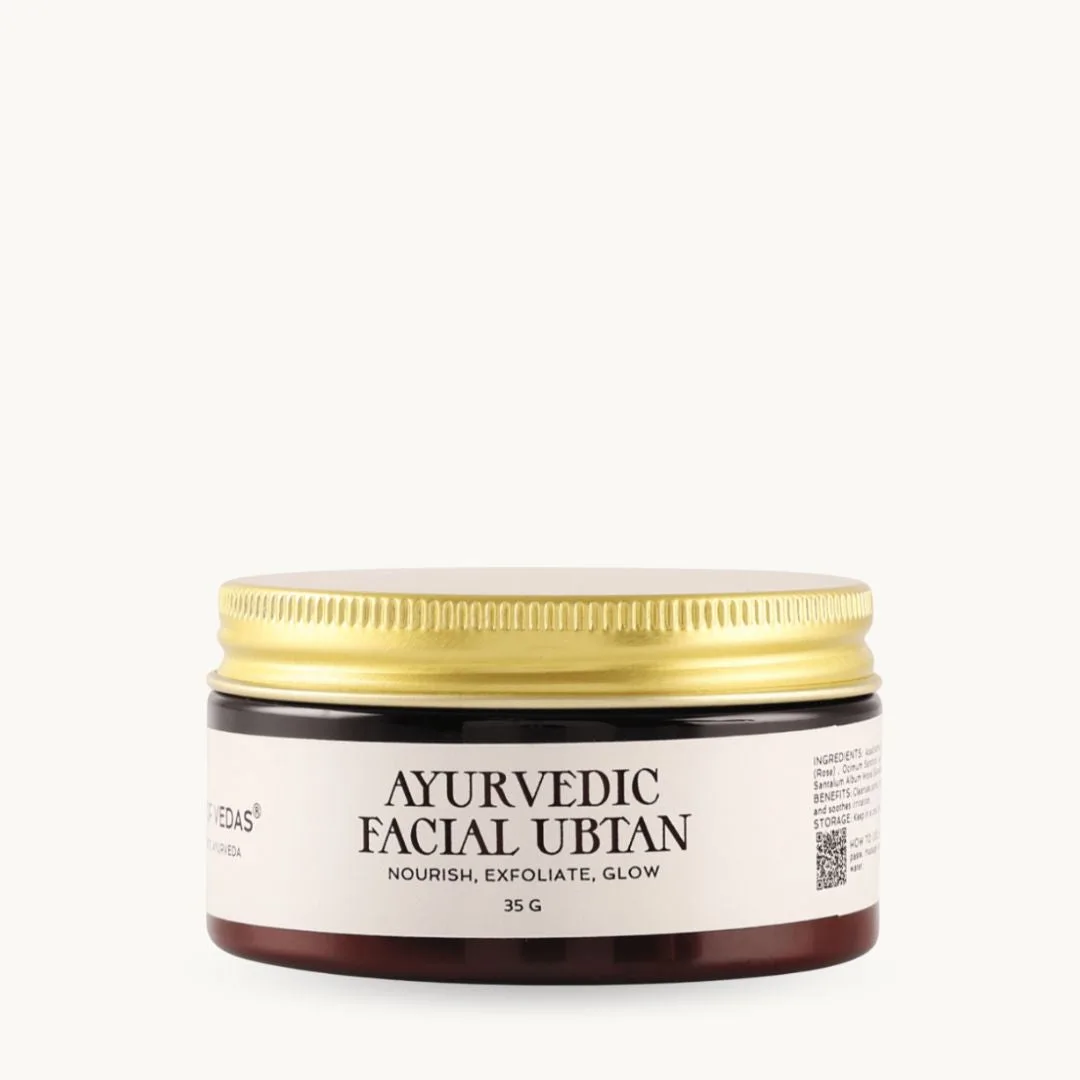
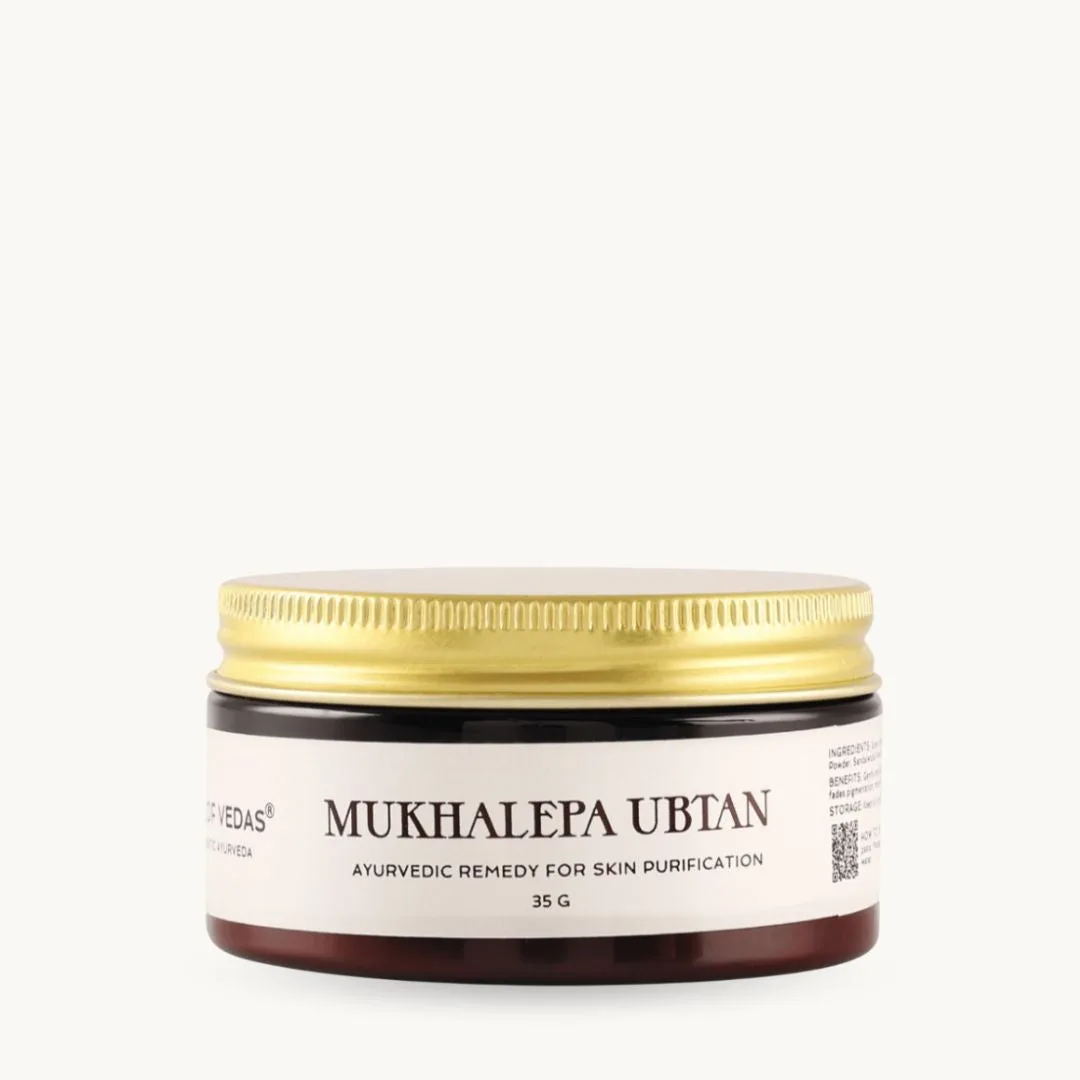
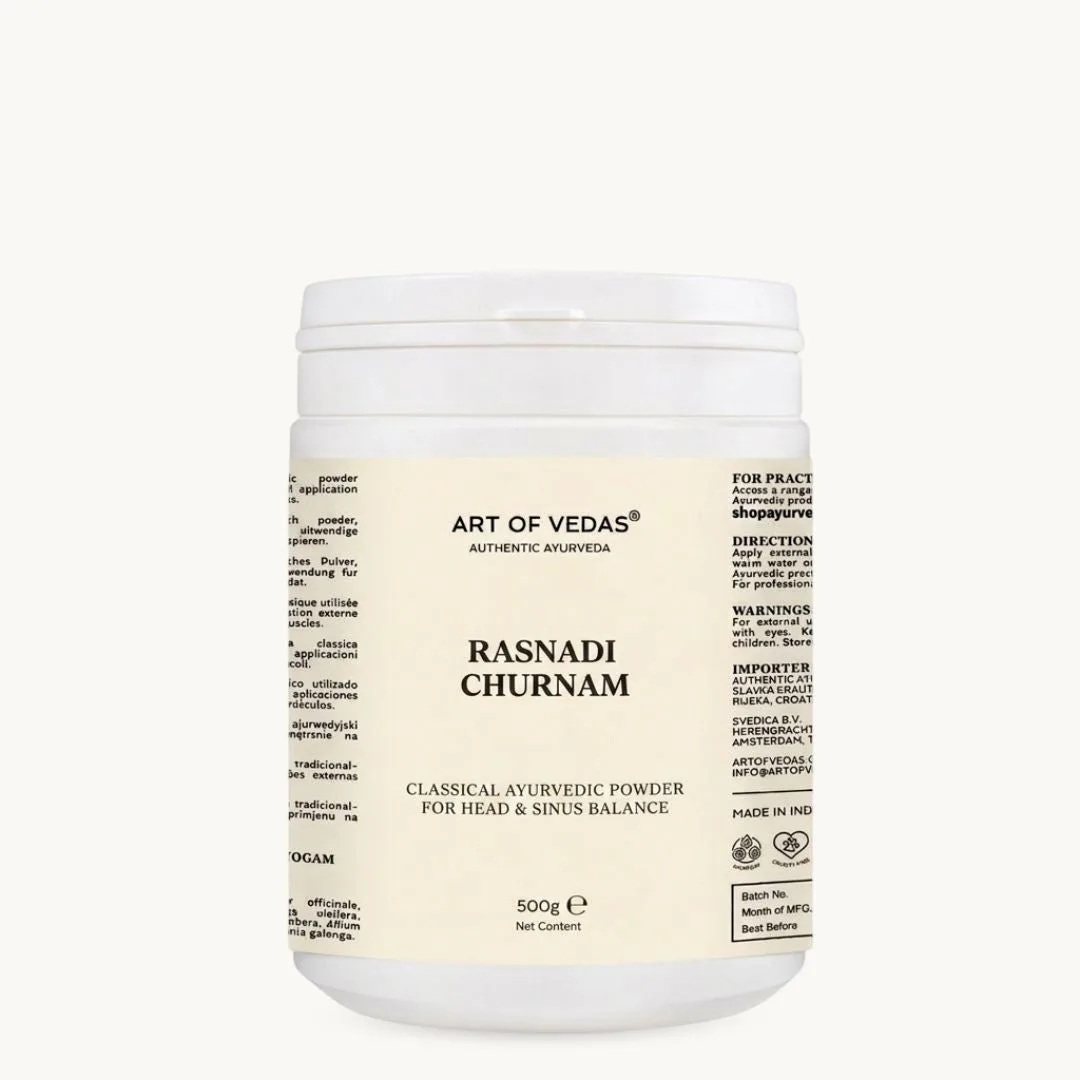
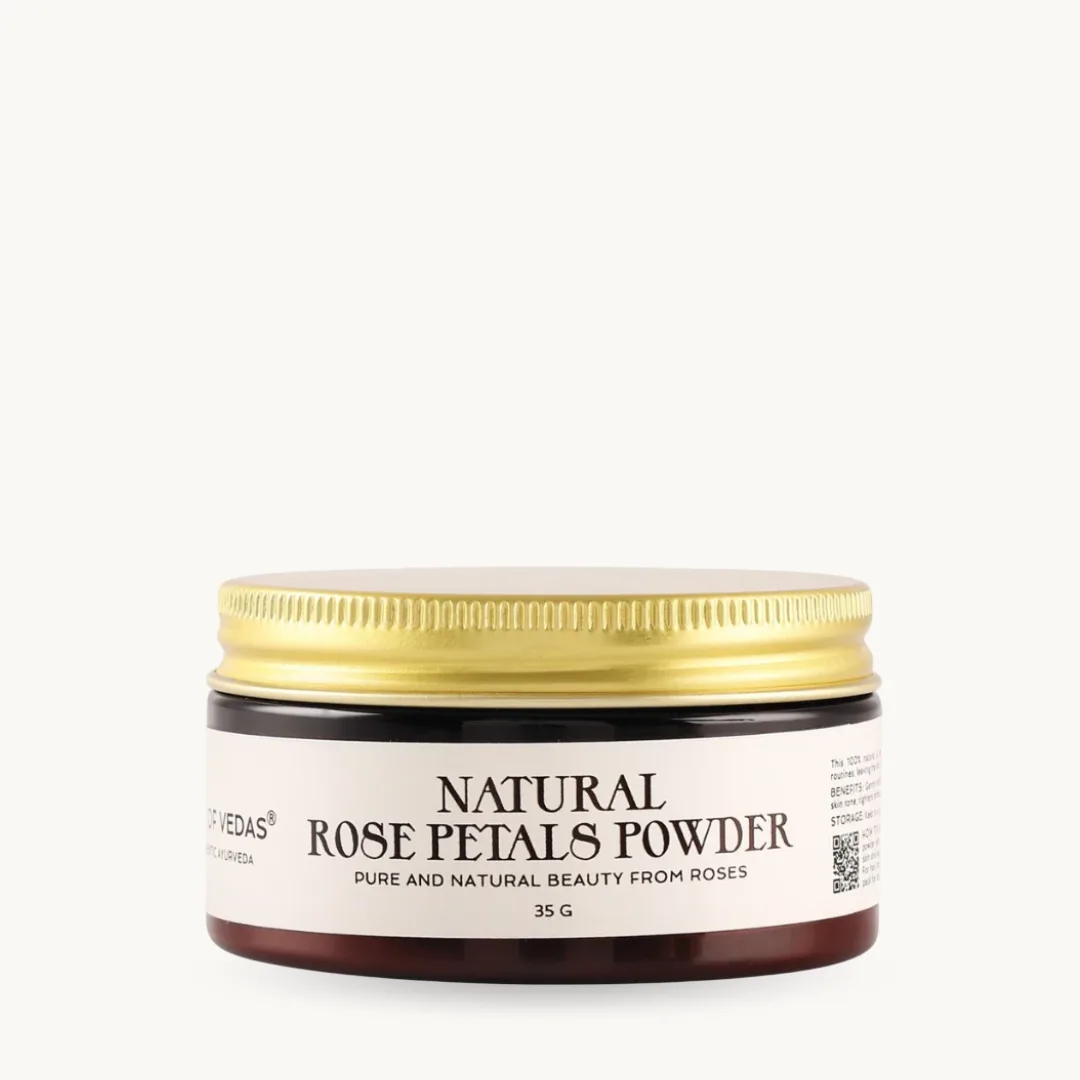
Ubtan cleanses, exfoliates and brightens the skin in a single application. Unlike conventional cleansers, it is a dry herbal powder with no preservatives, no water and no synthetic binders, mixed fresh before each use and applied directly to the skin.
This formulation follows the classical Mukhalepa tradition described in the Ashtanga Hridayam and Charaka Samhita. Green Gram provides the base exfoliation. Neem and Turmeric address excess sebum and uneven tone. Manjishtha and Khadira support complexion clarity as classical Varnya herbs. Sandalwood and Rose Petals calm and nourish the skin after cleansing.
Each 35g pack provides approximately 15 to 20 applications. Suitable for all skin types. Use as a daily morning cleanser or a short 5-minute mask two to three times per week. Follow with a face oil for a complete Mukha ritual.
For external use only. Not a substitute for professional medical advice.
Art of Vedas Pitta Massage Oil is a cooling, soothing Abhyanga blend formulated specifically for Pitta-predominant constitutions and warm-weather self-massage rituals. Built on a base of organic sesame oil (Tila Taila), the classical foundation of all Ayurvedic body oils, this formulation is infused with a carefully selected group of Pitta-pacifying herbs including neem (Azadirachta indica), sandalwood (Chandana), turmeric (Haridra), Indian madder (Manjistha) and holy basil (Tulsi).
The herb selection follows classical Pitta-balancing principles: cooling, bitter and astringent herbs that calm heat and support a clear, comfortable complexion. Sandalwood, described in the Ashtanga Hridayam as one of the foremost Pitta-pacifying aromatic substances, provides the oil with its distinctive calming fragrance. Neem and turmeric contribute their traditional Varnya (complexion-supporting) and Raktaprasadana (blood-soothing) qualities, while fennel and clove add gentle warmth to ensure the oil does not become excessively cooling.
For external use only. Not a substitute for professional medical advice. Patch test before first use. Discontinue if irritation occurs. Store in a cool, dry place away from direct sunlight.
Art of Vedas Vata Massage Oil is a warming, deeply grounding Abhyanga blend formulated specifically for Vata-predominant constitutions and cold-weather self-massage rituals. Vata, governed by the elements of air and ether, is the Dosha most in need of regular oil application. The Charaka Samhita states that Abhyanga is one of the single most important practices for keeping Vata in balance, and this oil is designed to make that daily ritual as nourishing and comforting as possible.
The base combines almond oil, jojoba oil and olive oil to create a rich, slow-absorbing texture that gives the skin ample time to drink in moisture during the massage. The essential oil blend of patchouli, cedarwood, lavender and eucalyptus was selected for its warming, grounding aromatic profile. Patchouli and cedarwood bring earthy heaviness that directly counters Vata's light, mobile nature, while lavender supports a calm, settled state of mind. A touch of eucalyptus adds gentle clarity without disrupting the overall warmth.
For external use only. Not a substitute for professional medical advice. Patch test before first use. Discontinue if irritation occurs. Store in a cool, dry place away from direct sunlight.
A rich overnight cream formulated with Rasayana herbs, the Ayurvedic plants traditionally used for deep nourishment and tissue restoration. Ashwagandha, Shatavari, and Bala are all classical Rasayana herbs. They are blended here with Amla, Anantmool, Nagkesar, and Kumud in a base of Almond, Sesame, and Castor Oil, with Sandalwood, Rose, and Vetiver essential oils.
The richer texture is designed for overnight use, it absorbs slowly and works through the night. You wake to skin that feels deeply nourished, soft, and settled.
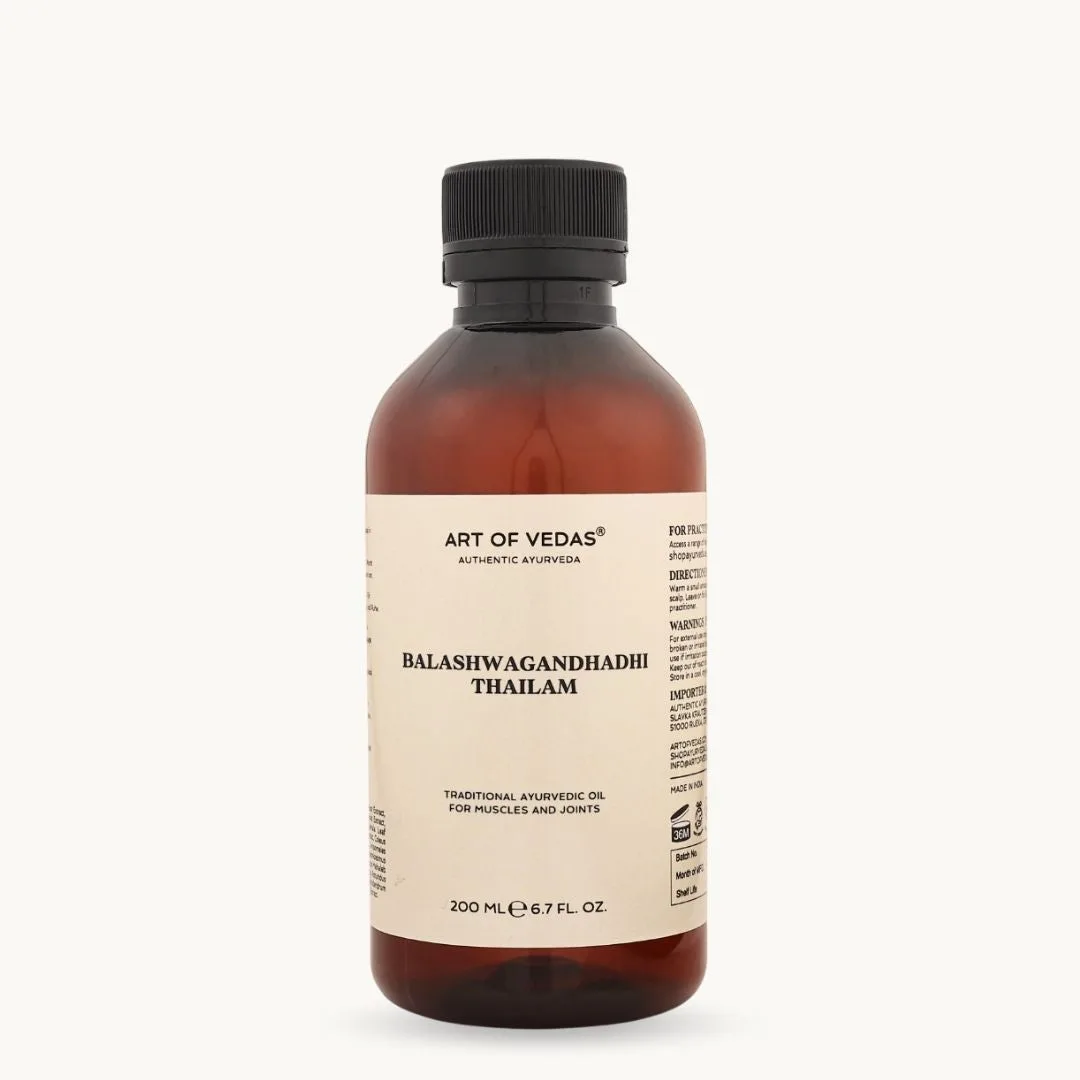
Balaswagandhadhi Thailam is a classical Ayurvedic formulation documented in Sahasrayogam, combining approximately 20 herbs in a pure sesame oil base. The formulation centres on two of Ayurveda's most celebrated strengthening herbs: Bala (Sida cordifolia), meaning "strength," and Ashwagandha (Withania somnifera), known as Indian Ginseng for its vitality-supporting properties.
Prepared using traditional Sneha Paka Vidhi (oil cooking method), this Thailam is traditionally valued for its Balya (strength-promoting) and Rasayana (rejuvenating) qualities. In Ayurvedic practice, it is particularly associated with recovery, nourishment, and supporting the body during times of fatigue or weakness.
Also known as Ashwagandha Bala Lakshadi Thailam, this formulation balances both Vata and Pitta doshas. It is used in daily Abhyanga (self-massage) as well as professional Panchakarma practices including Pizhichil, Kizhi, and Shirodhara.
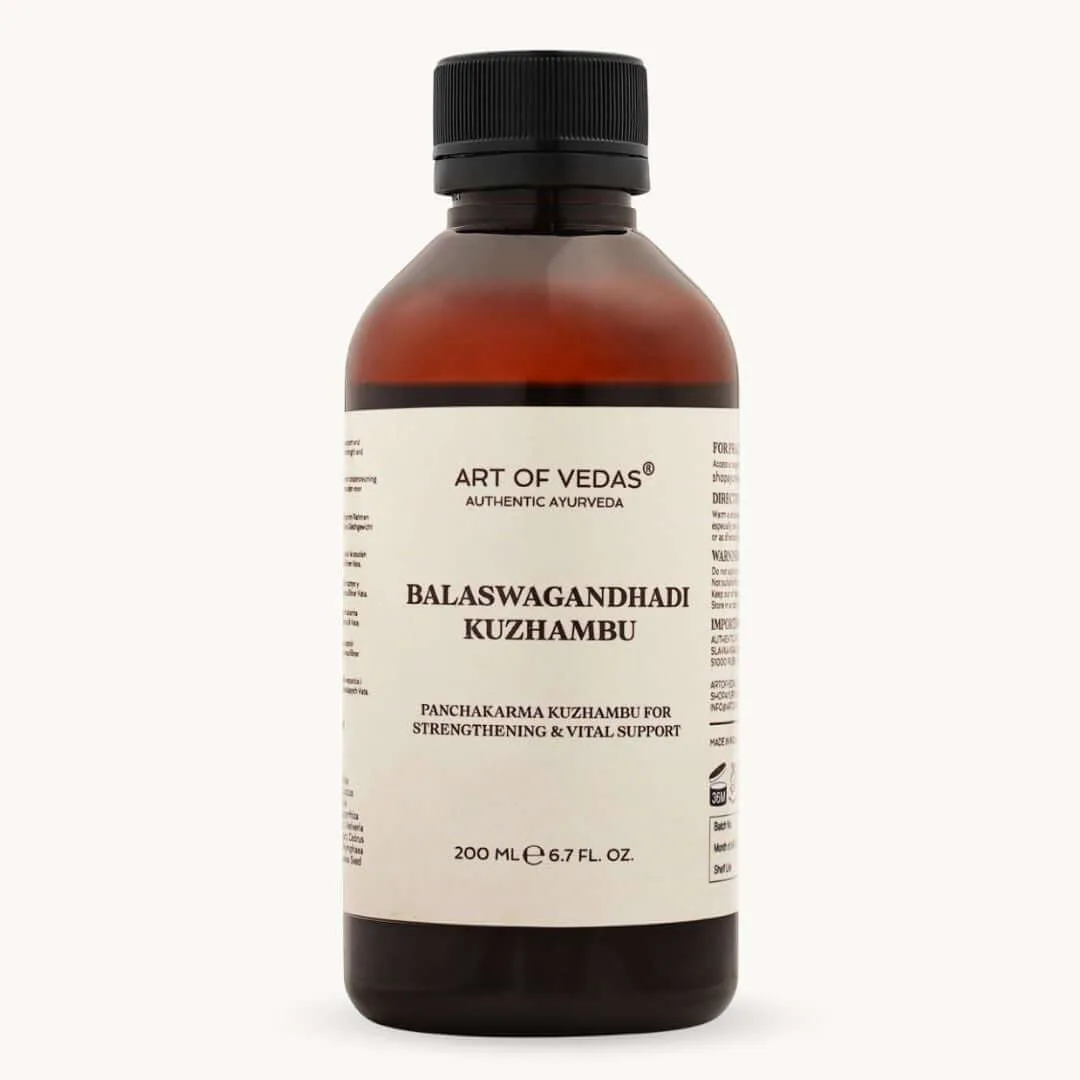
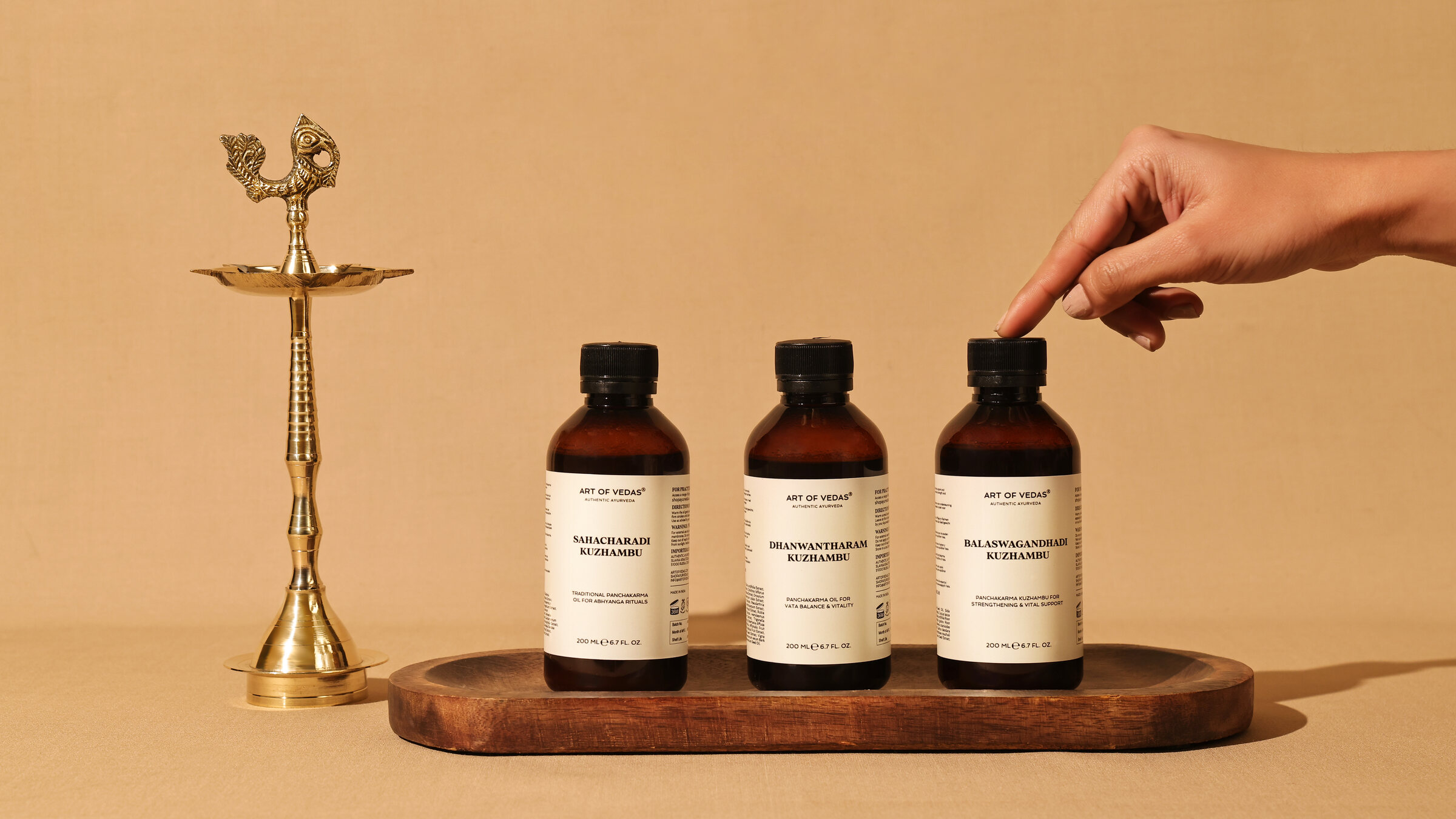
Balaswagandhadi Kuzhambu is the thicker form of the classical Balaswagandhadi formulation documented in the Sahasrayogam. Built around Bala (strength) and Ashwagandha (vitality), this is the preparation traditionally chosen when the goal is deep, sustained nourishment of muscles and tissue.
The semi-solid consistency keeps the formulation in contact with the skin longer than a flowing Thailam. This makes it the preferred choice for targeted application on fatigued or depleted areas, particularly after physical exertion, during recovery, or as part of a strengthening daily routine. It softens with body heat and absorbs at a measured pace.
In Ayurvedic practice, Balaswagandhadi is classified as Balya (strengthening) and Brimhana (nourishing). The Kuzhambu form concentrates that action exactly where it is needed.
For external use only. Not a substitute for professional medical advice.
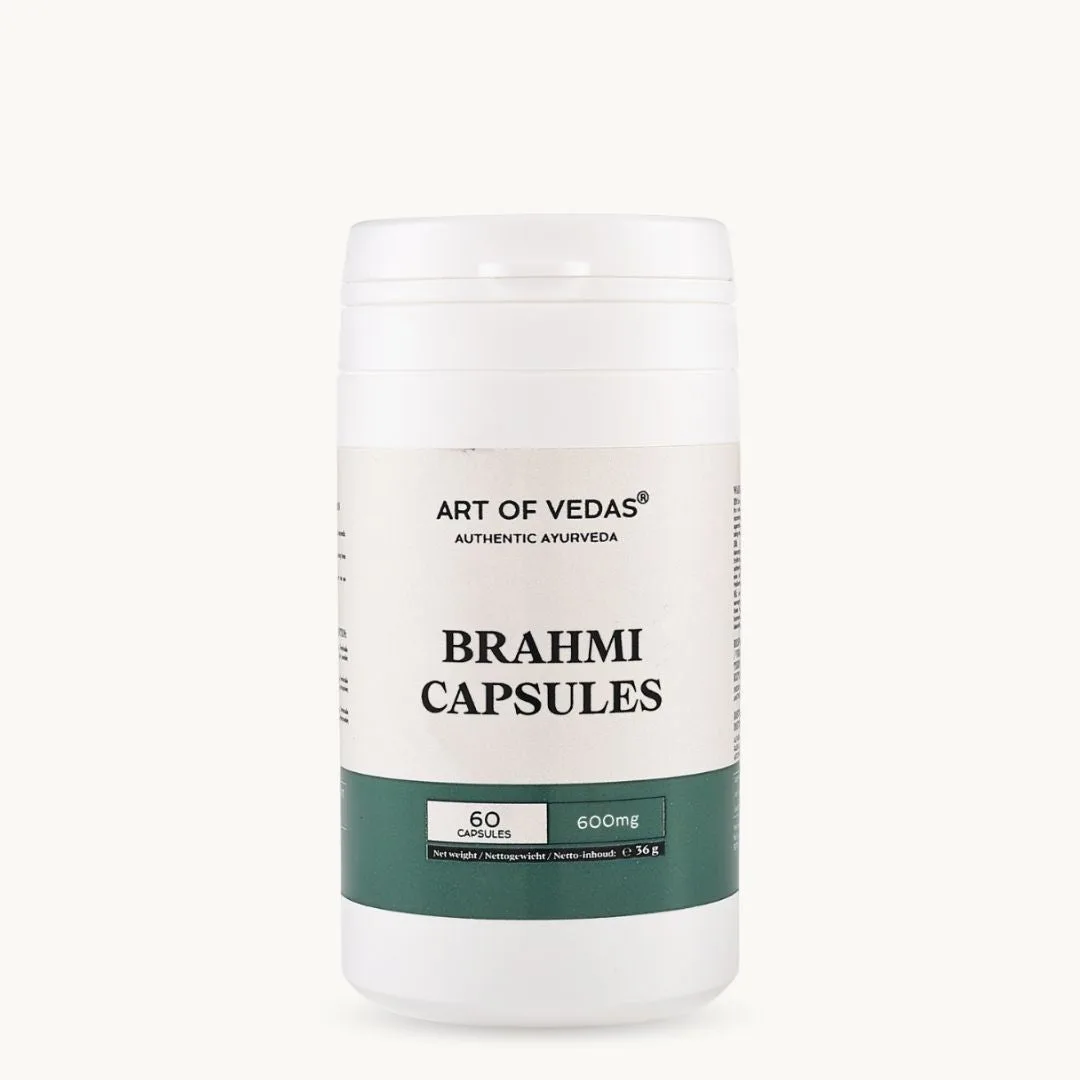
Brahmi (Bacopa monnieri) holds a singular place in Ayurvedic tradition as the premier Medhya Rasayana, a herb classified for its support of clarity and mental balance. Referenced in the Charaka Samhita and Ashtanga Hridayam, the name derives from Brahma, the creative principle. Brahmi is Tridoshic with a cooling Virya, suitable year-round for all constitutional types.
Classical texts describe it as Medhya (intellect-nourishing), Ayushya (life-promoting) and Rasayana (rejuvenative). Take 2 capsules daily with water, preferably after meals.
This product is a food supplement. Not intended to diagnose, treat, cure or prevent any disease. Not suitable for children, pregnant or breastfeeding women.
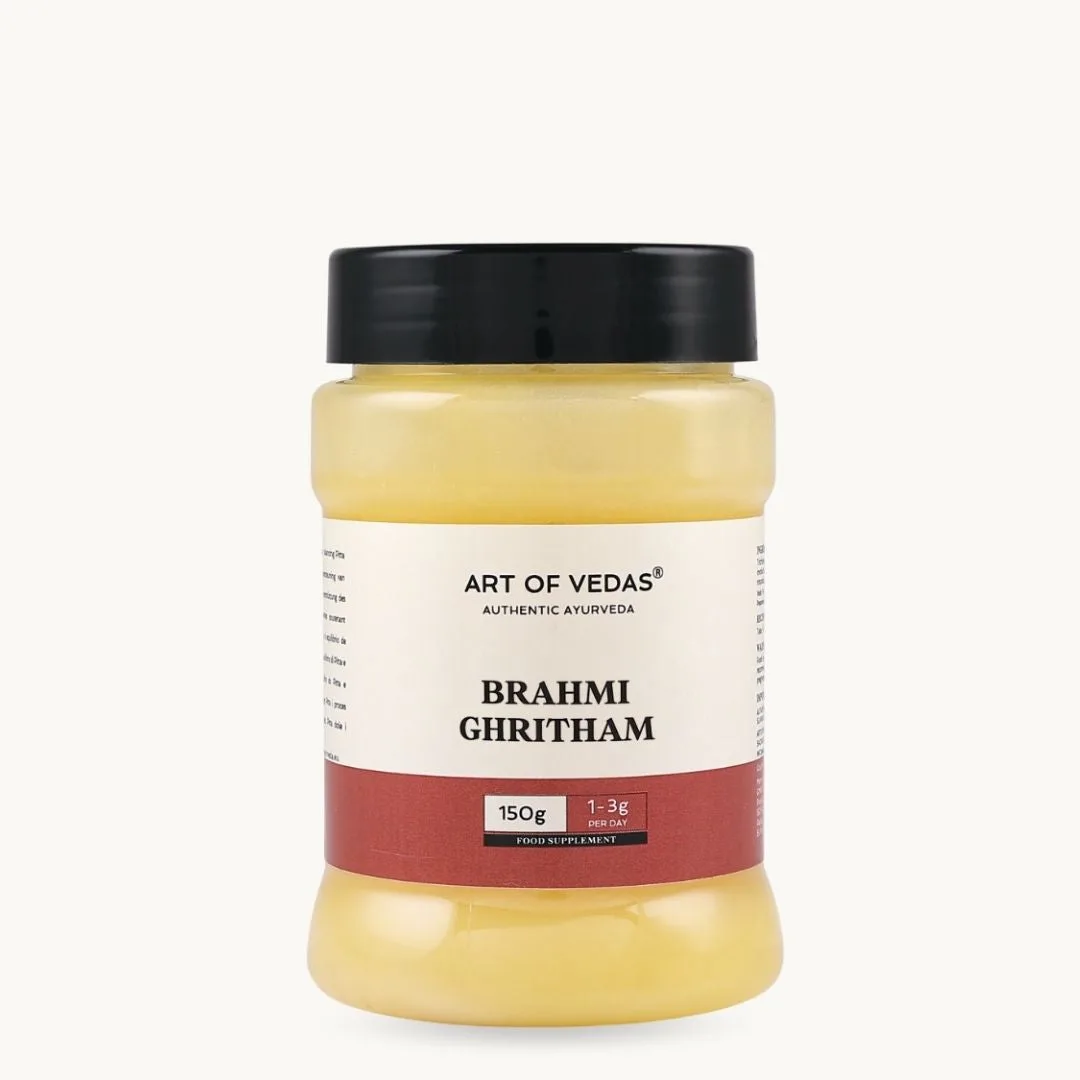
Brahmi Ghritham is the classical ghee preparation of Brahmi (Bacopa monnieri), the primary Medhya Rasayana of the Ayurvedic tradition. Documented in the Ashtanga Hridayam (Uttarasthana) and Charaka Samhita, this formulation combines 10 carefully selected herbs processed into purified cow's ghee through the traditional Sneha Kalpana method. The ghee carrier reaches the finest channels of the nervous system, delivering Brahmi's cooling, mind-nourishing properties to Majja Dhatu (nervous tissue) with exceptional depth.
Brahmi Ghritham is Tridoshic with a cooling Virya, particularly valued for Pitta-predominant conditions of the mind. Classical texts describe it as Medhya (intellect-nourishing), Rasayana (rejuvenative) and Majja Dhatu Poshaka (nervous tissue-nourishing). It complements the external application of Brahmi Thailam: the Ghritham works through the internal digestive channels, while the Thailam works through the scalp and transdermal route.
Take 1-3g daily on an empty stomach, warmed to liquid consistency, with warm water, or as directed by your Ayurvedic practitioner.
This product is a food supplement. Not intended to diagnose, treat, cure or prevent any disease. Do not exceed the recommended daily dose. Consult a qualified practitioner before use if pregnant, breastfeeding or taking medication.
Showing 18/106