Indukantham Ghritham is one of the ghee preparations recorded in the Sahasrayogam, the classical compendium that arranges formulations by their dosage form, and it is listed in the Ayurvedic Formulary of India at Part I, 6:5. This article sets out what the classical record actually says about the formula, and what the name carries.
The name
Indu is the moon. Kantha means beloved or pleasing. The classical habit of naming a preparation after an image rather than an action is worth noticing: the texts do not describe what a formula does in its name, they mark it so it can be remembered and transmitted. Several classical ghees carry names of this kind, and the name is a label within a tradition rather than a description of effect.
What the classical formula contains
The classical Indukantham group is larger than the simple version sold as a food preparation today. The formulation literature builds it on a decoction, a herbal paste and ghee, with the warming pungent herbs at its centre. Two of those herbs are constants: Shunthi, dried ginger, and Pippali, long pepper. Rock salt appears with them, the salt the classical kitchen and the classical pharmacy share.
The Art of Vedas Indukantham Ghritham is a simple ghee in this tradition: Shunthi, Pippali and rock salt in a pure ghee base, with the label as the authoritative ingredient list. It is not a reconstruction of the full classical formula, and the product page says so plainly.
Where it sits in the literature
- Sahasrayogam, in the chapter that collects the ghee preparations.
- Ayurvedic Formulary of India, Part I, entry 6:5.
- Grouped with the Sneha Kalpana preparations, the classical family of fats cooked with herbs.
Why the pungent herbs matter to the classification
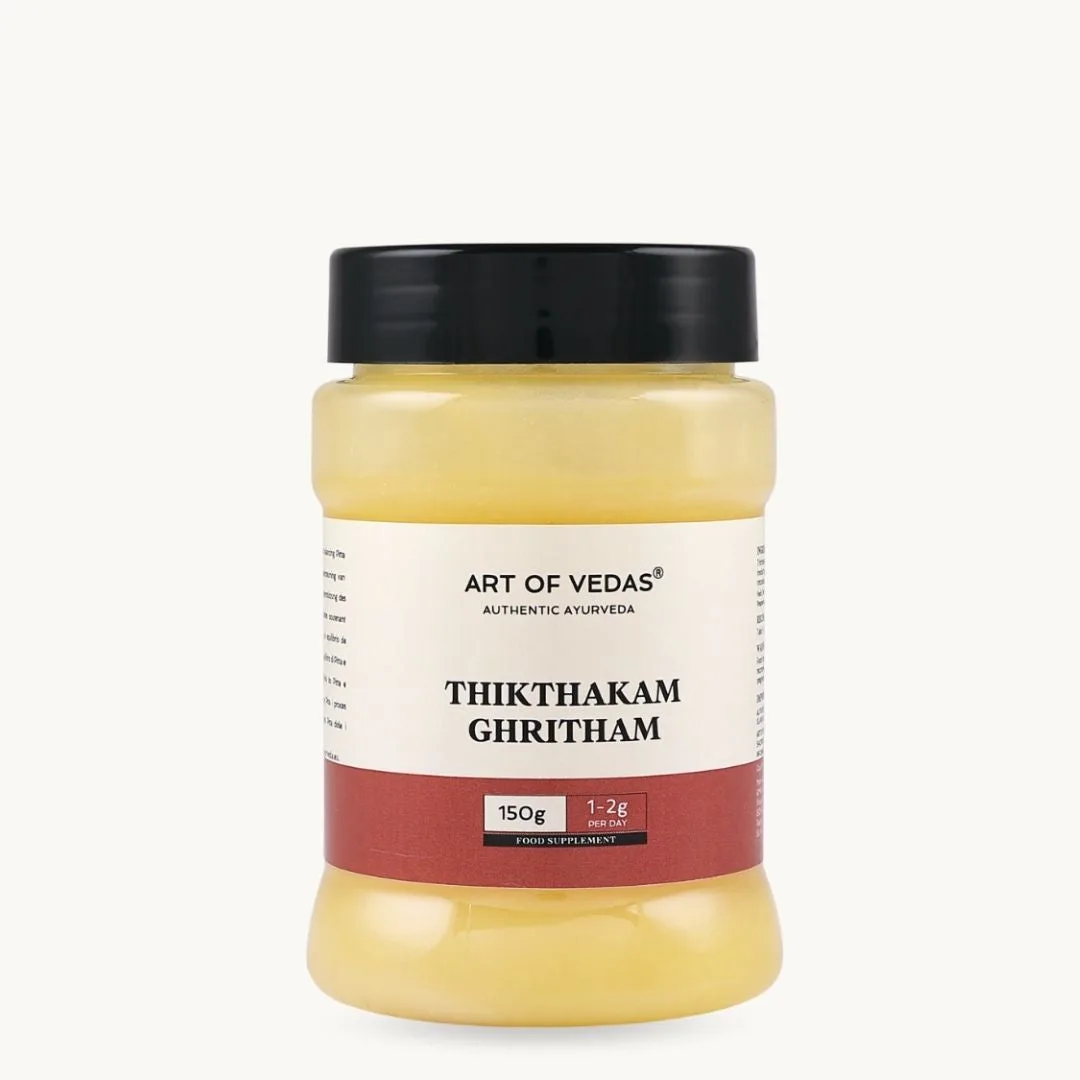
Shunthi and Pippali belong to the group the texts call Katu, pungent in Rasa, and both are described as Ushna, warming in Virya. A ghee built on them is therefore classified as a warming preparation in the classical scheme, which is how the texts place it relative to the bitter ghees such as Thikthakam Ghritham or the sweet ones such as Sukumaram Ghritham. The range comparison sets the family side by side, and the Ghritham overview explains the category.
Frequently Asked Questions
Which classical text records Indukantham Ghritham?
The Sahasrayogam, in its chapter of ghee preparations, and it is listed in the Ayurvedic Formulary of India at Part I, 6:5.
Does the name describe what the preparation does?
No. Indu Kantha means pleasing to the moon; classical names of this kind mark a formula for transmission rather than describing an effect.
Is the Art of Vedas jar the full classical formula?
No. It is a simple ghee in that tradition, built on Shunthi, Pippali and rock salt. The label is the authoritative ingredient list.
This article is for educational purposes and describes the classical Ayurvedic record. The products mentioned are food supplements, not a substitute for a varied, balanced diet, and are not intended to diagnose, treat, cure or prevent any disease. Take classical ghee preparations under the guidance of a qualified Ayurvedic practitioner.