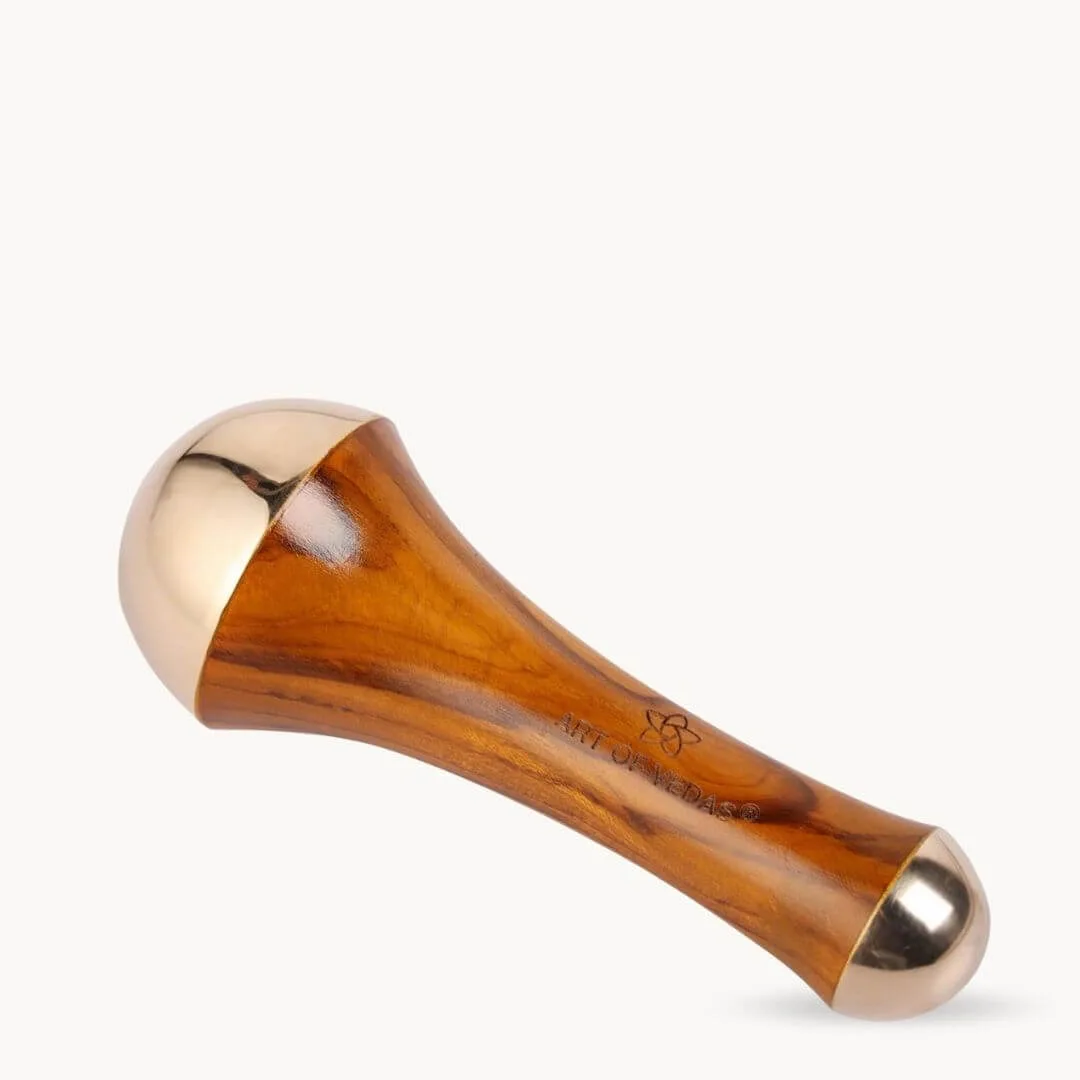
Learning how to use a Kansa wand on the feet turns an ordinary evening into a grounding ritual. The soles carry us through the whole day, and in Ayurveda the feet are treated with the same respect as the face. A bronze Kansa wand lets you work warm oil into every contour of the foot in slow, deliberate strokes, a practice traditionally kept for the quiet hour before sleep.
Why the feet in Ayurveda
Padabhyanga, the massage of the feet, holds a special place in the daily routine, or Dinacharya. Classical Ayurveda maps several Marma points across the sole, ankle and heel, the traditional energy points that a gentle bronze tool can reach without strain on the hands. Working the feet at the end of the day is considered a settling, inward practice, a way of drawing attention down from a busy head toward the ground. The Kansa wand suits this beautifully because its rounded dome presses evenly into the arch and heel where fingers tire quickly.
How to use the wand on the feet, step by step
Set aside five to ten unhurried minutes. Sit comfortably where you can reach one foot at a time.
- Warm a generous amount of oil or foot cream and massage it into the foot by hand first, so the skin is covered and the wand will glide.
- Draw the bronze dome along the sole from the heel toward the toes in long, steady passes.
- Make small, slow circles over the arch and the ball of the foot, where the day settles most.
- Trace around the ankle bone and up into the lower calf with light, upward strokes.
- Finish each foot by holding the sole in your hands for a moment, then repeat on the other side.
Keep the pressure gentle and even. The wand should feel warming and smooth, never sharp. A faint grey trace from the bronze is normal and wipes away.
Wand or vatki for the feet?
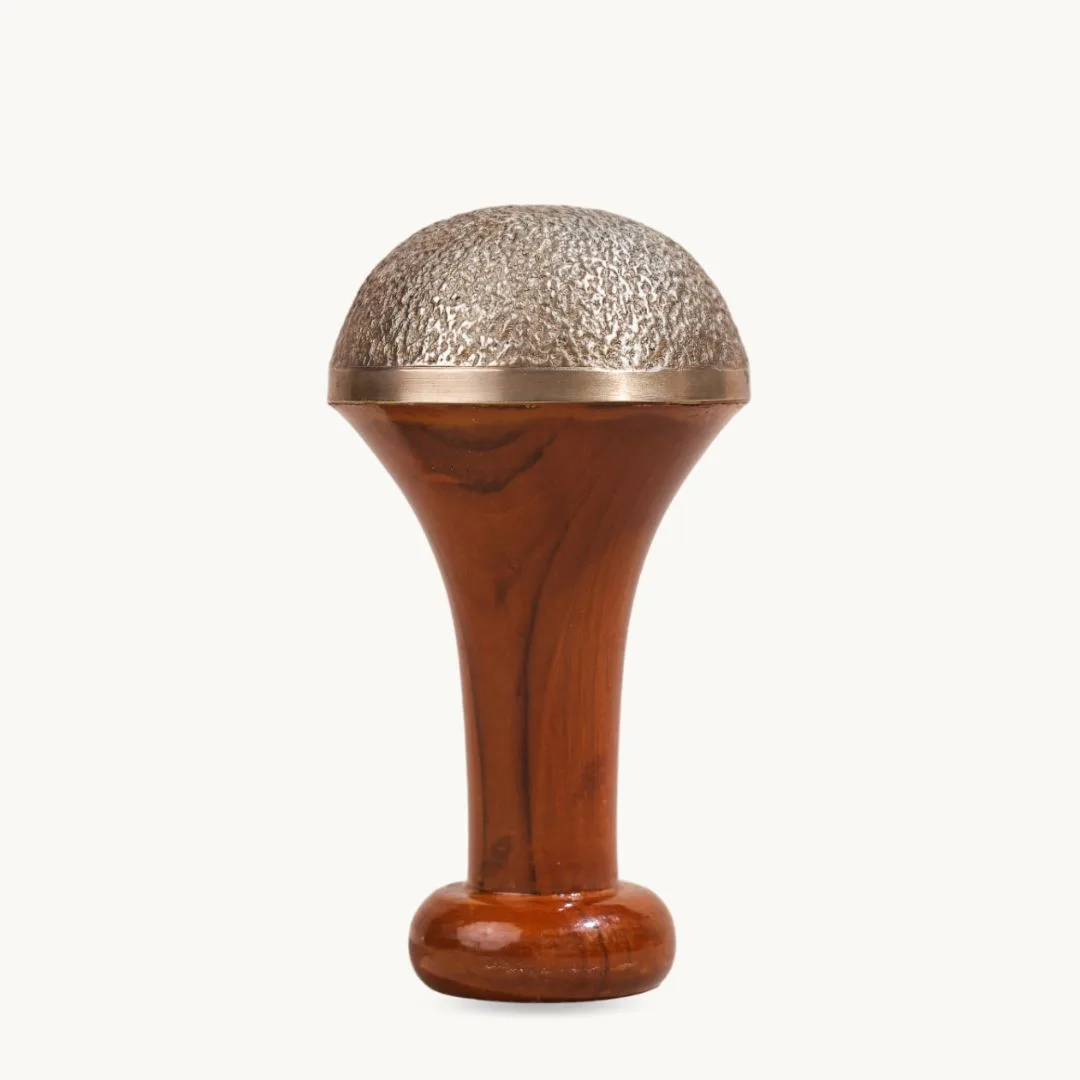
Both tools belong to foot care, and each has a character of its own. The wand is precise and easy to guide along the sole and around the ankle, ideal when you want focused, contoured work. The Kansa vatki, a small bronze bowl rubbed over an oiled sole, offers a broader, enveloping contact that many keep purely for the feet. If you are unsure which to reach for, our comparison of the Kansa wand and the Kansa vatki lays out the choice in full. Many households keep both and alternate by mood.
On craft, the wand is cast bronze buffed to a soft glow and set on a turned wooden handle that keeps the metal at a comfortable angle for the feet. Bronze is a copper and tin alloy that Ayurveda has worked with for generations, and its weight is part of the appeal, giving each stroke a grounding heft. Pair it with a nourishing medium such as natural foot cream or a warm plant oil so the sole stays covered throughout. After use, wipe the dome clean, dry it fully and store it away from knocks.
Building it into the evening
A foot ritual works best as the last thing before bed, when there is nothing left to rush toward. Read our Kansa vatki foot massage ritual and the wider evening Kansa foot routine for two ways to close the day. Warm socks afterward keep the oil where it belongs and the warmth in the feet.
Frequently Asked Questions
Which oil is best for a foot massage with the wand?
A warm plant oil such as sesame suits most people, or a rich foot cream. The medium simply needs to let the bronze glide without dragging.
How long should a foot session last?
Five to ten minutes across both feet is plenty. The aim is a slow, settling pause rather than a vigorous rub.
Can I use the wand on the feet every night?
Yes, a gentle nightly session suits most people. Pause if the skin ever feels tender or is broken.
Why do my feet look faintly grey afterward?
That is the natural interaction of bronze with the oil, a harmless cosmetic effect that wipes away with a cloth or during washing.
Should I choose the wand or the vatki for feet?
The wand suits focused, contoured strokes; the vatki suits broad, enveloping contact. Either works well, and many keep both.
For external use only. Not a substitute for professional medical advice.