In brief: Karpasasthyadi Thailam (also written Karpasasthyadi Thailam, Karpasasthyadi Taila, Karpasasthyadi oil or, in its thicker form, Karpasasthyadi Kuzhambu) is a classical Ayurvedic massage oil named after its lead ingredient: Karpasasthi, the seed of the cotton plant, Gossypium herbaceum. Cited from the Sahasrayogam, it is a warming oil that the compendia place with Vata and that the tradition uses for Abhyanga, the oil massage of the body, with particular attention to the neck, the shoulders and the upper body. This guide explains what Karpasasthyadi Thailam is, how the texts describe it, how it is applied and how often, how the Thailam and the Kuzhambu differ, and which Art of Vedas oils come closest.
What Karpasasthyadi Thailam is and what the name means
Karpasa is cotton, the shrub Gossypium herbaceum, and Asthi, literally bone, here means the seed. Karpasasthi is therefore the cotton seed, the hard seed left when the fibre has been taken off the boll. The ending "adi" means "and the others": the oil is named after the ingredient that leads the recipe. The seed, not the fibre, is what the recipe uses.
Karpasasthyadi Thailam, Karpasasthyadi Thailam, Karpasasthyadi Taila and Karpasasthyadi oil are the same preparation. Karpasasthyadi Kuzhambu is the same recipe made in the Kuzhambu way, with ghee and castor oil added to the sesame base.
The classical description
Karpasasthyadi Thailam is cited from the Sahasrayogam. The classical recipe names, among others, cotton seed, Bala root and Masha, the black gram, and places them in a sesame oil base: decoction and paste are cooked slowly into the oil by the Sneha Paka method until the water has gone. No herb count is given here, because the recipe differs slightly from text to text. Our complete guide to traditional Thailams describes the method and the base oils.
Black gram also leads Mahamasha Thailam, and its presence tells you the family: the heavier, warming oils of the compendia, built on sesame oil and nourishing grains.
Character in Ayurvedic terms
The compendia describe Karpasasthyadi Thailam as warming and heavy and place it with Vata. The texts describe cotton seed as warming, black gram as heavy and nourishing and sesame oil as warming, and the finished oil takes that character: a full, warm oil for the colder months and for those whose constitution the tradition describes as dry and light.
How Karpasasthyadi Thailam is used in practice
Karpasasthyadi Thailam is used externally for Abhyanga. Warm the oil by standing the closed bottle in a bowl of warm water for a few minutes; never use a microwave. The tradition gives this oil particular attention on the upper body: apply it to the back of the neck, the shoulders and the upper back with firm circular strokes, and to the arms with long strokes down the limb. Leave it on the skin for fifteen to twenty minutes, then take a warm shower or bath. Two to three times a week is a sensible rhythm, daily in the cooler months for those who can keep to it. The full sequence of strokes is in our Abhyanga guide.
Thailam or Kuzhambu
A Kuzhambu is the same recipe cooked into three fats: sesame oil, ghee and castor oil. Karpasasthyadi Kuzhambu is therefore thicker, heavier and warmer on the skin than the Thailam and is chosen for a focused, longer massage of one area; the Thailam suits the whole body and the daily routine. Our Kuzhambu guide explains the form and how the three fats behave.
Who should ask first
Karpasasthyadi Thailam is for external use only. Do a small skin test on the inner forearm before the first full application, keep the oil away from the eyes and do not apply it to broken skin. Anyone who reacts to sesame should check the declared list of any oil first. If you are pregnant, or wish to use any oil on a child, ask your doctor or a qualified Ayurvedic practitioner first.
Karpasasthyadi Thailam and the Art of Vedas range
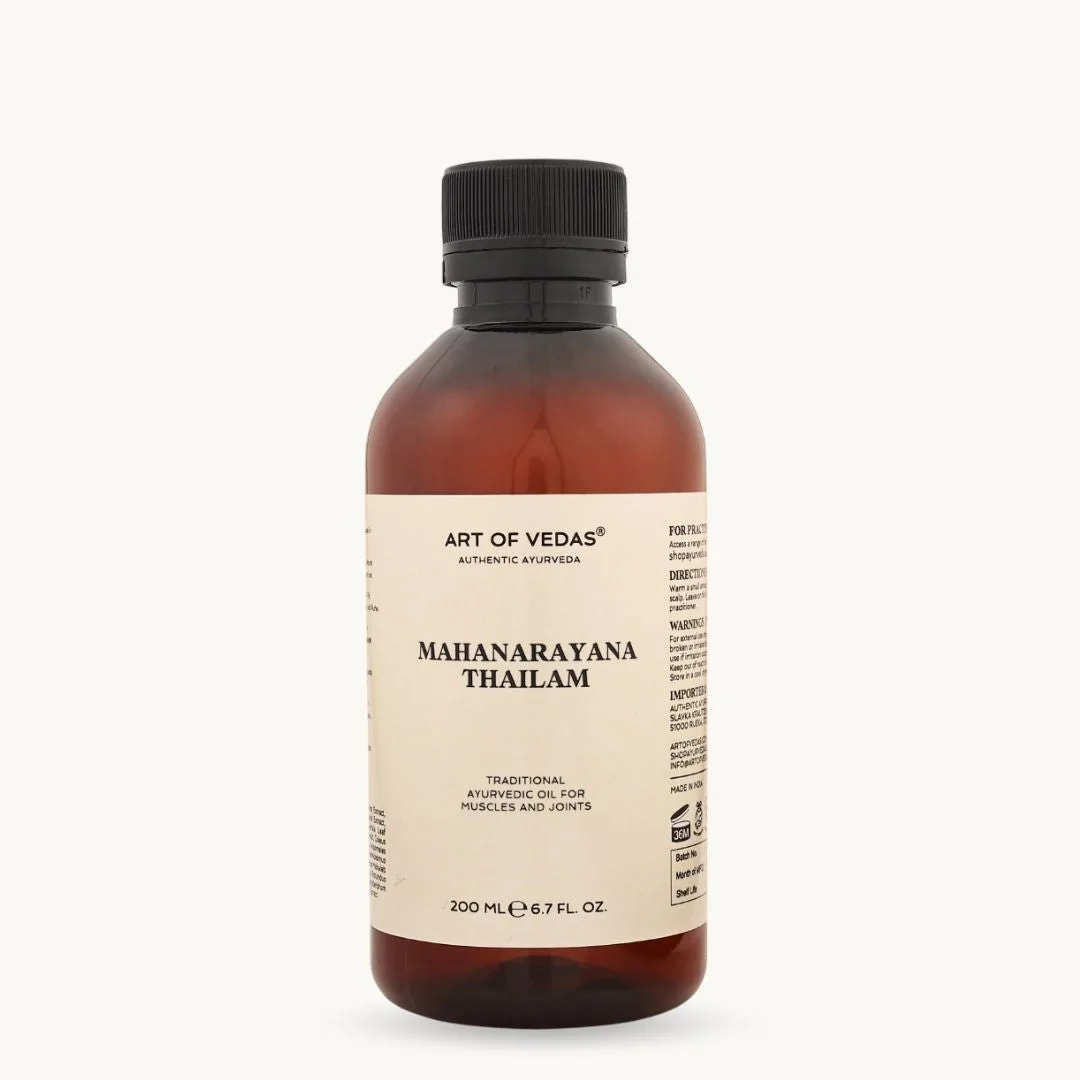
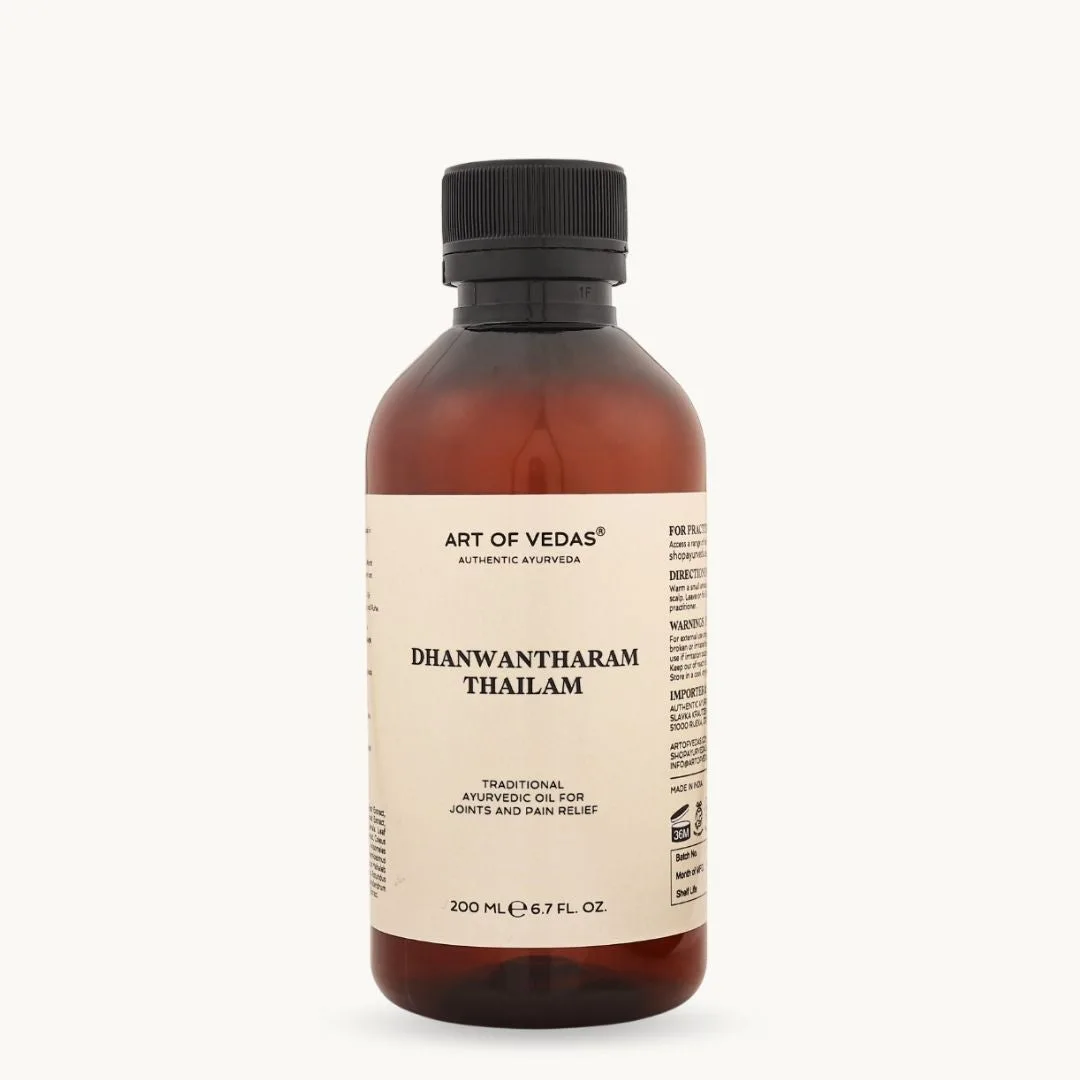
Art of Vedas does not currently offer Karpasasthyadi Thailam or Karpasasthyadi Kuzhambu. The closest oils in our range are the two classical warming Vata oils for Abhyanga: Mahanarayana Thailam, with the Dashamoola roots, Ashwagandha, Bala and Shatavari in sesame oil, the warmer and richer of the two, and Dhanwantharam Thailam, mildly warming and suited to a gentle daily routine. Our oil comparison sets the warming oils side by side.