This article is part of our AYURVEDIC SKINCARE FOR BEGINNERS guide series.
For external use only. Not a substitute for professional medical or dermatological advice. Perform a patch test before first use. Not recommended for those with saffron sensitivity.
Kumkumadi Oil: The Saffron-Based Ayurvedic Face Oil and Why It Commands a Premium
Among all the classical Ayurvedic facial preparations, Kumkumadi Thailam occupies a unique position. It is one of the only classical Ayurvedic preparations whose primary ingredient is saffron (Kumkuma, Crocus sativus) - one of the most costly natural substances in the world by weight. The Ashtanga Hridayam Uttarasthana, the section devoted to head and sense organ medicine, describes Kumkumadi Thailam in the context of Mukha Roga (conditions affecting the face) and skin brightening. Sahasrayogam provides the complete formulation with its approximately 26 ingredient herbs. Both texts describe it as a preparation for the face, for skin brightness, and for the maintenance of Twak (skin) quality.
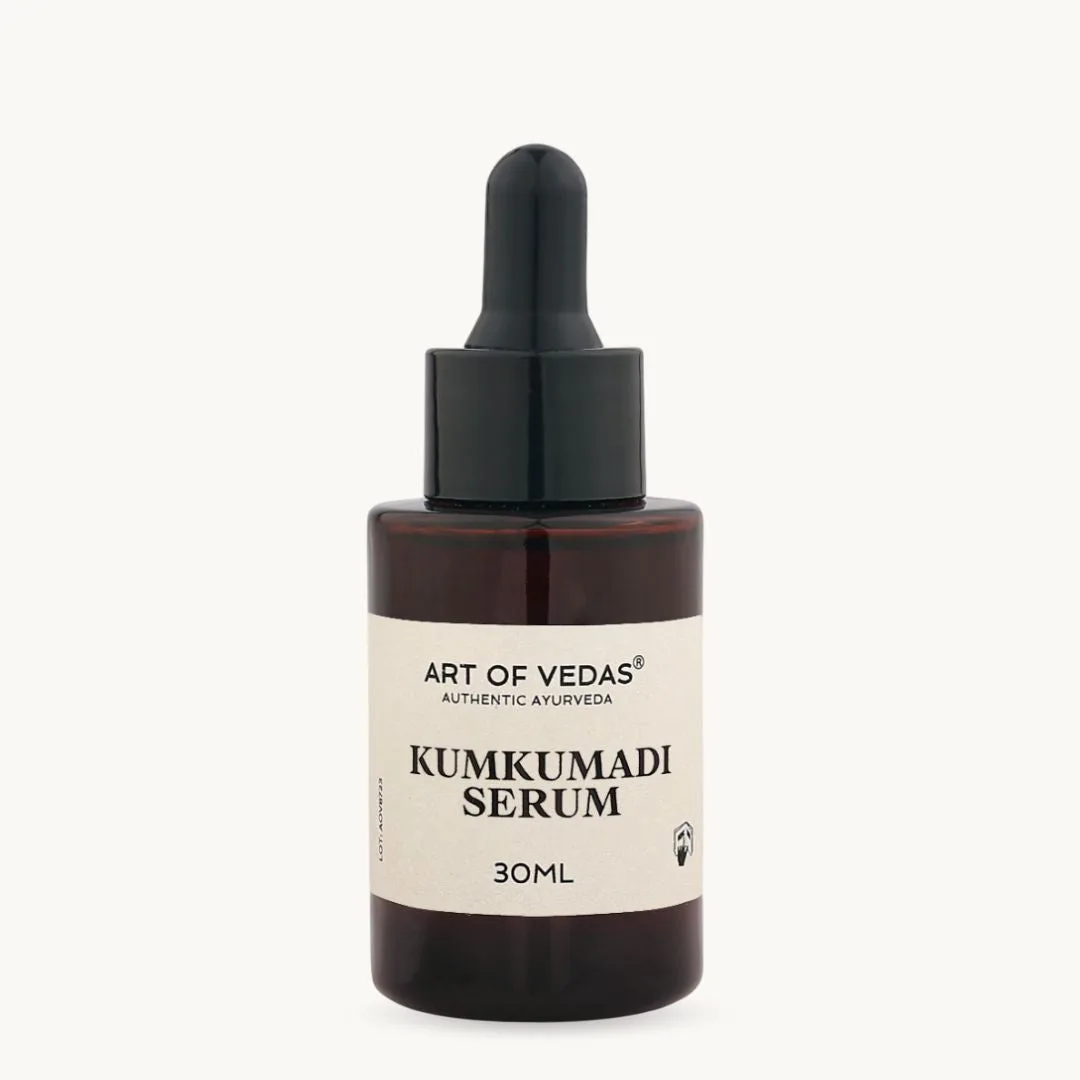
The reputation of Kumkumadi in contemporary Ayurvedic practice - and increasingly in European premium skincare - is built on two foundations: the genuine quality and complexity of the classical formulation, and the long tradition of its use 's Ayurvedic facial care tradition. This guide explains what Kumkumadi Thailam actually contains, what the classical texts say about it, how to use it correctly, and what distinguishes a genuine classical preparation from the many imitations that use the name without the substance. Art of Vedas prepares Kumkumadi according to the classical Sahasrayogam formulation.
The Name and Its Pharmacological Meaning
Kumkuma refers to saffron (Crocus sativus) in Sanskrit - the dried stigmas of the crocus flower. The word is also associated with the sacred red powder used in Indian ritual, which comes from turmeric in its common form but from saffron in its most elevated classical usage. Adi means "and so on, and related herbs" in Sanskrit - indicating that saffron is the primary herb in a formulation that includes a range of complementary preparations. Thailam means oil. The name therefore means approximately "the oil whose primary active is saffron, accompanied by its classical herb companions".
Saffron in Classical Ayurvedic Pharmacology
Kumkuma (saffron) in classical Ayurveda is classified as Madhura-Tikta (sweet-bitter) in Rasa, Laghu (light) and Snigdha (unctuous) in Guna, Ushna (warming) in Virya, and Katu (pungent) in Vipaka. Its primary dosha actions are Vata and Kapha pacifying, with its specific property of Rakta Shodhana (purification and enhancement of blood quality) being its most cited therapeutic action in the texts.
This Rakta Shodhana action is the classical mechanism behind saffron's use in facial preparations. In Ayurvedic physiology, Rakta Dhatu (blood and plasma tissue) is directly reflected in the quality of the skin. Preparations that improve Rakta quality improve the skin's appearance from within. Topical saffron preparations are described as acting on the Bhrajaka Pitta sub-dosha in the skin - the sub-dosha that governs complexion and the quality of light reflected by the skin - through both direct absorption and the stimulation of localised Rakta circulation in the facial tissue.
The Full Classical Formulation
The Sahasrayogam's Kumkumadi Thailam formulation is processed in sesame oil base with a decoction of approximately 26 herbs. The primary constituents beyond saffron include:
Chandana (Santalum album - sandalwood): Classified as the most cooling and Pitta-reducing of all the classical skin herbs. Its specific action on Bhrajaka Pitta complements saffron's warming quality, creating a balanced preparation appropriate for the face where neither excess heat nor excess cold is desirable. Manjishtha (Rubia cordifolia): One of the most important Rakta Shodhana herbs in classical Ayurveda. Its primary action is on Pitta and Rakta, making it specifically relevant to the skin brightening and complexion-supporting action of Kumkumadi. Laksha (resin of Laccifer lacca): A classical ingredient in skin preparations for its Pitta-calming and tissue-building properties. Mulethi (Glycyrrhiza glabra - licorice): A primary Pitta and Vata-pacifying herb, also classified as Varnya (complexion-enhancing) in classical Ayurveda. Lodhra (Symplocos racemosa): Specifically classified as Mukha Doshahara - beneficial for conditions affecting the face. It has astringent properties that support skin tone. Padmaka (Prunus cerasoides): Classified as cooling and Pitta-managing, with specific action on Twak (skin) quality.
The complete formulation of approximately 26 herbs is processed with the sesame oil base through the classical Sneha Paka Vidhi at controlled temperatures for a prescribed duration. The saffron, being expensive and heat-sensitive, is typically added toward the end of processing in some traditional preparations to preserve its aromatic compounds.
The Difference Between Classical Kumkumadi and Modern Versions
The contemporary skincare market has adopted the Kumkumadi name widely. Several points distinguish a genuine classical preparation from a commercial version that uses the name but not the process:
True classical Kumkumadi Thailam uses saffron as a primary ingredient in meaningful quantity, not as a symbolic trace addition. Saffron at effective quantities is expensive - it is the costliest spice in the world by weight. Formulations priced very inexpensively cannot contain significant saffron. The classical Sneha Paka Vidhi preparation process alters the properties of the sesame oil through the herbal decoction in a way that simple infusion of herbs in oil does not replicate. Classical preparations should be made with sesame oil as the base (sesame is the standard Ayurvedic vehicle for facial oils in the Sahasrayogam and Ashtanga Hridayam formulations). Preparations using sunflower, jojoba, or rosehip as the base are not classical Kumkumadi Thailam even if they contain saffron. The Art of Vedas Kumkumadi Thailam follows the Sahasrayogam formulation with sesame base and classical preparation process.
How to Use Kumkumadi Thailam
Kumkumadi Thailam is specifically a facial oil. It is applied to the face in the evening as part of the classical Mukha Abhyanga routine, ideally after cleansing and before sleep. The oil is at its most effective applied to slightly damp skin, as the moisture helps distribute the oil evenly across the face and supports absorption.
Two to three drops are sufficient for the full face. Warm the oil between the palms for a few seconds before pressing gently into the skin. The Mukha Abhyanga technique - upward strokes along the jaw, circular movements at the cheeks, gentle downward pressure at the forehead to relax the frowning musculature, and circular pressure at the marma points around the orbital bone and temples - distributes the oil and simultaneously supports lymphatic drainage and circulation. The complete Mukha Abhyanga technique is described in the facial massage guide.
Leave the oil on overnight for maximum absorption. The amount absorbed is modest - a few drops applied to damp skin leaves no visible residue on a pillow by morning if allowed to absorb for fifteen minutes before sleep. In the morning, the skin is cleansed gently to remove the small residue and any overnight Kapha accumulation on the skin surface.
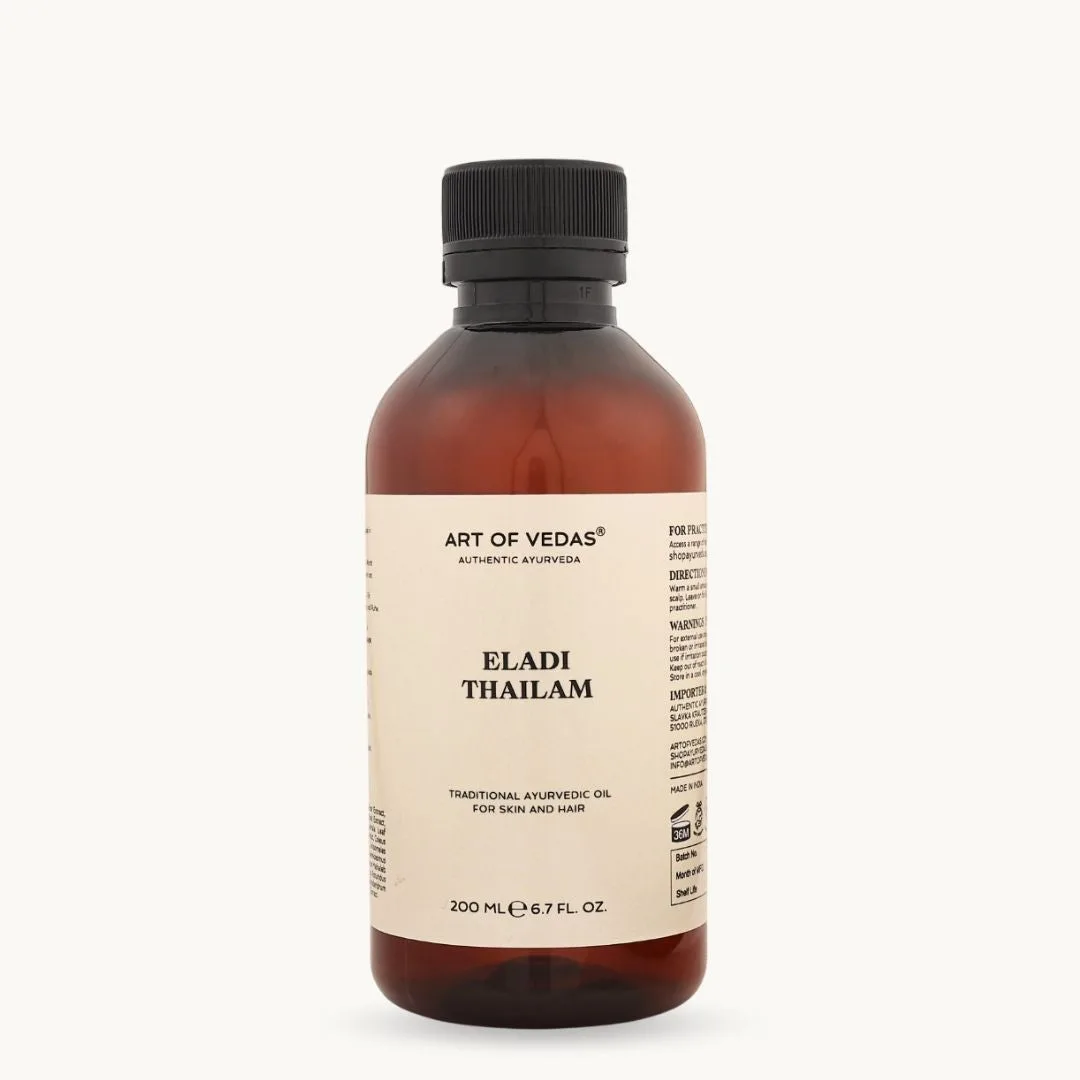
For more on the full classical facial skincare routine within which Kumkumadi is most effective, the Pitta skincare guide and the Eladi Thailam guide provide the broader facial care context. The Art of Vedas Thailam collection includes both Kumkumadi and Eladi for the complete classical facial oil range.
When Kumkumadi Is Indicated: Dosha and Skin Type
The Sahasrayogam's description of Kumkumadi Thailam's primary indications - Mukha Shodhana (face cleansing), Varna Prasadana (complexion enhancement), and Doshahara (Tridoshic management at the face) - makes it broadly applicable. Unlike many Ayurvedic preparations that are specifically Vata, Pitta, or Kapha indicated, Kumkumadi's formulation balances the warming saffron with the cooling chandana and the tissue-building manjishtha in a way that makes it appropriate across constitutional types for facial use.
In contemporary practice, it is most specifically indicated for skin showing signs of dullness, uneven tone, or the effects of sun exposure. The Varna Prasadana (complexion brightening) action comes from the combination of Rakta Shodhana herbs (saffron, manjishtha, mulethi) working on the quality of the dermal circulation. This is a gradual process visible over weeks of consistent use, not an immediate surface change.
Frequently Asked Questions
Why does Kumkumadi Thailam sometimes stain the skin or pillowcase orange?
The saffron pigment (crocin) and the other Varnya (complexion-supporting) herbs in Kumkumadi can temporarily impart a slight golden or orange tint to the skin immediately after application, particularly if the formulation contains significant quantities of saffron. This is an indicator of a meaningful saffron content rather than a trace amount. The tint fades as the oil absorbs and is not present the following morning. Using a dark pillowcase for the first few weeks of use is practical advice for those concerned about any minimal oil transfer.
Can Kumkumadi Thailam be used on oily or acne-prone skin?
Sesame oil, as the base of Kumkumadi, is non-comedogenic in classical Ayurvedic terms - it is not described as blocking channels or increasing Kapha accumulation when applied to the face in appropriate small quantities. The astringent and Kapha-managing herbs in the formulation (Lodhra, Manjishtha) counteract any tendency toward congestion. For genuinely oily, congested facial skin of the Kapha type, a very light application - one to two drops only - and thorough gentle cleansing in the morning is the appropriate adaptation. For those with active acne, consult a dermatologist or Ayurvedic practitioner before introducing any oil-based preparation.
How long before results are visible?
The classical texts do not describe Kumkumadi as producing immediate visual change. The Varna Prasadana action works through improving the quality of Rakta circulation and Bhrajaka Pitta in the facial skin over weeks and months of consistent use. Most practitioners describe noticeable improvement in skin luminosity and evenness of tone becoming visible after four to eight weeks of consistent evening application. This timeline is consistent with the general Ayurvedic understanding that tissue changes require sustained practice measured in weeks and months, not days.
Can Kumkumadi Thailam be used with modern skincare products?
It can be used alongside modern skincare, with attention to layering order. In classical practice, the oil is the final step in the evening routine. Applied over water-based serums and before sleep, it seals the preparation sequence. Strong acids (AHAs, BHAs, vitamin C) should not be applied immediately before or after an oil, as they change the pH environment in which the classical oil compounds are designed to work. Applying Kumkumadi Thailam on its own to clean skin, or after only a gentle hydrating mist or toner, follows the classical method most closely.