This article is part of our AYURVEDIC SKINCARE FOR BEGINNERS guide series.
For external use only. Not a substitute for professional medical advice for any skin condition. If you have a diagnosed skin condition, consult a dermatologist or qualified Ayurvedic practitioner before changing your skincare routine.
Ayurvedic Skincare for Sensitive Skin: The Pitta-Calming Protocol from Classical Texts
Sensitive skin is the label that modern dermatology gives to skin that reacts visibly to products, weather, stress, and dietary changes. It stings, flushes, reddens, and becomes uncomfortable with stimuli that leave other skin types unaffected. Modern skincare responds by reducing ingredients to minimum formulations and recommending barrier-focused approaches. Ayurveda asks a different question: what is driving the sensitivity in the first place, and where is it coming from?
The Ayurvedic answer, developed over centuries of clinical observation and documented in Ashtanga Hridayam and Charaka Samhita, is that skin reactivity is predominantly a Pitta presentation. Pitta governs transformation, heat, and the quality of penetration in all body tissues, including the skin. When Pitta is elevated, the skin's natural tolerance threshold drops, and the Bhrajaka Pitta sub-dosha - which is responsible for skin complexion and responsiveness to topical substances - becomes hyperactive. The result is the thin-skinned, reactive presentation that modern practice calls sensitive skin. This guide explains the Ayurvedic approach in practical terms and provides the Art of Vedas protocol for managing reactive skin through classical Pitta-calming methods.
Pitta and the Skin: The Classical Understanding
The Ashtanga Hridayam describes Bhrajaka Pitta as the sub-dosha residing in the skin, responsible for maintaining skin colour, complexion, and the quality of absorption. When Bhrajaka Pitta is in balance, the skin accepts topical applications appropriately and maintains its natural colour and tone. When it is elevated, the skin becomes hypersensitive to inputs - heat, cold, certain foods, topical products, and emotional stress - because Pitta's qualities of sharpness, heat, and penetrating capacity are amplified.
The typical Pitta skin is fair to medium in tone, with fine pores, a tendency toward redness and flushing, visible capillaries, and a naturally warm temperature to the touch. It is more prone to sun sensitivity than Vata or Kapha skin. In its imbalanced state, it becomes reactive to a wider range of triggers, develops persistent redness or broken capillaries, and may present with heat-related skin conditions that worsen with spicy food, alcohol, hot environments, and emotional stress.
Not all sensitive skin is Pitta-driven. Vata-type sensitive skin presents as thin, dry, fragile skin that reacts to weather changes and harsh products, but without the heat and redness characteristic of Pitta. The distinctions matter because the treatment approach differs significantly.
Identifying Your Skin's Dosha Pattern
Before selecting a skincare approach, it is useful to identify which dosha pattern your skin most reflects. The Art of Vedas dosha assessment covers constitutional skin types and current imbalance patterns. As a practical guide:
Pitta-pattern reactive skin typically presents with some or all of the following: flushing with heat, spicy food, alcohol, or emotional stress; fine redness or broken capillaries, particularly around the nose and cheeks; sensitivity to sun with rapid burning; skin that is warm to the touch; reactive to acids and retinoids in conventional skincare; sensitivity that worsens in summer.
Vata-pattern reactive skin presents differently: thin and fragile skin that reacts to cold, wind, and low humidity; dehydration and tightness; sensitivity that worsens in autumn and winter; no particular heat component; fragility rather than reactivity.
Mixed presentations are common, and the protocol below focuses primarily on Pitta-pattern sensitivity as the more common presentation in clinical practice and the one most consistently described in the Ayurvedic texts as skin reactivity.
The Classical Pitta-Calming Skincare Protocol
The Ayurvedic approach to Pitta skin care operates on three levels simultaneously: the topical (what you apply to the skin), the dietary (what drives internal Pitta), and the lifestyle (the conditions and habits that amplify or reduce Pitta systemically). Addressing only the topical level while ignoring the other two produces limited results, which is why classical Ayurvedic skin treatments are always embedded within the broader Dinacharya and dietary context.
Topical care: oils and preparations for Pitta skin
The classical principle for Pitta skin is cooling, soothing, and minimally stimulating. Harsh exfoliants, astringents, high-concentration vitamin C serums, retinoids, and alcohol-based toners are all contraindicated in Ayurvedic terms because they have sharp, heating, or penetrating qualities that aggravate Bhrajaka Pitta. The classical alternative is based on gentle oils with cooling herbs.
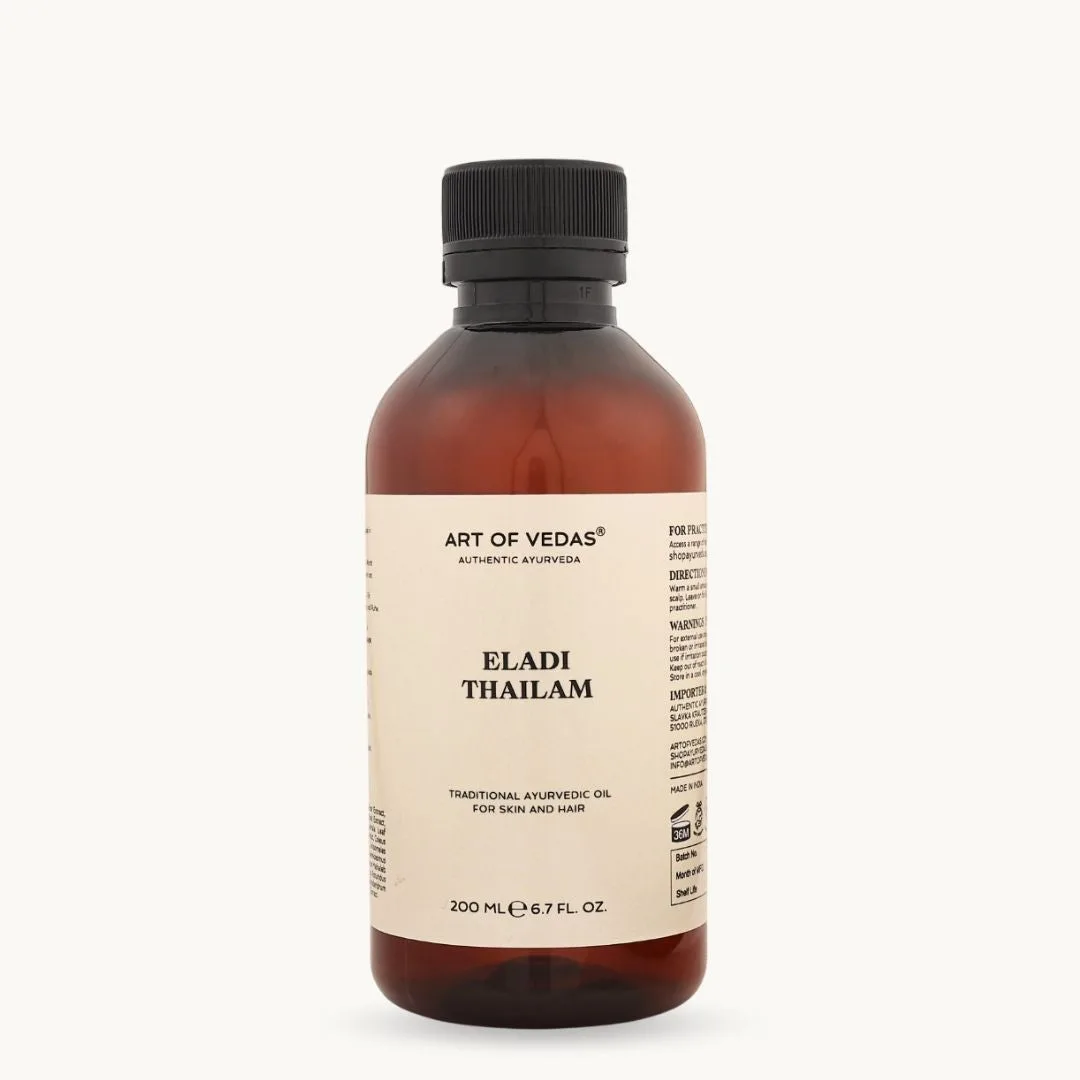
Eladi Thailam is the primary classical oil for Pitta skin conditions and facial care in the Sahasrayogam and Ashtanga Hridayam texts. Eladi's base is sesame, but the herb decoction that it carries - Ela (cardamom), Chandana (sandalwood), and a range of cooling herbs - gives it a distinctly Pitta-pacifying quality. It is one of the few classical oils described as appropriate for facial application even in sensitive and reactive skin types, and it has been used 's Ayurvedic tradition for skin care for centuries. It is lighter than many body oils and absorbs well into the facial skin.
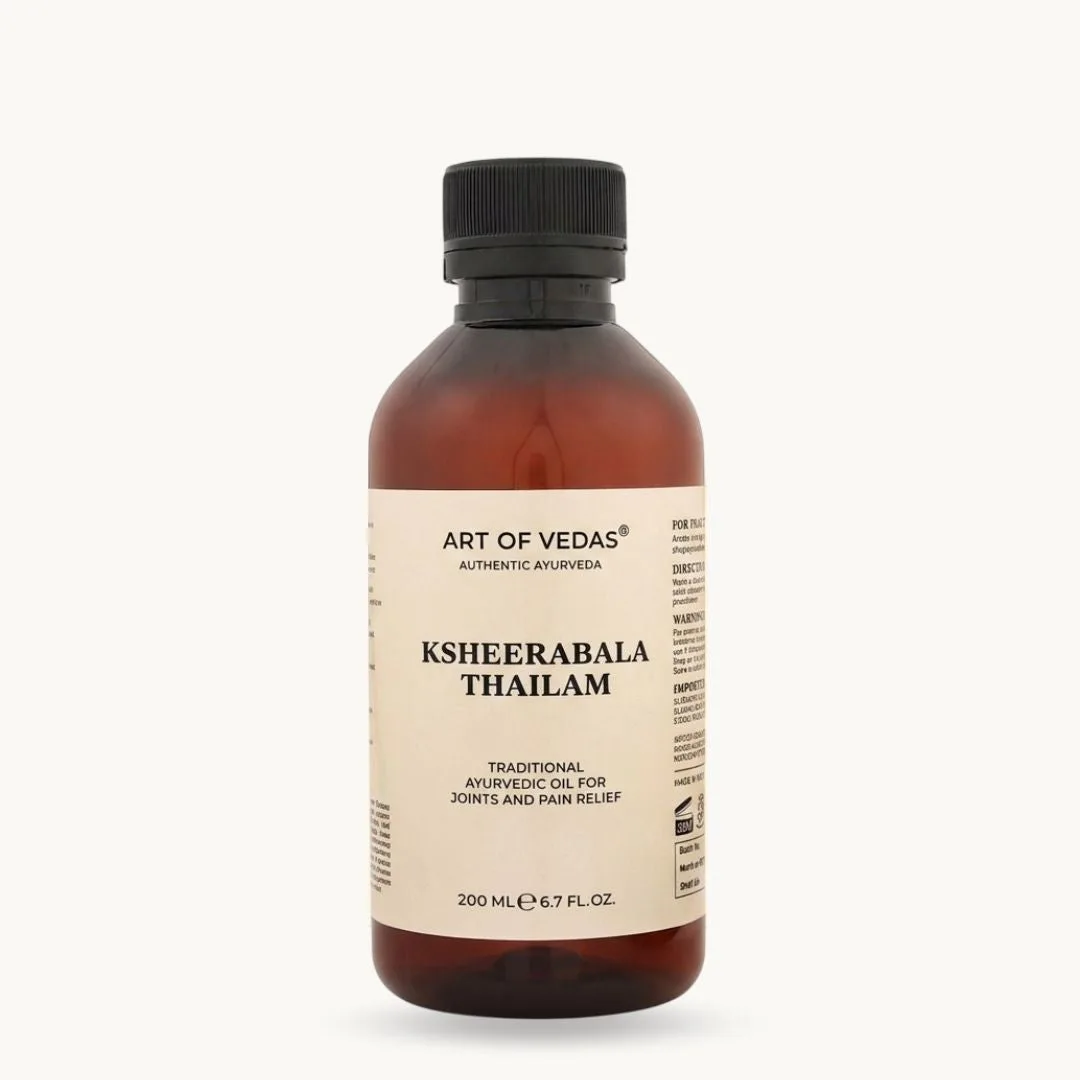
Ksheerabala Thailam, processed with Bala root and milk, is cooling and nourishing in its action. For reactive skin accompanied by some fragility and dryness, it provides the lubrication that Pitta-depleted skin needs without the warming quality of heavier sesame preparations. It is appropriate for the transition between the Pitta and Vata skin presentations.
The classical facial Abhyanga for Pitta skin
The Mukha Abhyanga (facial oil massage) for Pitta skin uses a lighter touch and less oil than for Vata skin, and uses room-temperature or slightly cooled oil rather than warm oil. The massage technique follows the marma points of the face as described in Ashtanga Hridayam, using gentle circular pressure along the jawline, beneath the cheekbones, across the forehead, and around the orbital bone. The pressure is never deep or dragging on the skin. The goal is to support lymphatic movement and distribute the oil's herbal compounds across the facial tissue without stimulating additional heat.
Leave the oil on the skin for 15-20 minutes. For a quick routine, apply before your shower or bath and let the warm water and steam emulsify the oil. This is the simplest form of the classical Pitta skin routine and takes only a few minutes of preparation. For more on the full Mukha Abhyanga technique, see the facial Abhyanga guide.
Cleansing for Pitta skin
Classical Ayurvedic texts do not describe harsh cleansing for any skin type. The primary classical facial cleanser is Ubtan - a paste made from flour (traditionally chickpea or lentil), turmeric, and rose water or milk. Applied as a gentle scrub and rinsed away, it cleanses without stripping. In modern practice, a gentle, fragrance-free oil cleanser or micellar water that does not disrupt the skin's acid mantle is the closest equivalent.
Rose water (Gulkand) is specifically described in Ashtanga Hridayam as beneficial for Pitta-type skin conditions. Applied as a toner or mixed with other preparations, it provides gentle cooling and mild astringency without the harshness of alcohol-based toners.
Internal Causes of Skin Reactivity: The Dietary Connection
This is where Ayurveda offers the most distinctive perspective on sensitive skin. The classical texts are consistent: skin conditions are not primarily skin problems. They are manifestations of internal conditions, particularly the state of Rakta Dhatu (blood and plasma tissue), Pitta dosha, and Agni (digestive fire). What enters the digestive system and how it is processed has direct consequences for skin quality.
The foods most consistently associated with Pitta-type skin reactivity in classical Ayurveda are: alcohol, spicy and hot foods, sour and fermented foods in excess, red meat, nightshade vegetables, and overly salty food. These are all Pitta-aggravating tastes and qualities. Conversely, cooling foods - cucumber, coconut, coriander, fennel, sweet fruits, dairy in moderate quantities, and warm-but-not-hot cooked foods with mild seasoning - reduce internal Pitta and have a corresponding calming effect on the skin.
Regular Triphala as a gentle internal cleanse (see the Triphala guide) is specifically described as beneficial for Rakta Dhatu (blood quality) and skin conditions in the classical texts. Its action on the digestive tract and liver indirectly improves skin quality through better processing of Pitta-generating metabolic waste.
Lifestyle Factors That Drive Pitta Skin Reactivity
Several lifestyle factors directly aggravate Pitta and increase skin reactivity. The classical texts are specific about these. Midday sun exposure, particularly between 11am and 3pm during Pitta time (10am to 2pm), is the most potent external Pitta aggravator. Protective clothing and shade are the classical approach to this; the Ashtanga Hridayam does not recommend sun avoidance completely, but it advises against excess sun in Pitta types during summer.
Anger, perfectionism, and competitive stress are the emotional Pitta aggravators most consistently described in the classical texts. The Charaka Samhita describes Pitta imbalance as both a cause and a consequence of these emotional states - they create a reinforcing cycle in which internal heat drives emotional intensity and vice versa. Practices that reduce mental heat - cooling pranayama (Sheetali or Sheetkari breath), walking near water, spending time in the shade and in nature - are described as specifically beneficial for Pitta-type presentations. For more on Pitta management broadly, see the Pitta imbalance guide.
Building a Daily Pitta Skincare Routine
Based on the classical protocol, a practical daily Pitta skincare routine combines topical oil, dietary discipline, and one or two lifestyle adjustments. The routine does not need to be complex. The Art of Vedas approach for Pitta skin centres on simplicity and consistency:
Morning: Splash face with cool water. Apply a few drops of room-temperature Eladi Thailam to damp skin and massage gently for two minutes. Proceed with sunscreen if outdoors. Evening: Gentle oil cleanse to remove the day's sunscreen and debris. Apply Eladi Thailam or Ksheerabala Thailam to the face and massage gently for 5-10 minutes. Leave on overnight for deeper penetration. Weekly: Gentle Ubtan cleanse with chickpea flour and rose water. Internally: Reduce spicy food, alcohol, and excessive heat exposure. Include cooling foods. Consider Triphala churna in warm water before bed as a gentle internal support.
The Art of Vedas Thailam collection and skincare range include the preparations most appropriate for Pitta and sensitive skin types.
Frequently Asked Questions
Can I use any essential oils with sensitive Pitta skin?
With caution. Essential oils are highly concentrated and can aggravate Pitta-type reactive skin if not well-diluted or if they are inherently warming (cinnamon, clove, eucalyptus, peppermint). Cooling and calming essential oils - rose, sandalwood, jasmine, chamomile - are more appropriate for Pitta skin. Classical Ayurvedic preparations like Eladi Thailam incorporate these herbs in their processed form, which is generally better tolerated than raw essential oil addition.
How is Ayurvedic skincare different from natural or organic skincare?
Natural and organic skincare reduces potentially harmful synthetic ingredients. Classical Ayurvedic skincare goes further: it selects ingredients based on their dosha action (how they affect Vata, Pitta, and Kapha in the skin) and prepares them using specific classical methods (Sneha Paka Vidhi for oils) that alter the properties of the base oil through the herbal processing. A classical Thyalam prepared with the correct herbal decoction is pharmacologically different from the same herbs simply infused in oil. This is why Art of Vedas follows classical preparation methods rather than simply blending natural ingredients.
My skin is both dry and reactive. Which category does it fall into?
This mixed presentation often reflects a combination of Vata (dryness and fragility) and Pitta (reactivity and heat) imbalance. It is more common than a pure single-dosha presentation. The approach is to use cooling oils (not warming), to nourish the skin barrier (addressing Vata) while avoiding Pitta triggers (addressing the reactivity). Ksheerabala Thailam, with its cooling and nourishing qualities, is often appropriate for this mixed presentation. Consulting the Art of Vedas practitioner consultation provides personalised guidance for complex presentations.
What about the sun and Pitta skin?
Pitta-dominant skin is typically the most sun-sensitive constitutional type. Classical Ayurveda advises protection from the midday sun for Pitta types, particularly in summer. This is consistent with modern dermatological advice about UV protection. Classical preparations do not function as SPF sunscreens, and sun protection with appropriate physical sunscreen should be used alongside any Ayurvedic skincare routine when UV exposure is significant.