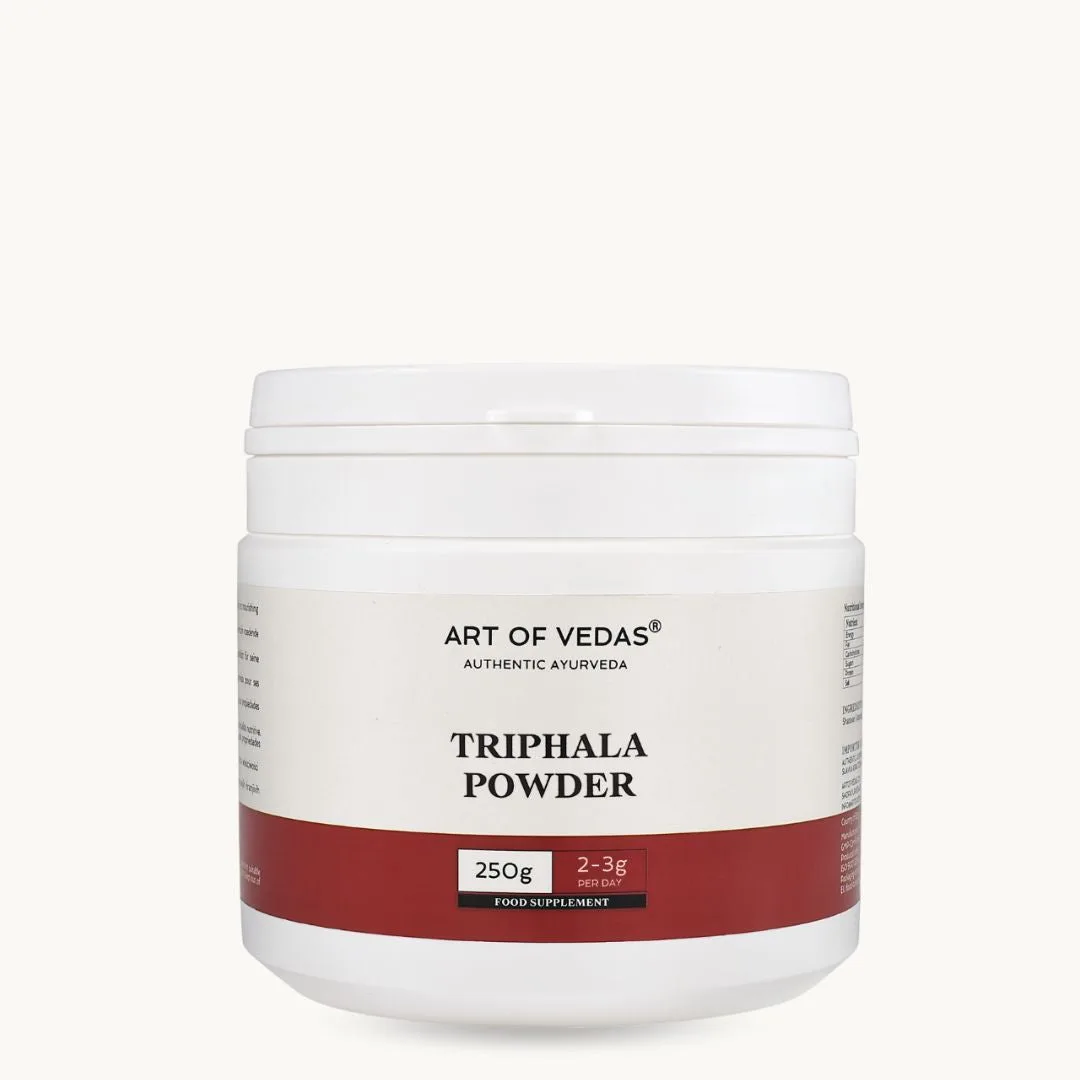
Triphala Churna is the most widely recognised powder formulation in the whole of Ayurveda. Its name states its contents plainly: tri means three and phala means fruit. Three dried fruits, ground and blended in equal parts, form a Churnam that classical physicians reached for so often that many later texts simply assume the reader already knows it. This guide explains what the three fruits are, what the classical literature says about the blend, how the powder is traditionally taken, and how to decide between the powder, tablet and capsule formats available today.
The Three Fruits of Triphala
The formula combines Amalaki, Bibhitaki and Haritaki in equal measure. Amalaki, botanically Emblica officinalis and often sold in Europe as amla, is a notably sour fruit that classical authors treated with particular respect. Bibhitaki, from the tree Terminalia bellirica, contributes an astringent character. Haritaki, from Terminalia chebula, is so highly regarded that the classical tradition calls it the king of herbs; you can read the full story in our guide to Harad, the king of herbs in Ayurveda. When the three fruits are dried, deseeded and powdered together, the result covers five of the six classical tastes, with only the salty taste absent. That unusual breadth of Rasa is one reason the texts give the blend such a central position.
What the Classical Texts Say
Triphala appears throughout the foundational compendia of Ayurveda, where it is described both as a formula in its own right and as a base for larger preparations. The classical literature places it within the Rasayana category, the group of preparations associated with long-term nourishment and daily routine rather than short-term use. The texts also describe Triphala being prepared as a decoction for external washes, which is why the blend still appears in traditional cosmetic rituals for skin and hair alongside its better-known role as an evening powder.
Traditional Uses of Triphala Churna
Ayurvedic households have used Triphala for generations as a steady, unhurried companion to daily routine. Within that tradition, the blend is:
- Traditionally taken in the evening with warm water as part of a settled night-time routine
- Classically categorised as a Rasayana, the group of formulations associated with daily nourishment
- Traditionally used to support digestive comfort as part of a balanced evening rhythm
- Prepared as a cooled decoction in traditional skin and hair rinse customs
- Valued in classical teaching for combining five of the six tastes in a single preparation
How the Powder Is Traditionally Taken
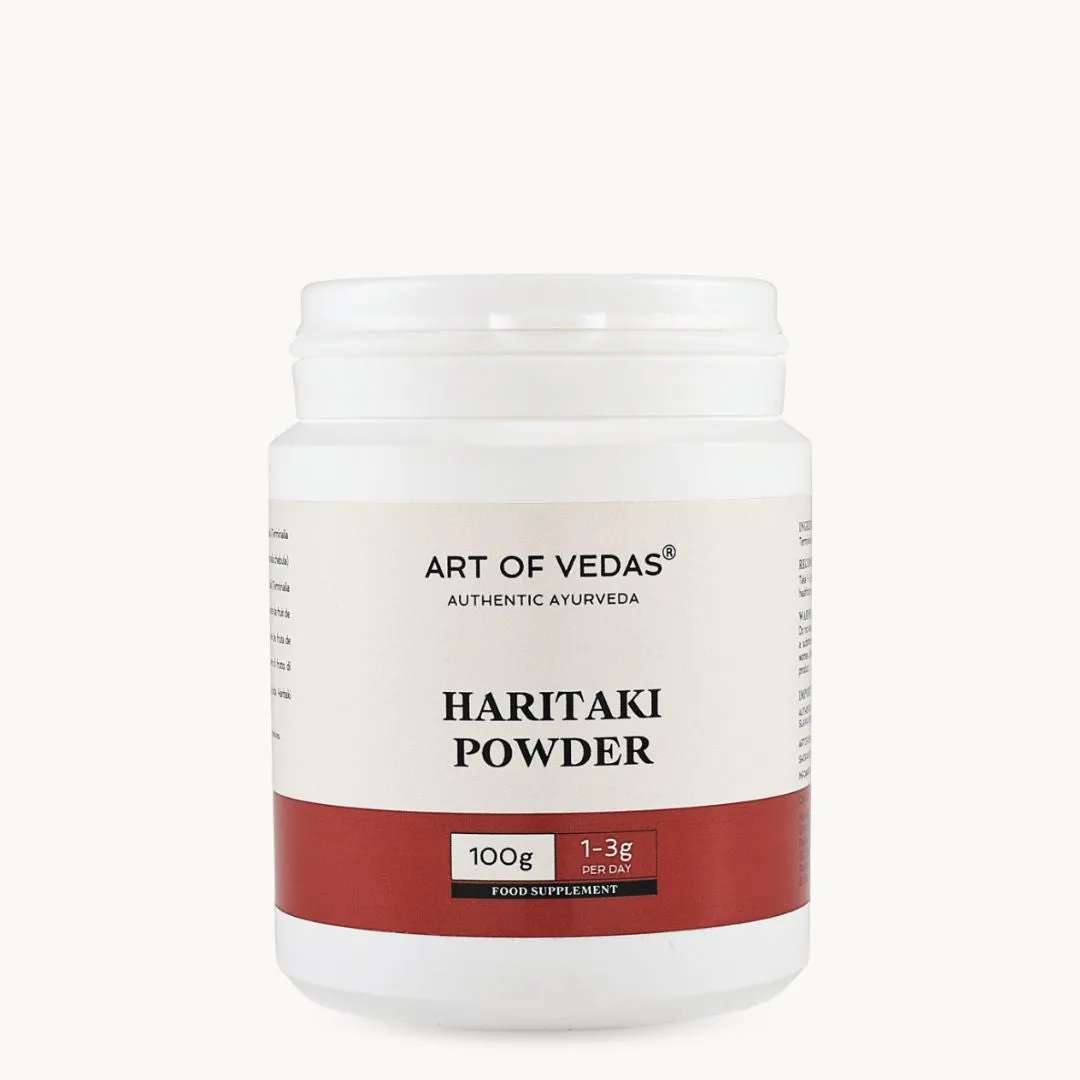
The customary method is simple. A small quantity of the powder, as indicated on the product label, is stirred into warm water and taken in the evening, some time after the last meal of the day. Some traditions steep the powder in water overnight and drink the liquid in the morning instead. The taste is honest and pronounced, sour and astringent at first with a faintly sweet finish, and most people find they grow used to it within a week or two. Follow the intake stated on the label of our Triphala powder, and if you prefer a measured, taste-free format, the same blend is available as Triphala capsules. Those who wish to work with single fruits can also find Haritaki powder on its own.
Choosing Between Powder, Tablets and Capsules
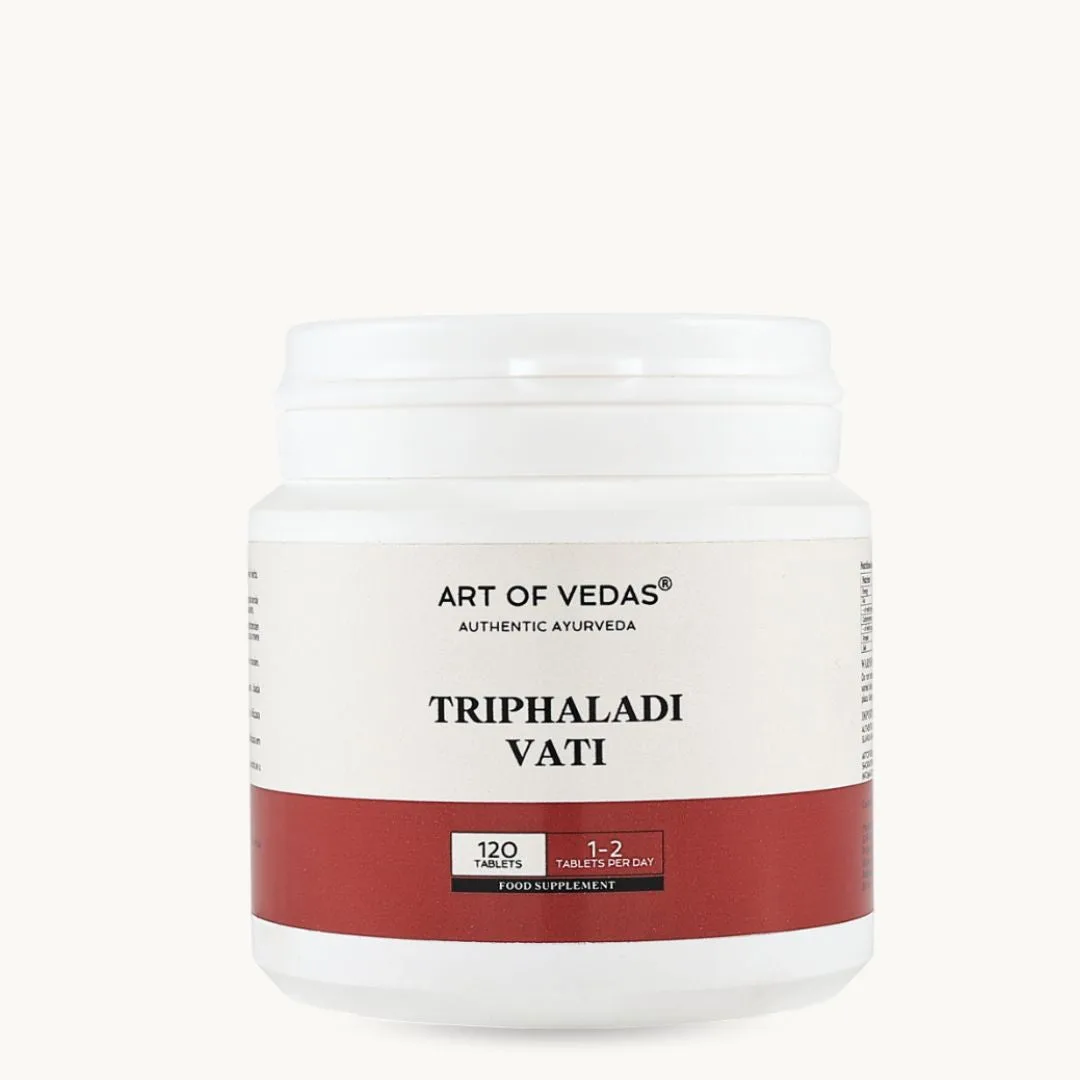
The powder is the oldest format and the one the classical texts describe, and it suits people who value the traditional taste experience and the flexibility of preparing it with warm water. Tablets and capsules suit travel and fixed routines. If you are weighing the options, our guide to Triphala Vati tablets explains how the classical tablet format is made, and our overview of Churnam, the classical Ayurvedic powder form, sets Triphala in the context of the wider powder tradition. Whichever format you choose, Art of Vedas supplies the same classically prepared three-fruit blend.
Frequently Asked Questions
What is Triphala Churna?
Triphala Churna is a classical Ayurvedic powder made from equal parts of three dried fruits: Amalaki, Bibhitaki and Haritaki. It is one of the oldest and most frequently referenced formulations in the Ayurvedic literature.
What is Triphala Churna traditionally used for?
Within Ayurvedic tradition it is taken in the evening with warm water as part of a daily routine and is classically categorised as a Rasayana. Cooled Triphala decoctions also appear in traditional skin and hair rinse customs.
When is the best time to take Triphala?
Tradition favours the evening, some time after the last meal. Some households prepare it as an overnight infusion and drink it in the morning. Always follow the recommended intake on the product label.
What does Triphala taste like?
Expect a pronounced sour and astringent taste with bitter notes and a faintly sweet finish. Classical teaching counts five of the six tastes in the blend, which is part of its reputation.
Should I choose powder, tablets or capsules?
The powder is the classical format and offers the traditional taste experience. Tablets and capsules offer convenience and portioning. The blend inside is the same three-fruit formula.
Is Triphala the same as Haritaki?
No. Haritaki is one of the three fruits within Triphala. Triphala always contains Haritaki together with Amalaki and Bibhitaki in equal parts.
The products mentioned in this article are food supplements or traditional Ayurvedic preparations. Food supplements are not a substitute for a varied, balanced diet and a healthy lifestyle, and they are not intended to diagnose, treat, cure or prevent any disease. Always follow the directions and the recommended daily intake stated on the product label, and consult a qualified Ayurvedic practitioner or healthcare professional if you are pregnant, nursing, taking medication or have an existing medical condition.