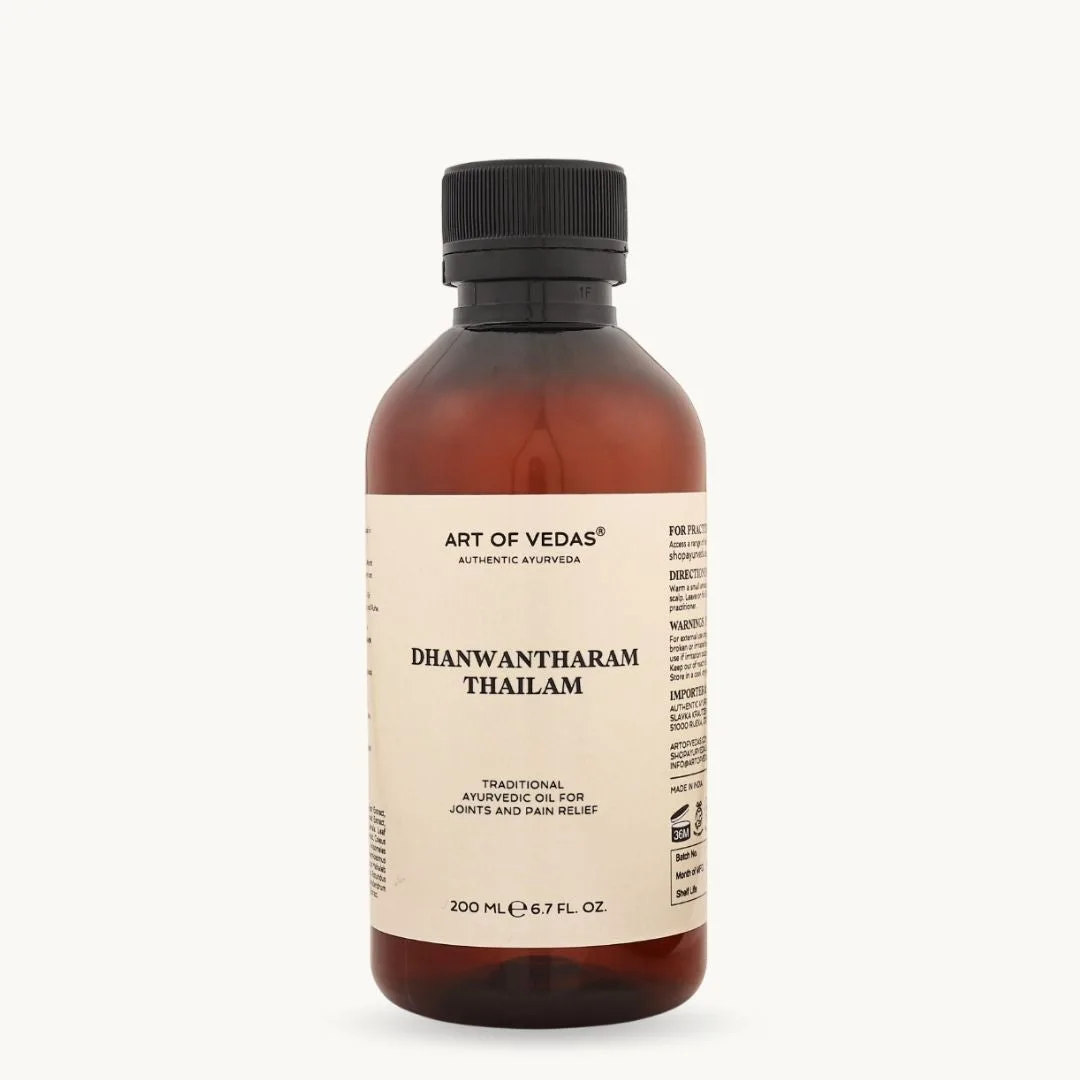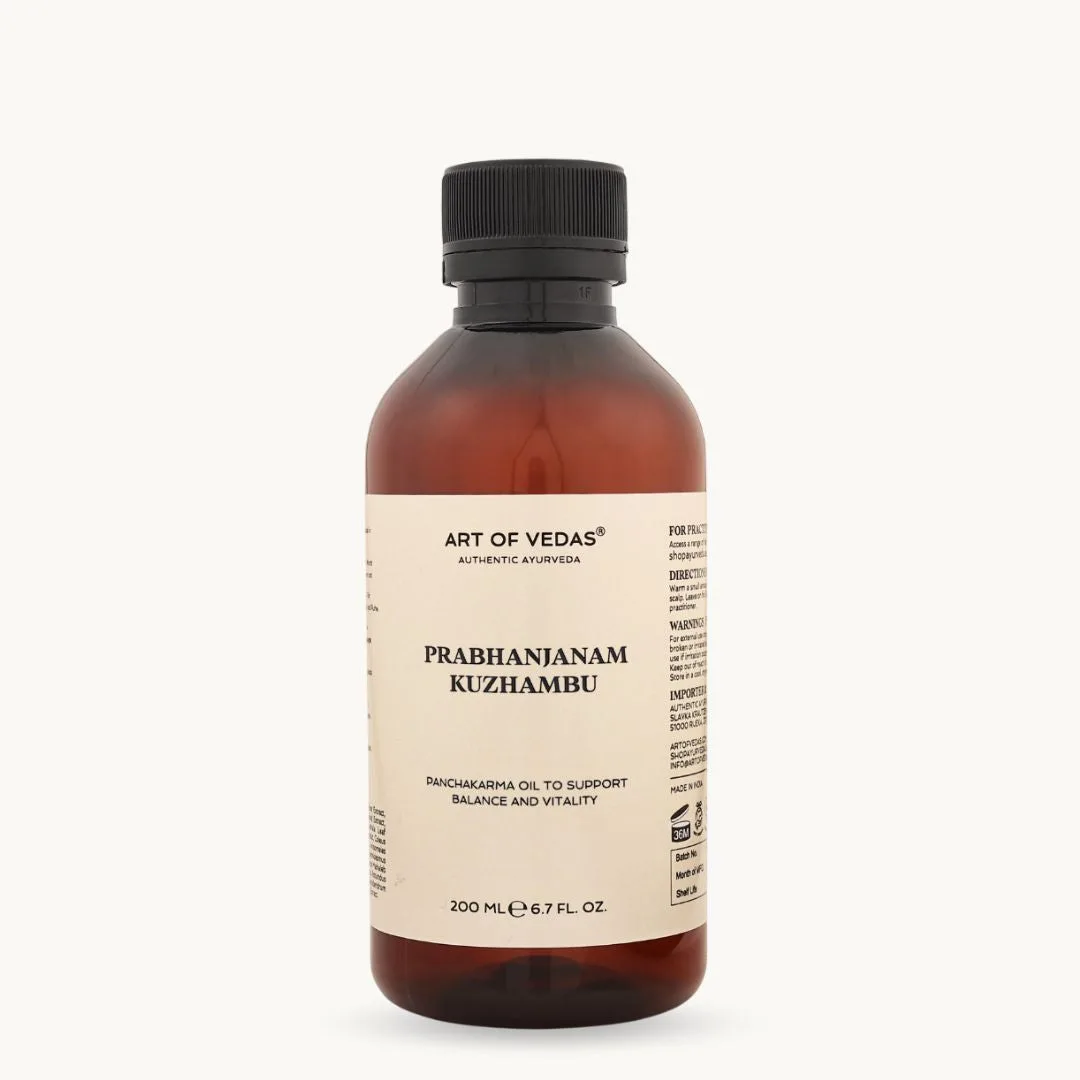
In brief: A Kuzhambu (also searched as Kuzhambu oil) is a classical Ayurvedic medicated oil in a heavier mixed base: the herbs of a Thailam recipe such as Dhanwantharam or Sahacharadi, cooked into sesame oil and castor oil. It is thicker than a Thailam and stays where it is placed; cooked longer, the same recipe becomes the semi-solid Mezhukupakam. Classically placed with Vata and traditionally used for Abhyanga of one area, it is sold by Art of Vedas in 200 ml bottles. This guide covers the meaning of the word, how a Kuzhambu is made, how to warm and apply it, which one suits which Dosha, storage and timing.
Therapies & Oils
Kuzhambu: The Complete Guide
Reviewed by Dr. Anu Joy, MD (Ayurveda), Ayurvedic doctor of Art of Vedas

Kuzhambu Meaning in Ayurveda
A Kuzhambu is not an oil. It is a semi-solid preparation, soft enough to yield under warm fingers yet firm enough to stay exactly where it is placed. That behaviour defines its use: applied to a chosen area, a Kuzhambu remains on that area and absorbs slowly, extending the working time of a focused application. A Thailam, by contrast, is a liquid preparation that spreads readily and suits long strokes over the whole body. The two formats are siblings, not rivals, and the full comparison is drawn in our guide to the difference between Thailam and Kuzhambu. Tradition reaches for the Kuzhambu when it wants targeted, local work rather than broad coverage.
How a Kuzhambu Is Made
The classical method brings three elements together: Kashayam, the herbal decoction; Kalka, the fresh herb paste; and a base of three fats, sesame, coconut and castor, each contributing its own character. The composition is reduced slowly over regulated heat until the moisture has left and the preparation settles into its semi-solid body. No thickening agents are added; the consistency comes from the fats themselves and the degree of reduction. The full method, step by step, is described in how a Kuzhambu is made.
The Kuzhambu Range at Art of Vedas
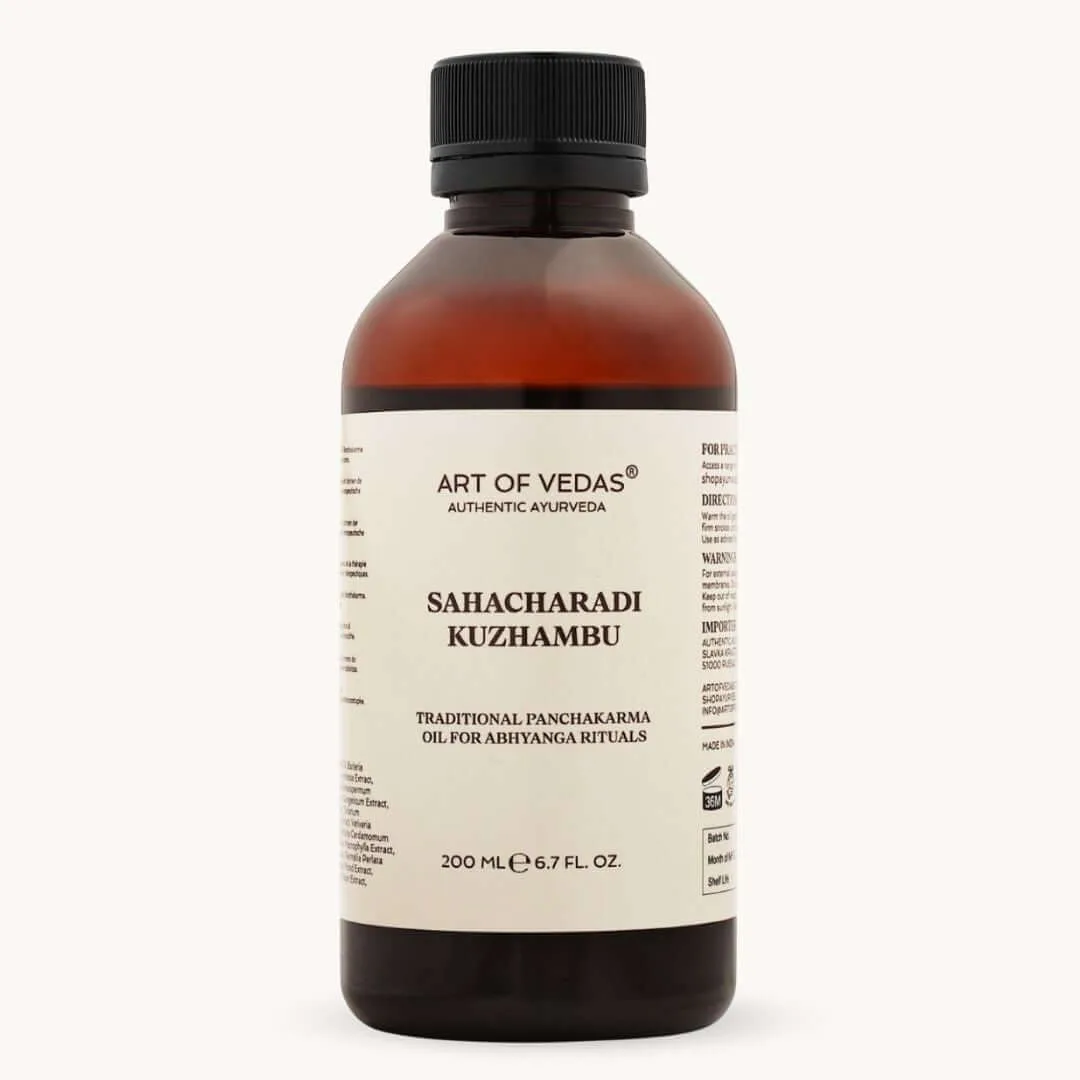
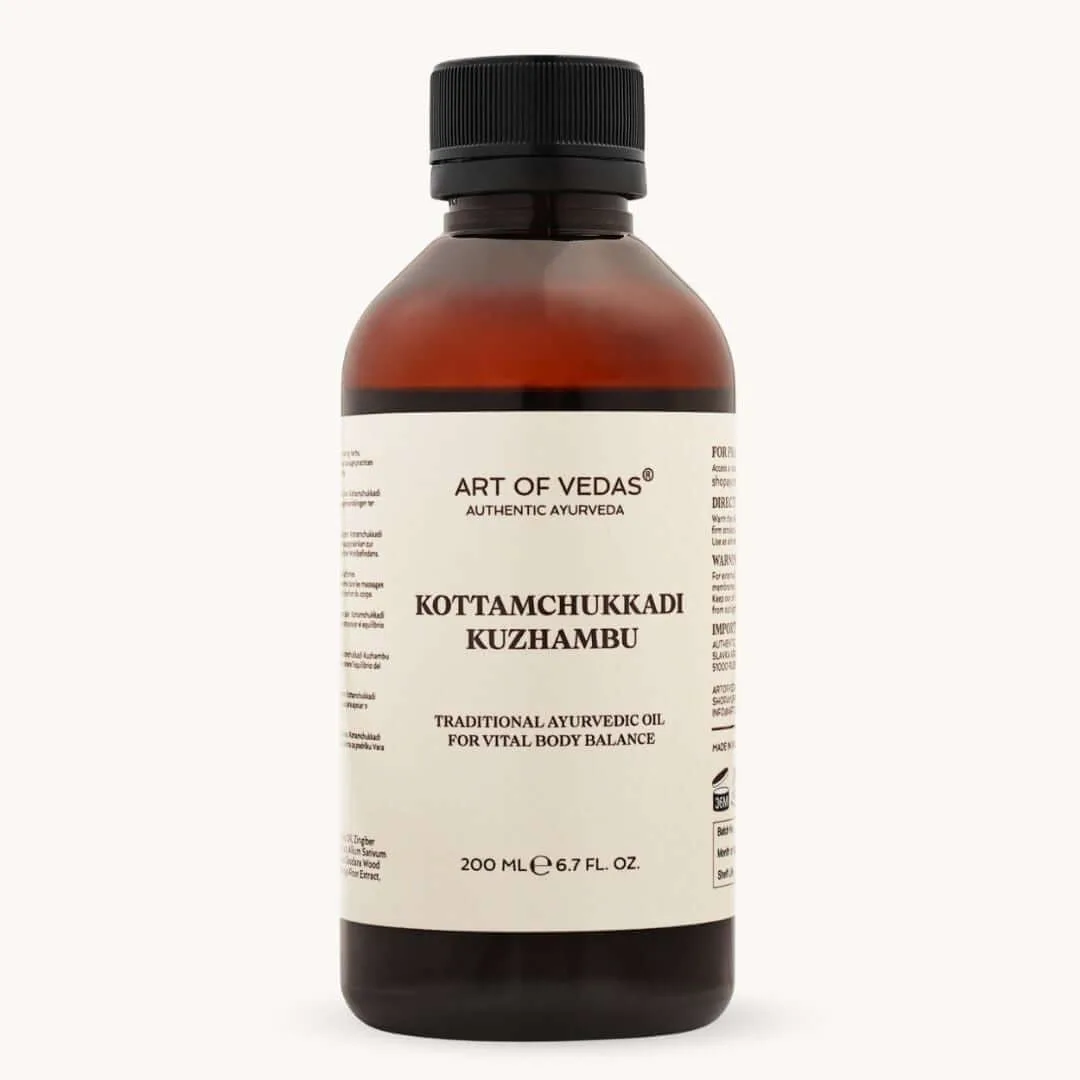
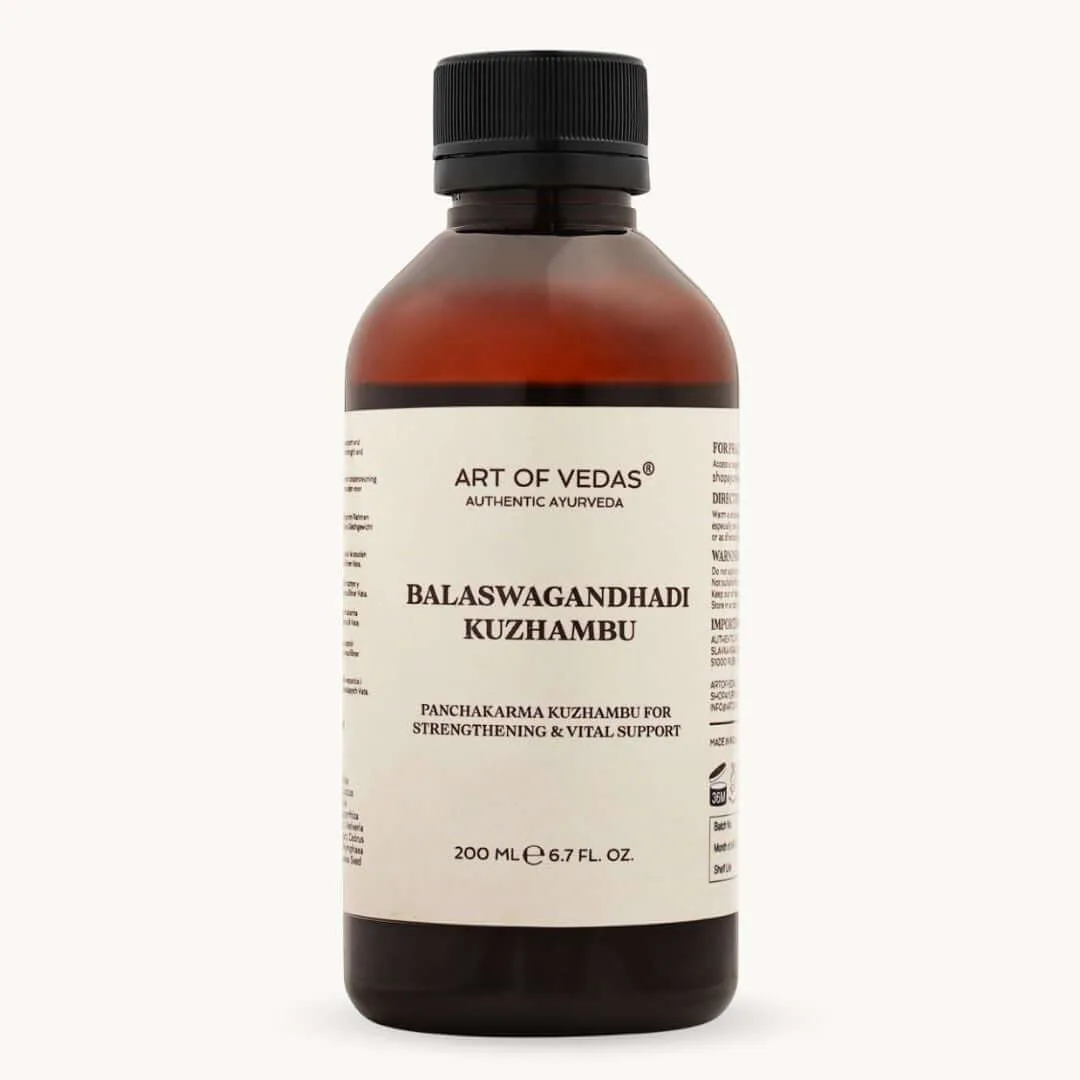
Our range follows the classical repertoire. Dhanwantharam Kuzhambu is the flagship, the semi-solid form of the great Bala-based Vata formula. Sahacharadi Kuzhambu carries the classical lower-body composition. Kottamchukkadi Kuzhambu brings the warming, stimulating register of its namesake formula, and Prabhanjanam Kuzhambu the Vata-comfort classic of the same name. Balaswagandhadi and Karparastyadi complete the family. Each product page lists the complete composition of its preparation.
How to Use a Kuzhambu
Warm a small quantity gently in a water bath until it softens, then work it into the chosen area with slow, sustained strokes. Because the preparation stays on the applied area and absorbs gradually, allow it unhurried time before a warm shower. A little goes far; the density that makes a Kuzhambu different also makes it economical. Readers coming from the liquid classics will find the wider context in our complete guide to traditional Ayurvedic Thailams.
- Stays on the applied area rather than running
- Absorbs slowly, extending the working time of focused application
- Dense, soft body suited to sustained local strokes
- Three-fat base uniting warming, cooling and penetrating characters
- Economical: a small quantity serves a full application
Frequently asked questions about Kuzhambu
What is a Kuzhambu in Ayurveda? A Kuzhambu is a classical Ayurvedic medicated oil prepared in a heavier mixed base. The herbs of a known Thailam recipe, Dhanwantharam, Sahacharadi or Kottamchukkadi among them, are cooked into sesame oil and castor oil, so the finished preparation is thicker and denser than a Thailam and stays where it is placed. Art of Vedas sells six Kuzhambu preparations in 200 ml bottles, all for external use.
What does Kuzhambu mean in English? There is no single English word. In everyday Malayalam and Tamil, Kuzhambu describes a thick, slow-flowing liquid, the same word that is used for a gravy. In Ayurvedic pharmacy it names a medicated oil cooked in a mixed base of sesame and castor oil, thicker than a Thailam. Kuzhambu oil, or thick medicated oil, is the closest English description of Dhanwantharam Kuzhambu and its relatives.
What is the difference between a Thailam, a Kuzhambu and a Mezhukupakam? Three consistencies of the same kind of recipe. A Thailam is the free-flowing oil, cooked into sesame oil, and is the form for Abhyanga of the whole body. A Kuzhambu is cooked in a mixed base of sesame and castor oil, so it is thicker and suits one area. A Mezhukupakam is the same recipe cooked longer still, until it is semi-solid and wax-like, for the thickest local application.
Dhanwantharam Thailam or Dhanwantharam Kuzhambu: which one? The same classical Dhanwantharam formula, with Bala, the Dashamoola roots, Ashwagandha and Shatavari among its herbs, in two bases. Dhanwantharam Thailam is the light, free-flowing oil for a daily Abhyanga of the whole body. Dhanwantharam Kuzhambu, in sesame and castor oil, is thicker and heavier and is traditionally used for a slower, focused Abhyanga of the muscles and joints of one area. Many people keep both.
How do you use Dhanwantharam Kuzhambu? Stand the closed bottle in warm water until the Kuzhambu flows easily and feels pleasantly warm on the inner wrist; do not use a microwave. Work a small amount into the chosen area with slow, sustained strokes until it is absorbed, leave it for 20 to 30 minutes, then take a warm shower. The evening is the usual time; daily or on alternate days, as a qualified Ayurvedic practitioner advises.
Which Kuzhambu for which Dosha? All six are classically placed with Vata; they differ in warmth. Dhanwantharam Kuzhambu and Balaswagandhadi Kuzhambu are the mildest and suit Vata with a share of Pitta. Sahacharadi Kuzhambu and Prabhanjanam Kuzhambu are warmer Vata preparations. Kottamchukkadi Kuzhambu and Karparasthyadi Kuzhambu, with ginger, mustard and galangal, are the most warming and are classically placed with Vata and Kapha. Ask a qualified Ayurvedic practitioner which suits your constitution.
How should a Kuzhambu be stored, and how long does it keep? Closed, in a cool place, away from direct sunlight and heat, with the cap tight after every use. A Kuzhambu thickens in a cool room and flows more easily in a warm one; both are normal, and a few minutes in warm water restores it. Use it within the date or period after opening printed on the label, and keep the opening clean so that no water gets in.
Can Dhanwantharam Kuzhambu be used in pregnancy, for children or on the face? Ask your doctor or a qualified Ayurvedic practitioner first. Dhanwantharam Kuzhambu is a body preparation for external use only: it is not a face oil, and Art of Vedas makes no claim about skin tone. Do a skin test on the inner forearm before the first application, keep it away from the eyes and broken skin, and do not use it if you react to sesame or castor oil.