Marma Points: Vital Energy Points in Classical Ayurveda
Marma points - the 107 vital anatomical sites mapped across the human body in classical Ayurvedic texts - represent one of the oldest systems of bodywork in recorded medicine. First described in the surgical treatise Sushruta Samhita (circa 600 BCE), Marma points were originally documented for a surgical purpose: to identify sites where trauma could cause serious harm, disability, or death. But the same anatomical precision that made Marma knowledge essential for surgeons made it equally valuable for therapists - and over the subsequent centuries, Marma therapy evolved into a sophisticated healing system in its own right.
Each Marma point is a junction where multiple tissue types converge - muscles, blood vessels, ligaments, bones, and joints meet at specific locations where vital energy (Prana) concentrates. These are not abstract "energy points" in a speculative sense - they are anatomically identifiable sites where the body's physical structures, circulatory pathways, and neural networks intersect.
The 107 Marma Points
The Sushruta Samhita classifies the 107 Marma points by body region:
Head and neck (37 Marma points): The densest concentration in the body - reflecting the classical understanding that the head is the seat of Prana and the sensory organs. Key points include Sthapani (the "third eye" point between the eyebrows, targeted in Shirodhara), Adhipati (the crown point), and Phana (at the sides of the nostrils, relevant to Nasya therapy).
Trunk (12 Marma points): Including Hridaya (the heart region), Nabhi (the navel centre), and Basti (the lower abdominal centre governing the urinary and reproductive systems).
Upper limbs (22 Marma points): Concentrated at the joints - shoulders, elbows, wrists, and fingers. These points are particularly relevant in Abhyanga practice, where joint areas receive specific attention.
Lower limbs (22 Marma points): Mirroring the upper limbs - hips, knees, ankles, and feet. The foot contains several therapeutically important Marma points, particularly Talahridaya (the centre of the sole), which is considered one of the most responsive points for general calming and grounding.
Back (14 Marma points): Running along the spine and across the shoulder blades - corresponding closely to the paravertebral regions that modern anatomy identifies as containing major nerve plexuses.
Classification by Vulnerability
Sushruta classified Marma points into five categories based on what happens when they are injured - a classification that remains relevant for understanding their therapeutic sensitivity:
Sadya Pranahara (immediately fatal): Points where severe trauma causes rapid death. These are the sites that surgeons must avoid at all costs.
Kalantara Pranahara (fatal over time): Points where injury leads to gradual deterioration. Understanding these points informs the gentle, sustained pressure used in therapeutic Marma work.
Vishalyaghna (fatal only if penetrated): Points that tolerate surface pressure but not deep penetration - directly informing the distinction between therapeutic Marma massage (surface pressure) and contraindicated deep manipulation.
Vaikalyakara (causing disability): Points where injury causes functional impairment. Therapeutically, gentle stimulation of these points is traditionally used to support the associated functions.
Rujakara (causing pain): Points where injury causes pain but no permanent damage. These are the most commonly worked points in therapeutic Marma massage.
Marma Therapy in Practice
Facial Marma Massage
The face contains numerous accessible Marma points that respond well to gentle, circular pressure. Kansa facial massage is one of the most effective methods for working facial Marma points - the bronze alloy of Kansa creates a specific interaction with the skin's pH while providing smooth, controlled pressure suitable for the delicate facial Marma sites.
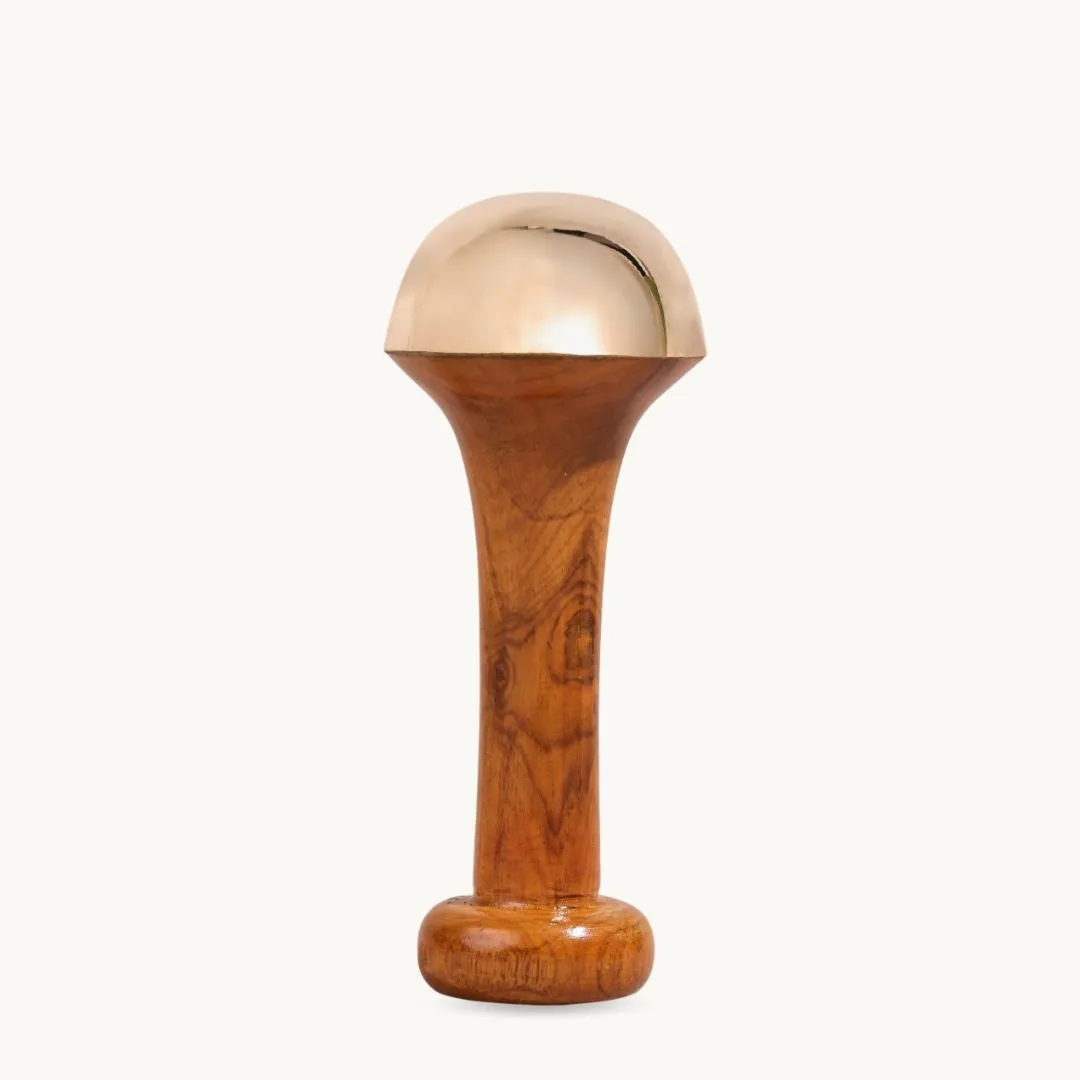
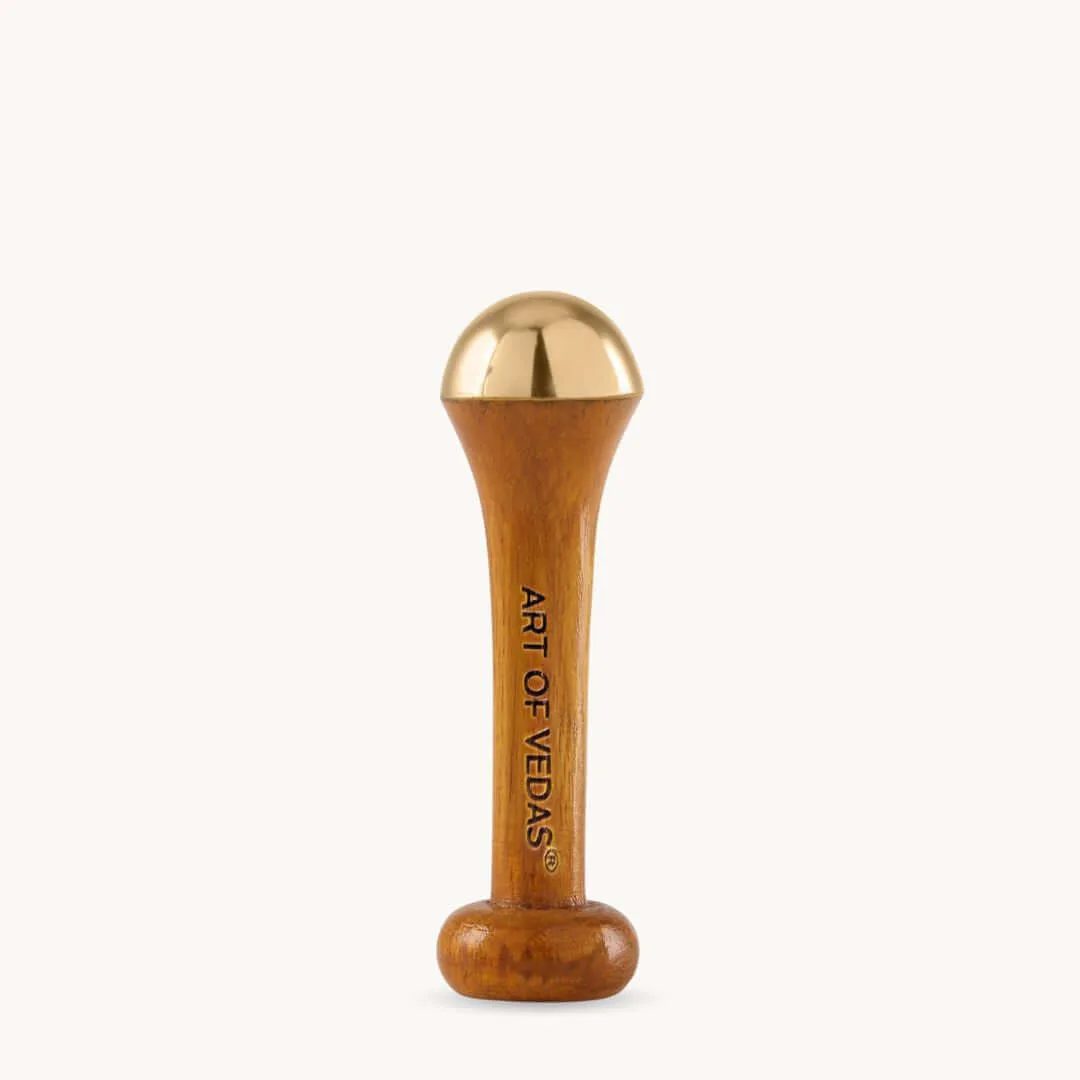
Key facial Marma points include Sthapani (between the eyebrows), Apanga (outer corner of the eye), Shankha (the temples), and Hanu (the chin point). Each responds to slow, gentle circular pressure with the Kansa Marma Wand - a tool designed specifically for precise Marma point work on the face and other sensitive areas.
Scalp and Body Marma Work
The scalp contains several therapeutically important Marma points - particularly Adhipati (the crown) and Simanta (the cranial suture lines). The Kansa Scalp and Body Wand, with its multiple Kansa nodes, allows simultaneous stimulation of several scalp Marma points during Shiro Abhyanga (head massage).
For full-body Marma work, the Kansa Abhyanga Wand provides the broader surface contact needed for larger body Marma points - particularly those at the joints, along the spine, and on the soles of the feet.
Oils for Marma Therapy
Marma therapy traditionally uses warm medicated oils that match the therapeutic intention and the patient's constitution. Thailams are the standard medium - their medicated base carries the therapeutic action of the herbs directly into the Marma sites during massage.
Marma Points and Modern Bodywork
The correspondence between Ayurvedic Marma points and the acupuncture points of Traditional Chinese Medicine has been extensively noted - many points occupy identical or very similar anatomical locations, suggesting either a shared origin or parallel anatomical observation. Similarly, many Marma points correspond to trigger points identified in modern myofascial therapy, neurovascular bundles in surgical anatomy, and reflex zones in reflexology traditions.
This convergence across independent medical traditions suggests that Marma points reflect genuine anatomical features rather than arbitrary cultural constructs - sites where the body's physical structures create natural concentration points for therapeutic intervention.
For personalised guidance on Marma therapy as part of your wellness approach, our Ayurvedic consultation service connects you with qualified practitioners.
Classical Ayurvedic knowledge for educational purposes. This is not medical advice and should not replace professional consultation.