In brief: Shirodhara (also written Shiro Dhara, from Shiro, head, and Dhara, stream) is the classical Ayurvedic treatment in which warm oil, or sometimes buttermilk or a herbal decoction, flows in a slow, continuous stream over the forehead for 30 to 60 minutes. It is traditionally used to calm the mind and settle Vata, and it is given by a trained therapist with a Shirodhara pot hanging above the treatment table. The oil is chosen by constitution, often Brahmi Thailam or Ksheerabala Thailam. See our Traditional Shirodhara Brass Pot and Brahmi Thailam.
Shirodhara: The Classical Ayurvedic Third-Eye Oil Therapy
Shirodhara - from Shiro (head) and Dhara (stream, flow) - is the iconic Ayurvedic treatment in which warm herbal oil, buttermilk, or herbal decoction is poured in a continuous, rhythmic stream over the forehead and specifically the Ajna Marma (the point between the eyebrows, often called the "third eye"). It is simultaneously the most visually distinctive and one of the most deeply calming treatments in the classical Ayurvedic repertoire.
Described in the classical texts as part of Murdha Taila (head oil therapies), Shirodhara belongs to the broader category of Panchakarma supportive procedures - though it is also widely used as a standalone treatment for its powerful effects on the nervous system, mind, and sensory organs.
How Shirodhara Works
The continuous stream of warm liquid falling from a consistent height onto the forehead creates a specific calming effect that is difficult to replicate through any other method. The steady, rhythmic stimulation of the Ajna Marma point produces a deeply calming effect - a state that classical texts describe as the pacification of Prana Vata (the sub-dosha of Vata governing the mind and senses).
The warmth and weight of the oil stream, combined with the specific oscillation pattern used by the practitioner, creates a progressive deepening of relaxation that many recipients describe as existing somewhere between waking consciousness and sleep - a unique state that distinguishes Shirodhara from other relaxation therapies.
Types of Shirodhara
Taila Dhara (oil stream): The most common form - uses warm herbal oil selected according to the person's constitution. Sesame-based Thailams are typical: Chandanadi Thailam for Pitta with heat, Balaswagandhadhi Thailam for Vata with weakness, Ksheerabala Thailam for combined Vata-Pitta presentations.
Takra Dhara (buttermilk stream): Uses warm herbal buttermilk - traditionally chosen for Pitta predominance, particularly with heat in the skin. Lighter and more cooling than oil Shirodhara.
Kashaya Dhara (decoction stream): Uses warm herbal Kashayam - traditional for Kapha-predominant conditions where oil would be too heavy.
The Treatment Process
Equipment
Classical Shirodhara requires a Shirodhara pot (Dhara Patra) - a vessel with a controlled opening at the base that allows the liquid to flow in a steady, adjustable stream. Traditional pots are made from brass, which retains heat well and allows precise flow control. Stainless steel alternatives are also used in modern practice settings.
The pot is suspended above the treatment table at a height of approximately 10, 15 centimetres (four to six inches) above the forehead - close enough for the stream to maintain warmth on contact, high enough for the falling liquid to develop gentle impact.
Treatment Sequence
Preparation: The person lies supine on a treatment table with a trough arrangement to collect the oil. The oil is warmed to a comfortable temperature (typically around 38, 40°C). A thin cotton wick or gauze strip is placed in the pot's opening to regulate flow into a smooth, even stream.
Oil application: The practitioner begins the stream at the centre of the forehead, then slowly oscillates it from temple to temple in a rhythmic pattern. The consistency of this oscillation - its speed, amplitude, and rhythm - is a skill that experienced practitioners develop over years. The stream is never stopped abruptly; transitions are gradual and smooth.
Duration: A standard session runs 30, 45 minutes. Therapeutic courses typically involve 7, 14, or 21 consecutive daily sessions depending on the person's needs.
Post-treatment: After the stream ends, the oil is gently removed from the hair and forehead. The person rests for 15, 30 minutes in a warm, quiet environment. A light head wash may follow, though many practitioners recommend leaving a thin layer of oil on the scalp for continued absorption.
Oils Used in Shirodhara
Oil selection is a practitioner's decision based on the person's Dosha balance and the season. Common choices include:
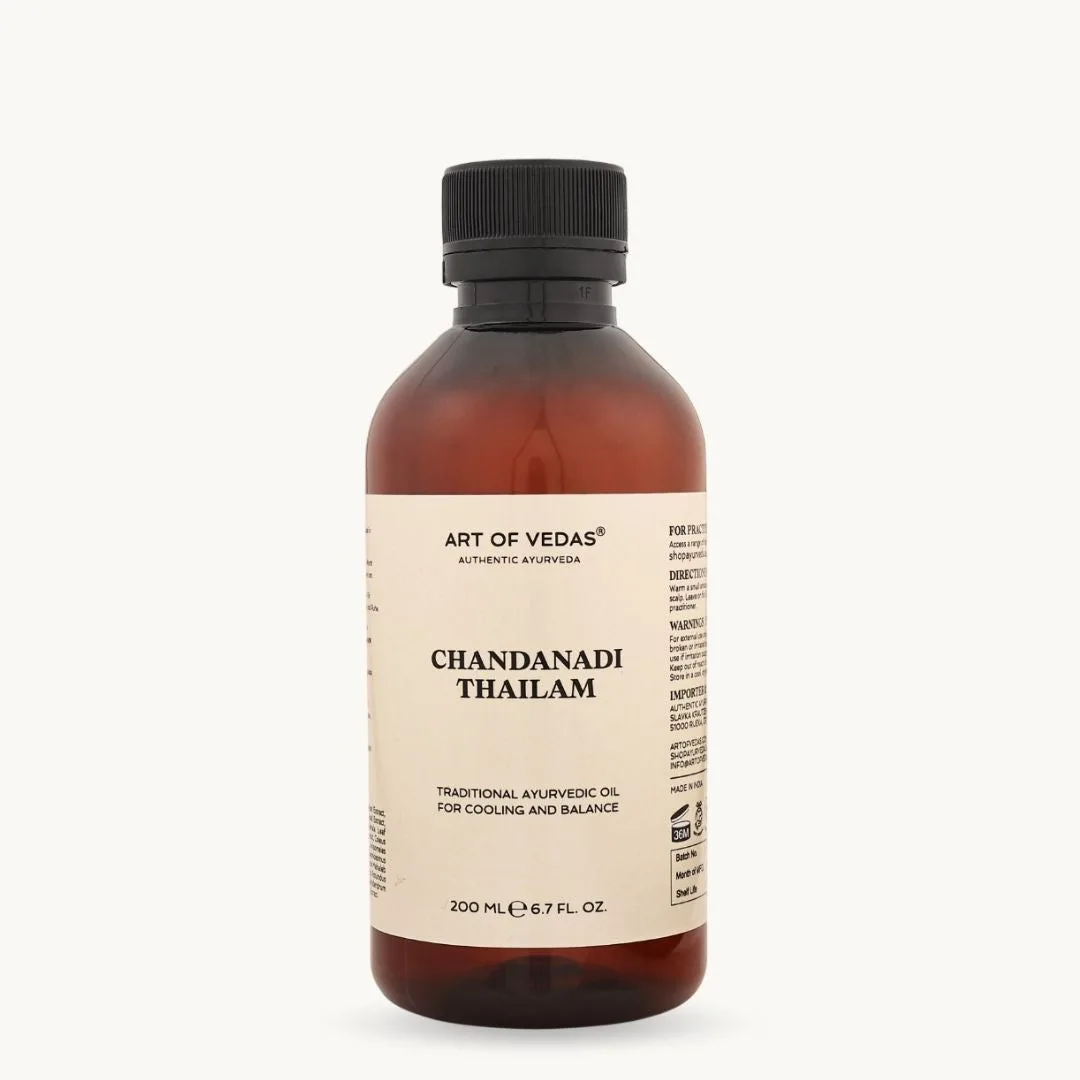
Chandanadi Thailam: Sandalwood-based - cooling, Pitta-pacifying. Traditional choice for conditions with heat, burning sensations, and mental agitation.
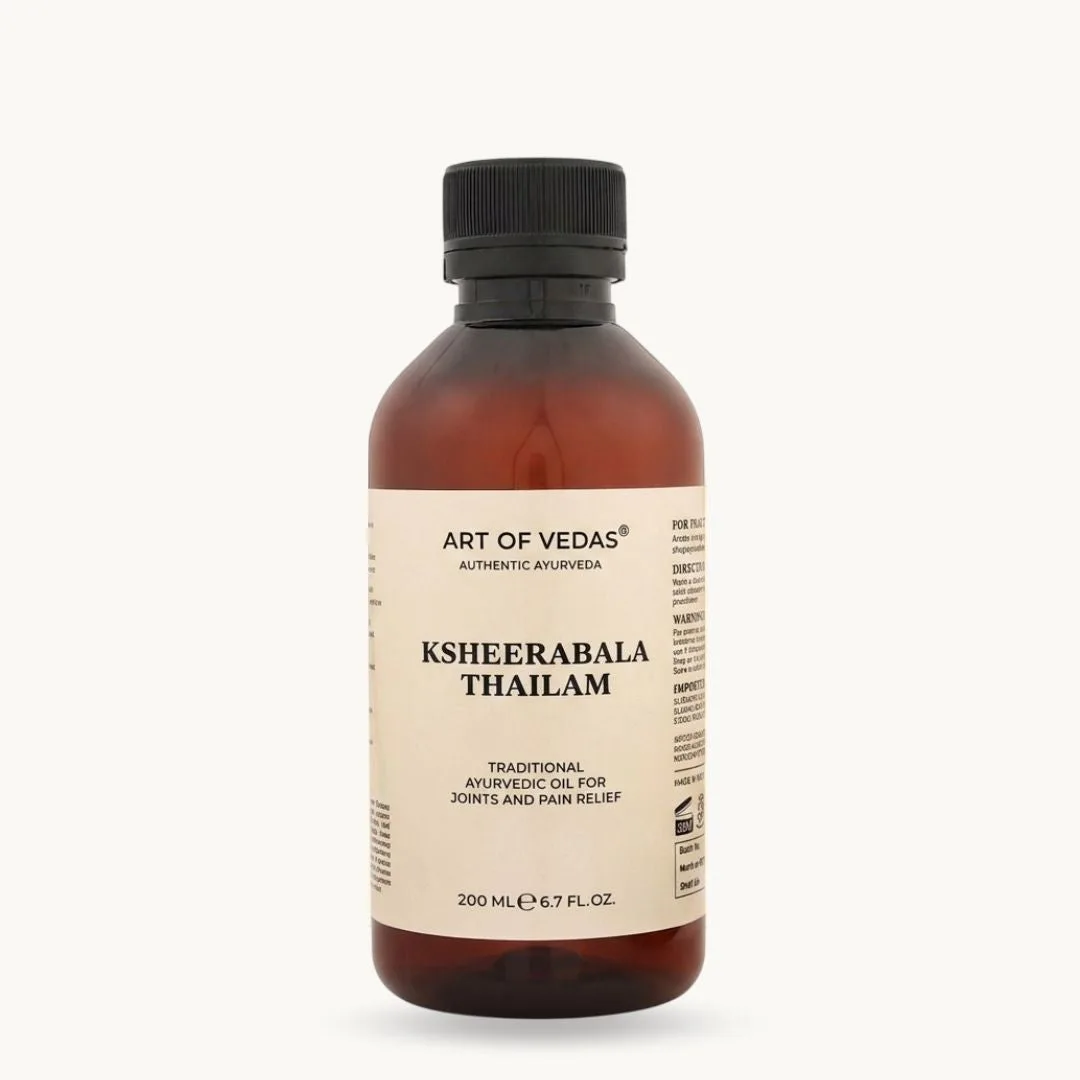
Ksheerabala Thailam: Prepared with Bala (Sida cordifolia) by the classical Ksheerapaka method - nourishing, Vata-pacifying.
Balaswagandhadhi Thailam: Bala and Ashwagandha base - strengthening, deeply Vata-pacifying. Used for conditions involving depletion, fatigue, and nervous exhaustion.
The selection of herbal oils for Shirodhara is a practitioner decision that accounts for the whole person - not a self-prescription choice.
Shirodhara in Home Practice
While professional Shirodhara requires trained practitioners and specific equipment, simplified home adaptations exist. These involve warm oil application to the forehead and scalp as part of a broader Abhyanga (self-massage) practice - not a replacement for professional Shirodhara but a supportive home ritual that shares some of its calming qualities.
For professional-grade Shirodhara, the brass Shirodhara pot and stainless steel alternative are available for practitioners setting up treatment rooms.
For guidance on whether Shirodhara may be appropriate for your situation and which oil type to use, consult a qualified practitioner through our Ayurvedic consultation service.
Classical Ayurvedic knowledge for educational purposes. This treatment description is for informational purposes and does not constitute medical advice.
Frequently asked questions about Shirodhara
What is Shirodhara? Shirodhara is an Ayurvedic treatment in which a thin stream of warm oil is poured steadily onto the forehead while the person lies on a treatment table. It belongs to the Murdha Taila group of head oil treatments, is often given after Abhyanga and is traditionally valued for deep relaxation and a calm, settled mind.
How long does a Shirodhara session take? A classical Shirodhara session usually lasts 30 to 60 minutes of pouring, followed by a short rest and a gentle wash of the hair. Practitioners often give it as a series of seven, fourteen or twenty-one days, and many combine it with a full body Abhyanga beforehand.
Which oil is used for Shirodhara? The practitioner chooses the oil by constitution and season. Brahmi Thailam and Ksheerabala Thailam are classical choices for Vata and Pitta, and plain sesame oil is also used. For Takradhara the stream is herbal buttermilk, for Kashayadhara a herbal decoction.
Can Shirodhara be done at home? Shirodhara needs a steady stream at the right height and temperature and a second person to guide it, so it is normally given in a treatment room. At home, Shiroabhyanga, the warm oil massage of the head, is the traditional daily alternative.