Mukha Abhyanga: The Classical Ayurvedic Facial Massage Ritual
Mukha Abhyanga - the classical Ayurvedic practice of facial oil massage - is among the most detailed and purposeful self-care rituals described in the classical texts. Where modern facial massage is often understood primarily in aesthetic terms, the classical Ayurvedic framework places Mukha Abhyanga within a precise physiological and energetic context: nourishing Bhrajaka Pitta (the sub-dosha governing skin function and complexion), stimulating the facial Marma points (vital energy points), supporting lymphatic drainage, and allowing medicated oil to penetrate into the deeper skin Dhatu through the warmth and friction of systematic massage.
This guide explains the classical principles, the ritual sequence, and the two key elements that make a classical Mukha Abhyanga complete: the right Ayurvedic face oil and a Kansa Wand.
The Classical Basis for Mukha Abhyanga
The Ashtanga Hridayam's Dinacharya chapter (daily routine) includes Abhyanga as one of the most important daily practices, and specifically mentions face and head as the areas requiring regular oil application. The classical rationale has several dimensions:
-
Bhrajaka Pitta support: Bhrajaka Pitta governs complexion, skin colour, and the capacity of skin to absorb and process what is applied to it. Daily oil massage with appropriate preparations directly nourishes this sub-dosha.
-
Marma point stimulation: The face contains several of the body's most important Marma points - concentrated energy junctions where Prana, blood, and the subtle body channels meet. Methodical massage activates and balances these points.
-
Ojas preservation: The face reflects the state of Ojas (vital essence) more visibly than any other part of the body. Consistent, nourishing facial Abhyanga is described as supporting the radiance associated with healthy Ojas.
-
Varnya action of classical oils: The specific Varnya (complexion-enhancing) preparations - Kumkumadi Thailam foremost among them - are described as requiring consistent application and massage to activate their full effect on Bhrajaka Pitta and Tvak (skin tissue).
The Kansa Wand: Essential Classical Tool for Mukha Abhyanga
Kansa - the sacred Ayurvedic metal alloy of copper, tin, and zinc - has been used in ritual healing and facial practice across India for thousands of years. The Kansa Wand (a domed tool in Kansa metal, used with circular and sweeping strokes on the oiled face) is the most important implement in classical Mukha Abhyanga practice.
The classical understanding of Kansa's action is threefold:
-
Draws Pitta and excess heat: Kansa metal is described in classical texts as drawing excess Pitta from the tissues - reflected in the slight yellowish tinge the wand may leave on the skin when Pitta is elevated (a sign the metal is working, not a cause for concern)
-
Alkalising and balancing: The metal's energetic quality is described as supporting the skin's natural balance
-
Friction for deeper oil penetration: The wand's dome creates sustained friction across the skin surface, generating localised warmth that opens the pores and allows the face oil to penetrate more deeply than hand application alone
The Double-Sided Kansa Wand provides both the large dome for broad facial strokes and the smaller dome for more precise work around the eyes and nose. For focused Marma point work, the Kansa Marma Wand offers a pointed tip designed specifically for Marma point pressure.
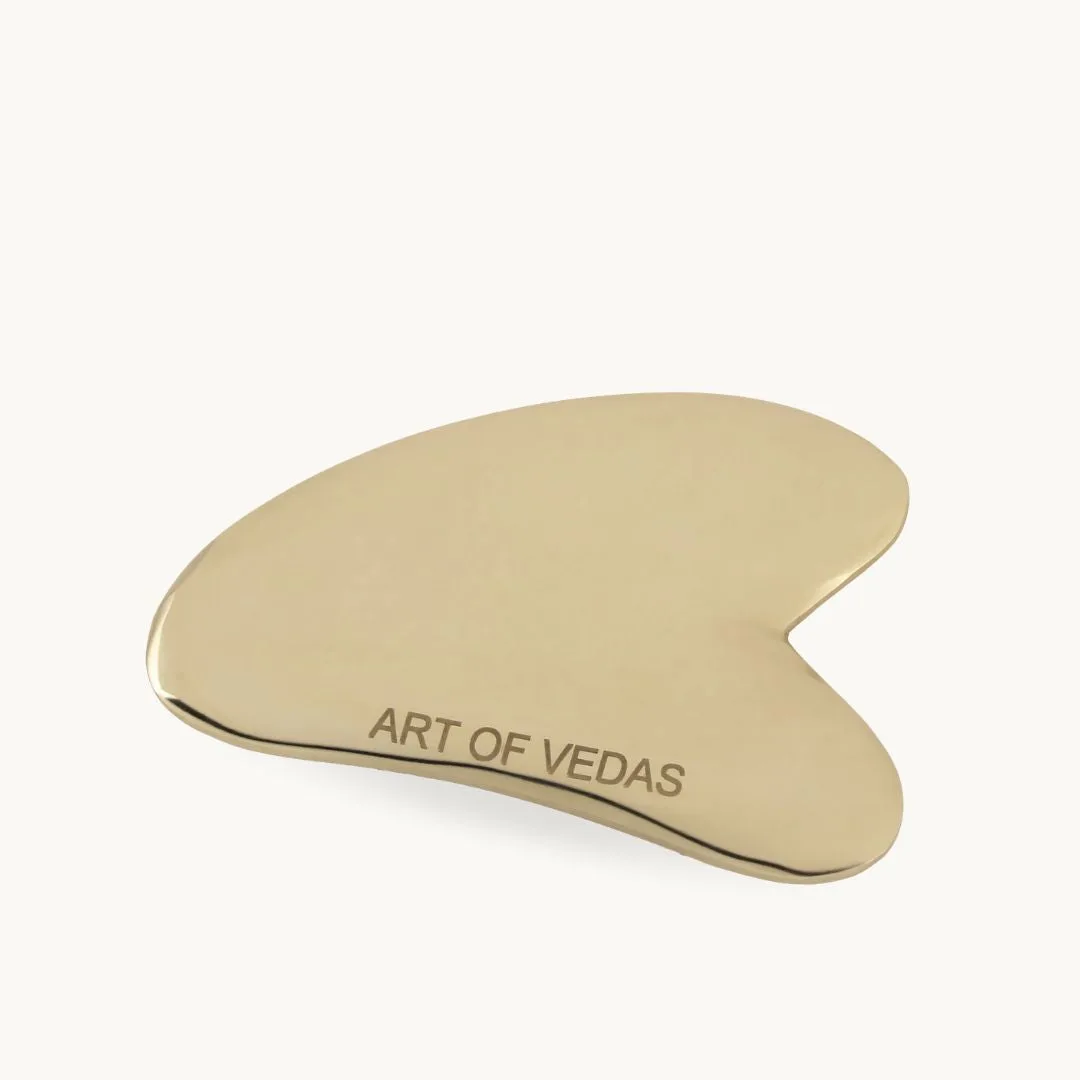
The Kansa Gua Sha offers an alternative tool in the same Kansa metal - its flat, curved form is particularly well-suited to the jaw, neck, and décolletage, and to longer lymphatic drainage strokes.
Choosing Your Facial Oil for Mukha Abhyanga
The classical approach pairs the Kansa Wand with a specific face oil chosen for your skin's constitution and current condition:
-
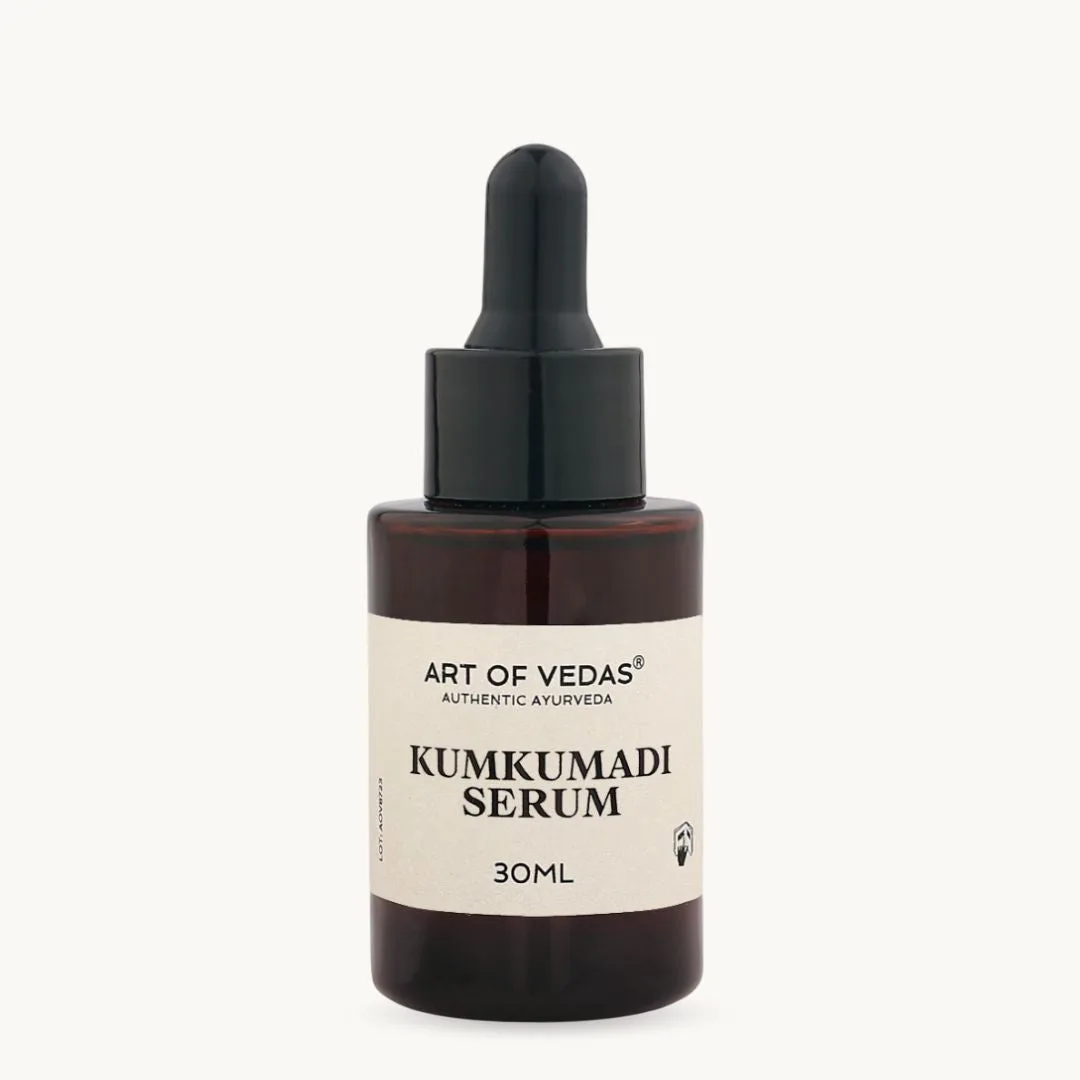
Kumkumadi Serum: The foremost classical Varnya face oil - Kumkuma (saffron) with Chandana, Manjishtha, and the full Varnya herb complex in sesame base. The classical evening application preparation, left on overnight for cumulative complexion benefit. Suitable for all skin types; particularly indicated where brightening and Tvak Prasadana (skin clarity) are the primary goals.
-
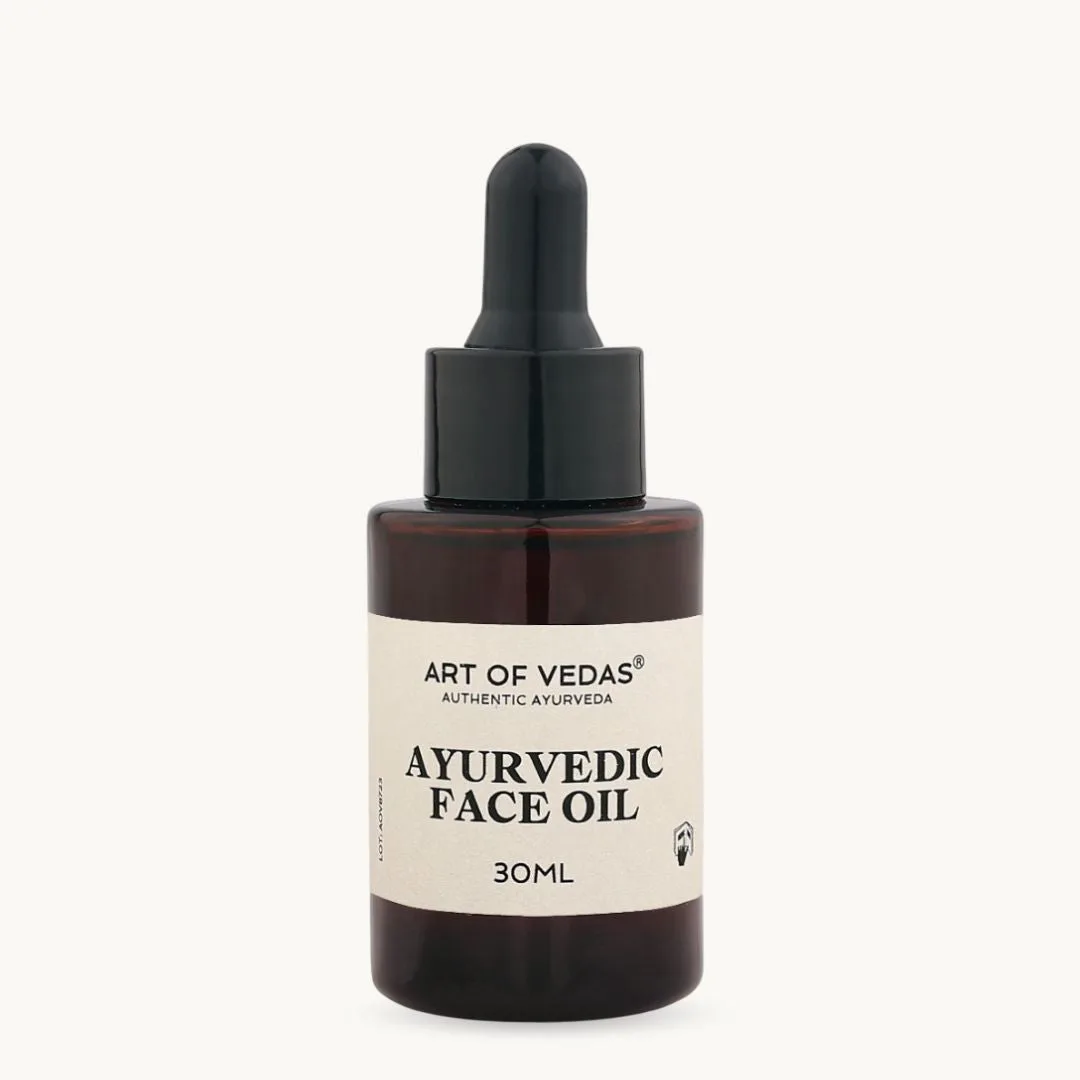
Ayurvedic Face Oil: The balanced daily face oil for morning and regular use - nourishing and light enough for daily Mukha Abhyanga without heaviness. Ideal as the morning companion to an evening Kumkumadi ritual.
-
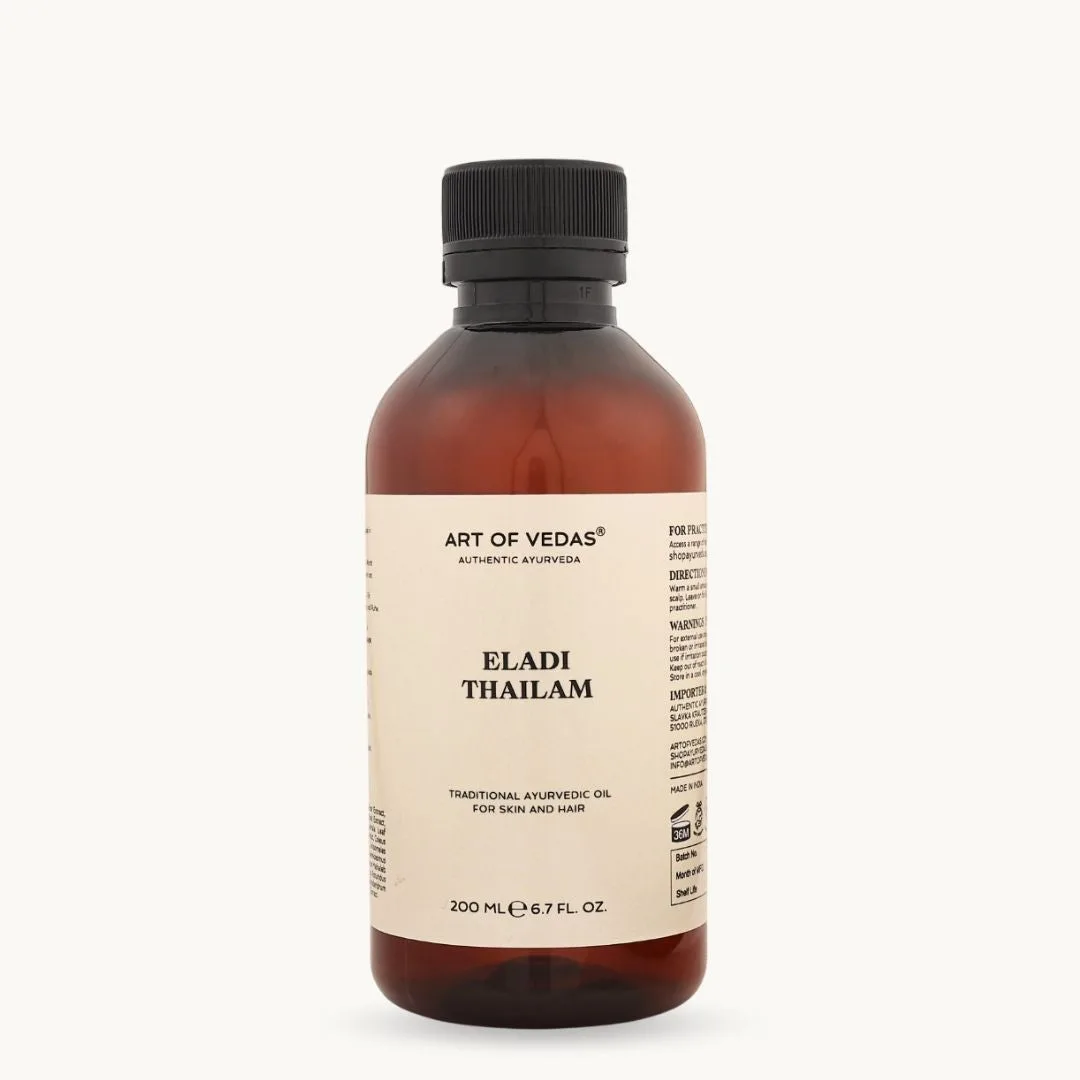
Eladi Thailam: Classical coconut-base Pitta-cooling facial oil - the most appropriate choice for reactive, sensitive, or hot-tending skin. Use in place of sesame-base oils in summer or where Pitta is the dominant skin concern.
-
Nalpamaradi Face Cream: Brings the clarifying Nalpamaradi Thailam profile into a cream format - ideal as part of the ritual for Kapha-type or congested skin, or as a targeted brightening step before the Kansa Wand massage.
The Classical Mukha Abhyanga Ritual: Step-by-Step
This sequence follows the classical Marma-aware approach. Allow 10, 15 minutes for a full practice.
Preparation
- Cleanse the face gently with warm water or an Ayurvedic face wash to remove any surface impurities
- The face should be slightly damp - not completely dry - as moisture assists initial oil application
- Warm 3, 5 drops of your chosen face oil between your palms until the oil is body temperature
Initial Application
- Press both palms over the face and hold for a breath - this first contact allows the oil's warmth and the Prana of your hands to make initial connection with the skin
- Spread the oil gently across the full face - forehead, cheeks, nose, jaw, chin - and down the neck with upward strokes
- Spend a moment pressing gently at the three key opening Marma points: Sthapani (between the eyebrows), Phana (outside each nostril), and the centre of the forehead - these open the subtle channels before the Kansa work begins
Kansa Wand Sequence
-
Forehead: Use the large dome of the Kansa Wand in slow horizontal strokes across the forehead - from centre to temples, both directions. 6, 8 strokes.
-
Eye area: Switch to the small dome. Gentle figure-eight circles around the eye socket - above the brow, outward to the temple, below the eye inward. Never press directly on the eye. 3, 4 times per side.
-
Cheeks: Large dome again. Long upward strokes from the jaw angle to the temple, from the nostril across the cheek, from the chin up the jaw. Always moving upward and outward.
-
Nose: Small dome. Gentle circles around Phana Marma (outer nostril) and along the nasal bridge.
-
Jaw and chin: Large dome. Firm outward strokes from the chin along the jawline to the ear. This area carries the most tension - take time here.
-
Neck: Long upward strokes from the collarbone to the jaw, always moving upward to support lymphatic drainage.
Closing Marma Sequence
- Using the Kansa Marma Wand or your fingertips, complete the practice with sustained gentle pressure at: Sthapani (third eye point), Apanga (outer eye corner - the most important Pitta Marma of the face), and Adhipati (crown of head, even if just lightly touched through the hair)
- Complete with both palms pressed gently over the face and a slow breath - the closing mirror of the opening
After the Ritual
Leave the oil on the skin - do not wash off. For the evening ritual with Kumkumadi Serum, leave overnight and rinse gently in the morning. For the morning Ayurvedic Face Oil ritual, allow 5, 10 minutes to absorb before any further preparation.
Integrating Mukha Abhyanga into Dinacharya
In classical Dinacharya (daily routine), Abhyanga is performed in the morning before bathing - Mukha Abhyanga forms the facial component of this morning practice. The evening adds the more intensive Kumkumadi night application. This morning-evening pairing is the classical model for consistent skin care that builds cumulative benefit over weeks and months of practice.
See our complete Dinacharya guide for how Mukha Abhyanga fits within the full classical morning routine, and our Mukha Lepa guide for how a classical face pack can be combined with the oil ritual on deeper-practice days.
Frequently Asked Questions
How often should I do Mukha Abhyanga?
The classical recommendation is daily - Abhyanga in some form (even abbreviated) is listed as a daily practice in Dinacharya. A five-minute morning application of the Ayurvedic Face Oil by hand is adequate for daily practice. The full Kansa Wand ritual can be done daily if time allows, or at minimum three to four times a week. The evening Kumkumadi application requires only two to three minutes.
Will oil make my skin more oily?
Classical Ayurveda does not approach this question in terms of "adding oil to oily skin." What presents as excess oiliness is typically Kapha congestion or Pitta inflammation - conditions that appropriate oil (in the right small quantity, with the right herbs, massaged in properly with a Kansa Wand) addresses rather than aggravates. The key factors are using the right oil for your constitution, not over-applying, and massaging in fully rather than leaving a surface layer.
Do I need the Kansa Wand or can I just use my hands?
Both are valid. Hand application is a simplified version of the practice and is entirely appropriate for daily use. The Kansa Wand adds the specific Marma stimulation, deeper friction-assisted penetration, and the classical Kansa metal benefits that are not available with hand massage. If you are building a consistent Mukha Abhyanga ritual, the wand significantly enhances the practice.
The Complete Mukha Ritual Range
Everything needed for a classical Mukha Abhyanga practice: Kumkumadi Serum · Ayurvedic Face Oil · Eladi Thailam · Nalpamaradi Face Cream · Kansa Wand Double-Sided · Kansa Marma Wand · Kansa Gua Sha. Browse the full face care collection.
This guide is for informational and educational purposes. Ayurvedic face oils and Kansa tools are for external use as part of a daily self-care ritual. They are not medicines and not substitutes for professional medical advice.