In brief: Nalpamaradi Thailam (also written Nalpamaradi Thailam, Nalpamaradi Taila or Nalpamaradi oil) is a classical Ayurvedic skin oil built on Nalpamara, the bark of four fig trees, with turmeric, cooked into a base oil by the Sneha Paka method. The base is where the two forms part: Nalpamaradi Thailam is made in sesame oil, Nalpamaradi Kera Thailam, also called Nalpamaradi Keram, in coconut oil. Art of Vedas sells the coconut form. The reference usually cited is the Sahasrayogam. It is cooling and classically placed with Pitta. This guide explains the two forms, which to choose, how to apply the oil, and how it compares with Eladi and Kumkumadi.
Nalpamaradi Thailam vs Nalpamaradi Kera Thailam: the two forms, which to choose and how to use the oil
Reviewed by Dr. Anu Joy, MD (Ayurveda), Ayurvedic doctor of Art of Vedas

What Nalpamaradi Thailam is, and what the name means
Nalpamaradi Thailam is a classical Ayurvedic oil for the skin. The name is built from Nalpamara, the traditional name for a group of four fig trees whose bark is used together, and the ending adi, which means and the others: the recipe that begins with the four fig barks. The four trees are the banyan (Nyagrodha, Ficus benghalensis), the sacred fig (Ashvattha, Ficus religiosa), the cluster fig (Udumbara, Ficus racemosa) and Plaksha, a fourth fig.
Thailam, also written thailam, taila or tel, is the word for an oil in which plants have been cooked; Nalpamaradi Thailam, Nalpamaradi Thailam, Nalpamaradi Taila and Nalpamaradi oil all name the same preparation. Kera means coconut, so Nalpamaradi Kera Thailam, or Nalpamaradi Keram, is the same recipe prepared in coconut oil instead of sesame oil. Art of Vedas sells the coconut form as Nalpamaradi Kera Thailam.
The classical description
The reference usually cited for Nalpamaradi Thailam is the Sahasrayogam, the collection in which many of the oils in daily use are set out. The classical recipe names, among others, the bark of the four fig trees and turmeric (Haridra), prepared in a base oil by the Sneha Paka method: the barks are simmered into a decoction, the softer plants are ground to a paste, and decoction, paste and oil are cooked slowly together until the water has gone and the paste meets the traditional finishing tests.
The classical texts place the fig barks and turmeric among the plants used for the skin, and the oil has always been a skin oil rather than a massage oil for the muscles and joints. Art of Vedas makes no claim about skin tone, and this guide does not describe the oil in those terms: it describes the tradition and the practical use. The recipe differs slightly between texts and makers, so compare declared ingredient lists rather than names.
Nalpamaradi Thailam vs Nalpamaradi Kera Thailam: the two forms
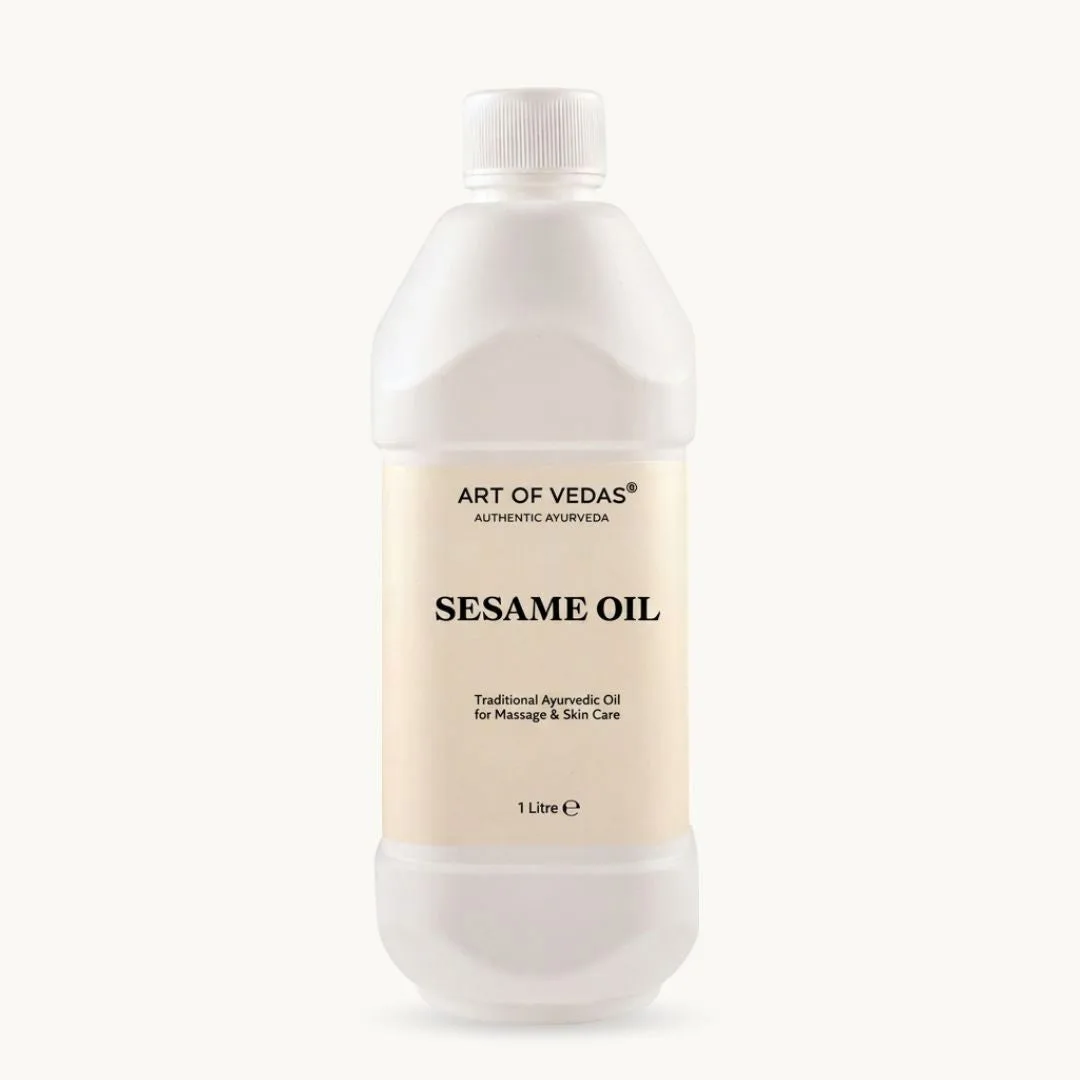
This is the most searched question about the oil, and the answer is short: the plants are the same, the base oil is different. Nalpamaradi Thailam, without further qualification, is prepared in sesame oil (Tila Taila). Nalpamaradi Kera Thailam, Nalpamaradi Keram or Nalpamaradi Kera Taila is prepared in coconut oil (Kera Taila). Both are classical ways of making the same recipe; the choice of base follows the climate and the use.
- Sesame base (Nalpamaradi Thailam): heavier, warmer and richer on the skin. Sesame is the standard base of Ayurvedic massage oils and sits longer on the skin. It suits the body, dry skin and the cooler months.
- Coconut base (Nalpamaradi Kera Thailam): lighter, cooler, quicker to absorb and easier to wash off. Coconut oil is the traditional base of the oils applied to the face and scalp in warm climates. It suits the face, warm skin and the warmer months. Coconut oil sets below about 24 degrees Celsius, so the bottle may need warming in winter.
The two also smell and feel different: the sesame form is nutty and deeper in colour, the coconut form lighter in scent and more yellow from the turmeric. Our Kuzhambu guide explains the other base-oil forms used in the same tradition.
Which is better: how to choose
Neither form is better. The question that matters is where and when you will use it. For the face, and for anyone whose skin is on the warm or oily side, the coconut form is the usual choice, which is why Art of Vedas carries Nalpamaradi Kera Thailam rather than the sesame form. For a fuller body application in winter, or for skin that is dry and rough, the sesame form is the classical choice. If you are unsure, a qualified Ayurvedic practitioner will look at your skin and the season and tell you which base suits you.
Character in Ayurvedic terms
The classical texts describe Nalpamaradi Thailam as cooling (Sheeta Virya) and place it with Pitta, the Dosha of heat. The fig barks are astringent in taste (Kashaya Rasa), and the coconut base adds its own cooling quality, so the Kera form is the cooler of the two. The sesame form keeps the cooling character of the plants, but the base itself is warmer.
How Nalpamaradi Kera Thailam is used in practice
Nalpamaradi Kera Thailam is applied to clean skin: on the face as Mukhabhyanga, the facial oil massage, and on the body as part of Abhyanga, the Ayurvedic oil massage.
- Warming: if the oil has set, stand the closed bottle in a bowl of warm water for a few minutes until it is liquid. Do not use a microwave.
- Quantity: three to five drops for the face, a tablespoon or two for the body. The oil is coloured by turmeric, so a small amount is enough.
- Application: on the face, press the warmed drops onto slightly damp skin and massage with light upward strokes from the centre outwards, using the ring finger around the eyes. On the body, use long strokes along the limbs and circular strokes around the joints.
- Timing: leave it on for 15 to 30 minutes, then wash off with warm water and a mild cleanser, or take a warm shower. Many people apply it in the evening so that any yellow tint has gone by morning.
- How often: two to three times a week is a common rhythm; daily use is possible in the warm months as part of the daily routine (Dinacharya). Ask a qualified Ayurvedic practitioner what suits you.
- Turmeric and fabric: the oil marks pale towels and pillowcases. Use an old towel and wash the skin well before dressing.
Who should ask first
Nalpamaradi Kera Thailam is for external use only. Do a small skin test on the inner forearm and wait 24 hours before the first application to the face; keep it away from the eyes and broken skin, and stop if the skin reacts. Anyone who reacts to coconut should check the ingredient declaration on the product page and the label before use. In pregnancy, while breastfeeding, or for children, ask your doctor or a qualified Ayurvedic practitioner first. For any skin question that goes beyond daily care, a qualified Ayurvedic practitioner is the right person to ask.
Nalpamaradi compared with Eladi and Kumkumadi
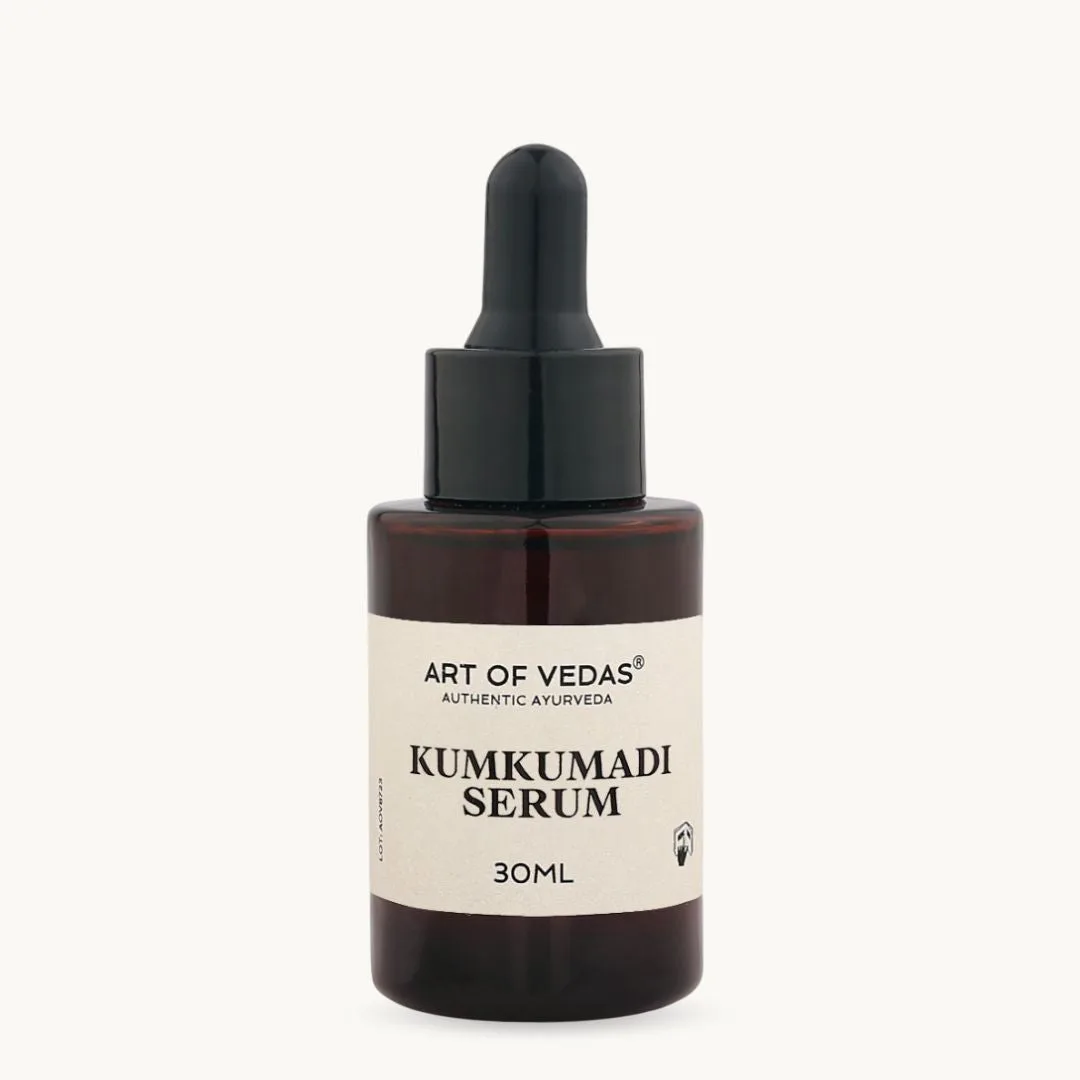
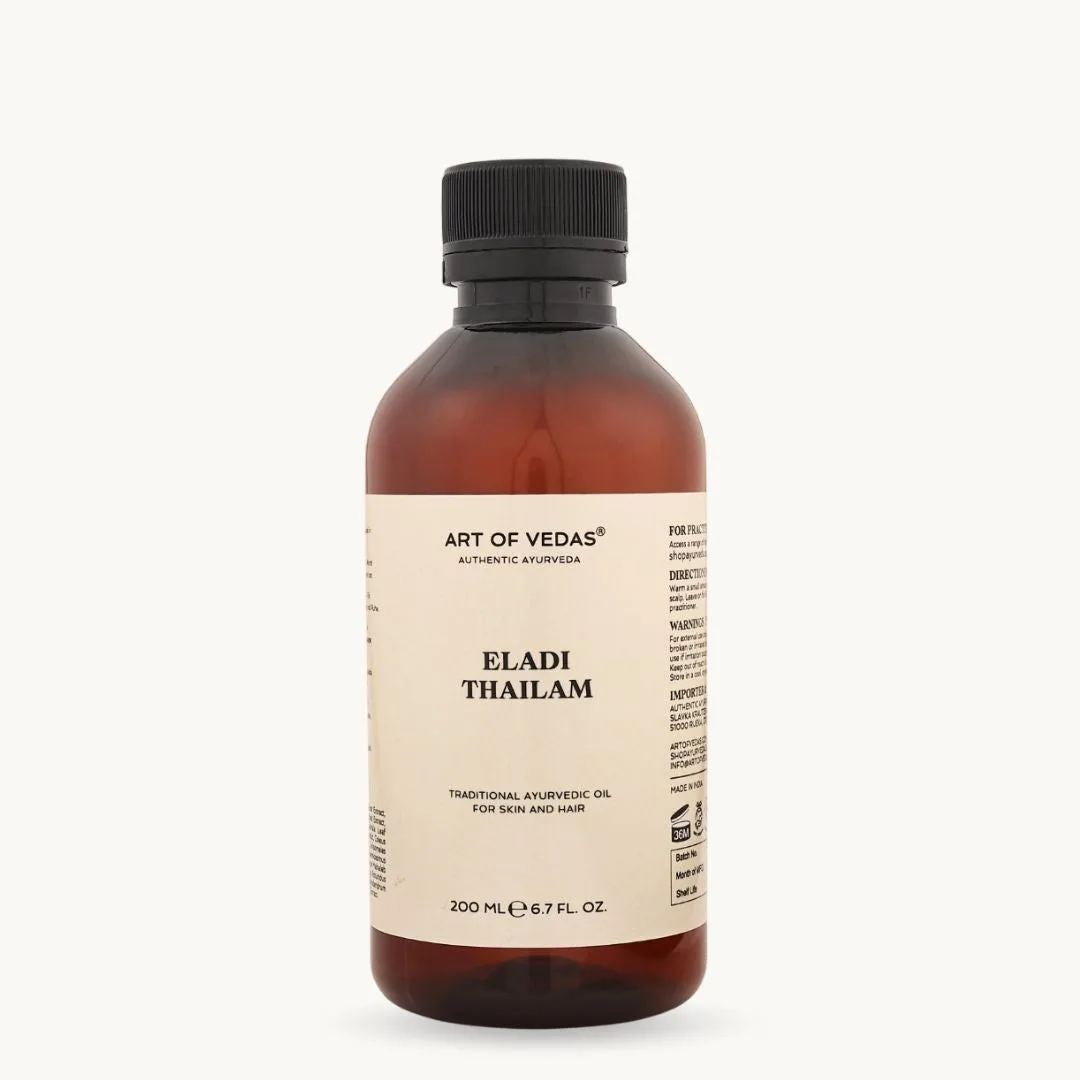
Eladi Thailam is built on cardamom, aromatic spices and resins, is mildly warming and placed with Kapha and Vata; Art of Vedas makes it in sesame oil. Kumkumadi Thailam is the saffron-led face oil in sesame, used in a few drops at night and sold by Art of Vedas as Kumkumadi Serum. Nalpamaradi is the cooling fig-bark and turmeric oil, placed with Pitta, and in our range it is the coconut form. None of the three is better than the others; they answer different skin types and seasons. The full side-by-side with Eladi, including whether the two can be used together, is on our Eladi vs Nalpamaradi Thailam page, and our comparison of Ayurvedic massage oils and the complete guide to Thailams place all of them in the wider range.
Frequently asked questions about Nalpamaradi Thailam
What is the difference between Nalpamaradi Thailam and Nalpamaradi Kera Thailam? The plants are the same, the base oil differs. Nalpamaradi Thailam is the recipe of four fig barks and turmeric cooked into sesame oil; Nalpamaradi Kera Thailam, also called Nalpamaradi Keram, is the same recipe cooked into coconut oil. The sesame form is warmer and heavier, the coconut form lighter and cooler. Art of Vedas sells the coconut form.
Nalpamaradi Thailam or Nalpamaradi Kera Thailam: which is better? Neither. They are two classical ways of preparing one recipe. The coconut form, Nalpamaradi Kera Thailam, is the usual choice for the face, for warm or oily skin and for the warmer months; the sesame form suits the body, dry skin and winter. Art of Vedas carries Nalpamaradi Kera Thailam because most people use the oil on the face.
Which is better for the face, Nalpamaradi Thailam or Nalpamaradi Kera Thailam? For the face, the coconut form, Nalpamaradi Kera Thailam, is the usual choice: it is lighter, absorbs faster and washes off more easily than the sesame form. Apply three to five warmed drops to clean, slightly damp skin, massage lightly and wash off after 15 to 30 minutes. Art of Vedas makes no claim about skin tone.
What is Nalpamaradi Thailam used for? In Ayurveda it is a skin oil, traditionally applied to the face as Mukhabhyanga and to the body as part of Abhyanga, the oil massage. The classical texts describe it as cooling and place it with Pitta. Art of Vedas sells Nalpamaradi Kera Thailam as an oil for external use and makes no claim about skin tone.
Nalpamaradi Thailam or Kumkumadi Thailam: which is better? They are different oils. Kumkumadi Thailam is the saffron-led face oil in a sesame base, applied in a few drops at night; Nalpamaradi is the cooling fig-bark and turmeric oil, in our range in a coconut base, applied and then washed off. Warm or oily skin usually goes to Nalpamaradi Kera Thailam, dry skin to Kumkumadi. Ask a qualified Ayurvedic practitioner.
How do you use Nalpamaradi Kera Thailam, and how often? Warm the bottle in a bowl of warm water if the oil has set, apply three to five drops to the clean face or a tablespoon to the body, massage with light strokes, leave it for 15 to 30 minutes and wash off with warm water. Two to three times a week is a common rhythm, daily in the warm months.
Is Nalpamaradi Keram the same as Nalpamaradi Kera Thailam? Yes. Keram, Kera Thailam and Kera Taila all mean the coconut-oil form; Kera is the word for coconut. Nalpamaradi Thailam or Nalpamaradi Taila without that word is the sesame form. The Art of Vedas product is Nalpamaradi Kera Thailam, the coconut form, which sets below about 24 degrees Celsius and becomes liquid again when warmed.
Can Nalpamaradi Kera Thailam be used in pregnancy or for children? Ask your doctor or a qualified Ayurvedic practitioner first. Nalpamaradi Kera Thailam is for external use only; do a small skin test on the inner forearm and wait 24 hours before the first application to the face, keep it away from the eyes and broken skin, and stop if the skin reacts.