Nasya is one of the five classical Panchakarma therapies described in the Charaka Samhita and Ashtanga Hridayam - the nasal administration of medicated oil. Among the daily practices of Ayurvedic Dinacharya (daily routine), daily Nasya with medicated oil is one of the most consistently recommended for maintaining the health of the head, the sense organs, and the upper respiratory passages. Nasya Oel kaufen has become a growing search across Germany and Europe as awareness of classical Ayurvedic daily practices spreads.
What is Nasya? The classical definition
Nasya (from the Sanskrit root Nasa - nose) refers to the therapeutic application of substances through the nasal passage. The Ashtanga Hridayam (Sutrasthana, Chapter 20) describes the nose as the "gateway to the head" (Shirasodwaram) - the primary route by which treatments can reach the brain, the sense organs, and the subtle channels (Srotas) of the head.
Classical texts distinguish between several types of Nasya:
-
Pratimarsha Nasya: Daily preventive Nasya with a small amount of oil - 2 drops per nostril, described as appropriate for daily practice and suitable for all constitutions. This is the form used in everyday Dinacharya.
-
Marsha Nasya: A slightly larger dose (4, 8 drops) used for more specific therapeutic purposes, best undertaken with practitioner guidance.
-
Shodhana Nasya: Cleansing Nasya using more stimulating preparations - part of clinical Panchakarma, not for everyday home use.
For daily home practice, Pratimarsha Nasya with a classical medicated oil such as Anu Thailam is the most appropriate approach.
Anu Thailam: the classical Nasya oil
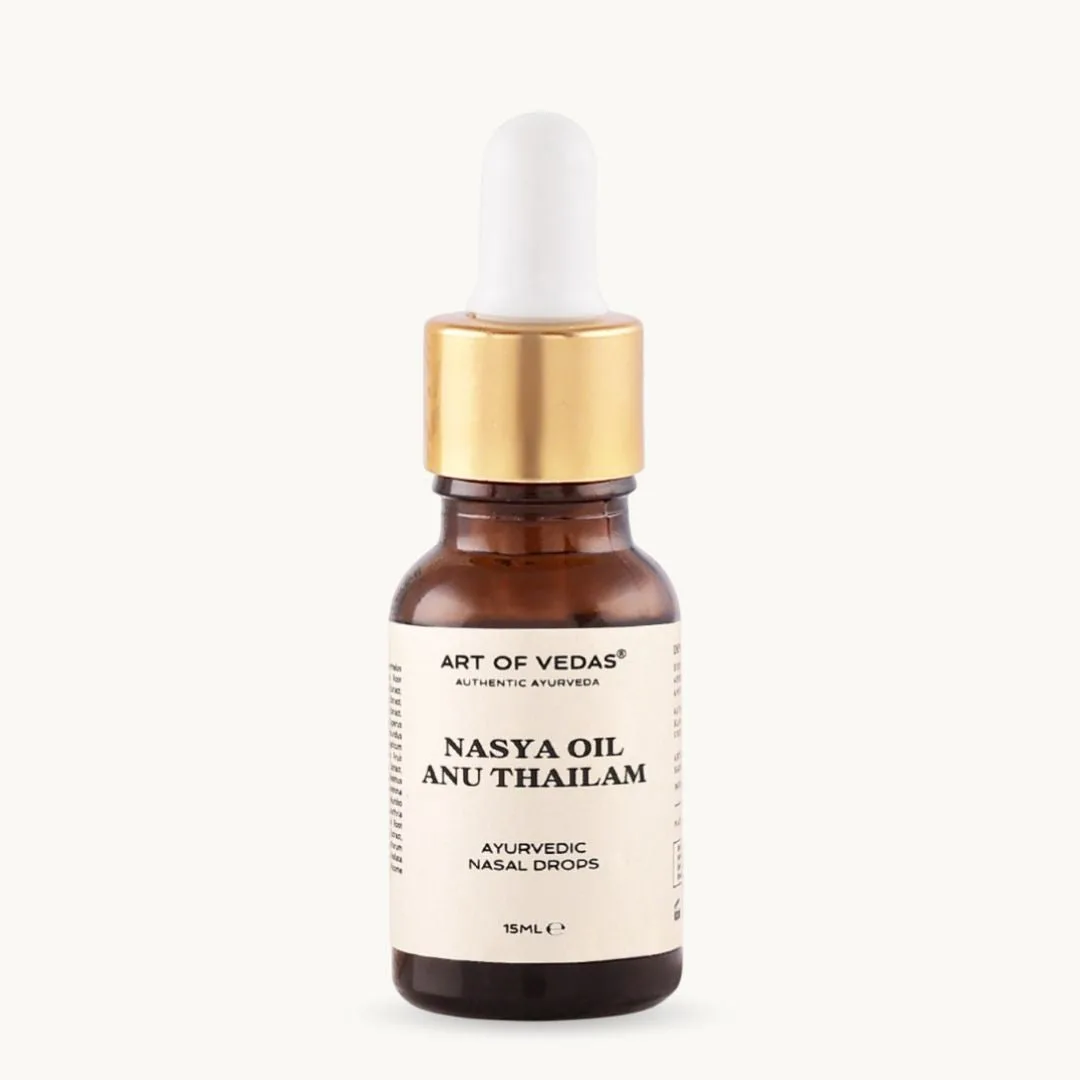
The most celebrated classical Nasya oil is Anu Thailam - a compound medicated oil described in the Sahasrayogam and Ashtanga Hridayam, prepared from 28 classical herbs processed in sesame oil and. Our Nasya Oil (Anu Thailam) follows this classical formula. The Ashtanga Hridayam specifically recommends Anu Thailam for daily Pratimarsha Nasya as part of the Dinacharya routine.
The traditional herb combination in Anu Thailam is designed to:
- Moisturise and lubricate the nasal passages and sinuses
- Support the clarity of the sense organs (eyes, ears, nose, throat)
- Pacify Vata and Kapha in the head region
- Support the classical Ayurvedic concept of the head's Prana channels remaining clear and unobstructed
How to use Nasya oil at home: step-by-step
-
Timing: Morning, after cleaning the teeth and tongue and before taking food. The Ashtanga Hridayam describes morning as the optimal time for daily Nasya practice.
-
Position: Tilt the head back gently - either by lying down with the head extended over the edge of a pillow, or by tilting the head back while sitting.
-
Application: For Pratimarsha Nasya, use the tip of a clean finger or a small dropper to apply 2 drops of warmed Anu Thailam to each nostril. Warm the oil slightly before application - body temperature is ideal.
-
Inhalation: Inhale gently through the nostrils to draw the oil up into the nasal passage. Avoid forceful sniffing.
-
Rest briefly: Remain still for 1, 2 minutes to allow the oil to reach the nasal passages.
-
Avoid cold air or cold food immediately after Nasya practice.
When not to do Nasya
- Immediately after meals
- During acute nasal congestion, fever, or active infection
- After bathing when the head is still wet
- During pregnancy - Pratimarsha Nasya with a very small amount of plain oil is generally described as safe, but consult a practitioner
- In young children - Nasya is described for adults in classical texts
Nasya oil and the Ayurvedic Dosha system
Nasya is described in classical texts as particularly beneficial for Vata and Kapha conditions affecting the head. Vata types - who tend towards dryness in the nasal passages, particularly in cold and dry seasons - benefit most from regular daily Nasya. Kapha types benefit particularly in spring (Kapha season), when Kapha in the head and sinuses is at its seasonal peak. See our Vata type guide and Kapha type guide for full Dosha-specific daily routine guidance.
Our Nasya Oil (Anu Thailam) is available in our online store. For professional clinical Nasya therapy, see our range of Gokarna Brass Nasya Vessels used in formal clinical Panchakarma settings.
For the full overview of Nasya in the Panchakarma context, see our Anu Thailam guide.
Nasya oil from Art of Vedas is for external nasal use only. It is a personal care product, not a medicine. Consult a practitioner if pregnant, if you have a nasal or sinus condition, or before using with children.