PET or Glass for Ayurvedic Oils: Does the Bottle Change the Oil?
In short: An Ayurvedic oil, Kuzhambu or Ghritham keeps just as well in food-grade PET as in glass, and the container does not change what is inside. Glass changes how a bottle looks, feels and weighs, not the quality or the shelf life of the oil.
PET or glass for Ayurvedic oils is a question many shoppers ask before they order their first Thailam. Glass has a reputation for quality, and it is a fine material. The oil, however, is made in the cooking vessel and not in the bottle. This guide explains what each container does and does not do, so that you can choose with confidence.
Does an Ayurvedic oil keep better in glass than in PET?
No. The quality team behind our oils confirms that shelf life and quality are the same in PET as in glass. The shelf life printed on each Art of Vedas bottle applies to that bottle exactly as it is sold.
What decides how long an oil stays good is the way it was prepared and the way it is kept at home: closed, cool, dry and out of direct sunlight. These points apply to every container. Our guide to the shelf life of Ayurvedic oils and Ghritham covers this in more detail.
What makes a Thailam keep well?
A Thailam is cooked until the water has left the oil. This is the classical Sneha Paka process, and it is the reason a finished Thailam keeps well.
The herbs are cooked with the base oil, and the preparation is complete only when the water is gone. What goes into the bottle is therefore a stable, finished oil. The bottle has one task: to hold that oil closed and clean until you use it. Food-grade PET does this, and so does glass. You can read more in what keeps a Thailam fresh.
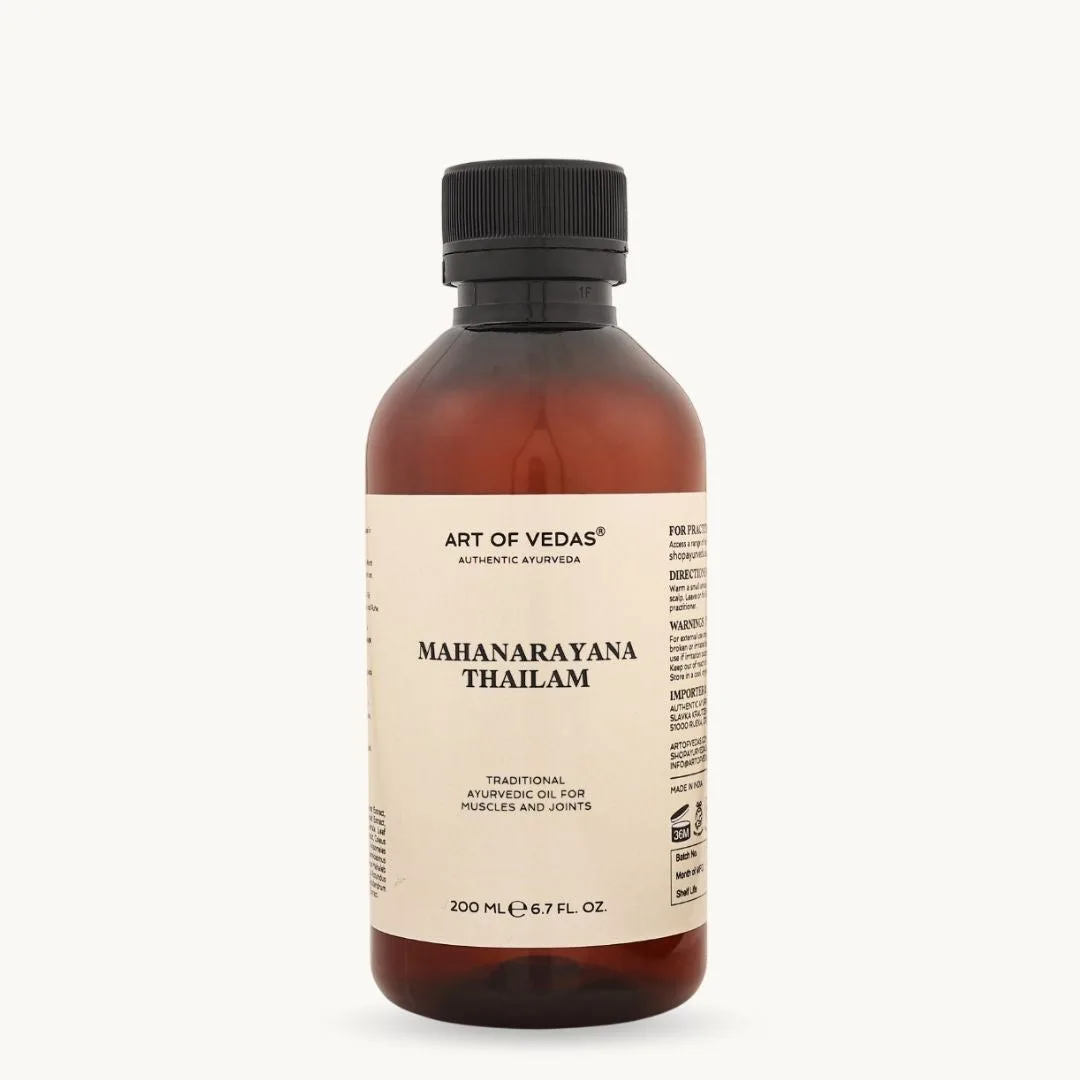
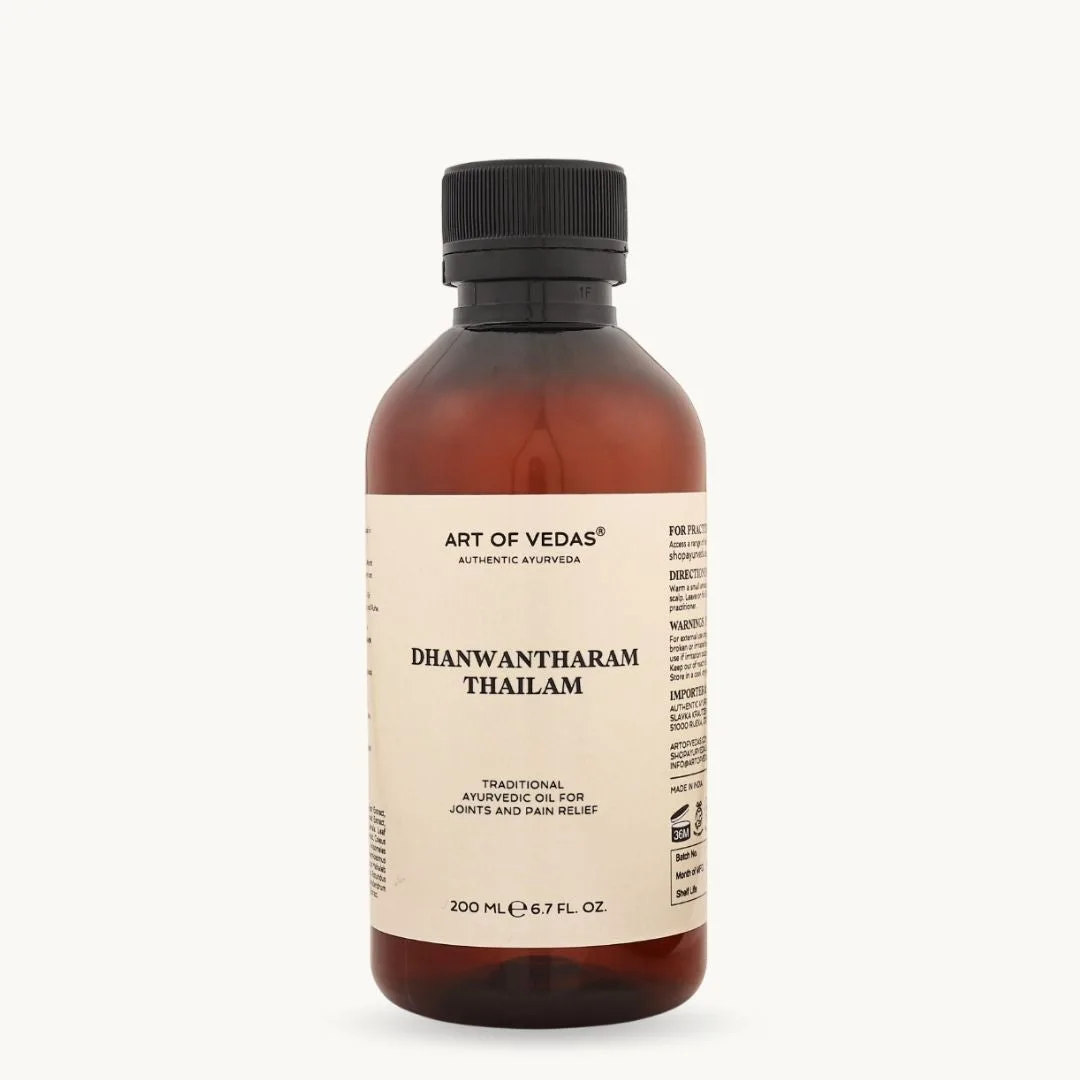
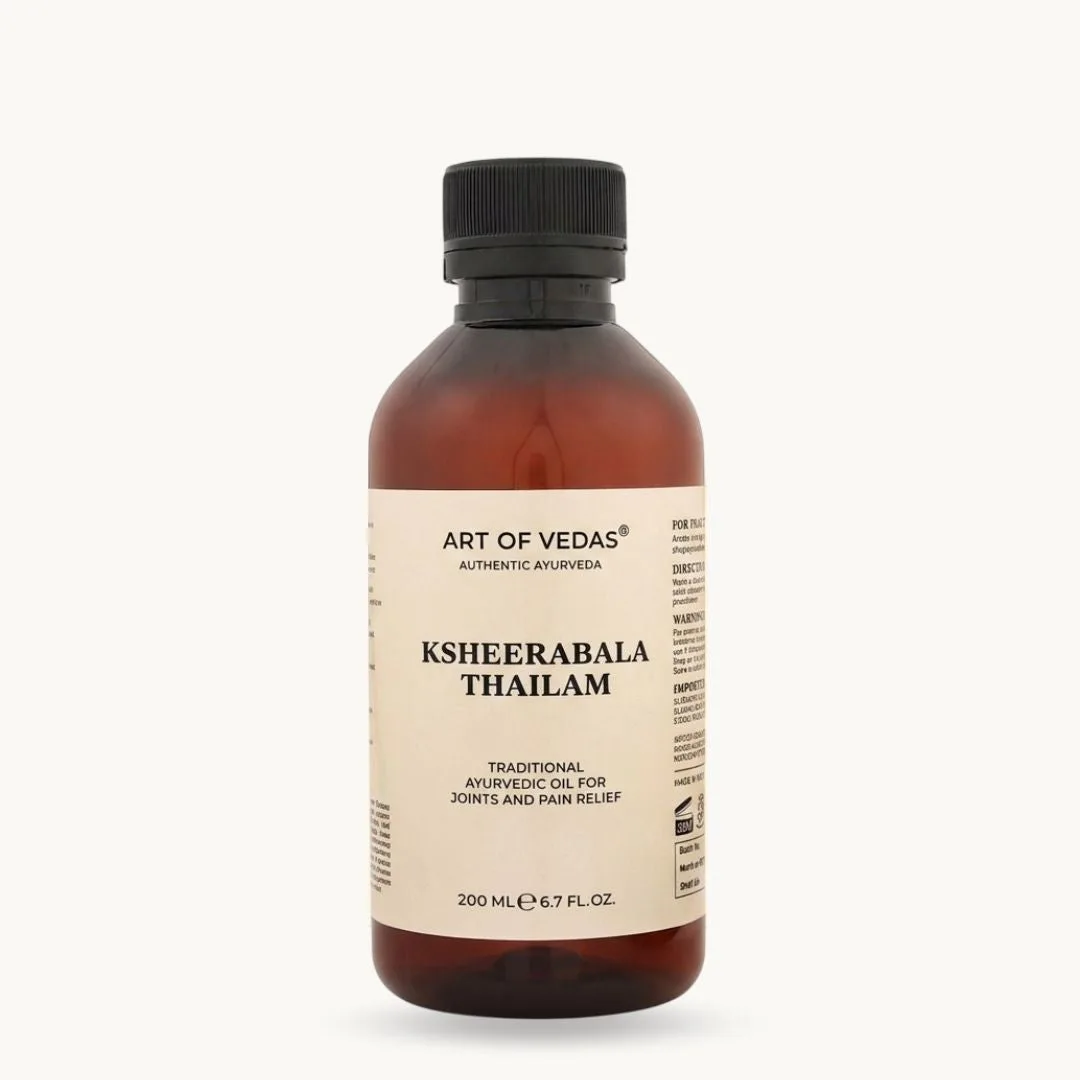
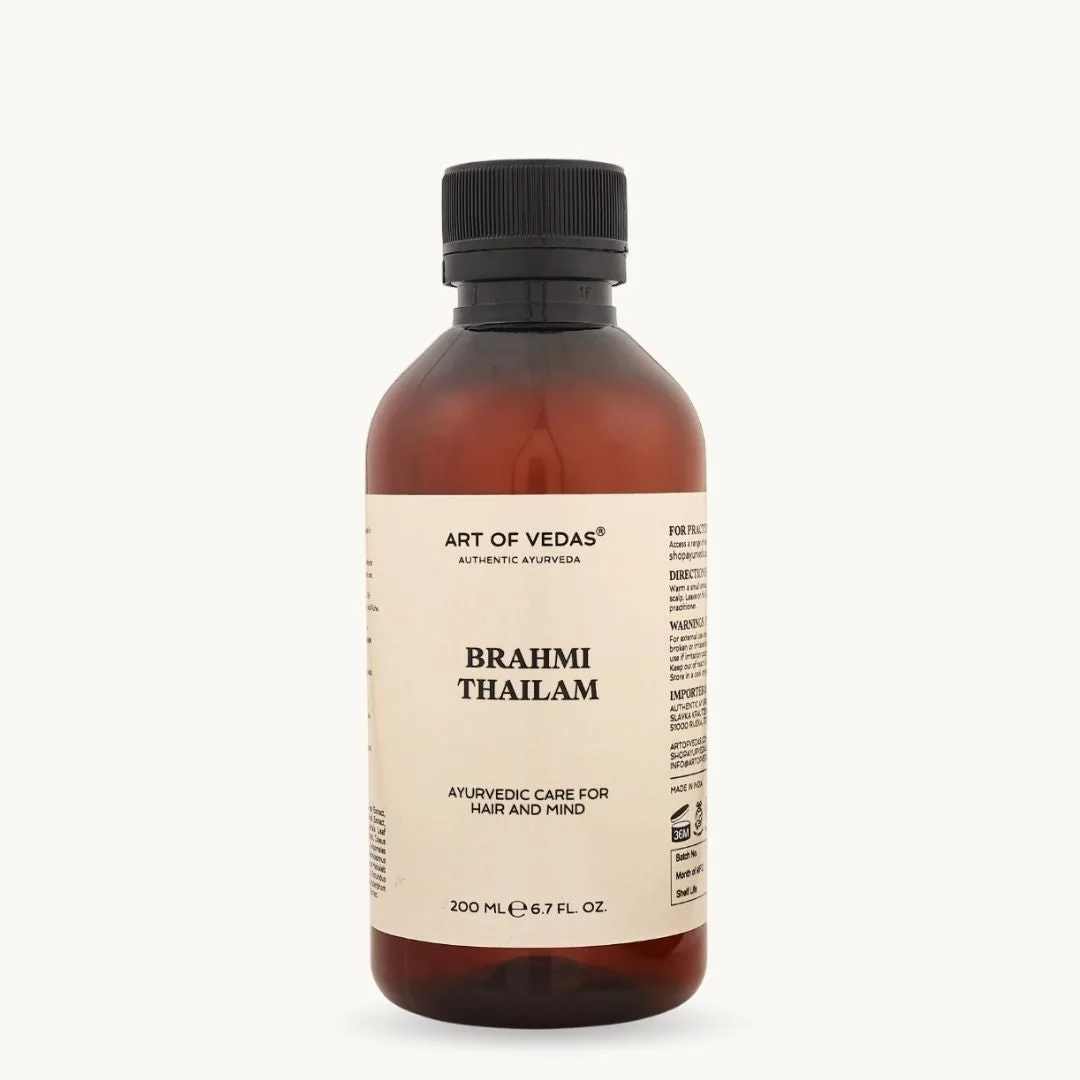
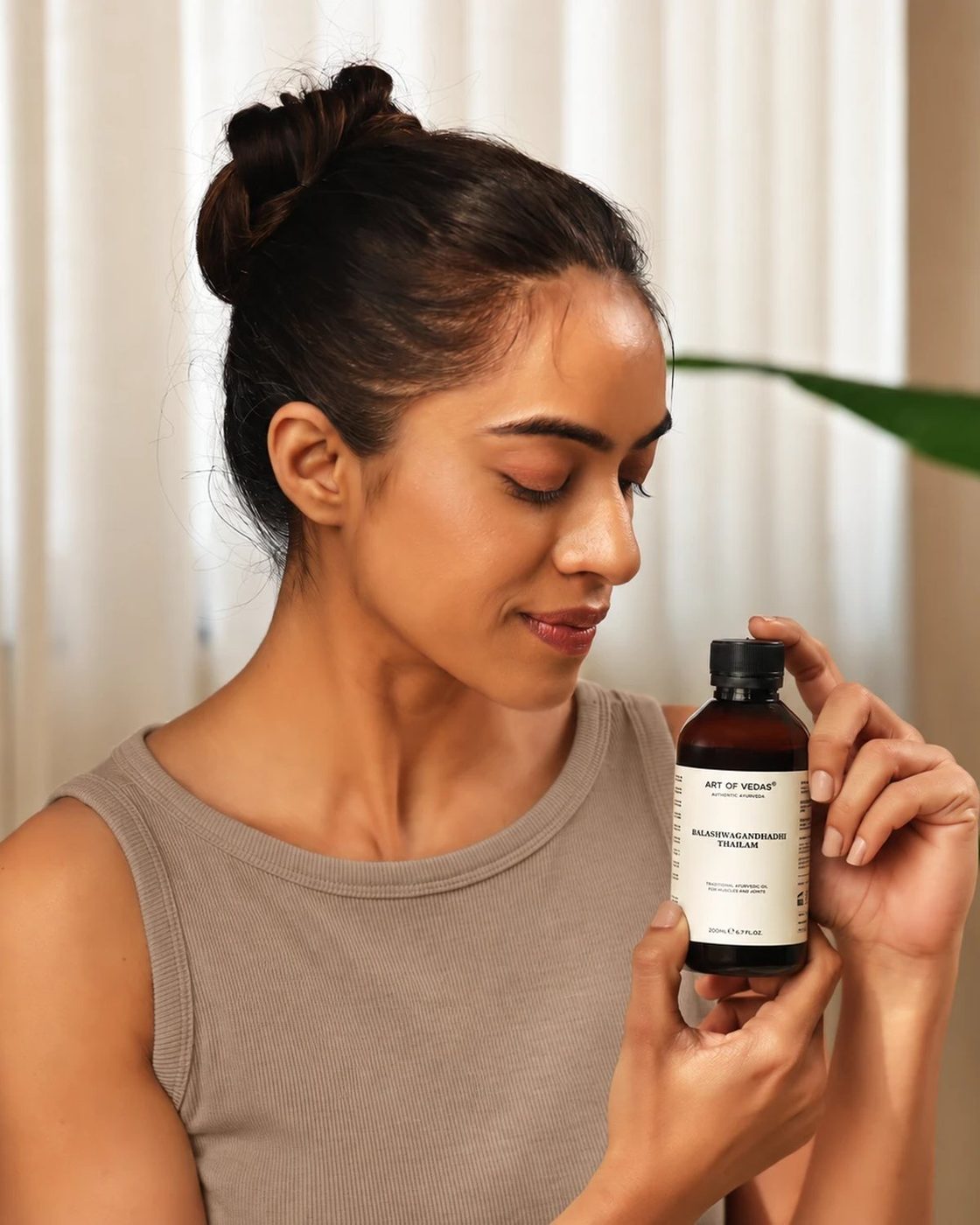
Art of Vedas bottles its Thailams in food-grade PET, in 200 ml and 450 ml sizes. The Dosha massage oils for Vata, Pitta and Kapha are bottled in the same way.
The table below sets the two materials side by side. The first two rows are the same for both, and the differences lie in the practical rows that follow.
Point
PET bottle
Glass bottle
Effect on the oil
None. The oil is the same.
None. The oil is the same.
Shelf life
As printed on the bottle
The same as in PET
Weight
Very light
Heavy
Breakage in bathroom and transit
Shatterproof
Can break on tiles or in a parcel
Look and feel
Clear, light and practical
Weighty, with a classic appearance
Recycling
Widely recycled, resin code 1
Recyclable
Does glass make an Ayurvedic oil stronger?
No. Glass is not required for the quality of an Ayurvedic oil and it does not make the oil stronger. It mainly changes how a bottle looks and feels, what it weighs and what it costs to ship.
Glass is fully inert and it is a good container. It simply adds nothing to an oil that is already finished. In India, where classical Ayurvedic oils come from, PET has been normal practice for these oils for many years. The choice of PET is therefore not a shortcut. It follows long practice in the home of the tradition.
What kind of material is PET?
PET is the clear, light plastic used for edible oils and drinks. It is not made with BPA and it needs no plasticisers. The PET used by Art of Vedas is food grade.
Is a Kuzhambu any different in PET?
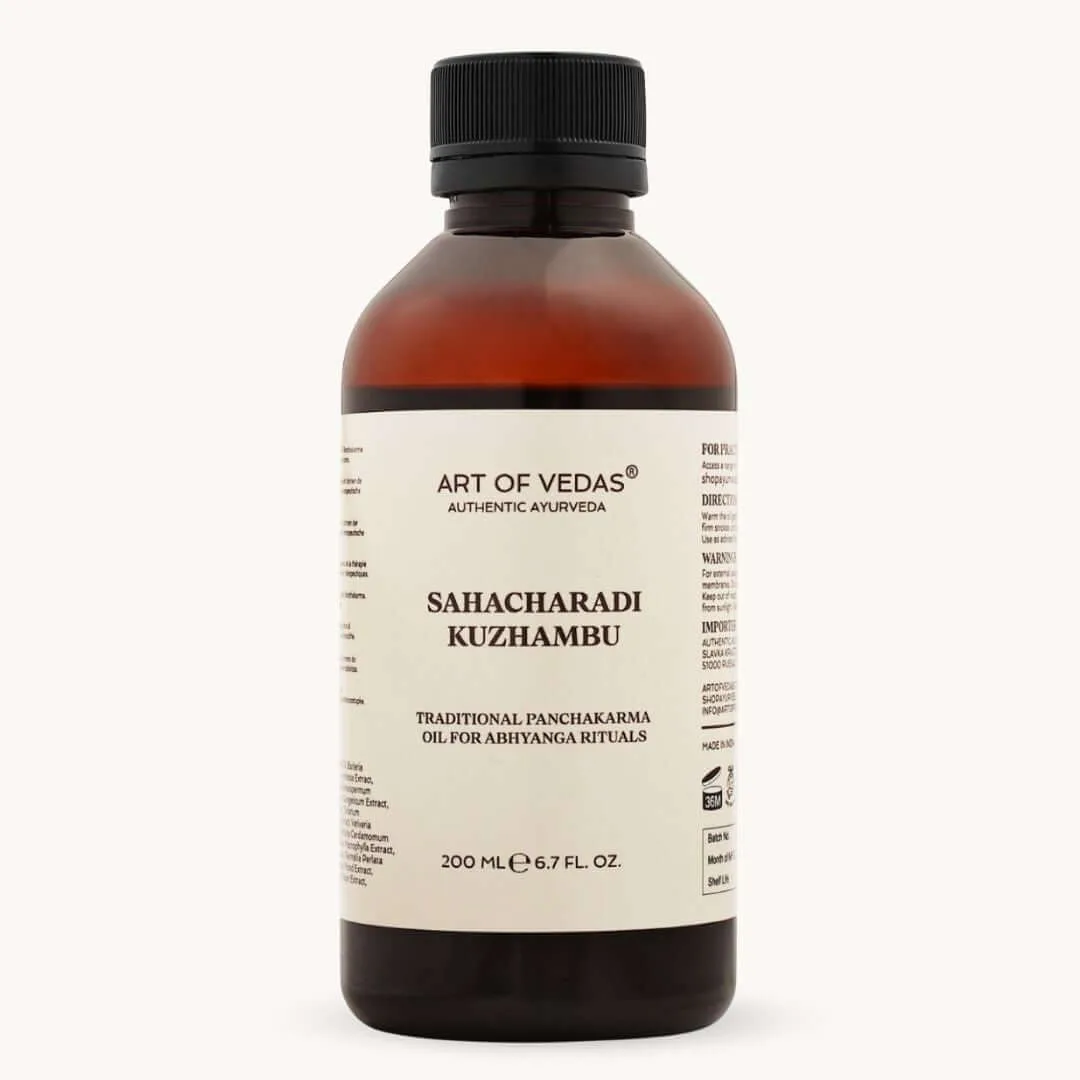
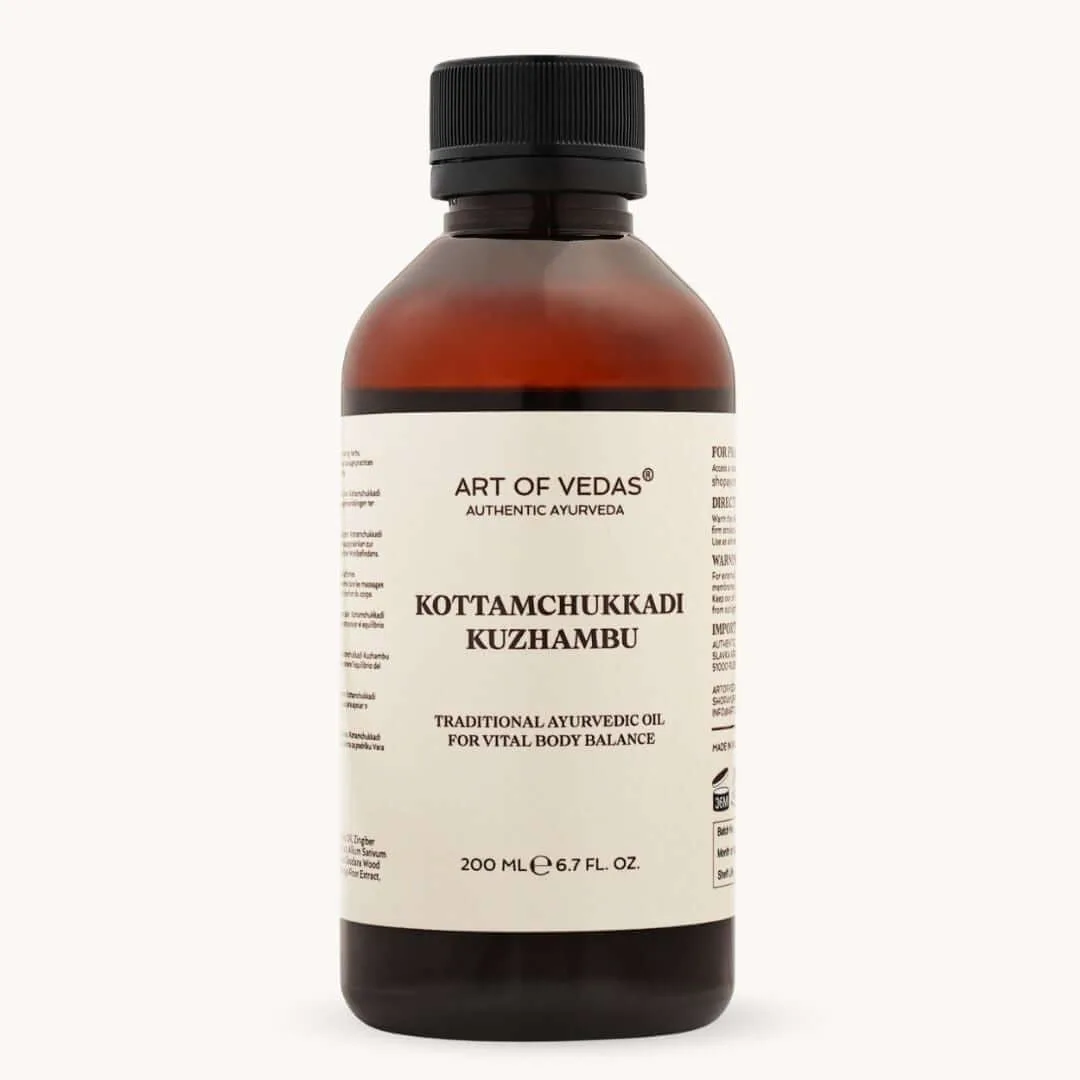
No. A Kuzhambu is a classical oil preparation, and it keeps in food-grade PET in the same way as a Thailam. Art of Vedas bottles each Kuzhambu in 200 ml PET.
An oil used for Abhyanga, the classical oil massage, is often handled in the bathroom and with oily hands. A light bottle that does not break when it slips is a practical advantage there.
Does a Ghritham keep as well in a PET jar as in glass?
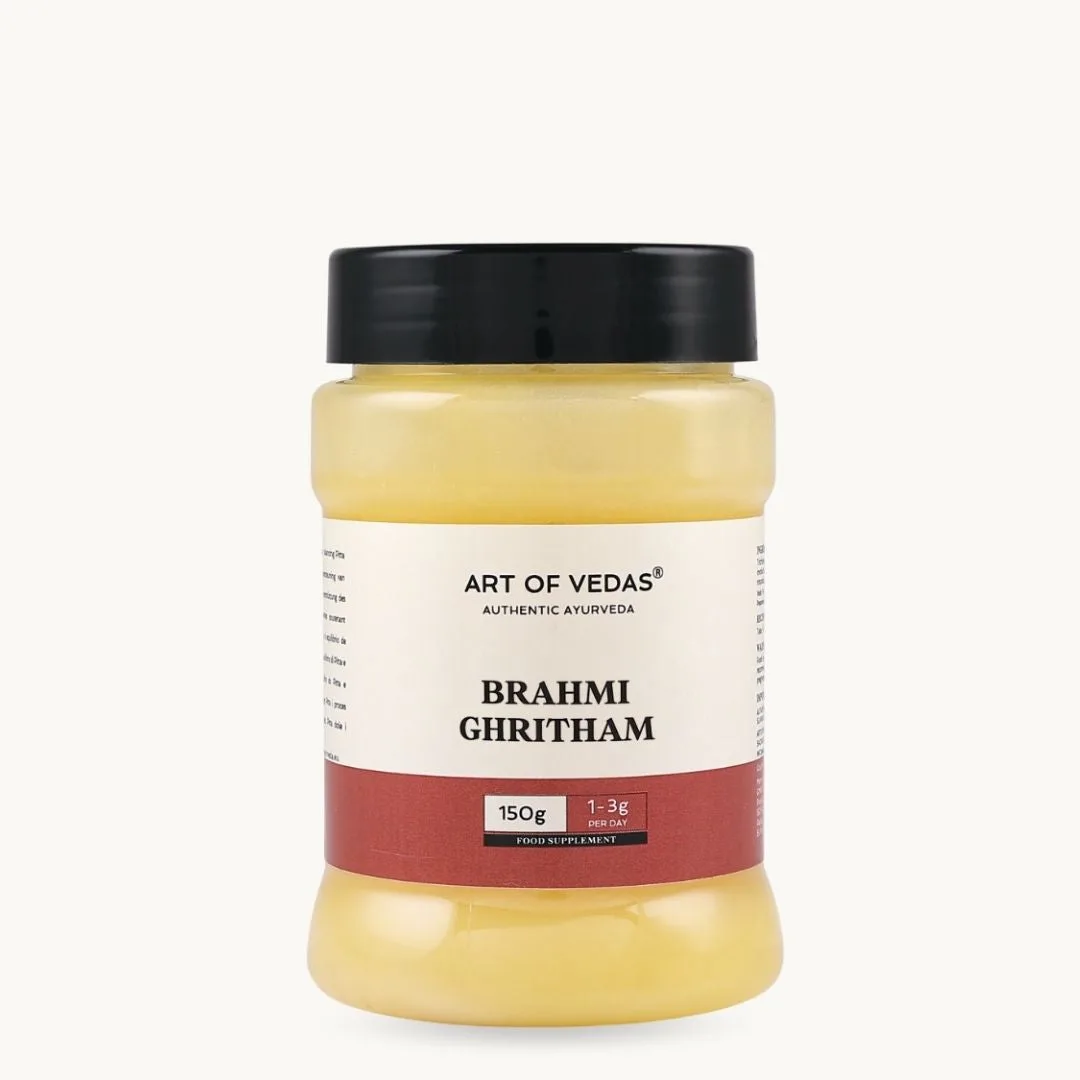
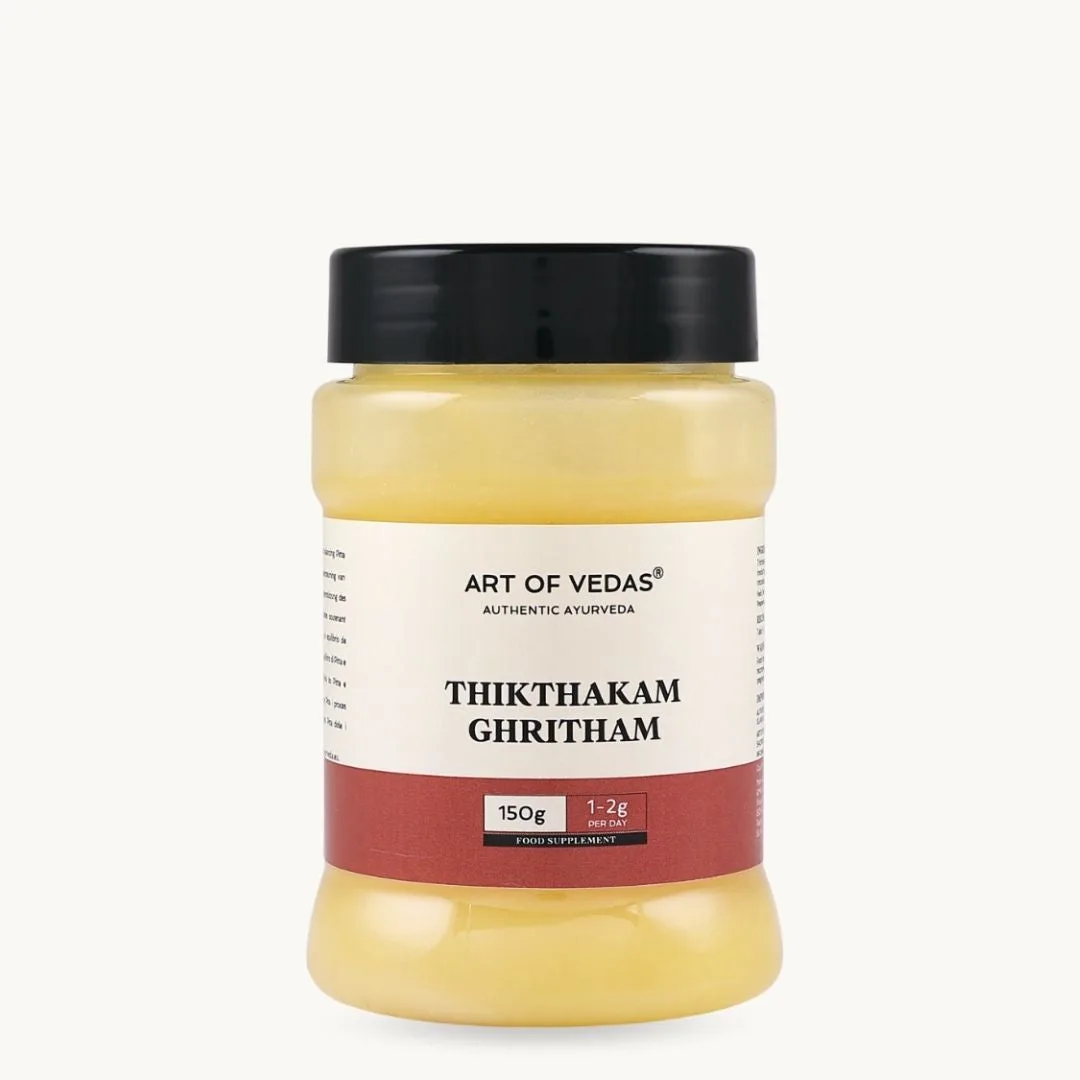
Yes. Art of Vedas Ghrithams come in food-grade PET jars of 150 g, and the shelf life printed on the jar applies to that jar as sold. The jar material does not change the Ghritham.
What matters more with a Ghritham is how the jar is handled once it is open. Keep it closed, cool and dry, away from direct sunlight, and always use a clean, dry spoon. Our guide on how to store Thailam, Kuzhambu and Ghritham sets out the routine step by step.
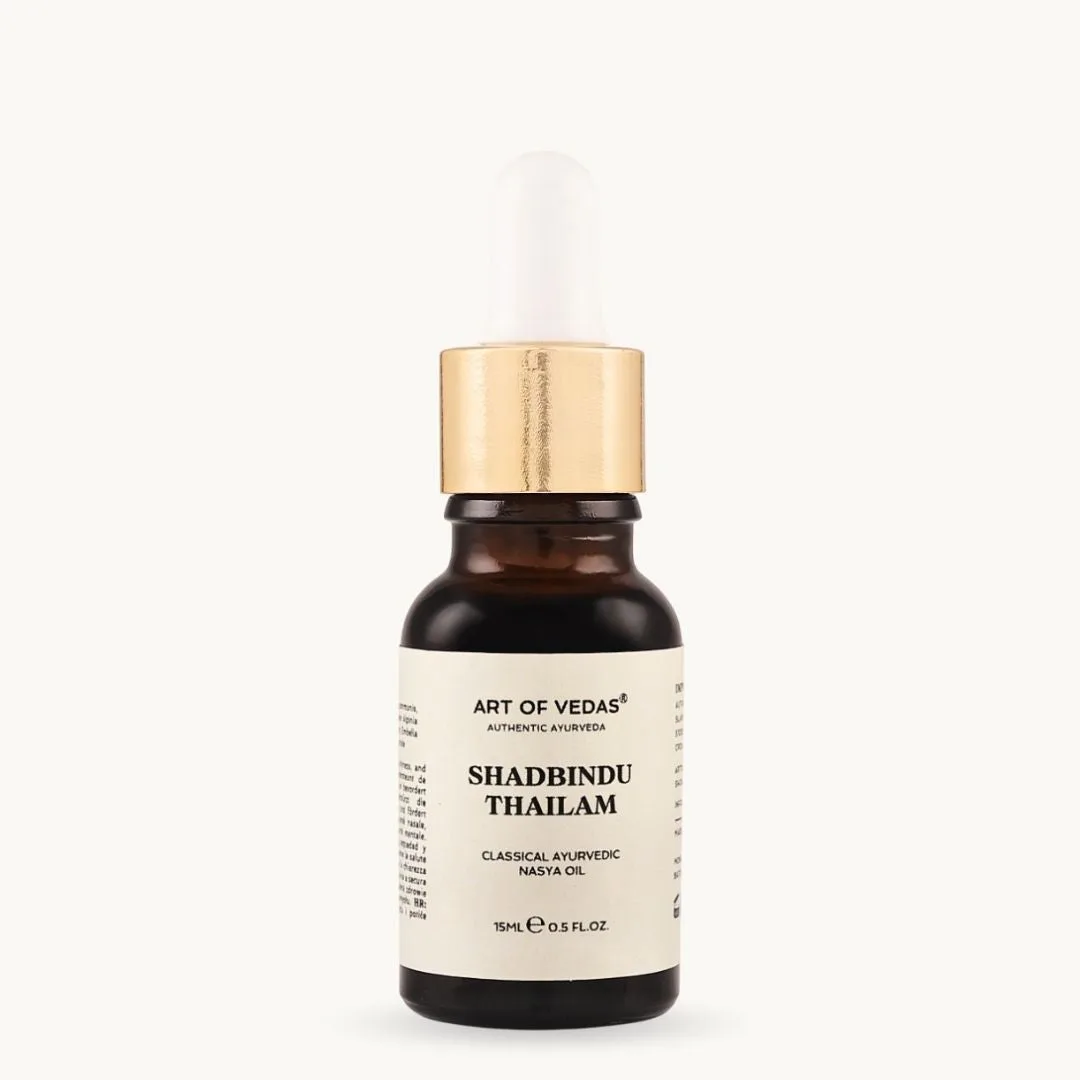
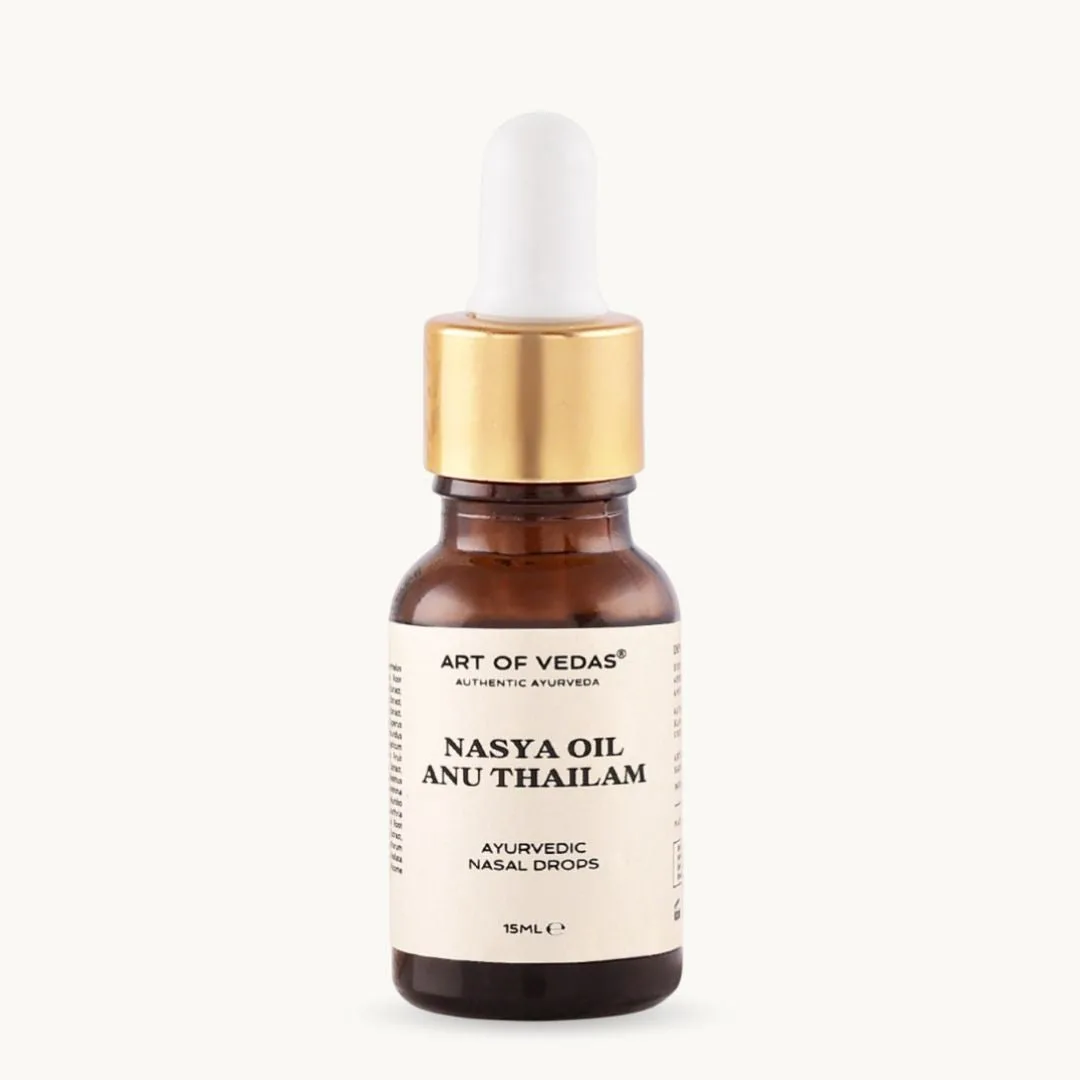
The small oils that are used by the drop are in glass, because glass suits a dropper bottle. This is a choice of format and not a ranking of quality.
Nasya Oil in 15 ml and 50 ml, Shadbindu Thailam in 15 ml and Dhanwantharam 101 Avarthy in 15 ml are tiny volumes of concentrated oil, dosed drop by drop. A small glass bottle with a dropper is the natural format for that use. A 450 ml bottle of massage oil is a different object with a different task. The reasoning is explained in why Nasya oil is in glass.
Where the two materials really differ
The real differences are practical ones.
Weight: PET weighs far less than glass. A large bottle is easier to hold and pour, and a parcel is lighter to send.
Breakage: PET is shatterproof. Glass can break on a tiled floor or on its way to you.
Appearance: glass feels weighty in the hand and many people like the look of it. That is a fair preference.
Recycling: PET is widely recycled under resin code 1, and glass is recyclable as well.
Choose an Ayurvedic oil for the preparation itself: the classical recipe, the way it was cooked and the shelf life printed on the bottle. The container is a matter of handling and of taste. If you enjoy glass on the bathroom shelf, that is a reasonable wish, but it is not a measure of the oil inside. You will find the full range of Thailams, Kuzhambus and Ghrithams at Art of Vedas.
Thailams and Kuzhambus are for external use only. Ghrithams are food supplements and do not replace a varied diet.
Subscribe for classical Ayurvedic rituals, new arrivals and 10% off your first order.
By subscribing you agree to receive marketing emails from Art of Vedas. You can unsubscribe at any time.
Thank you for subscribing. A welcome email from Art of Vedas is on its way.
------
Apply it at checkout on your first order.
Art of Vedas
Customer Care
Before we begin
Share your details so our team can reply by email within 24 hours if your question needs a personal answer.
We use your details only to reply to your enquiry. We never share them with third parties.
Leave your message here and the Art of Vedas team will reply by email. Please do not share sensitive personal or payment details.
Your privacy
We use essential cookies to run the shop: your cart, checkout and session. With your consent we also use privacy-friendly, anonymous analytics to understand how the site is used. We never sell your data. Privacy policy
Your privacy
Essential
Required for the shop to function: cart, checkout and security. Always active.
Always on
Analytics
Anonymous, cookieless statistics that help us improve the site. No personal data, no tracking across other websites.
Marketing
Cookies that measure our advertising and show more relevant ads, including via Google. None are set without your consent.