Sesame Oil in Ayurveda: The Classical Base Oil Guide
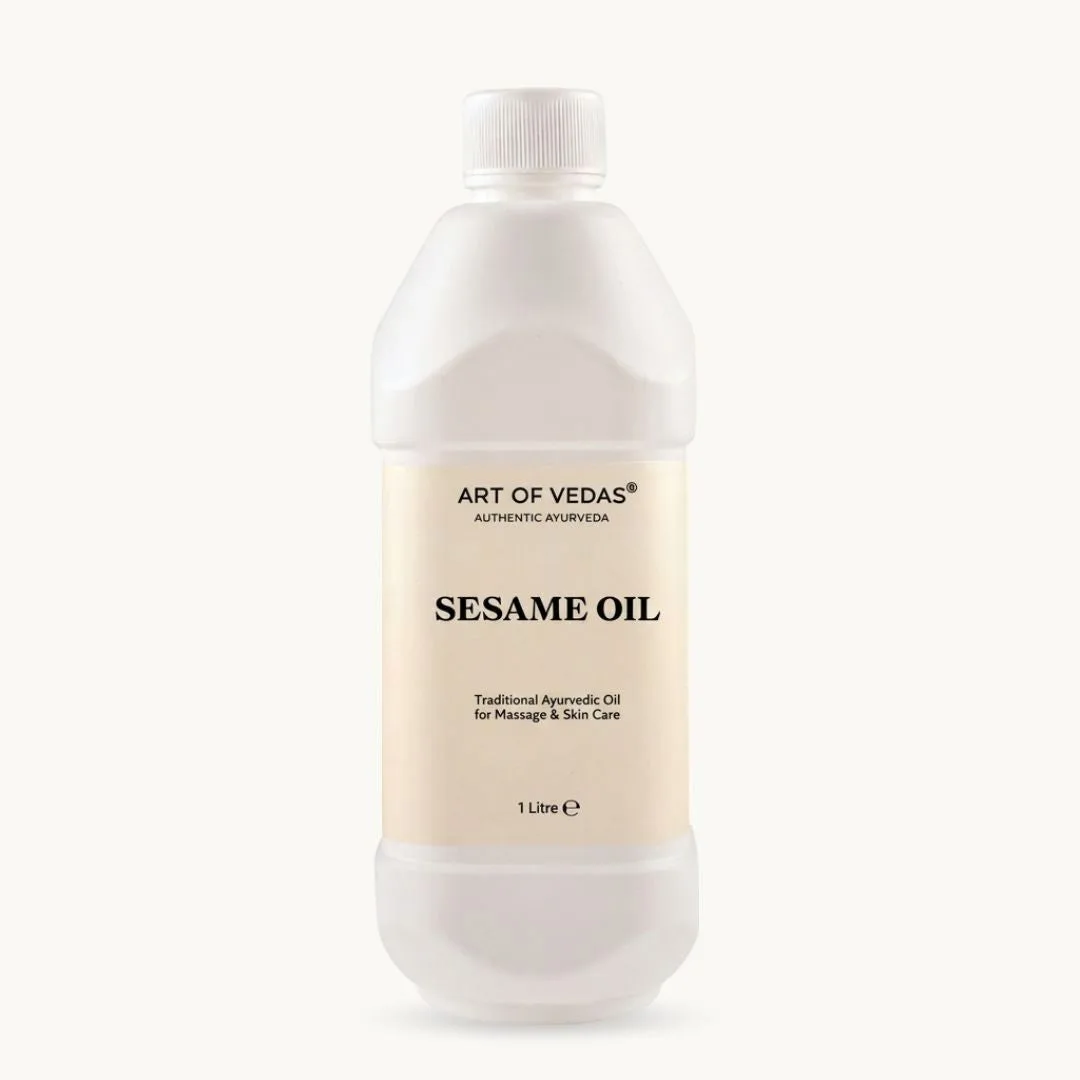
In the entire classical Ayurvedic pharmacopoeia, no single oil holds the position of sesame oil (Tila Taila). Across the Charaka Samhita, Ashtanga Hridayam, Sushruta Samhita, and virtually every classical Ayurvedic text, sesame oil is described as the foremost of all oils - the reference standard against which other oils are measured, the default base for the overwhelming majority of classical Thailam preparations, and the most comprehensively beneficial oil for external use in the classical tradition.
Understanding why sesame oil holds this position - and what its classical properties actually are - is essential context for understanding the entire tradition of classical Ayurvedic oil therapy.
Sesame Oil in the Classical Texts
The Ashtanga Hridayam (Sutrasthana Chapter 5) describes sesame oil with a level of detail and praise given to no other oil. The key passage describes Tila Taila as "the best of all oils" and enumerates its properties systematically. In Ayurvedic pharmacology, sesame oil is characterised as:
-
Rasa (taste): Madhura (sweet), with Tikta (bitter) and Kashaya (astringent) notes
-
Virya (potency): Ushna (warming)
-
Vipaka (post-digestive effect): Madhura (sweet)
-
Guna (qualities): Guru (heavy), Snigdha (unctuous), Sukshma (subtle/penetrating), Sara (mobile)
-
Dosha effect: Vata-shamana primarily; Pitta and Kapha in moderate quantities
The combination of warming potency, heavy quality, and subtle penetrating character explains sesame oil's unique position: it is warming enough to actively settle Vata, heavy and unctuous enough to nourish the tissues, and subtle enough to penetrate through the skin into the deeper tissue layers - an unusually complete combination in a single base oil.
Why Sesame Is the Classical Abhyanga Oil
The Ashtanga Hridayam's description of the Abhyanga practice (Sutrasthana Chapter 2) specifies sesame oil as the standard Abhyanga oil - and the clinical rationale is clear. Vata is the Dosha most directly addressed by Abhyanga, and sesame oil is the most Vata-settling base oil in the classical pharmacopoeia. Its warming, heavy, penetrating combination settles Vata on multiple levels simultaneously:
- The warmth (Ushna virya) directly counters Vata's cold quality
- The heaviness (Guru guna) counters Vata's light, mobile quality
- The unctuousness (Snigdha guna) directly counters Vata's dry quality
- The penetrating subtlety (Sukshma guna) allows it to reach the deeper tissue layers where Vata accumulates
This is why the classical Ayurvedic Thailams - Dhanwantharam, Ksheerabala, Mahanarayana, Sahacharadi, and the others - are almost universally sesame-based. The sesame base provides the foundational Vata-settling action; the herbs processed into it provide the specific therapeutic direction.
Sesame Oil vs Plain vs Medicated
The classical tradition distinguishes between three forms of sesame oil for external use:
-
Raw (Apakvam) sesame oil: The unprocessed oil - the base from which all others are made. Has the full classical properties but without the enhanced penetration and herb-direction of processed oils.
-
Processed (Pakva) sesame oil: Sesame oil that has been boiled with water and specific herbal decoctions through a classical processing procedure (Taila Paka) - this processing enhances the oil's penetrating properties and stability for storage. Many classical Abhyanga recommendations are for properly processed, not raw, sesame oil.
-
Medicated (Aushadha Siddha) sesame oil: The classical Thailams - sesame oil in which specific herbs have been cooked using the Taila Paka method, directing the combined properties of oil and herbs to specific tissue layers and therapeutic targets. This is the highest-potency form for specific indications.
Sesame Oil for Oral Use: Kavala and Gandusha
Beyond Abhyanga, sesame oil has a specific classical role in oral care: the Kavala (swishing) and Gandusha (holding) oil pulling practices described in the Ashtanga Hridayam use sesame oil as the primary classical vehicle. Its warming, Krimighna, and gum-strengthening properties make it the most broadly appropriate oil for oil pulling across constitutions - with coconut oil as an alternative for Pitta constitutions. See our oil pulling guide for the complete practice.
Practical Guide: Using Sesame Oil at Home
For those beginning an Abhyanga practice without access to classical medicated Thailams, good-quality, cold-pressed sesame oil is the appropriate starting point. Key considerations:
-
Quality: Cold-pressed, unrefined sesame oil retains the most classical properties - the pale gold variety (not the dark, toasted sesame oil used in East Asian cooking, which is processed differently)
-
Warming: Always warm before application - the warming is both practically important (warm oil penetrates better and settles Vata more effectively) and classically specified
-
Seasonal adjustment: Sesame oil's warming quality makes it most appropriate for autumn, winter, and spring. In summer or for Pitta-dominant constitutions, lighter or more cooling oils (coconut, sunflower) are more seasonally appropriate
-
As a base for herbs: Plain sesame oil can be used as a simple home base for brief herb infusions - adding Ashwagandha, Brahmi, or other Churnas to warm sesame oil and allowing to infuse for several hours approximates a simple home Thailam
Frequently Asked Questions
Why is sesame oil the best oil for Abhyanga?
The classical texts describe sesame oil (Tila Taila) as the best of all oils specifically because its combination of warming potency, heavy nourishing quality, and subtle penetrating property gives it an unmatched Vata-settling profile. Since Abhyanga's primary purpose is Vata-settling and tissue nourishment, sesame oil's complete alignment with these goals makes it the reference standard for Abhyanga practice.
Can I use toasted sesame oil for Ayurvedic massage?
No - the dark, toasted sesame oil used in East Asian cooking is processed at high heat that changes its properties significantly. Classical Ayurvedic Tila Taila refers to cold-pressed, unroasted sesame oil - the pale gold variety. The toasted version has a strong flavour and altered properties that do not match the classical description.
Is sesame oil suitable for all skin types?
Sesame oil is most appropriate for Vata and Kapha skin types and for the cooler seasons. For Pitta skin types or in summer, its warming quality may be too stimulating - coconut or sunflower oil are more appropriate for Pitta skin. The classical medicated Thailams that begin with sesame base are formulated to direct the oil appropriately for specific conditions regardless of the base oil's general character.
Related Guides
For sesame oil in Abhyanga context, see our complete Abhyanga guide. For the classical medicated oils built on sesame base, see our guide to comparing classical Ayurvedic oils. For the coconut oil equivalent guide, see our coconut oil guide. Browse our Ayurvedic Thailam collection.
This article is for informational and educational purposes only. Sesame oil and Ayurvedic preparations are for general external use and wellbeing. They are not medicines and not intended to diagnose, treat, cure, or prevent any medical condition.