What Is Triphala?
Triphala means "three fruits." It is a combination of three dried fruits in equal proportions: Amalaki (Emblica officinalis), Bibhitaki (Terminalia bellirica), and Haritaki (Terminalia chebula). This formula appears in virtually every classical Ayurvedic text and is one of the most frequently prescribed preparations in the entire tradition.
The genius of Triphala lies in its balance. Each fruit corresponds to one of the three Doshas, making the combined formula tridoshic, meaning it supports balance across all three constitutional types. This rare quality is why Triphala has remained a cornerstone of Ayurvedic practice for well over a thousand years.
The Three Fruits
Amalaki (Indian Gooseberry)
Amalaki is considered the most important Rasayana fruit in Ayurveda. The Charaka Samhita devotes special attention to it, and it forms the base of the famous Rasayana preparation Chyavanprash.
-
Rasa (taste): all five tastes are present, with sour predominating
-
Virya (potency): cooling
-
Dosha affinity: primarily balances Pitta, but benefits all three Doshas
-
Traditional use: traditionally used in Ayurveda to support healthy digestion, nourish tissues, and promote vitality. It is one of the richest natural sources of vitamin C
Amalaki is the cooling, nourishing component of Triphala. It contributes Pitta-balancing properties and tissue-nourishing Rasayana effects.
Bibhitaki (Terminalia bellirica)
Bibhitaki is known as "the one that keeps you away from disease" in Sanskrit tradition. It is a powerful astringent fruit with an affinity for Kapha Dosha.
-
Rasa (taste): Kashaya (astringent)
-
Virya (potency): warming
-
Dosha affinity: primarily balances Kapha
-
Traditional use: traditionally used in Ayurveda to support the respiratory system and promote healthy Kapha balance. It has a drying quality that counteracts excess moisture and heaviness
Bibhitaki is the Kapha-balancing component. It contributes astringent, drying properties that complement Amalaki's moistening nature.
Haritaki (Terminalia chebula)
Haritaki is called the "King of Medicines" in Ayurveda and holds an even more exalted position in Tibetan medicine, where it appears in the hand of the Medicine Buddha. The Charaka Samhita places it first among Rasayana herbs.
-
Rasa (taste): all five tastes, with astringent predominating
-
Virya (potency): warming
-
Dosha affinity: primarily balances Vata, but is considered tridoshic
-
Traditional use: traditionally used in Ayurveda to support healthy elimination, nourish Vata, and promote longevity. It is considered the most important herb for the digestive tract
Haritaki is the Vata-balancing component. It contributes the eliminative, cleansing action that makes Triphala effective for digestive support.
How Triphala Works According to Ayurveda
The three fruits together create a formula that is greater than the sum of its parts. In Ayurvedic terms, Triphala acts on multiple levels:
Digestive Support
Triphala is classified as both Deepana and Pachana. It supports all three stages of digestion, from the initial breakdown in the stomach through absorption in the small intestine to elimination through the colon.
Gentle Elimination
Triphala is not a harsh laxative. It is classified as Anulomana, meaning it guides Vata downward in its natural direction, promoting regular, comfortable elimination. This is fundamentally different from a purgative, which forcefully expels contents. With regular use, Triphala supports the body's own eliminative rhythm rather than creating dependency.
Rasayana
Beyond digestion, Triphala is a Rasayana. The classical texts describe it as nourishing to all seven Dhatus (tissue layers) and supportive of Ojas (vital essence). This dual action, cleansing and nourishing simultaneously, is what makes Triphala exceptional. Most cleansing substances are depleting; most nourishing substances are heavy. Triphala manages to do both.
Eye Health
The classical texts specifically mention Triphala's traditional use for supporting eye health. Triphala Ghritham (Triphala cooked in ghee) is a classical preparation described for this purpose, and Triphala water (a cold infusion) is traditionally used as an eye wash.
How to Take Triphala
As a Powder (Churnam)
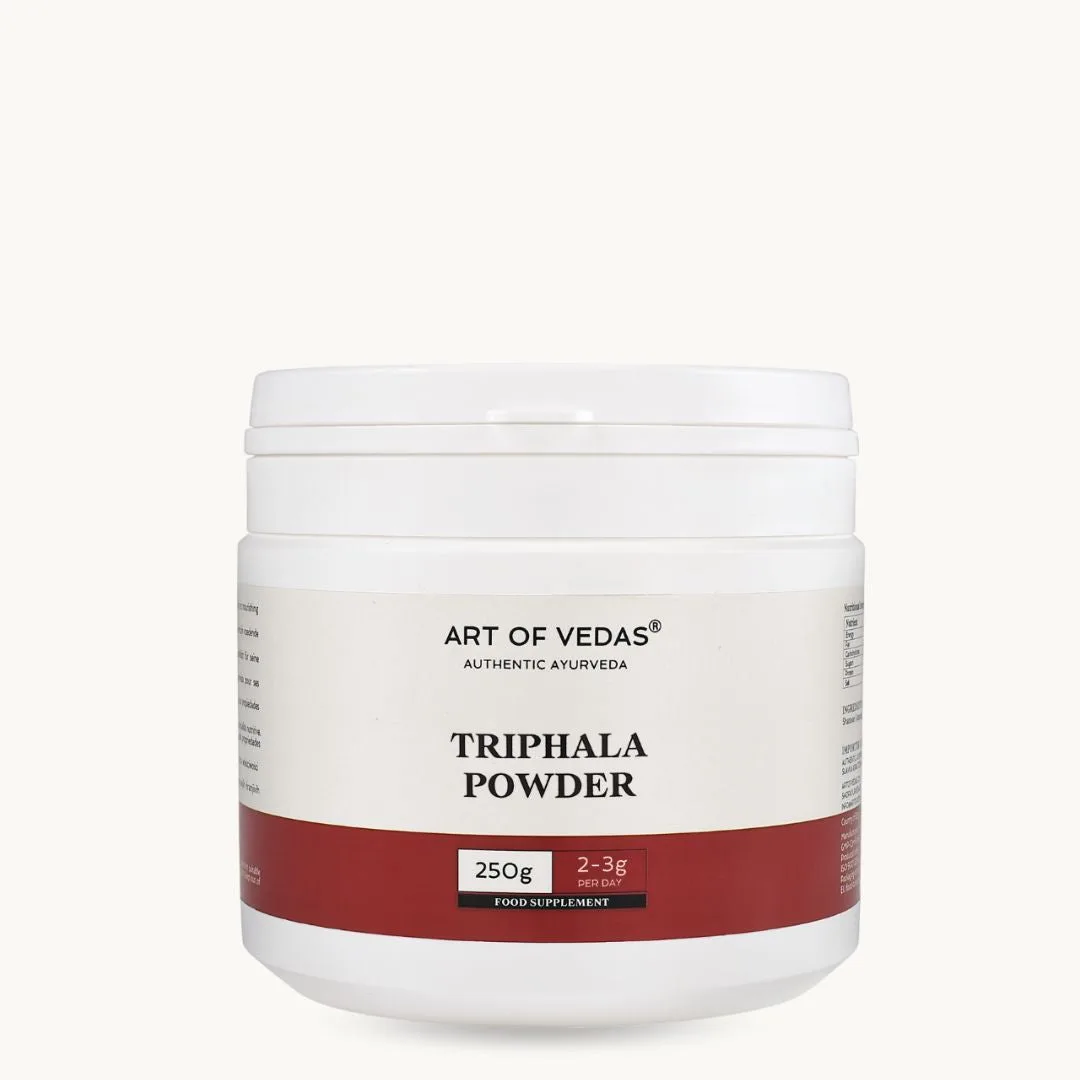
The most traditional method. Mix 3 to 6 grams (approximately half to one teaspoon) of Triphala powder into warm water and drink. The taste is astringent, bitter, and sour, and most people find it unpleasant at first. This is normal. Classical texts actually consider the taste an important part of the therapeutic action, as the bitter and astringent tastes stimulate digestive function.
Tips for taking the powder:
- Start with a smaller dose (2 to 3 grams) and increase gradually
- Stir well; the powder does not dissolve completely
- Drink while the mixture is still warm
- Follow with a small sip of plain warm water
As Tablets or Capsules
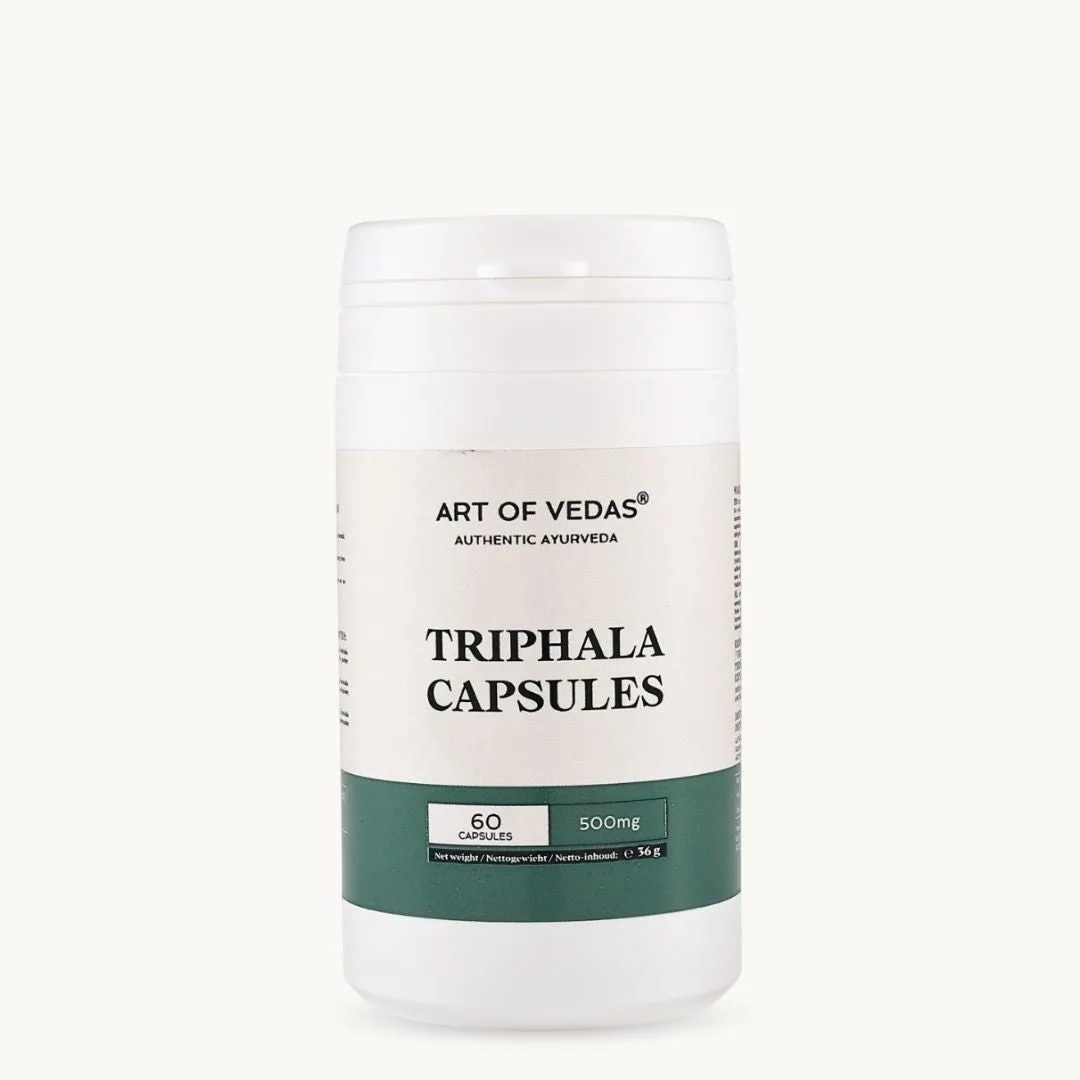
For those who cannot tolerate the taste, tablets and capsules offer a convenient alternative. Standard dosing is 500 mg to 1,000 mg, taken once or twice daily. While effective, purists note that bypassing the taste receptors reduces part of the therapeutic action.
As a Cold Infusion
Soak one teaspoon of Triphala powder in a glass of room-temperature water overnight. Strain in the morning and drink the amber-coloured liquid. This method is milder than the warm-water preparation and is particularly suited to Pitta types or warm weather.
When to Take Triphala
Timing affects the action of Triphala. Classical texts provide guidance:
-
Before bed: the most common recommendation. Take Triphala with warm water 30 to 60 minutes before sleep. This supports overnight cleansing and morning elimination
-
On an empty stomach in the morning: some practitioners recommend this timing for a stronger digestive-kindling effect
-
Between meals: when the goal is to support digestion and nutrient absorption
The best timing depends on your individual constitution and the purpose of taking Triphala. Consult an Ayurvedic practitioner for personalised guidance.
The Anupana (Vehicle)
As with all Ayurvedic preparations, the medium matters:
-
Warm water: standard, suitable for all Doshas
-
Honey: recommended for Kapha types or when the goal is reducing heaviness. Classical rule: never heat honey; add it to water that has cooled to a drinkable temperature
-
Ghee: recommended as a Rasayana combination, particularly for Vata and Pitta types
-
warm water: for a more nourishing, tissue-building effect
Duration of Use
Triphala is considered safe for long-term use. Classical texts describe it as a daily Rasayana that can be taken for months or years. Unlike stimulant laxatives, it does not create dependency. In fact, its effect often improves over time as it gradually restores the body's natural digestive rhythm.
A common approach is to take Triphala daily for 2 to 3 months, then pause for 2 to 4 weeks before resuming. This cyclical pattern follows the Ayurvedic principle that even beneficial substances benefit from occasional breaks.
Triphala for Different Constitutions
Vata Type
Take Triphala with warm water and a small amount of ghee or sesame oil. The ghee counteracts the drying quality that could aggravate Vata. Evening dosing before bed supports Vata's tendency toward irregular elimination.
Pitta Type
Take Triphala as a cold overnight infusion or with room-temperature water. The cooling preparation suits Pitta's warm constitution. Amalaki's presence in the formula makes Triphala naturally Pitta-friendly, but the cold infusion method is gentlest.
Kapha Type
Take Triphala with warm water and honey. The warming preparation and the honey's light, scraping quality complement Kapha management. Morning dosing on an empty stomach is often recommended for Kapha.
Quality Indicators
Not all Triphala products are equal. Here is what to check:
-
Equal proportions: authentic Triphala contains equal parts of all three fruits. Some commercial products alter the ratio
-
Whole fruit vs extract: traditional Triphala uses the dried, powdered whole fruit (without seeds). Standardised extracts concentrate specific compounds but may lack the full-spectrum action of the whole fruit
-
Organic certification: reduces pesticide residue concerns
-
Heavy metal testing: essential for any Ayurvedic herbal product. Look for third-party lab certificates
-
Freshness: Triphala powder should have a distinctly sour, astringent smell. If it smells stale or flat, it may have lost potency
Classical Formulations Containing Triphala
Triphala appears as an ingredient in dozens of classical formulations:
-
Triphala Ghritham: Triphala cooked in ghee, traditionally used to support eye health and as a deeper Rasayana
-
Triphala Guggulu: combined with Guggulu resin, traditionally used to support healthy metabolism and joint comfort
-
Triphala Churnam with additions: combined with Trikatu (three pungent spices) for stronger digestive support
These compound formulations serve more specific purposes and are typically prescribed by a practitioner rather than self-selected.
Frequently Asked Questions
Can I take Triphala every day?
Yes. Classical texts describe Triphala as suitable for daily use. A cyclical approach (2 to 3 months on, 2 to 4 weeks off) is one common practice pattern.
Is Triphala a laxative?
Not in the conventional sense. Triphala is an Anulomana, meaning it supports the natural downward movement of Vata. It promotes regular elimination without the urgency or dependency associated with stimulant laxatives.
Can I take Triphala during pregnancy?
Consult a qualified practitioner. Classical texts advise caution with most herbal preparations during pregnancy.
Is the taste supposed to be that unpleasant?
Yes. The complex taste profile is considered therapeutically relevant. Many people find the taste becomes more tolerable, even enjoyable, after a few weeks of regular use. This shift in taste perception is itself considered a sign of improving balance.
This product is a food supplement and not intended to diagnose, treat, cure or prevent any disease.
Where to Find Quality Triphala
Art of Vedas supplies authentic Triphala carefully selected. Our Triphala uses equal proportions of all three fruits, prepared according to classical specifications. Browse our Triphala range or explore our Chyavanprash guide to learn about another cornerstone Rasayana formulation based on Amalaki.