In brief: The figure that should decide a wholesale oil order is not the litre price but the rate at which each oil actually leaves your treatment room, because that rate determines pack size, storage and whether bulk buying makes sense at all.
Measure your own consumption before comparing any prices
The catalogue cannot tell you which format to buy. Order the largest container of the oil you use most often, and small bottles of everything else, and six months later the canister can still be half full while three small bottles have stood empty for weeks. The missing number was never in the catalogue. It was internal.
Find it by measuring a real working month: what goes into the working bottle each morning and what comes back to the shelf at night, recorded per preparation and per treatment type. A full body Abhyanga (the classical Ayurvedic oil application) consumes a very different volume in one pair of hands than in another, so a figure from another practice tells you little. After four weeks you hold a rate per oil, and every decision below follows from it.
The rule is short. Buy the format you will finish within a sensible period after opening, not the one with the lowest price per litre. A format that outlives its own useful life on your shelf is not a saving, because part of it is never used.
What you are buying, in European regulatory terms
Ayurvedic oils reach the European market under two separate regimes, and a professional buyer should know which applies before ordering. Oils for external application are cosmetic products under Regulation (EC) No 1223/2009. Each must be notified through the CPNP portal, and each must have a Responsible Person established in the European Union holding the Product Information File. This matters directly: import oils yourself from outside the Union and you generally become that Responsible Person, with the assessment, documentation and labelling duties the role carries. Buying from a supplier who already holds that position keeps the obligation off your practice. The Art of Vedas cosmetic range is placed on the European market with a Responsible Person in place.
Ghritham, the classical ghee based preparations, are not cosmetics. They fall under food law, with different labelling and different import treatment, and cannot be ordered as an extension of an oil order. That distinction is covered in our guide to buying Ghritham in Europe.
The documents to ask for before a first order
A supplier set up to serve clinics should be able to produce these without discussion.
- The batch or lot number printed on the container itself, not only on the invoice. Traceability that lives on paperwork alone breaks the moment the oil is decanted.
- The ingredient declaration in INCI form, with written confirmation that it matches the formula currently shipping rather than an earlier version.
- The name and address of the Responsible Person, which must appear on the label in any case.
- Minimum durability date or period after opening, stated per format. The canister and the retail bottle do not necessarily carry the same figure.
- Declared fragrance allergens, which you need for your own intake and consent forms.
- A safety data sheet where the composition requires one.
Read the preparation type, not only the name
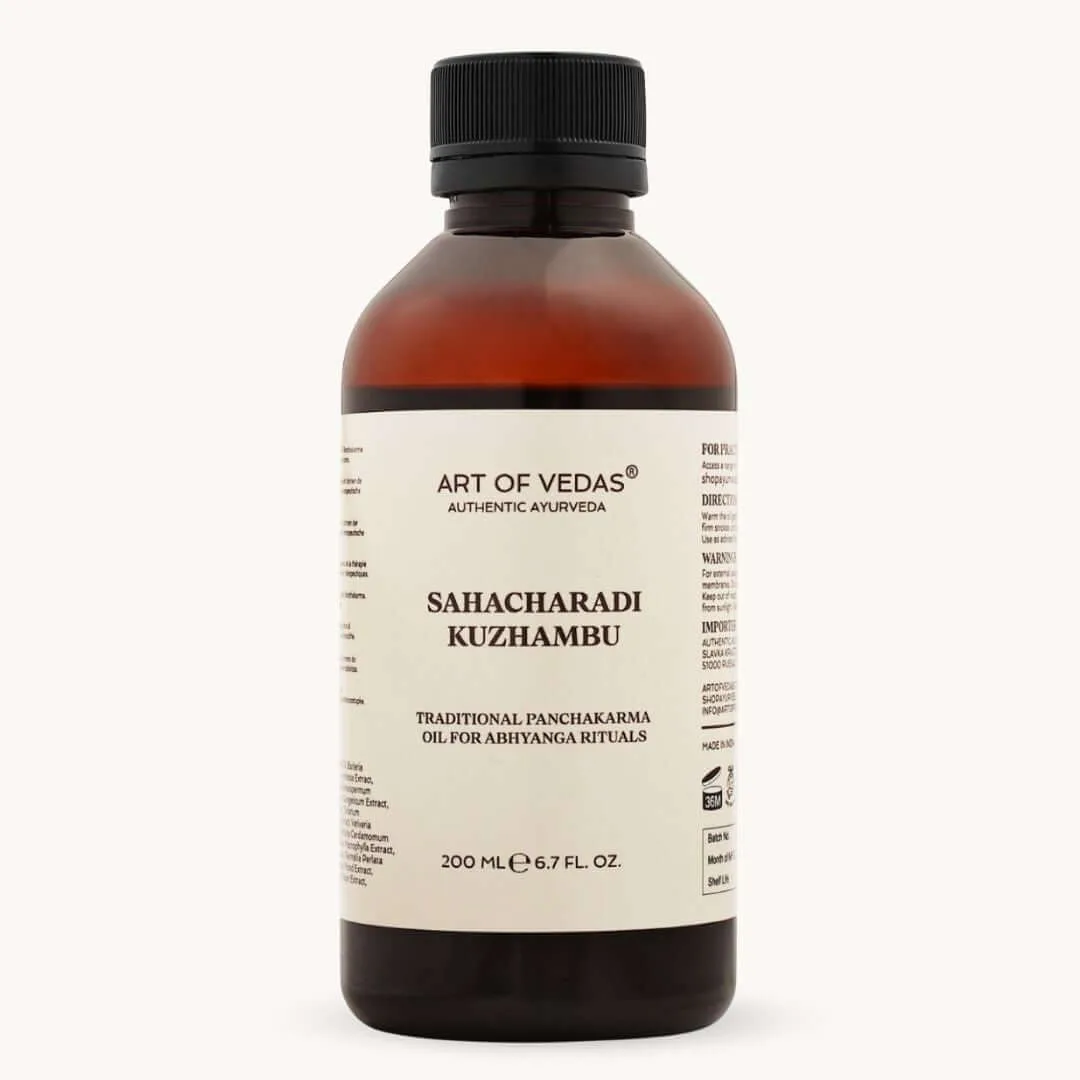
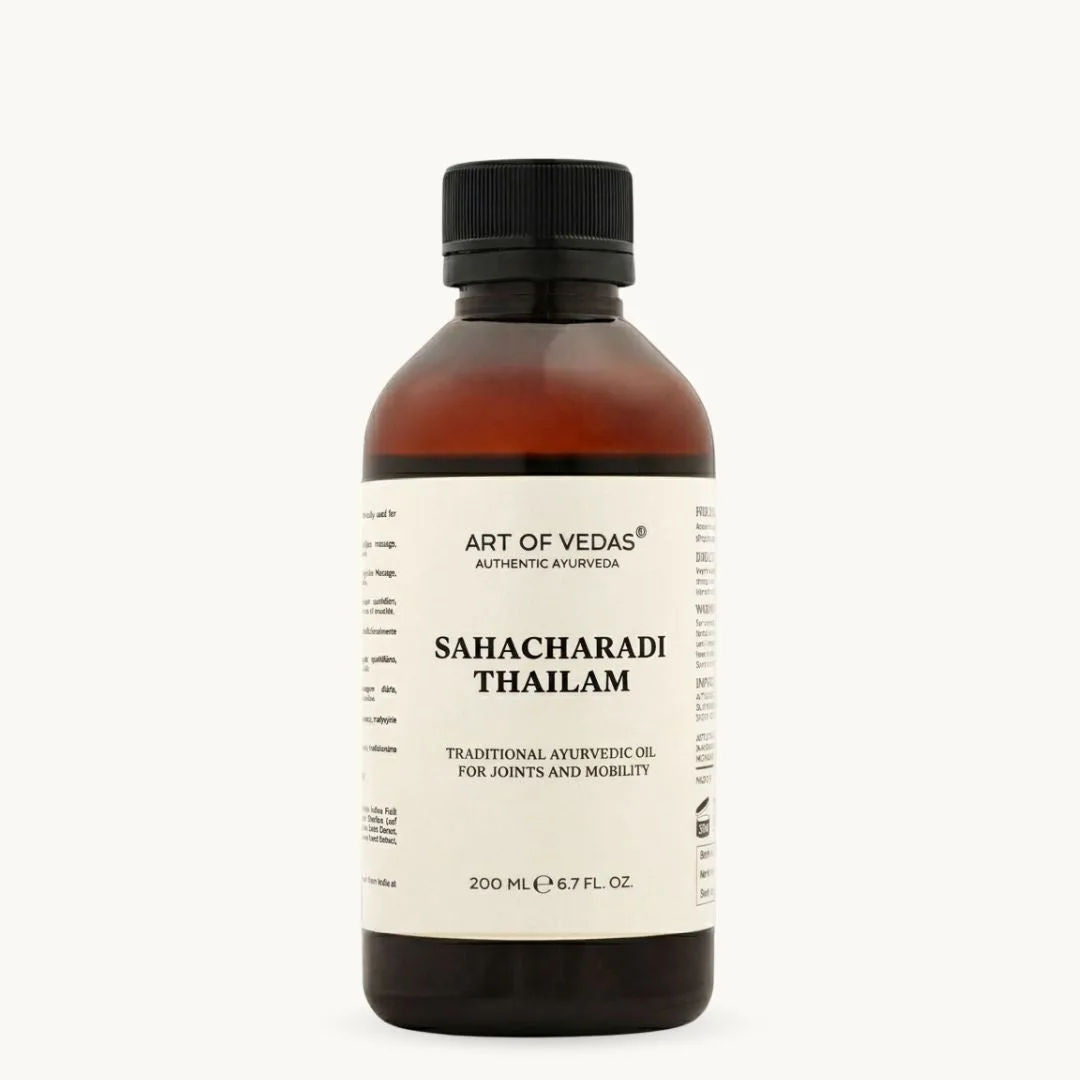
Two containers can carry the same Sanskrit name and behave quite differently in the room. The suffix is the specification. A Thailam is an oil based preparation, pourable at room temperature, and it is what most treatment sequences assume. A Kuzhambu is thicker and semi solid, worked into a defined area rather than poured. Sahacharadi Kuzhambu and a Sahacharadi Thailam are not interchangeable on a treatment table even though the herb set is closely related, and a therapist expecting one and receiving the other loses time on every session.
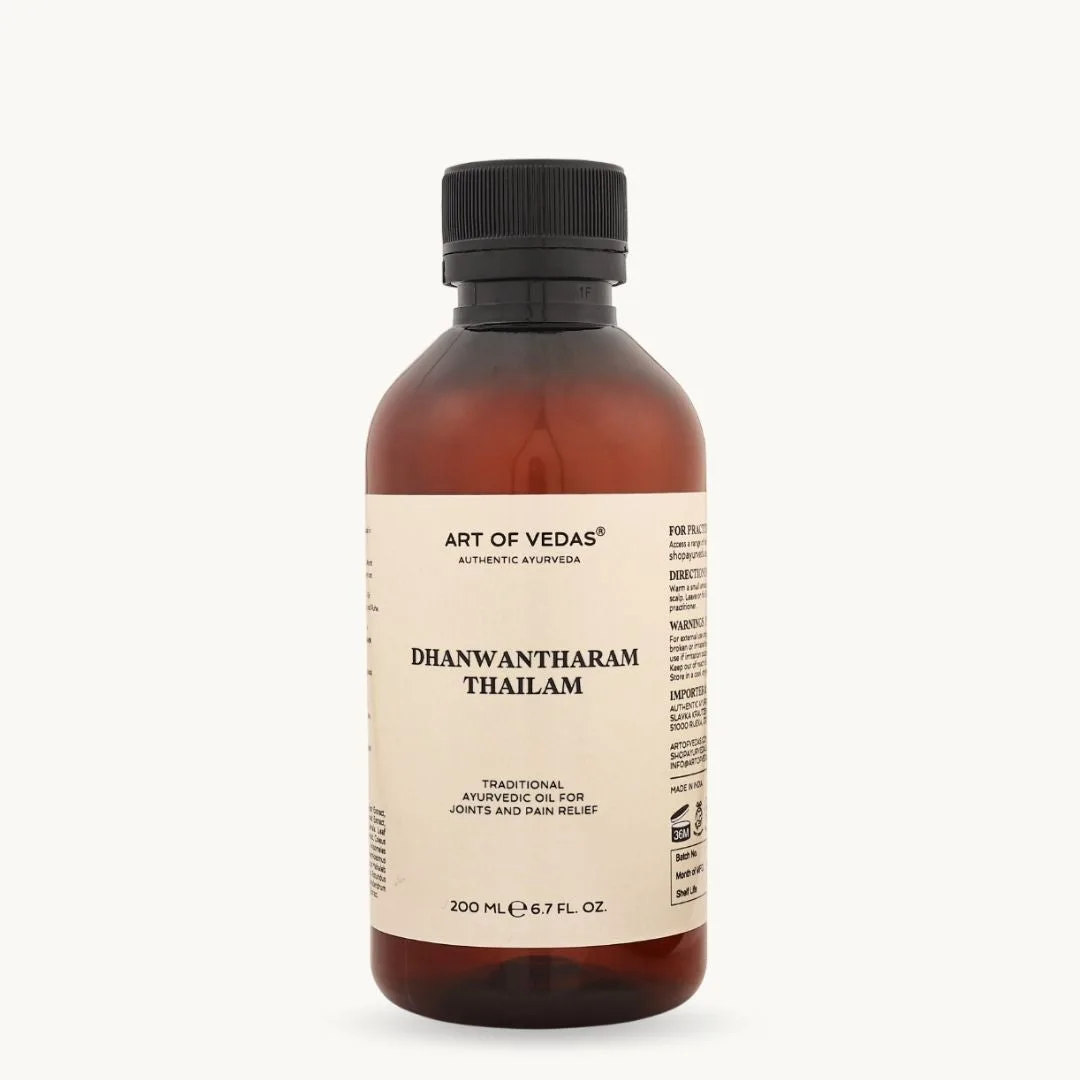
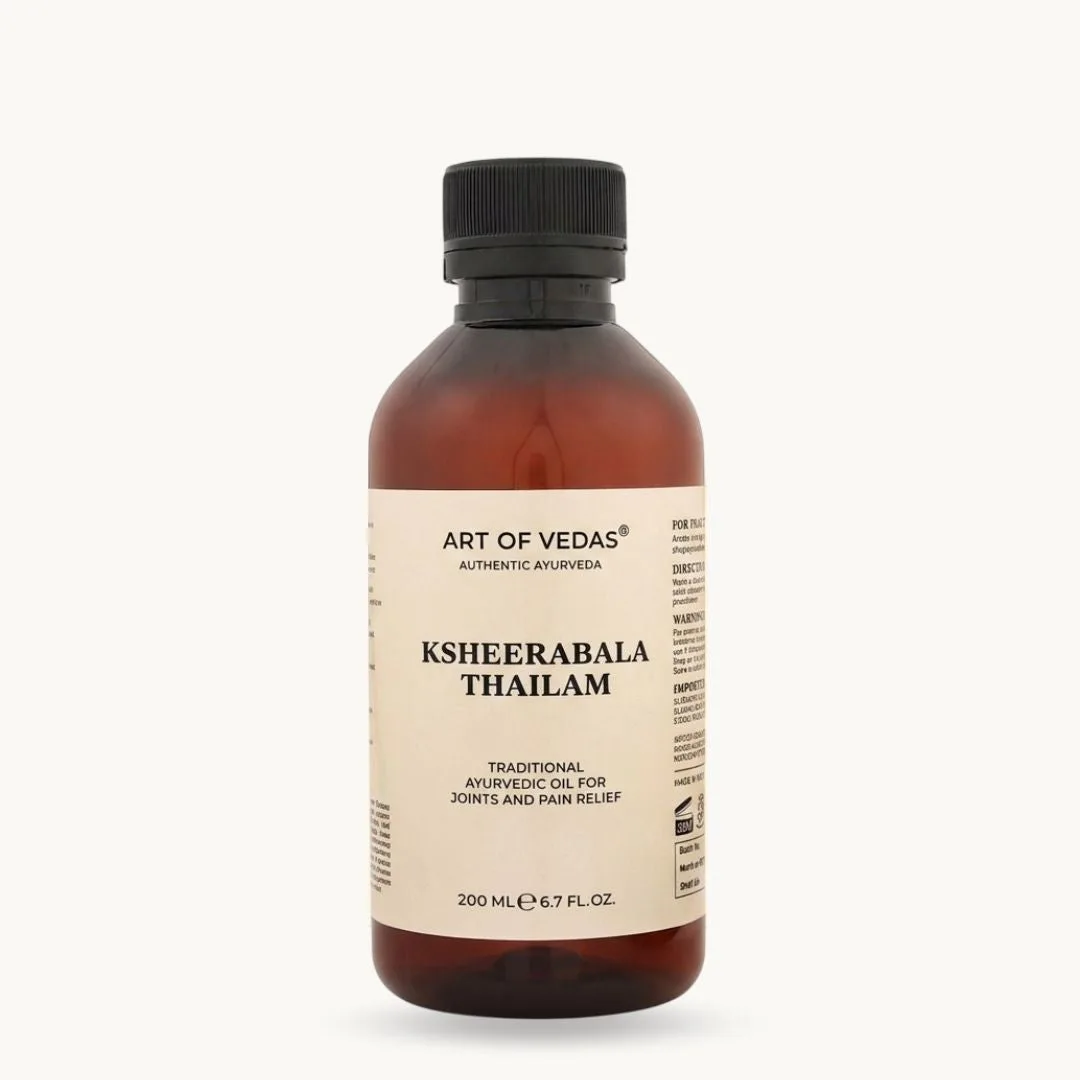
Strength is the second variable. Oils prepared through repeated processing cycles, counted in avarthy, are heavier preparations classically suited to shorter and more specific use, and priced accordingly. A standard Dhanwantharam Thailam and a higher avarthy version are not the same order line. Ksheerabala Thailam, which the tradition directs towards Vata (the Dosha, or functional principle, governing movement, dryness and cold), is likewise made in a range of strengths, so the order should state which one.
Plain base oils are the third category. Sesame oil is the traditional carrier for classical oil preparations and is worth stocking on its own account, for dilution and for the work where a herbal preparation is not called for.
Pack size, decanting and hygiene
Bulk oil is bought in canisters and used from working bottles. That transfer is where stock control is lost, and a short written protocol settles it.
- Decant into a clean, dry working bottle sized for two or three days, labelled with the batch number from the canister. Traceability must survive the transfer.
- Never return oil from a working bottle or a warming dish to the bulk container. Whatever has been near a client stays out.
- Warm the working bottle in a water bath or a purpose made warmer, never over direct heat. Repeated overheating shortens the useful life of a preparation.
Canisters belong in a dark, cool store room, closed and upright, away from radiators and windows. A Kuzhambu stiffens in a cold store and needs gentle warming before it is workable. Quantities per therapy, including the volumes a Panchakarma (the classical Ayurvedic purification programme) room consumes in a full cycle, are set out in our note on planning oil volumes for a Panchakarma room.
Ordering across European borders
Register your VAT number with the supplier before the first invoice is raised. A business established in another member state can be supplied under the intra community regime once a valid number is on file, and correcting an invoice afterwards is tedious.
Plan for weight. Oil in five litre canisters becomes a pallet consignment quickly, and pallet freight carries different lead times, delivery windows and access requirements than parcel delivery. A clinic with no loading access, or nobody present during working hours, should say so when ordering. Season matters too: winter transport thickens heavier preparations, and an unventilated vehicle in high summer is no better. Both argue for ordering ahead of a busy period.
Professional pricing and bulk formats
Art of Vedas serves practitioners, clinics, spas and Panchakarma centres through a separate professional platform at shopayurveda.eu. Accounts are reviewed individually, and once active an account shows professional pricing and the bulk formats that do not appear on the consumer domains.
Centres with a continuing requirement should read the guidance on bulk supply for Ayurveda centres, which deals with standing orders rather than single purchases.
Questions practitioners ask before a first wholesale order
Do I need a professional qualification to buy Ayurvedic oils wholesale in Europe?
For an account with professional pricing, yes, in practice. Approval rests on evidence of professional activity: a registration number, a therapy qualification, a business registration for a clinic or spa, or a training certificate. Professional formats are intended for professional use.
Do I need a VAT number to order wholesale?
Not to place an order, but without a valid number the invoice cannot be issued under the intra community regime and local VAT will be charged. For a VAT registered business that is normally recoverable, though it affects cash flow. Supply the number when the account is opened.
Is a five litre canister sensible for a small practice?
Only for the one or two preparations you use every week. For the rest, the smaller professional format is the better buy, and the retail bottle remains right for oils used occasionally or held for a single client.
How do I judge a new preparation before committing to a bulk format?
Buy the smallest format first and put it through a full working month. That gives you two things no specification sheet can: your own consumption rate for that oil, and how the therapists find it in the hand. Only then is a canister a reasonable commitment.
Can I resell the oils to my own clients?
Yes, but retail sale brings its own obligations. The product must reach the consumer with correct labelling in the language of your market, and you answer for how it is presented and stored. Professional accounts support resale; settle the labelling questions before the first shipment rather than after it.