


Products

A hand-cast Kansa bronze bowl wand for Padabhyanga, the classical Ayurvedic foot massage. The bowl dome is mounted on a hardwood handle, giving full control of angle and pressure as it works across the sole. The handle distinguishes this tool from the handheld Vatki bowl, it allows sustained, directed pressure into the plantar Marma points without strain on the hand. Traditionally valued in Ayurveda for pacifying Pitta and grounding Vata through the soles of the feet.

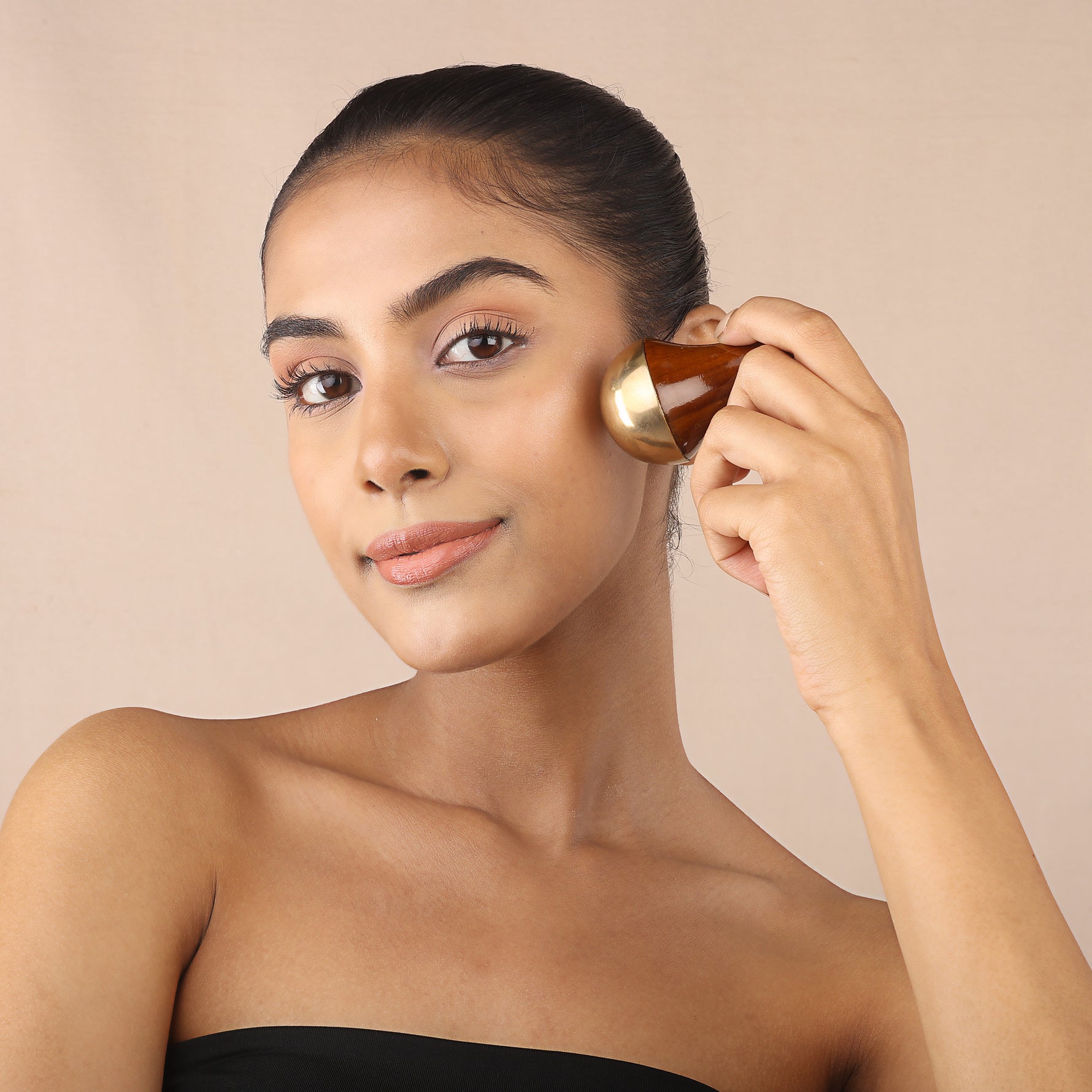
Two domes, each shaped for a different part of the face. The larger dome glides across cheeks, forehead and jawline, covering the broad, open areas in slow circular movements. The smaller dome turns for the precise work: temples, brow, under-eye, the edges of the nose.
The metal has a naturally cooling quality. In Ayurveda, this is traditionally associated with Pitta balance — a calming of warmth and reactivity in the skin. The faint grey-green tint you may notice during use is a natural reaction between the metal, the oil, and your skin's pH. It washes off easily and is not harmful.
Apply 3 to 4 drops of face oil before you begin. Work across both sides of the face, starting from the centre and moving outward. Gentle pressure is enough — the tool does the work. Five to ten minutes daily is ideal.
For external use only. Clean and dry thoroughly after each use. Store away from moisture.

Kapikacchu (Mucuna pruriens), also known as Atmagupta in classical texts, is one of Ayurveda's most respected Vrishya (vitalising) herbs. Referenced in the Charaka Samhita and Ashtanga Hridayam, it has been traditionally valued for supporting strength and vitality across all stages of life. With a sweet taste and warming Virya, it has a particular affinity for Vata Dosha.
Classical texts describe Kapikacchu as Balya (strength-promoting), Vrishya (vitality-enhancing) and Brumhana (nourishing). Traditionally used as a daily Rasayana. Take 1-2 capsules daily with water, or as advised by your Ayurvedic practitioner.
This product is a food supplement. Not intended to diagnose, treat, cure or prevent any disease. Not recommended during pregnancy or breastfeeding. Intended for use under the supervision of a qualified Ayurvedic practitioner.

Karparastyadi Kuzhambu is a classical formulation documented in the Sahasrayogam, led by Karpasa (cotton seed) and traditionally valued in Ayurveda for its action on Vata dosha in the musculoskeletal system. The semi-solid Kuzhambu form delivers this classical preparation with a consistency that holds in place over the area of application.
Where Karparastyadi Thailam flows and spreads, the Kuzhambu stays. This makes it the natural choice for localised application on specific joints, the neck, or the lower back, areas where sustained contact with the formulation supports the traditional Vata-pacifying action. It softens with body heat and works into the skin gradually.
Traditionally used in Ayurvedic practice for conditions involving stiffness, restricted movement, and discomfort associated with Vata aggravation. The Kuzhambu form is favoured by practitioners for localised external therapies.
For external use only. Not a substitute for professional medical advice.

Karpooradi Thailam is a classical Ayurvedic oil from the Kerala tradition, known for its powerful warming and penetrating action. Mentioned in the Bhaishajya Ratnavali and Sahasrayogam, this traditional formula combines just two carefully chosen herbs, Camphor (Karpura) and Celery seed (Ajmoda), in a nourishing Sesame oil base.
Unlike complex multi-herb formulations, this pure, focused blend delivers targeted comfort. The sharp, penetrating quality of Camphor works in harmony with Celery seed's soothing properties to support comfortable movement and ease occasional muscle tension. Traditionally used to balance Vata and Kapha, Karpooradi Thailam brings warmth to cold, stiff joints and helps clear buildup in the chest.
Whether you are seeking support after physical activity, comfort from seasonal stiffness, or traditional respiratory wellness, this time-honoured oil offers a simple yet powerful approach to daily wellbeing.

Kolakulathadi Churnam is a classical external-use Ayurvedic powder formulated specifically for Udvartana (traditional dry powder massage), one of the essential Dinacharya practices described in the Ashtanga Hridayam. The name derives from its two anchor ingredients: Kola (Ziziphus jujuba) and Kulatha (Dolichos biflorus/horse gram), combined with warming, drying herbs that give the powder its characteristic Lekhana (scraping) and Kapha-reducing action.
Udvartana is performed as a vigorous upward-direction dry massage using herbal powders, traditionally recommended for Kapha-predominant constitutions and as a preparatory or standalone therapy in Panchakarma. The Ashtanga Hridayam specifically describes Udvartana as Kaphahara (Kapha-reducing), Meda Pravilayana (tissue-toning) and Sthirikarana (firming). Kolakulathadi is the most commonly prescribed powder for this purpose across all major classical texts.
Art of Vedas Kolakulathadi Powder is prepared following classical proportions. For Udvartana, take an appropriate quantity and massage vigorously over the body in upward strokes (from feet toward heart) on dry skin or after a light oil application. Follow with a warm bath. Available in 500g and 1KG professional sizes for practitioners and Panchakarma centres.
For external use only. Not a medicine and not a substitute for professional medical advice. Avoid broken or irritated skin. Discontinue if irritation occurs. Store in a cool, dry place.

Kottamchukkadi Kuzhambu is a classical warming formulation documented in the Sahasrayogam, traditionally used for localised application on stiff joints and cold, heavy areas of the body. The name comes from its two lead herbs: Kottam (Saussurea lappa) and Chukku (dried Ginger), both valued in Ayurveda for their penetrating, warming action.
The semi-solid consistency holds the formulation in place over joints, the lower back, or any area where deep, warming contact is needed. It softens with body heat and absorbs steadily, making it particularly suited to morning application during cold seasons or before physical activity. Practitioners use this preparation in Panchakarma protocols for Vata-Kapha conditions where both stiffness and heaviness are present.
Kottamchukkadi is classified in Ayurveda as both Vata Shamana and Kapha Shamana. The Kuzhambu form delivers that warming action with precision.
For external use only. Not a substitute for professional medical advice.

Ksheerabala Thailam is a classical Ayurvedic formulation documented in Ashtanga Hridayam and Sahasrayogam. This elegant three-ingredient oil, Bala (Sida cordifolia), cow's milk, and sesame oil is traditionally regarded as a nerve tonic in Ayurveda. Prepared using the Ksheerapaka method (milk processing), Ksheerabala offers a cooling, calming quality that distinguishes it from warming oils like Mahanarayana. Particularly valued for Padabhyanga (foot massage) as part of an evening relaxation ritual.

A few drops of this serum leave the skin noticeably softer, more even in tone, and quietly luminous. It absorbs cleanly without heaviness and works well under a Kansa wand or alone as the last step of your evening ritual.
Kumkumadi is a classical Ayurvedic formula documented in the Ashtanga Hridayam, the chapter dedicated to Mukhalepa (face care). It belongs to the Varnya category, herbs traditionally used in Ayurveda to support natural skin clarity. The key herb is Kumkuma (saffron), supported by Chandana (sandalwood), Manjishtha, Padmaka (lotus) and Yashtimadhu, all infused into cold-pressed sesame oil, the classical base for face oiling in Ayurveda.
Suitable for all skin types. Best applied in the evening after cleansing. If you use a Kansa wand, apply the serum first and massage immediately after.
For external use only. Not a substitute for professional medical advice.

Mahamasha Thailam is a classical Ayurvedic formulation documented in Bhaishajya Ratnavali, combining over 40 herbs with the complete Dashamoola (ten roots) in a pure sesame oil base. The name derives from its signature ingredient Masha (Vigna mungo / black gram), the only Ayurvedic oil named after and dominated by this powerful legume, traditionally valued for its deep tissue nourishing properties.
Prepared according to traditional Taila Paka Vidhi (oil cooking method) with cow's milk processing, this Thailam is classified as both Nadibalya (nerve-strengthening) and Mamsabalya (muscle-strengthening), a dual action unique among classical oils. In Ayurvedic practice, it is particularly associated with addressing Vata imbalances affecting both nerve and muscle tissue simultaneously.
Rooted in the Keraliya Ayurveda Parampara (Kerala tradition), Mahamasha Thailam is used in daily Abhyanga (self-massage) as well as professional Panchakarma practices including Pizhichil (oil bath), Shirodhara (forehead oil flow), Nasya (nasal administration), Karna Purna (ear application), and Matra Basti (oil enema). Its warming Ushna Virya makes it especially suited for presentations characterised by coldness, stiffness, and weakness.

Mahanarayana Thailam is a classical Ayurvedic formulation containing over 50 herbs, documented in Sahasrayogam and Bhaishajya Ratnavali. This warming, sesame-based oil is traditionally used for Abhyanga massage and Vata pacification. Prepared in India using authentic Sneha Paka Vidhi methods.

Mahathiktakam Ghritham is the great bitter ghee of the classical Ayurvedic pharmacopoeia, documented in the Ashtanga Hridayam (Chikitsa Sthana). The name is literal: Maha (great) + Tikta (bitter) + Ghritham (ghee). This formulation combines 26 bitter and astringent herbs including Nimba (Neem), Guduchi, Triphala and Patola, processed into purified cow's ghee through the traditional Sneha Kalpana method.
In the classical framework, the Tikta (bitter) taste is the primary tool for Pitta reduction and Rakta Dhatu (blood tissue) support. Mahathiktakam provides a broad, deep Tikta action across multiple tissue levels simultaneously. Classical texts describe it as Pittahara, Kushthaghna (skin-clarifying) and Raktashodhaka (blood-supporting). The "Maha" prefix distinguishes it from Thikthakam Ghritham by the greater breadth of herbs in the formula.
Take 2g daily on an empty stomach, warmed to liquid consistency, with warm water, or as directed by your Ayurvedic practitioner.
This product is a food supplement. Not intended to diagnose, treat, cure or prevent any disease. Do not exceed the recommended daily dose. Consult a qualified practitioner before use if pregnant, breastfeeding or taking medication.

The Mini Kansa Wand is cast from classical Kansa, a copper-tin bronze used in Ayurvedic facial practice for centuries. The dome is intentionally small sized to follow the orbital bone, reach the brow ridge, settle into the temple, and work the four marma points around the eye that a larger tool cannot address with precision.
Kansa has a naturally cooling quality. In Ayurveda, this is associated with calming Pitta, the accumulated heat that shows around the eyes as puffiness, sensitivity, and a dull, uneven complexion. Used with a face oil in slow, deliberate circles, the dome draws that heat outward and helps the oil absorb more completely than applying by hand.
This is the tool used in Netra Abhyanga, the traditional Ayurvedic eye-area ritual. At home, practiced for five minutes each morning or evening, it is one of the more quietly effective habits you can build into a daily routine.

Mukhalepa Ubtan is a deep-cleansing face mask for oily, blemish-prone skin. It is a dry herbal powder mixed fresh with water or rose water before each use, with no preservatives, no synthetic binding agents and no conventional mask fillers.
The formulation is based on the Mukhalepa Adhyaya of the Ashtanga Hridayam, the classical Ayurvedic text on skin purification. Multani Mitti absorbs sebum and surface impurities from within the pores. Neem and Tulsi address Kapha imbalances including excess oil and skin buildup. Sandalwood pacifies Pitta and reduces redness. Rose Petals restore softness and luminosity. Turmeric brightens and evens the complexion. Manjistha works on deeper discoloration.
Unlike commercial masks loaded with water and preservatives, this traditional Ubtan activates the moment you mix it. Each application is as potent as the first.

Murivenna Oil is a classical Ayurvedic formulation traditionally used for external application after physical exertion, fresh bruises, sprains, minor burns, and muscle strains. Unlike most Ayurvedic oils that use warming sesame oil, Murivenna features a cooling coconut oil base that immediately soothes hot, tender tissue following physical impact.
This traditional formula combines 9 herbs in precise proportions, creating comprehensive support for the body's natural recovery process. The cooling herbs (Aloe Vera, Shatavari, coconut oil) balance excess heat, while warming herbs (Betel Leaf, Moringa Bark) support healthy circulation to affected areas. This thermal balance makes Murivenna uniquely suited for the acute phase after impact, when heat and swelling are present.
Primary indications: Fresh bruises, sprains, strains, minor burns, muscle overexertion, acute physical impact
Application: External use only, 2-3 times daily during acute phase.

Musta Churnam (Cyperus rotundus), known as Nagarmotha in Hindi, is regarded in classical Ayurveda as one of the finest Deepana-Pachana (digestive) herbs. The Charaka Samhita classifies it in the Lekhaniya group (metabolic herbs) and the Trishna Nigrahana group (thirst-alleviating).
Unlike many digestive herbs that are heating, Musta offers the rare quality of stimulating Agni without generating excess heat. Its cooling Virya makes it suitable even in warm seasons and for Pitta-predominant constitutions. Classical texts also describe it as Grahi (absorbent) and Stambhana (binding).
Take 1/2 to 1 teaspoon (2-3g) with warm water, before or after meals. Often combined with other digestive herbs such as Haritaki or ginger for enhanced effect.
This product is a food supplement. Not intended to diagnose, treat, cure or prevent any disease. Consult a qualified practitioner before use if pregnant, breastfeeding or taking medication.

Narayana Thailam is a classical Ayurvedic formulation referenced in the Bhaishajya Ratnavali for neuromuscular and joint support. This potent oil combines the complete Dashamoola (ten roots), dual-strength Ashwagandha and Punarnava, along with traditional nervine herbs like Bala and Shatavari in a nourishing sesame oil base.
Named after Lord Narayana (Vishnu), this oil has been traditionally used for centuries to support muscle strength, joint comfort and nervous system balance. The warming, deeply penetrating formula is ideal for Abhyanga massage and is particularly valued in Ayurveda for supporting those experiencing weakness, stiffness or general Vata imbalance.

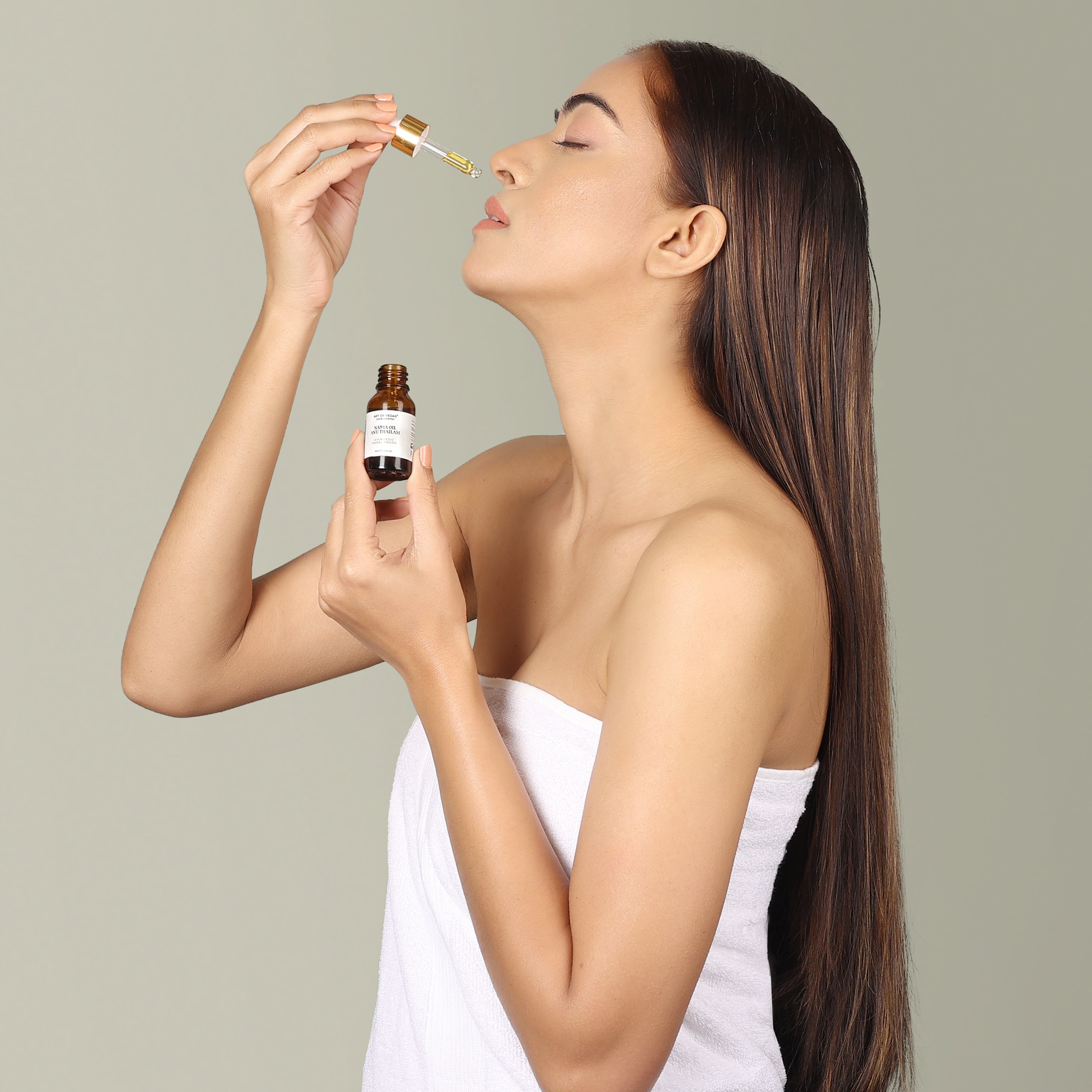
Art of Vedas Nasya Oil is an authentic Anu Thailam, the most important nasal oil in classical Ayurveda, documented in Ashtanga Hridaya over 1,500 years ago. This traditional formula combines 24 carefully selected herbs in pure sesame oil, prepared according to ancient methods to support nasal wellness, promote mental clarity, and nourish all five sense organs.
In Ayurveda, the nose is called "Nasa hi Shiraso Dwaram", the doorway to the head. Daily Nasya practice with Anu Thailam is considered one of the most important rituals for maintaining wellness of the head, eyes, ears, and mind. Just 2 drops per nostril each morning can become a transformative part of your Dinacharya (daily routine).
Whether you are new to Nasya or an experienced practitioner, this classical formula offers authentic support for clear breathing, mental focus, and overall head region wellness throughout all seasons.
Showing 72/105
Let customers speak for us


I was struggling to find authentic Ayurvedic items, i am glad to make my order


I ordered several supplements and oils from there and they are great quality

In advice of a good friend, I ordered and received my goods in really good condition. Wands are beautiful and nice to handle. I'm ready to learn more of Ayurveda and looking forward to see what is does with my body & soul. Service (responding to mail) is friendly and correct. Thx so much for that !


The order was quickly, all items in best conditions, massage oils smooth and healthy. I fully recommend.
