This article is part of our AYURVEDIC SKINCARE FOR BEGINNERS guide series.
Important Disclaimer: All Art of Vedas skincare products are for external use only. They are wellness products and do not treat, cure, or prevent any disease or medical condition. All references to traditional Ayurvedic indications are descriptions of classical use. For any skin concerns requiring medical attention, please consult a qualified healthcare professional.
The modern anti-aging skincare industry is built on a particular theory: that aging skin is primarily a deficit - of moisture, of collagen, of elastin - and that the solution is to replenish what has been lost. Ayurvedic medicine understood skin aging differently. The classical framework positions aging not primarily as a deficit but as an expression of Vata's increasing dominance over the body's tissues - a gradual drying and fragmentation of the processes that maintain tissue quality and the radiance that classical texts describe as ojas.
The Ayurvedic response is not to add back isolated compounds from outside but to nourish and support the body's own renewal capacity through consistent therapeutic practice. The branch of Ayurvedic medicine devoted to this project is called Rasayana - the science of rejuvenation. The Rasayana approach to skin longevity is genuinely different from conventional anti-aging skincare - not just in its ingredients but in its entire philosophical architecture.
What Rasayana Actually Means
The Sanskrit term Rasayana comes from rasa (essence, primary nutrient fluid) and ayana (path, channel). Rasayana practices are those that nourish and open the pathways along which rasa - the most fundamental nutritive substance in Ayurvedic physiology - flows through the body's tissue layers.
For skin specifically, the Rasayana approach addresses aging at several simultaneous levels. Rather than targeting one mechanism (moisture) or one molecule (collagen), it aims to sustain the skin's own biological processes - its cellular renewal, antioxidant defence, microcirculation, and barrier function - by consistently providing the conditions under which those processes function optimally.
The visible expression of good Rasayana practice on the skin - what classical texts describe as twak prasada (skin clarity and lustre) - is not the absence of wrinkles but the presence of something: a quality of aliveness, translucency, and healthy texture that is recognisable even when the skin's surface shows normal signs of age.
The Classical Rasayana Herbs for Skin
Varnya Herbs: Supporting Complexion Quality Over Time
The first category of Rasayana herbs relevant to anti-aging are the varnya herbs - those specifically documented for supporting the brightness, clarity, and evenness of the complexion. In anti-aging terms, varnya herbs address the progressive dulling of the complexion, the development of uneven tone from accumulated UV exposure, and the loss of translucency associated with well-nourished young skin.
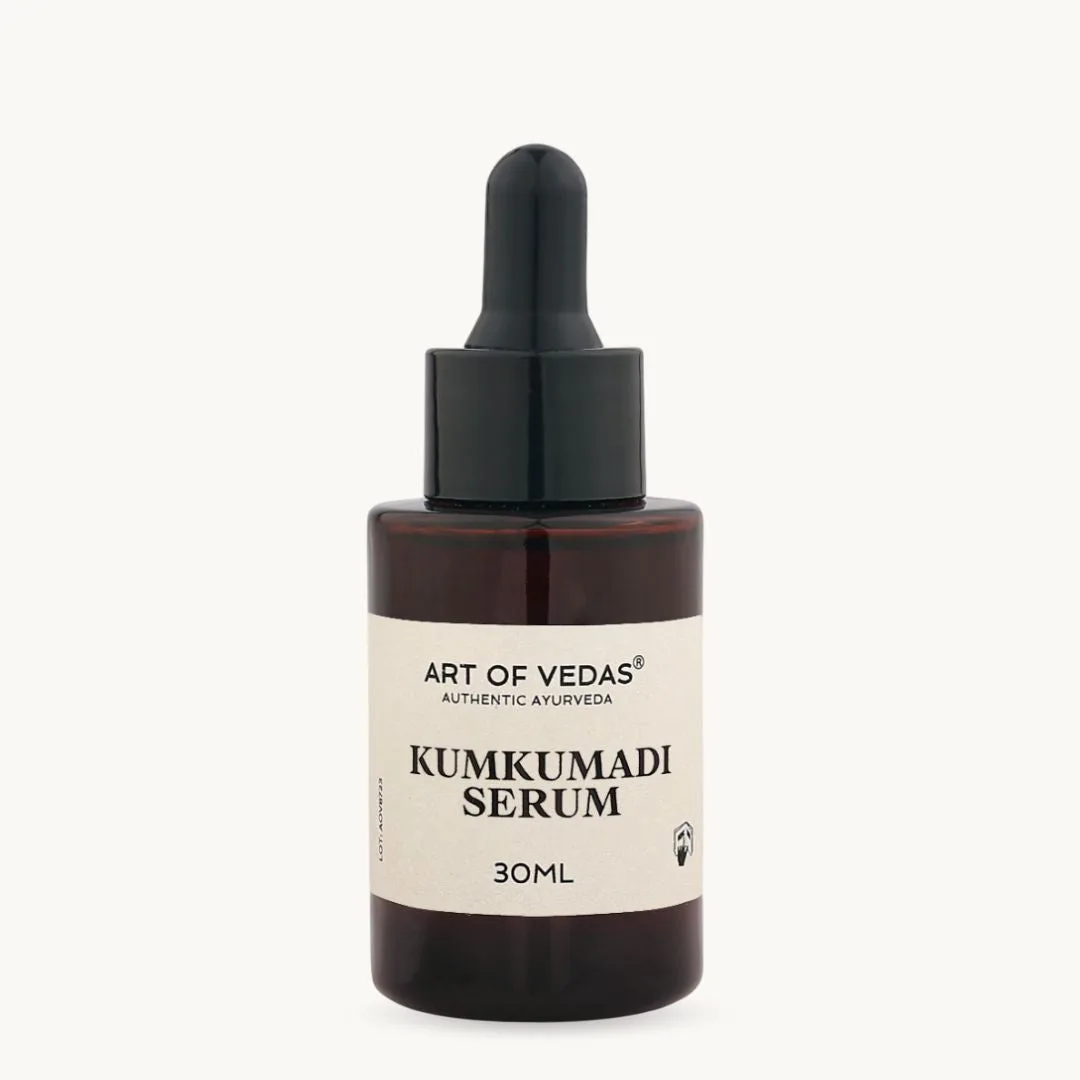
The most important classical varnya herbs for topical facial use are: Kumkuma (saffron) - the foremost varnya herb, warming, antioxidant, complexion-activating; Chandana (sandalwood) - cooling varnya, anti-inflammatory, the balancing partner to saffron's warmth; Manjishtha (Indian madder, Rubia cordifolia) - antioxidant and anti-inflammatory; Priyangu (Callicarpa macrophylla) - cooling complexion support; and Padmaka (Prunus cerasoides) - a Himalayan brightening botanical. All five are present in our Kumkumadi Serum. For the full saffron-varnya tradition, see our saffron for skin guide and sandalwood guide.
Krimighna Herbs: Supporting Skin Clarity
The second category are krimighna herbs - those with antimicrobial and skin-clarifying properties. In anti-aging terms, these address the changes in skin microbiome balance and barrier function that contribute to the loss of clarity and impaired healing response that characterise aging skin.
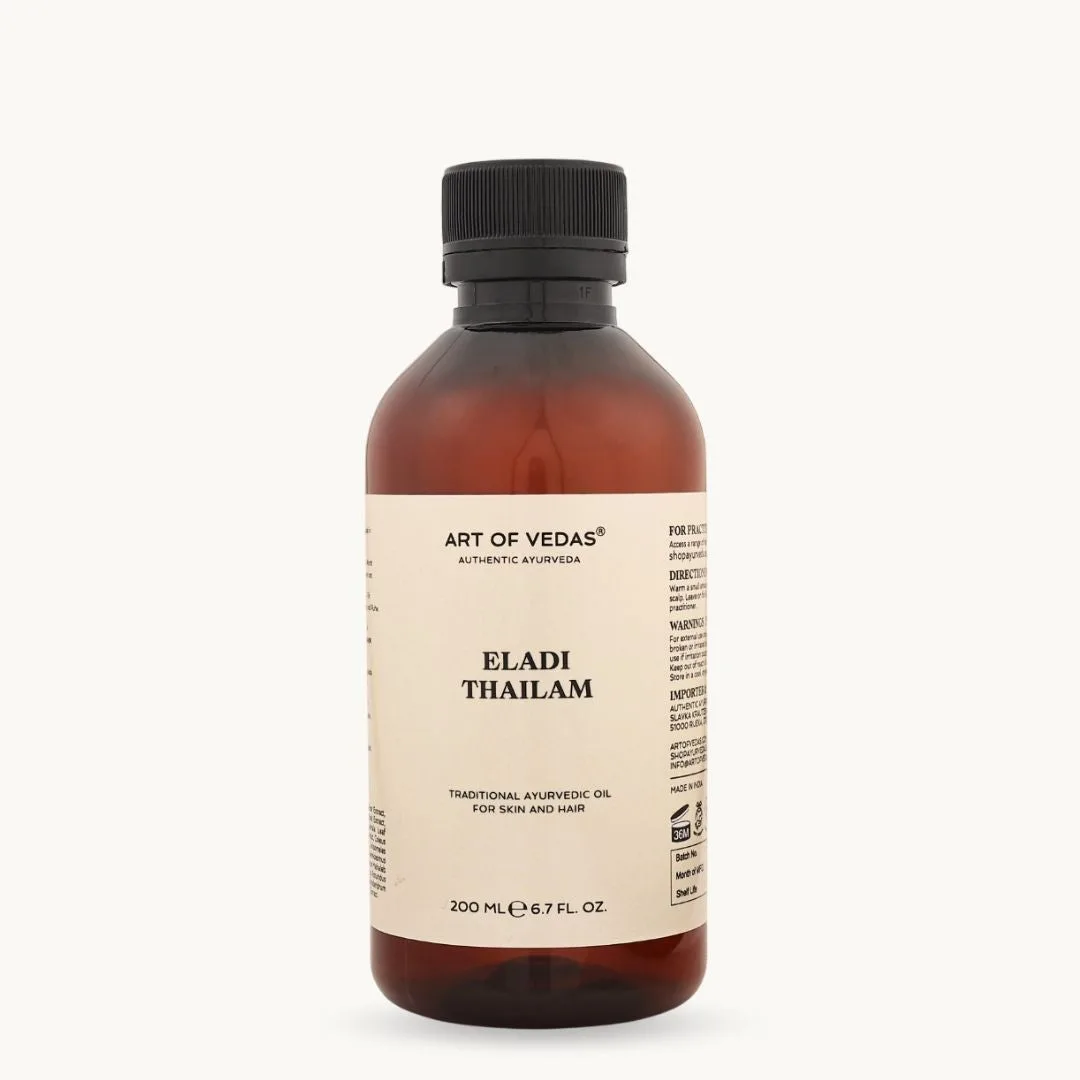
Ela (cardamom) - the lead herb in our Eladi Thailam - is documented in classical texts as a significant Rasayana herb in its own right, alongside Haridra (turmeric), Daruharidra (tree turmeric), and Musta (nutgrass). For the complete breakdown of Eladi Thailam's full Rasayana herb formula, see our Eladi Thailam ingredients guide and the complete Eladi Thailam guide.
The Mukhabhyanga Ritual as Rasayana: Why the Practice Matters as Much as the Product
The most important thing classical Ayurveda understood about anti-aging skin care is that no product applied to the skin is as powerful as the product applied through a consistent, skilled practice. The Ashtanga Hridayam's description of Abhyanga's benefits includes explicitly: delayed aging (jara), improved skin quality, and the sustained radiance associated with ojas - attributed not just to the oil but to the regular warm oil massage practice itself.
What Mukhabhyanga Does That No Cream Can
Microcirculation stimulation. The sustained, methodical massage technique of mukhabhyanga produces a measurable increase in facial microcirculation - the fine network of capillaries and lymphatic channels through which nutrient delivery, waste removal, and tissue maintenance occur. Aging skin characteristically has reduced microcirculation; consistent mukhabhyanga practice directly addresses this. No cream produces this effect.
Lymphatic drainage. Classical mukhabhyanga technique follows specific stroke directions - always toward the lymphatic drainage nodes of the neck - that support the lymphatic removal of metabolic waste from facial tissue. This drainage function directly addresses the puffiness, dullness, and loss of definition that frequently characterise aging facial skin, and it is a purely mechanical effect of the practice.
Marma point activation. The 107 marma points of classical Ayurvedic anatomy include numerous points on the face and head whose stimulation through sustained, gentle pressure during mukhabhyanga produces both local and systemic effects. Consistent activation of the facial marma points is described as contributing to delayed aging, maintained skin vitality, and the sustained quality of ojas - effects attributed specifically to the practice, not to any product applied during it.
Nervous system regulation. Classical Ayurveda understood chronic stress (related to excess Vata and Pitta) as one of the most significant drivers of premature aging. The parasympathetic shift produced by the full mukhabhyanga ritual directly counteracts this mechanism. This is why the classical texts describe Abhyanga as beneficial for sleep quality, mental clarity, and emotional balance alongside its cosmetic effects on the skin.
For the complete mukhabhyanga technique - including the full step-by-step ritual, marma point engagement, stroke directions for lymphatic drainage, variations by skin type and season, and guidance on building from a 5-minute daily practice to the full 20-minute ritual - see our dedicated facial Abhyanga complete guide.
The Kansa Wand in Anti-Aging Practice
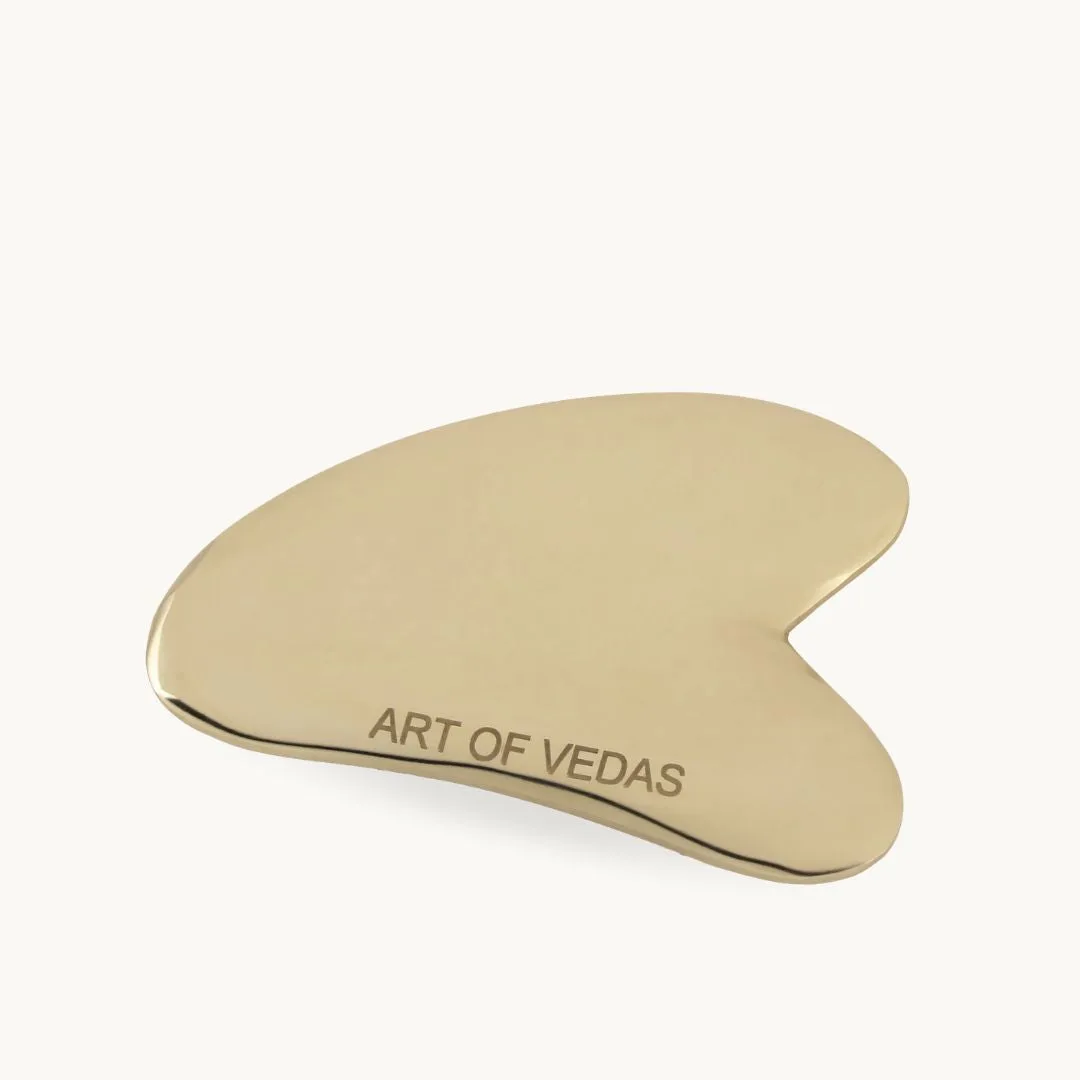
The Kansa wand - made from the traditional Ayurvedic alloy of copper, tin, and zinc - is the classical instrument of mukhabhyanga. In the context of anti-aging practice, it provides a quality of sustained, even pressure across the skin surface that fingers cannot replicate, produces a consistent deeper tissue activation relevant to maintaining structural skin quality over time, and has a classically documented balancing effect that specifically reduces excess Pitta - the inflammatory tendency that drives premature aging.
The combination of warm Rasayana oil (Eladi Thailam as the daily formula, Kumkumadi Serum as the targeted varnya treatment) applied through mukhabhyanga and then worked with the Kansa wand represents the most complete classical Ayurvedic anti-aging facial practice available for home use. Explore the full Kansa tools collection for Kansa wands, Kansa Gua Sha tools, and Kansa body massage tools.
Nasya: The Overlooked Anti-Aging Ritual
The Ashtanga Hridayam's description of Nasya - the traditional morning nasal oil application - includes among its benefits specifically: prevention of premature hair greying, maintenance of eye clarity, and the sustained health and appearance of the facial skin. All attributed to the nasal oil's action through the head's tissue channels (srotas), nourishing the facial tissues from an entirely different route than topical mukhabhyanga.
In classical Ayurvedic anti-aging practice, Nasya and mukhabhyanga are natural companions - each addressing the head's tissues through a different pathway, their combined effect greater than either alone. The morning Nasya practice is 2 to 3 minutes of your morning routine; its contribution to the long-term health of the facial skin over months and years is disproportionate to the time it requires. Explore the Art of Vedas Nasya collection for traditional Nasya oils suited to daily morning practice.
Building the Complete Ayurvedic Anti-Aging Practice
The essential minimum (10 minutes, every day): Cleanse. Apply warmed Eladi Thailam (4 to 6 drops). Perform the essential mukhabhyanga strokes - neck, jaw, cheeks, forehead. Finish with gentle marma pressure at Shankha (temples) and Ajna (between eyebrows). Consistency is the mechanism: daily practice compounds over 8 to 12 weeks into genuinely measurable changes in skin texture, radiance, and hydration retention.
The complete evening ritual (20 to 25 minutes, 4 to 5 evenings weekly): Cleanse. Optional: apply Kumkumadi Serum first (2 drops, allow 5 minutes). Apply warmed Eladi Thailam (6 to 8 drops). Full mukhabhyanga sequence - neck drainage, jaw strokes, cheek sweeps, eye area (ring finger only), forehead, all marma points. Kansa wand work over the prepared skin. Close with held palm contact and 3 slow breaths.
Morning additions (5 minutes): Nasya (2 drops each nostril). Light Eladi Thailam application (3 drops, upward strokes). SPF last.
Weekly practice: Full-body Abhyanga with sesame oil or traditional Thailam from the Ayurvedic oils collection. Scalp Abhyanga with oil from the hair care collection. Tongue cleaning and oil pulling from the oral care collection as part of the morning dinacharya sequence.
For the complete daily structure, see our complete Ayurvedic skincare routine guide. For personalising by skin type, see our Ayurvedic skincare by dosha guide.
What to Expect: The Rasayana Timeline
Classical Ayurvedic texts are specific about Rasayana timelines: the practice works cumulatively, building on itself over weeks and months. Most people notice in the first 1 to 2 weeks: significantly improved skin comfort and hydration retention, reduced tightness and reactivity. In weeks 4 to 8: visible changes in skin radiance, texture, and overall complexion evenness. From 3 months onward: the structural quality improvements - improved skin firmness and resilience, sustained glow, gradual reversal of dullness-related changes - that are the hallmark of genuine Rasayana practice.
Consistency across time is more important than perfection on any given day. The Rasayana timeline is not a limitation of the approach; it is the mechanism through which the approach delivers what it promises.
Frequently Asked Questions
At what age should I start an Ayurvedic anti-aging skincare practice?
Classical Ayurveda recommends beginning a consistent mukhabhyanga and dinacharya practice from young adulthood - not to reverse changes that have already occurred but to prevent the acceleration of aging by maintaining the conditions under which the body's own Rasayana processes function optimally throughout life. The best time to start is now, regardless of your current age. The earlier a consistent practice is established, the more its cumulative benefit has time to compound.
Can I use Ayurvedic anti-aging oils alongside retinol or vitamin C serum?
Yes, generally, with simple layering: apply water-based actives (vitamin C serum) first, allow to absorb, then apply your Ayurvedic oil as the final nourishing, sealing layer. Retinol and Eladi Thailam or Kumkumadi Serum are complementary rather than competing - retinol's stimulation of cellular turnover is supported by the nourishing, barrier-strengthening effects of the classical oil preparation. SPF is always the final morning step.
How does the Ayurvedic approach address the neck and décolletage?
The mukhabhyanga sequence always begins at the neck - not just as a warm-up but because the neck's lymphatic channels must be cleared before the face's lymphatic drainage can occur efficiently. The neck and jaw are treated as integral to the facial practice. Eladi Thailam is entirely appropriate for neck and chest Abhyanga as part of the extended mukhabhyanga ritual.
Continue Exploring