The Two Variants: Sesame vs. Coconut Base
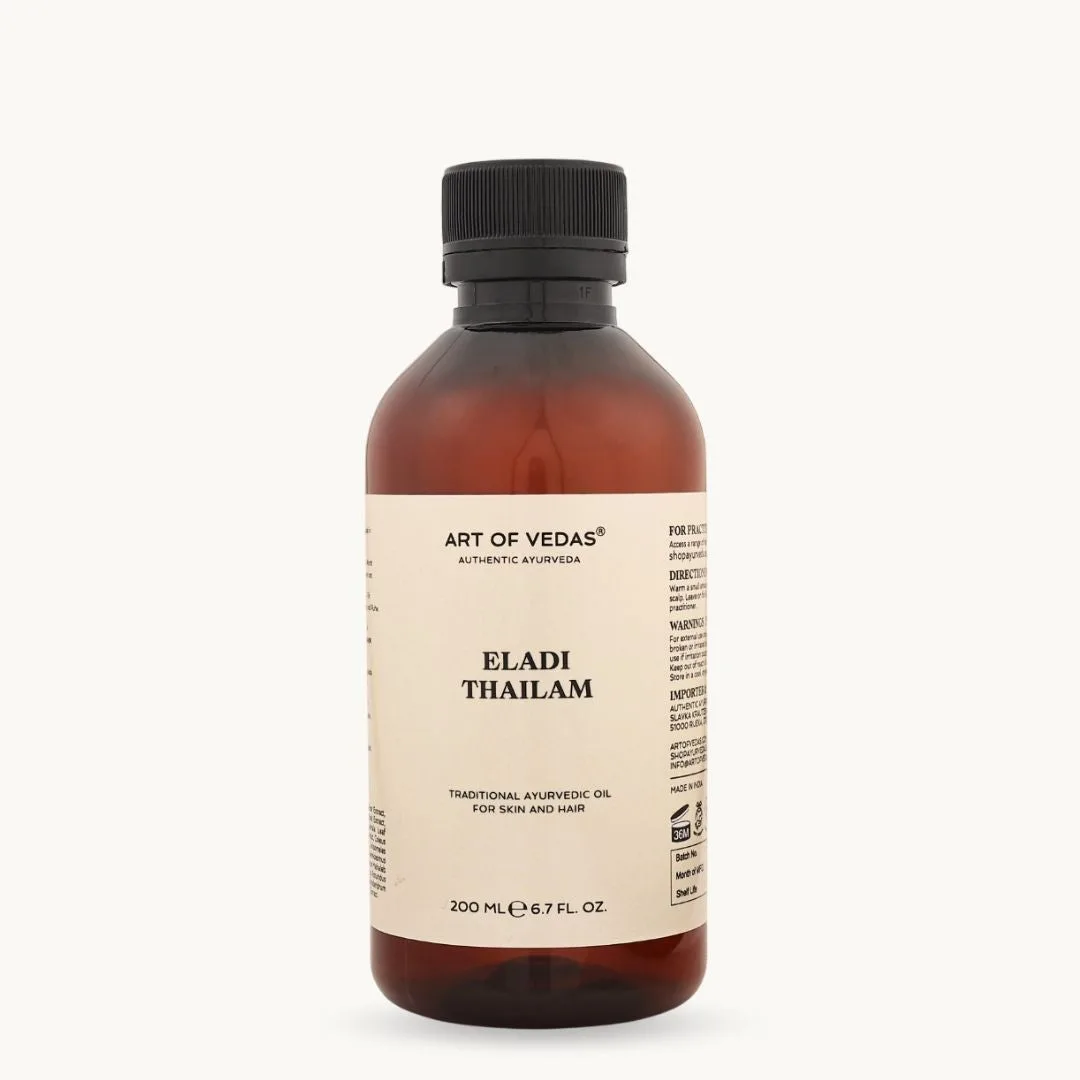
Eladi Thailam exists in two primary variants, distinguished by their base oil. The more widely known Eladi Thailam uses sesame oil (Tila Taila) as its base - considered the gold standard base for medicated oils in most classical Ayurvedic traditions. Sesame oil is warming (ushna) in nature, penetrates deeply into the skin, and contains natural antioxidants including sesamol and sesamin.
Eladi Keram is the variant, using coconut oil (Kera Taila) as its base. 's Ayurvedic tradition has long favoured coconut oil for its cooling properties and its medium-chain fatty acid content. Eladi Keram is the formulation used in the only published clinical trial on Eladi, discussed in our science and research article.
Both variants share the same herbal composition. The choice of base influences the oil's overall energetics - sesame being more warming and penetrating, coconut being lighter and more cooling - but both deliver the same botanical benefits. Art of Vedas uses the traditional sesame-based Eladi Thailam.
The Star Ingredients: Ela (Cardamom)
Sukshma Ela - Small Cardamom (Elettaria cardamomum)
No ingredient in this formula is more central than Ela. Sukshma Ela - small or green cardamom - is the primary source of Eladi Thailam's distinctive, sweet-spicy aroma and one of its most active therapeutic contributors.
Ayurvedic classification: Cardamom has a complex rasa (taste) profile - primarily madhura (sweet) and katu (pungent) - with a cooling virya (potency) despite its aromatic intensity. This makes it unusual: most pungent herbs are warming, but cardamom is considered to have a cooling or neutral effect in Ayurveda, making it appropriate for facial formulas where excess heat is not desirable. Its prabhava (specific action) is deepana and pachana - activating and clarifying effects on the skin.
Key active compounds: The essential oil of green cardamom contains 1,8-cineole (eucalyptol) as its dominant compound, typically 30 to 40% of the oil. Other significant compounds include alpha-terpineol, linalool, alpha-terpinyl acetate, sabinene, and limonene. These volatile compounds are responsible for cardamom's antimicrobial, anti-inflammatory, and antioxidant properties.
Modern research: A 2015 study in the Journal of Essential Oil Research found that green cardamom essential oil showed inhibitory effects against several skin-associated microorganisms, with notable selectivity - affecting potentially problematic organisms while remaining gentle enough for regular topical application. Research published in Phytotherapy Research documented cardamom extracts' ability to reduce inflammatory mediator release from mast cells in cell culture models, suggesting a balancing rather than suppressive effect on skin immunity. A 2017 analysis in the Journal of Food Science and Technology confirmed cardamom's strong free radical scavenging capacity.
Sthoola Ela - Large or Black Cardamom (Amomum subulatum)
Alongside green cardamom, classical Eladi formulas include Sthoola Ela - large or black cardamom - which grows in the Himalayan foothills and carries a distinctly smokier, camphor-like aroma. Black cardamom shares many properties of small cardamom but is considered more robustly warming and more strongly deepana in nature.
Why both cardamoms? The combination is a characteristic of well-formulated Eladi preparations. Small cardamom provides the lighter, sweeter aromatic notes and the more cooling anti-inflammatory effects. Black cardamom adds depth, warmth, and additional circulatory stimulation. Together, they create a more complete and balanced effect than either alone.
Saffron (Kumkuma) - Crocus sativus
Saffron is the most expensive ingredient in Eladi Thailam by weight - and for good reason. Even the tiny quantities used in classical proportions contribute meaningfully to both the formula's therapeutic properties and its characteristic golden-amber colour.
Ayurvedic classification: Kumkuma is classified with a bitter and pungent rasa, warming virya, and sweet vipaka. Its primary Ayurvedic actions include varnya (brightening, complexion-enhancing), kandughna (anti-itch, soothing), and vata-kapha pacifying. The classical texts consistently associate saffron with skin radiance and complexion support.
Key active compounds: Saffron's therapeutic properties come from three interconnected compounds: crocin (the deep red carotenoid pigment), crocetin (its aglycone form), and safranal (the primary aromatic compound). Together, these contribute powerful antioxidant effects, potential support for even skin tone, and mood-associated aromatic properties.
Modern research: A 2019 study in Phytomedicine investigated saffron extract's effects on melanin synthesis, finding that crocin and crocetin influenced melanin pathways toward more balanced distribution rather than outright suppression. Research in the Journal of Photochemistry and Photobiology documented saffron's ability to reduce markers of UV-induced oxidative stress in skin cell models - though Eladi Thailam does not function as sunscreen and should never replace proper UV protection.
Sandalwood (Chandana) - Santalum album
Few ingredients in classical Ayurvedic cosmetics carry the prestige of Chandana - true Indian sandalwood. Its inclusion in Eladi Thailam speaks to the formula's positioning as a premium facial preparation.
Ayurvedic classification: Sandalwood has a bitter and sweet rasa with a distinctly cooling virya - one of the coolest in the materia medica. Its primary Ayurvedic actions include sheetala (cooling), dahaprashamana (heat-alleviating), vishaghna (anti-toxic), and varnya (complexion-brightening). In formulation terms, sandalwood is added specifically to counterbalance the warming effects of the sesame oil base and warming herbs, creating a more balanced overall energetic for facial application.
Key active compounds: True sandalwood essential oil is dominated by sesquiterpenols, primarily alpha-santalol and beta-santalol, which together typically comprise 70 to 90% of the oil. These compounds are responsible for sandalwood's characteristic warm-woody aroma as well as its skin-active properties.
Modern research: A comprehensive review in the Journal of Clinical and Aesthetic Dermatology documented multiple studies demonstrating anti-inflammatory effects of sandalwood oil and alpha-santalol. Research using human skin models found that sandalwood compounds reduced the production of pro-inflammatory cytokines without completely suppressing skin immune function - a balancing effect consistent with Ayurvedic tradition. As detailed in our benefits and application guide, many users report that regular use helps their skin feel more comfortable and balanced.
Manjishtha (Indian Madder) - Rubia cordifolia
Manjishtha is one of the most important herbs in Ayurvedic dermatological practice. It carries a bitter, sweet, and astringent rasa with a warming virya. Its primary Ayurvedic actions relevant to skin include rakta shodhaka (blood purifying), varnya (complexion-brightening), and shothahara (anti-swelling). The concept of rakta shodhaka reflects the Ayurvedic understanding that skin health is deeply connected to the quality and circulation of blood - making manjishtha a foundational herb in formulas addressing complexion concerns.
Manjishtha is rich in anthraquinone glycosides including purpurin, munjistin, and alizarin, alongside flavonoids and phenolic acids. A 2016 study documented manjishtha extract's potent free radical scavenging activity comparable to established antioxidants.
Tuvaraka - Hydnocarpus laurifolia
Tuvaraka is one of the more specifically dermatological ingredients in Eladi Thailam. It is classified as having a predominantly bitter and astringent rasa with a heating virya. Its primary Ayurvedic actions include kushtaghna (skin-supporting), krimighna (antimicrobial), and kandughna (soothing). The term kushtaghna literally means "that which supports healing of skin conditions" - and tuvaraka has been used in Ayurvedic practice specifically for skin wellness for at least 2,500 years, with detailed mentions in both Charaka Samhita and Sushruta Samhita.
Tuvaraka seeds and oil are rich in cyclopentenyl fatty acids, particularly hydnocarpic acid, chaulmoogric acid, and gorlic acid - unusual fatty acids of long-standing interest to researchers for their biological activity.
Dalchini (Cinnamon) - Cinnamomum verum
Ceylon cinnamon appears in Eladi Thailam in small but significant quantities. It has a pungent, sweet, and astringent rasa with a warming virya. Its primary actions include deepana (digestive-stimulating), krimighna (antimicrobial), and tvachya (skin-benefiting). Cinnamon bark essential oil is dominated by cinnamaldehyde, which is highly potent - which is precisely why cinnamon is used in carefully measured small quantities in Eladi formulations, balanced by cooling ingredients like sandalwood and saffron.
Priyangu - Callicarpa macrophylla
Priyangu carries a bitter, sweet, and astringent rasa with a cooling virya, and is classified as a varnya herb - contributing to the formula's complexion-brightening and skin-tone-supporting properties. Its sheetala (cooling) nature reinforces the balancing effect of sandalwood, further moderating the formula's overall potency for daily facial use. Priyangu flowers and leaves have been used in Ayurvedic cosmetic preparations for centuries, particularly in formulas intended for skin experiencing heat-related concerns.
Yashti Madhu (Licorice Root) - Glycyrrhiza glabra
Licorice root is one of the most widely researched skin-active botanicals in the world - and one of the most prized varnya (complexion-supporting) herbs in Ayurvedic dermatology. Yashti Madhu has a sweet and slightly bitter rasa with a cooling virya. Its primary Ayurvedic actions include varnya (complexion-brightening), shothahara (anti-swelling), and rasayana (rejuvenating). It is considered one of the top-tier varnya substances in the classical materia medica.
Licorice root contains glycyrrhizin, glabridin (a potent skin-active flavonoid), liquiritin, isoliquiritin, and numerous other flavonoids and phenolic compounds. Glabridin in particular has attracted significant research interest for its effects on melanin pathways and anti-inflammatory activity.
Nagakesara - Mesua ferrea
Nagakesara - the ironwood tree - contributes stamens and bark to Eladi Thailam. It has a bitter, sweet, and astringent rasa with a warming virya. Its Ayurvedic actions include deepana, kaphahara (reducing kapha), and tvachya (skin-beneficial). In classical skin formulas, nagakesara contributes to the formula's ability to address congestion and sluggishness in the skin. The herb contains xanthones including mesuaxanthone A and B, along with flavonoids, coumarins, and terpenoids.
Lodhra - Symplocos racemosa
Lodhra is a classic Ayurvedic astringent herb with specific applications in skin care. It has a predominantly astringent rasa with a cooling virya. Its primary actions include grahi (absorbing), shothahara (anti-swelling), and tvachya (skin-supporting). In formulation terms, lodhra's astringent, firming quality helps balance the more emollient ingredients in the formula. Lodhra contains loturine and colloturine alkaloids, along with flavonoids and tannins - the tannin content contributing to its astringent, toning effects.
Musta (Nagarmotha) - Cyperus rotundus
Musta - also known as purple nutsedge - is one of the most widely used herbs in Ayurvedic practice, appearing in hundreds of classical formulations. It has a bitter, pungent, and astringent rasa with a cooling virya. Its primary actions relevant to Eladi include deepana, pachana, and krimighna. Musta rhizome contains sesquiterpene ketones including alpha-cyperone, beta-selinene, and cyperene, alongside alkaloids and flavonoids that contribute antimicrobial and aromatic properties.
Shaileya (Stone Flower) - Parmelia perlata
Shaileya is a lichen - a remarkable symbiotic organism of fungi and algae - that has been used in Ayurvedic medicine and perfumery for centuries. It is classified as having a bitter and astringent rasa with a cooling virya, and its primary Ayurvedic action in skin formulas is shothahara (anti-swelling). It also acts as a fixative in aromatic preparations, helping anchor other volatile compounds and extend the formula's aromatic longevity. Stone flower is one of the traditional ingredients that gives properly prepared Eladi Thailam its characteristic complex base note.
Haridra (Turmeric) - Curcuma longa
Haridra has a pungent and bitter rasa with a warming virya. Its primary Ayurvedic actions include varnya (complexion-brightening), krimighna (antimicrobial), shothahara (anti-swelling), and vishaghna (anti-toxic). Turmeric rhizome contains curcuminoids - curcumin, demethoxycurcumin, bisdemethoxycurcumin - as its primary active compounds, along with volatile oils. The classical texts describe haridra as one of the most important herbs for skin, both internally and externally.
Daruharidra (Indian Barberry) - Berberis aristata
Daruharidra contributes its berberine-rich bark to Eladi Thailam. It has a bitter and astringent rasa with a heating virya. Its primary Ayurvedic actions include krimighna (antimicrobial), kushtaghna (skin-supporting), and shothahara (anti-swelling). In classical skin formulas, daruharidra is valued for its antimicrobial properties and its role in supporting skin clarity. The primary active alkaloid, berberine, has attracted significant modern research interest for its antimicrobial and anti-inflammatory properties.
The Base Oils in Depth
Tila Taila - Sesame Oil (Sesamum indicum)
The base oil is the foundation upon which everything else rests. In classical Ayurvedic formulation, the choice of base oil (called the sneha component) shapes the formula's overall energetics and its ability to carry herbal compounds into the skin.
Ayurvedic classification: Sesame oil is classified as the supreme therapeutic oil in Ayurvedic medicine. It has a sweet, bitter, and astringent rasa with a distinctly warming virya. Its primary actions include tvachya (skin-nourishing), brimhana (building tissues), vatahara (calming vata), and - most significantly - yogavahi, a special property meaning it enhances the action of whatever is combined with it.
The yogavahi property of sesame oil is particularly significant for understanding how Eladi Thailam works as a complete formula. Sesame oil does not just carry the herbs - it amplifies their effects, increasing their penetration and bioavailability in the skin. This is one reason classical Ayurvedic oil formulas are so complex: the base oil is an active participant in the therapy, not just a neutral vehicle.
Key active compounds: Sesame oil's exceptional stability comes from its unique lignan content - sesamol, sesamin, sesamolin, and sesaminol - which act as powerful antioxidants and help prevent the oil from going rancid. Research published in pharmaceutical journals has shown that sesame oil penetrates beyond the skin's surface layer, potentially facilitating the transdermal delivery of dissolved herbal compounds.
How the Ingredients Work Together: The Synergy Principle
Reading through the individual ingredients, you might wonder how 25 or more herbs with distinct properties can form a coherent and effective formula. The answer lies in classical Ayurvedic formulation principles that are, in retrospect, remarkably sophisticated.
Layering antimicrobial activity: Rather than relying on one potent antimicrobial herb, Eladi uses multiple ingredients with antimicrobial properties (cardamom, tuvaraka, daruharidra, musta). Each works through slightly different mechanisms, creating broader support without the irritation that might come from high concentrations of any single antimicrobial compound.
Multi-source antioxidant protection: Antioxidant protection comes from multiple sources - saffron, manjishtha, licorice, turmeric, sandalwood, sesame oil itself - each contributing different antioxidant mechanisms. This multi-source approach creates more comprehensive protection than any single antioxidant.
Understanding Ingredient Quality: What Separates Good Eladi from Great Eladi
Knowing the ingredient list is one thing. Understanding what makes a genuinely high-quality Eladi Thailam is another - and the gap between average and excellent is significant.
The quality of the finished preparation depends entirely on the quality of the starting materials. Saffron from Kashmir or Iran. Sandalwood of specific age and oil content. Cardamom from Idukki district, still considered among the world's finest. These distinctions matter enormously. Low-quality, commercially grown, improperly harvested, or adulterated herbs produce an Eladi Thailam that may look and smell similar to a high-quality preparation but will lack the full spectrum of active compounds.
The classical preparation method - Sneha Paka Vidhi - involves cooking the herbs with the base oil at carefully controlled temperatures over an extended period. This process is not merely infusion. The controlled heating facilitates specific chemical transformations, extracting oil-soluble compounds from the herbs in a way that simple cold infusion cannot achieve. To learn more about what to look for when purchasing Eladi Thailam, see our quality and authenticity guide.
Frequently Asked Questions About Eladi Thailam Ingredients
Does Eladi Thailam contain any synthetic ingredients? Authentic Eladi Thailam prepared according to classical methods contains only natural botanical ingredients - herbs, flowers, barks, roots, and seeds cooked in a natural oil base. No synthetic preservatives, fragrances, or stabilisers are used in traditional preparations.
Is Eladi Thailam vegan? Yes - Eladi Thailam is entirely plant-based. All ingredients are derived from botanical sources. No animal products are used.
How many ingredients are actually in Eladi Thailam? Classical formulas for Eladi Thailam typically specify between 22 and 28 individual botanical ingredients, depending on which classical text is followed. Art of Vedas Eladi Thailam follows a classical formulation with 25 or more authentic ingredients.
Can any of the ingredients cause allergic reactions? Any botanical ingredient can theoretically cause an allergic reaction in sensitive individuals. The most likely candidates in Eladi would be tree-derived ingredients (sandalwood, cinnamon) or aromatic compounds in cardamom. Patch testing before full facial application is always recommended - apply a small amount to your inner forearm, wait 24 to 48 hours, and check for any reaction before using on the face.
Experience the Complete Formula
Now that you understand what is inside Eladi Thailam and why each ingredient matters, experience the complete formula for yourself. Shop authentic Eladi Thailam - traditionally prepared with all classical ingredients, following Sneha Paka Vidhi methods refined over generations.
Continue Exploring the Eladi Thailam Hub
Explore All Ayurvedic Thailams