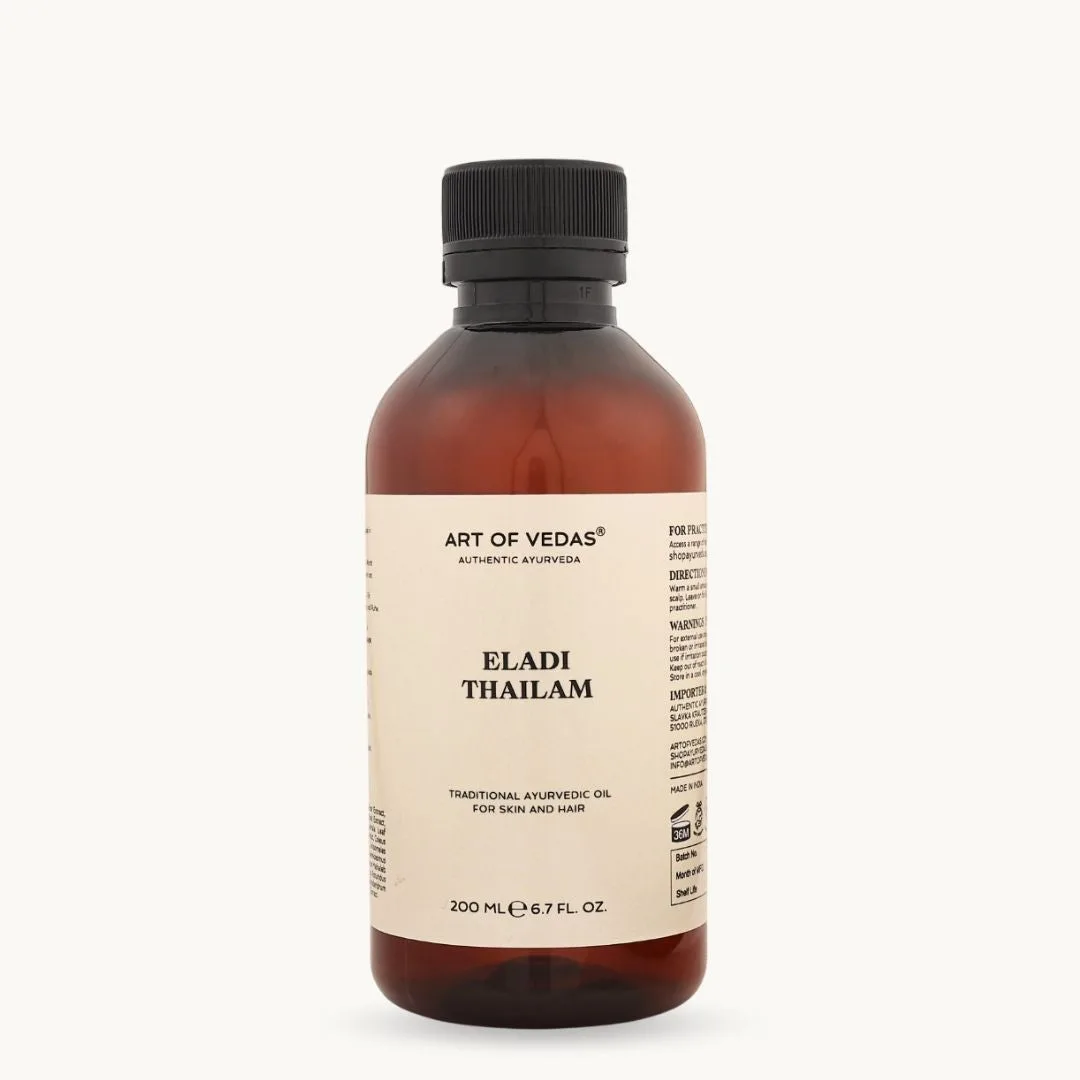
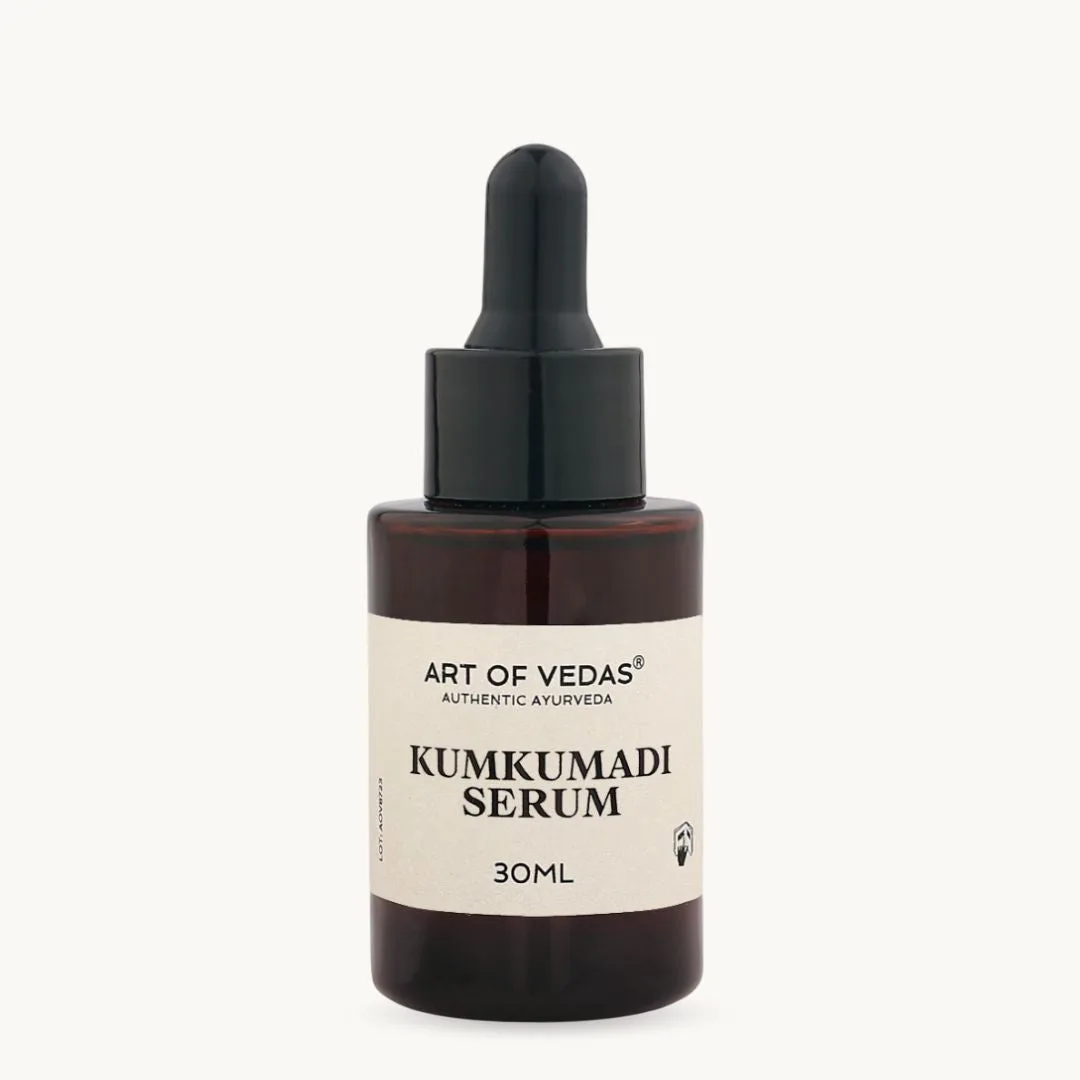
Important Disclaimer: Both Eladi Thailam and Kumkumadi Thailam are traditional Ayurvedic wellness oils for external use only. Neither treats, cures, or prevents any disease or medical condition. All descriptions are traditional Ayurvedic indications. For any skin condition requiring medical attention, please consult a qualified healthcare professional.
If you have been researching traditional Ayurvedic face oils, you have almost certainly encountered both names. Both are classical Ayurvedic formulations with centuries of history. Both use saffron as a key ingredient. Both are prepared in sesame oil using traditional Sneha Paka Vidhi methods. And both are marketed, often in identical language, as premium Ayurvedic facial oils for radiant, glowing skin.
So what actually separates them? And more importantly - which one is right for your skin?
This article gives you an honest, detailed comparison. Not a marketing exercise. We look at both formulas as they exist in classical Ayurvedic texts, what each contains and why, which skin types each is best suited to, and how the two work as part of a broader Ayurvedic skincare ritual. By the end, you will have a clear answer - even if that answer turns out to be: use both, in different ways.
The Short Answer
Eladi Thailam is a broad-spectrum traditional Ayurvedic facial oil - a complex, 25+ herb formula that balances warming and cooling ingredients, supports skin clarity, calms reactive skin, and is suitable for daily use across most skin types. Named after cardamom (Ela), its profile is aromatic, well-rounded, and genuinely multi-purpose.
Kumkumadi Thailam is a more targeted traditional Ayurvedic facial oil - typically a simpler formula built around a powerful saffron base, focused primarily on complexion brightening and skin tone support. Named after saffron (Kumkuma), its profile is more concentrated and more specifically "brightening" in its traditional indication.
The simplest framing: Eladi is your daily ritual oil. Kumkumadi is your targeted treatment oil. Many serious Ayurvedic skincare enthusiasts use both - and we will explain how to do that effectively later in this article.
The Classical Origins: What the Texts Actually Say
Kumkumadi Thailam in Classical Texts
Kumkumadi Thailam is documented primarily in the Ashtanga Hridayam (compiled by Vagbhata, approximately 7th century CE), specifically in the Uttarasthana section dealing with diseases of the head and skin. The classical Kumkumadi formula specifies a relatively concise list of ingredients - typically between 16 and 26 herbs - with saffron (Kumkuma, Crocus sativus) as the primary and most defining ingredient.
The classical indications for Kumkumadi are specific and consistent: improving varna (skin colour and radiance), addressing vyanga (dark spots and uneven complexion), and supporting the overall brightness and clarity of facial skin. This is a more targeted set of indications than Eladi's broader skin wellness profile.
Eladi Thailam in Classical Texts
Eladi Thailam is documented most completely in the Sahasrayogam - a comprehensive traditional Ayurvedic formulary - and referenced in the Bhaishajya Ratnavali and several other classical compilations. As we detail in our classical texts and history guide, Eladi is a considerably more complex formula, typically specifying 25 or more botanical ingredients.
Where Kumkumadi was designed as a targeted treatment, Eladi was designed as a complete daily care formula - broad-spectrum support for the skin, used as the foundation of an Ayurvedic facial wellness practice.
Head-to-Head: Ingredients
Kumkumadi Thailam - The Core Formula
The defining characteristic of Kumkumadi Thailam is its saffron concentration. Where Eladi Thailam includes saffron as one of 25 or more ingredients, Kumkumadi positions saffron as the dominant therapeutic component - present in proportionally higher quantities relative to the rest of the formula.
Key Kumkumadi ingredients typically include:
Kumkuma (Saffron) - Crocus sativus: The star ingredient. Crocin, crocetin, and safranal provide powerful antioxidant activity and the complexion-supporting properties that define the formula.
Chandana (Sandalwood) - Santalum album: Cooling, anti-inflammatory, complexion-supporting. Present in both Eladi and Kumkumadi.
Manjishtha (Indian Madder) - Rubia cordifolia: A critical varnya herb with blood-purifying and antioxidant properties. Appears in both formulas.
Laksha (Lac): A resinous ingredient derived from lac insects, used in classical Ayurveda for skin wellness. Notably, this ingredient is not vegan - a significant practical difference between many Kumkumadi formulas and Eladi Thailam, which is entirely plant-based.
Banyan bark (Vata Tvak) - Ficus benghalensis: Astringent, toning, traditionally used for its firming properties on skin.
The overall formula profile of Kumkumadi is: strongly saffron-forward, heavily varnya (brightening and complexion-focused), moderately cooling overall, with a rich, saffron-dominated aroma.
Eladi Thailam - The Core Formula
Where Kumkumadi is relatively focused, Eladi Thailam is deliberately comprehensive. As we detail fully in our complete ingredients guide, Eladi contains 25 or more botanical ingredients across multiple therapeutic categories.
Key ingredients in Eladi but typically absent from Kumkumadi:
Ela (Green Cardamom) - Elettaria cardamomum and Sthoola Ela (Black Cardamom) - Amomum subulatum: The namesake ingredients, present in significant quantities. Cardamom provides antimicrobial activity, mild anti-inflammatory effects, and the formula's characteristic bright, cooling aromatic quality.
Tuvaraka - Hydnocarpus laurifolia: A traditional Ayurvedic herb with strong skin-clarifying and antimicrobial applications. Not typically present in Kumkumadi.
Shaileya (Stone Flower) - Parmelia perlata: A lichen providing aromatic fixative properties and anti-inflammatory effects. Characteristic of complex traditional Ayurvedic oil preparations.
Daruharidra - Berberis aristata: Indian barberry, with berberine-rich bark providing antimicrobial and skin-clarifying properties.
The result: Eladi has a significantly broader active compound profile than Kumkumadi, particularly in the areas of antimicrobial activity and complex aromatic composition.
The Aroma Difference
Kumkumadi Thailam smells like: Saffron-forward, warm, honeyed, slightly sweet with a rich woody base from sandalwood. The dominant impression is opulent and warm - beautiful but relatively straightforward in its aromatic structure.
If you appreciate complex, evolving aromatic profiles, Eladi tends to be the more interesting experience. If you prefer a cleaner, more straightforwardly luxurious saffron-and-sandalwood profile, Kumkumadi may be more appealing on aroma alone.
Skin Type Matching: Which Oil for Which Skin?
Vata Skin (Dry, Delicate, Fine Lines, Dull)
Both oils work well. Vata skin benefits from the deep nourishment of a sesame oil base and the warming, tissue-building properties that both formulas share. Eladi's broader formula provides comprehensive support for vata skin's multiple characteristics - dryness, delicateness, sensitivity to cold and wind.
Best approach: Eladi Thailam as daily morning and evening oil; Kumkumadi as an additional evening treatment 2 to 3 times per week during cooler months.
Pitta Skin (Sensitive, Reactive, Heat-Related Concerns)
Kapha Skin (Oily, Congestion-Prone, Sluggish Complexion)
Eladi Thailam has a significant edge. The antimicrobial herbs in Eladi - cardamom, tuvaraka, daruharidra, musta - are specifically relevant for kapha skin's tendency toward congestion, excess sebum, and microbial imbalance. Kumkumadi's formula, while brightening, does not address these characteristics as directly.
Best approach: Eladi Thailam evening only, light application (2 to 3 drops). Kumkumadi works well for kapha skin only as a targeted spot treatment for dull or uneven areas.
Uneven Tone or Dull Complexion
Kumkumadi has the edge here. If your primary concern is uneven skin tone, lack of luminosity, or dull complexion - and your skin is not significantly reactive or oily - Kumkumadi's concentrated saffron formula makes it the more targeted choice for this specific concern. That said, Eladi's varnya herbs (saffron, manjishtha, sandalwood, licorice, priyangu) also provide substantial complexion-supporting benefits.
Mature or Aging Skin
Use both. Mature skin typically presents multiple concerns simultaneously: dryness, unevenness, reduced radiance, and often increased sensitivity. Eladi addresses the full range as a daily oil; Kumkumadi provides an additional targeted benefit for radiance and skin tone. Together, these two oils form one of the strongest traditional Ayurvedic anti-aging facial care combinations available.
For more on how to integrate both oils into a broader Ayurvedic skincare approach, see our complete application guide.
The Vegan Question
This is a practical consideration often overlooked in comparison articles: many traditional Kumkumadi Thailam formulas are not vegan.
The classical Kumkumadi formula includes Laksha - lac resin, a substance derived from lac insects. For those following a vegan lifestyle, this makes traditional Kumkumadi formulas unsuitable. Some modern Kumkumadi formulas substitute plant-based alternatives for laksha - but this is a departure from the classical formula.
Eladi Thailam is entirely plant-based. Every ingredient in a classically prepared Eladi Thailam is derived from botanical sources - herbs, spices, tree barks, resins, and plant oils. No animal products are used. For vegan consumers, this is a significant point in Eladi's favour.
Price Comparison
Both genuine Kumkumadi Thailam and Eladi Thailam are premium products - the cost of authentic saffron, sandalwood, and traditional preparation methods makes cheap versions of either oil impossible to take seriously. As we explain in our quality and authenticity guide, genuine Sneha Paka preparation with authentic ingredients has a baseline cost that means any very cheap Ayurvedic oil should be approached with serious scepticism.
In the European market, Kumkumadi is often positioned at a slight premium to Eladi - the saffron-forward marketing positioning and slightly higher relative saffron content typically command a higher price point. However, for daily use as a foundational facial oil, Eladi Thailam typically represents better value: more complex formula, broader therapeutic scope, entirely plant-based, and competitive price.
How to Use Both Oils Together
If you want the full benefit of both classical formulas, the most intelligent approach is to use them in complementary roles rather than as alternatives to each other.
Morning: Eladi Thailam - 3 to 4 drops as your daily protective and nourishing oil. Its antimicrobial, anti-inflammatory, and barrier-supporting properties make it ideal for starting the day. Always follow with SPF.
Evening (regular nights): Eladi Thailam again - 4 to 6 drops with a full mukhabhyanga ritual. The calming aromatic compounds support nervous system transition toward rest.
Evening (2 to 3 nights per week): Kumkumadi Thailam - 2 to 3 drops as a targeted treatment step, applied before Eladi (on completely dry skin, leaving 5 minutes for absorption) or as a standalone treatment on those evenings.
This layered approach gives you Eladi's comprehensive daily skin support with Kumkumadi's targeted brightening benefit as a periodic boost.
Combine either or both with our Kansa wand facial massage tools for a complete traditional Ayurvedic facial ritual. The Kansa wand works beautifully as a massage tool with both oils, enhancing absorption and providing additional benefits through the traditional bronze metal's balancing properties.
The Honest Bottom Line
Choose Eladi Thailam if: You want a comprehensive daily facial oil. Your skin is sensitive, reactive, or prone to heat-related concerns. You have oily or congestion-prone skin that also needs brightening. You follow a vegan lifestyle. You value aromatic complexity and a genuine multi-herb traditional formula. You are new to traditional Ayurvedic oils and want one product that covers the full range of daily facial wellness needs.
Choose Kumkumadi Thailam if: Your primary concern is complexion dullness and uneven skin tone, and your skin is not significantly reactive or oily. You are looking for a targeted treatment oil to add to an existing daily facial oil practice. You are drawn to a more saffron-forward aromatic profile.
Use both if: You want the most comprehensive traditional Ayurvedic facial care possible, your skin is mature or dealing with multiple concerns simultaneously, and you want to experience both classical formulas in their intended complementary roles.
At Art of Vedas, our starting point is always Eladi Thailam - because its comprehensive formula makes it the most versatile and universally suitable traditional Ayurvedic facial oil we know of. Explore our full collection of traditional Ayurvedic Thailams to find the right combination for your skin.
Frequently Asked Questions
Can I use Eladi Thailam and Kumkumadi together in the same application?
Yes - apply one first, allow 3 to 5 minutes for absorption, then apply the second. Most practitioners suggest Kumkumadi first (as the treatment oil), followed by Eladi (as the broader nourishing oil). Use smaller quantities of each than you would use of either alone.
Which oil is better for dark circles under the eyes?
Neither oil is specifically formulated for the delicate under-eye area, and both should be applied with extreme care in this area (lightest touch, ring finger only, no pressure on the eyelid). The gentle varnya herbs in both formulas may support a more even, brighter appearance over time with consistent use, but this is a gradual effect rather than an immediate result.
Is one more effective than the other for acne-prone skin?
Eladi Thailam has a clearer advantage for acne-prone skin, due to its antimicrobial herb content - cardamom, tuvaraka, daruharidra, musta - that Kumkumadi does not match. For skin prone to congestion and breakouts, Eladi used in very small quantities (2 to 3 drops, evenings only) is the more appropriate classical formula.
Can men use these oils?
Absolutely. Traditional Ayurvedic facial care is not gender-specific. Both Eladi Thailam and Kumkumadi Thailam are suitable for all genders. The facial Abhyanga practice, daily oil application, and skin wellness benefits are equally relevant regardless of gender.
Continue Exploring
Explore more in this series