Why Oil on the Face? The Classical Rationale
The face, in Ayurvedic anatomy, is understood as a region of particular importance for several reasons. It is the site of five of the sense organs (eyes, ears, nose, tongue, skin) and is therefore closely connected to the functioning of the Prana Vata - the sub-type of Vata that governs sensory perception and the flow of life force in the head region.
The skin itself is considered the outermost layer of Rasa Dhatu (plasma/lymph tissue) in classical Ayurvedic histology. Nourishing the skin with appropriate oils is understood as nourishing this foundational tissue layer - supporting its moisture, flexibility, and vitality. The Charaka Samhita notes that regular oil application to the body and face supports the smoothness and suppleness of the skin, and that those who practice Abhyanga (oil massage) regularly maintain their skin health more effectively than those who do not.
Practically speaking, classical oils for the face are chosen to:
- Nourish and maintain the moisture of facial skin
- Support the suppleness and vitality of skin tissue (Twak)
- Balance the dosha tendency relevant to the individual's skin type
- Serve as a carrier for traditional herbal preparations that have classical benefit for facial skin
- Support the ritual of facial massage, stimulating Marma points and lymphatic circulation
Classical Oils for Facial Use: An Overview
Several classical preparations are specifically mentioned in the texts as suitable for facial use. Others, while originally formulated for broader body applications, have been used in the facial context within traditional and North Indian Ayurvedic practice.
Kumkumadi Thailam
Kumkumadi Thailam is perhaps the most classically recognised facial oil in the Ayurvedic tradition. The primary classical source is the Ashtanga Hridayam (Uttara Sthana, Chapter 32), which describes the formulation as beneficial for the complexion (Varna) and facial skin quality. The name refers to the primary ingredient - Kumkuma (saffron, Crocus sativus) - processed into sesame oil along with a complex combination of herbs including Manjishtha (Rubia cordifolia), Laksha (Laccifer lacca), Chandana (sandalwood), and others depending on the classical lineage of the formula.
Kumkumadi Thailam has Pitta-balancing properties. Its cooling, Varnya (complexion-supporting) herbs make it particularly aligned with skin that shows signs of Pitta excess - sensitivity, redness, uneven tone, or dryness from heat.
It is applied in small quantities - typically two to five drops - to clean, slightly damp skin, using gentle upward circular movements. It is best used in the evening as part of a facial ritual, as some of its ingredients are traditionally avoided in direct sunlight.
Eladi Thailam (Eladi Keram)
Eladi Thailam is a classical preparation with a coconut oil base that is particularly well-suited to facial skin in warmer climates and for Pitta or Kapha-type skin conditions. The name derives from Ela (cardamom), one of its primary herbs, and the formulation includes Twak (cinnamon), Patra (bay leaf), and other aromatic herbs with clarifying and brightening properties in the Ayurvedic understanding.
The Sahasrayogam, a classical text, describes Eladi Keram as specifically beneficial for the face - supporting the clarity and evenness of the complexion. Its lighter coconut oil base makes it particularly relevant during summer months or for those whose skin tends toward oiliness or congestion.
Nalpamaradi Thailam
Nalpamaradi Thailam is a classical formulation based on the four Pamaradi trees (Ficus species) processed in sesame oil with turmeric (Haridra) and other herbs. It is traditionally used to support an even, clear complexion and is one of the most commonly used classical oils daily skin care practice.
The turmeric base and the combination of Ficus herbs give this oil a warm, clarifying quality. It is traditionally applied to the body and face before bathing, left for a short time, and then washed off - rather than used as a leave-on oil. This makes it a classical equivalent of what modern practitioners might call a pre-cleanse or pre-bath oil treatment.
Chandanadi Thailam
Chandanadi Thailam, with Chandana (sandalwood) as its primary herb, is a classically cooling formulation used for the face and body in conditions associated with Pitta elevation. Sandalwood is described in Ayurvedic texts as Twachya (beneficial for skin), Varnya (supporting complexion), Dahaprashamana (cooling burning sensations), and Pitta-shamana.
This oil is particularly suitable for sensitive, reactive, or heat-affected skin and is applied in a thin, even layer to the face, where it supports the sense of calm and coolness in the skin.
Dosha-Based Selection Guide for Face Oils
For Vata Skin Types
Vata skin in Ayurvedic terms tends toward dryness, fine texture, and a tendency for lines and loss of moisture when Vata is elevated. The primary need is nourishment and moisture retention. Classical oils for Vata facial skin tend to be richer, warmer, and sesame-based - providing the oleation and heaviness that counterbalances the dry, light, mobile qualities of excess Vata.
- Sesame oil (Tila Taila) as a base - warming, nourishing, deeply penetrating
- Kumkumadi Thailam - particularly the sesame-based formulations, which combine Varna support with Vata nourishment
- Ashwagandha-enriched facial preparations - for deep nourishment and the Balya quality relevant to depleted or aged skin
For Pitta Skin Types
Pitta skin tends toward sensitivity, reactivity, redness, and a tendency for heat-related responses. The primary need is cooling, soothing, and Pitta-pacifying. Classical oils for Pitta facial skin tend to be coconut or sandalwood-based, and include herbs with Sheeta virya (cooling potency), Tikta rasa (bitter taste), and Varnya properties.
- Coconut oil (Narikela Taila) as a base - cooling, light, non-heating
- Kumkumadi Thailam - specifically in its coconut-base formulations for cooling application
- Chandanadi Thailam - classically cooling and Pitta-pacifying for the face
- Eladi Keram - clarifying and cooling, particularly well-suited to sensitive Pitta skin
For Kapha Skin Types
Kapha skin tends toward heaviness, congestion, and excess sebum in the Ayurvedic understanding. The primary need is a lighter, clarifying, warming approach that supports circulation and avoids adding excess heaviness. Classical approach for Kapha facial skin uses lighter oils in smaller quantities, with herbs that have Deepana, Lekhana (scraping), and Kaphahara properties.
- Lighter oils - sesame in small quantities, or lighter formulations
- Nalpamaradi Thailam as a pre-cleanse treatment rather than a leave-on oil
- Eladi Thailam - its aromatic, mildly stimulating herbs are better suited to Kapha skin than the heavier formulations
How to Apply Facial Oil in the Ayurvedic Tradition
The classical approach to facial oil application reflects the understanding of Marma points - the anatomical junctions of Prana, Tejas, and Ojas in the body - and the direction of muscle and lymphatic flow.
-
Cleanse first: Begin with clean skin. Classical practice recommends oil application to skin that has been gently cleansed with warm water.
-
Warm the oil: Even a small amount of oil - two to five drops for most classical facial oils - should be gently warmed between the palms before application.
-
Upward movements: Apply using upward, circular movements from the chin toward the forehead. This direction supports lymphatic drainage and works against gravity-related drooping of the facial tissues.
-
Marma point attention: The temples (Shankha marma), the inner corners of the eyes (Apanga marma area), and the area at the junction of the nose and cheek deserve gentle but attentive touch during facial oil massage.
-
Quantity: Less is more with classical face oils. Two to five drops of Kumkumadi Thailam or Eladi Thailam are sufficient for the whole face. The goal is a thin, even layer absorbed by the skin - not a heavy coating.
-
Timing: Evening application is generally recommended for most classical face oils, allowing the skin to absorb the preparation overnight. Morning application, if desired, should use smaller quantities.
Face Oil in the Context of the Kansa Wand Facial Ritual
One of the most significant intersections of Ayurvedic face oil practice and tool-based ritual is the Kansa wand facial massage. The Kansa wand - a traditional tool made from the sacred Kansa (bell metal) alloy - is used with a small amount of face oil as a carrier, and works across the facial skin using specific strokes that stimulate Marma points, support lymphatic circulation, and address Pitta heat in the tissues.
For Kansa wand facial massage, Kumkumadi Thailam or Eladi Thailam are the classical choice - both light enough to avoid dragging on the skin during the strokes, and appropriate in their dosha-balancing properties. A complete guide to the Kansa wand technique is available in our Kansa wand guide.
Seasonal Rotation of Face Oils
Classical Ayurveda recognises that the appropriate oil for the face shifts with the seasons, just as the appropriate foods and routines shift. A general seasonal framework for face oil selection:
-
Autumn and winter (Vata season): Richer, sesame-based oils; Kumkumadi Thailam in its sesame variant; deeper nourishment and moisture retention.
-
Spring (Kapha season): Lighter oils, smaller quantities; Nalpamaradi Thailam as a pre-bath treatment; prioritise clarity and lightness.
-
Summer (Pitta season): Cooling, coconut-based formulations; Chandanadi Thailam; Eladi Keram; avoid heavy sesame-based oils in high heat.
Frequently Asked Questions
Which Ayurvedic oil is best for the face?
There is no single best oil - the appropriate selection depends on your constitution (Prakriti), the current season, and your specific skin needs. Kumkumadi Thailam is the most classically recommended facial oil in the Ayurvedic texts. For Pitta or sensitive skin, Eladi Keram or Chandanadi Thailam may be more appropriate. For Kapha skin, Nalpamaradi Thailam as a pre-cleanse treatment is the classical approach.
Can I use regular sesame oil on my face?
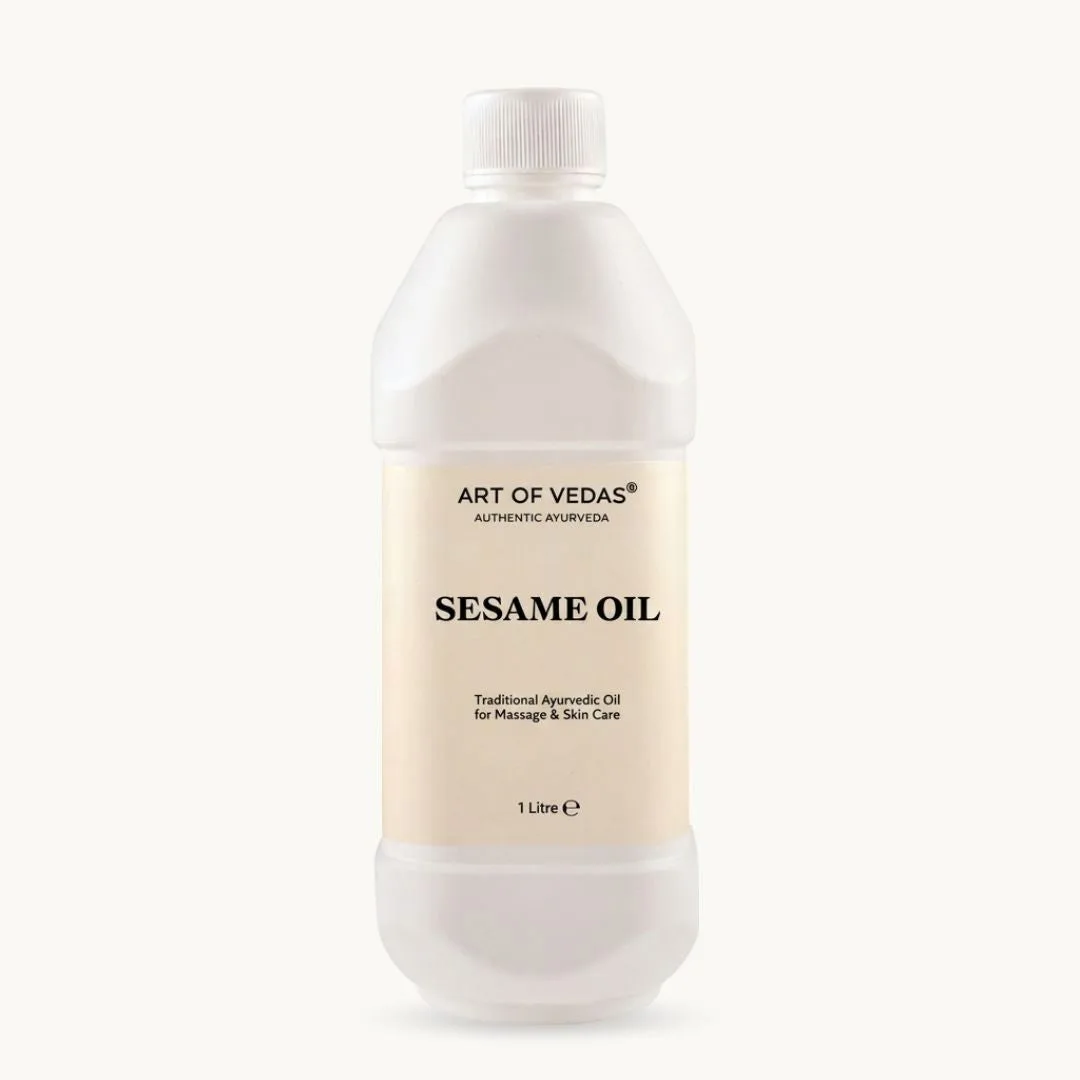
Plain sesame oil (Tila Taila) is the classical base for many Ayurvedic facial preparations and is entirely appropriate for use on the face - particularly for Vata skin types. Classical medicated oils such as Kumkumadi Thailam are sesame-based and simply add herbal properties on top of this foundation. For general nourishing use, untoasted sesame oil is the appropriate choice.
How many drops of face oil should I use?
Two to five drops is generally sufficient for the whole face with classical Ayurvedic face oils. These are concentrated preparations - Kumkumadi Thailam in particular is meant to be applied sparingly. The goal is a thin, even layer that absorbs into the skin rather than sitting on its surface.
When should I apply Ayurvedic face oil - morning or evening?
Evening application is generally recommended for classical Ayurvedic facial oils, as it allows the preparation to absorb overnight and the skin's natural repair processes to work in conjunction with the oil. Morning application is appropriate for a lighter approach - smaller quantities, used as part of the morning Dinacharya routine before light sun exposure.
Is Kumkumadi Thailam suitable for all skin types?
Kumkumadi Thailam is traditionally described as Tridosha-balancing in its classical formulation, and is suitable for most skin types. The sesame-based formulation is more appropriate for Vata skin, while lighter or coconut-based variants are more appropriate for Pitta or Kapha skin. Those with very oily or congested skin may prefer to use it in small quantities or as part of a facial massage practice with a Kansa wand rather than as a daily leave-on oil.
Can I use an Ayurvedic body oil on my face?
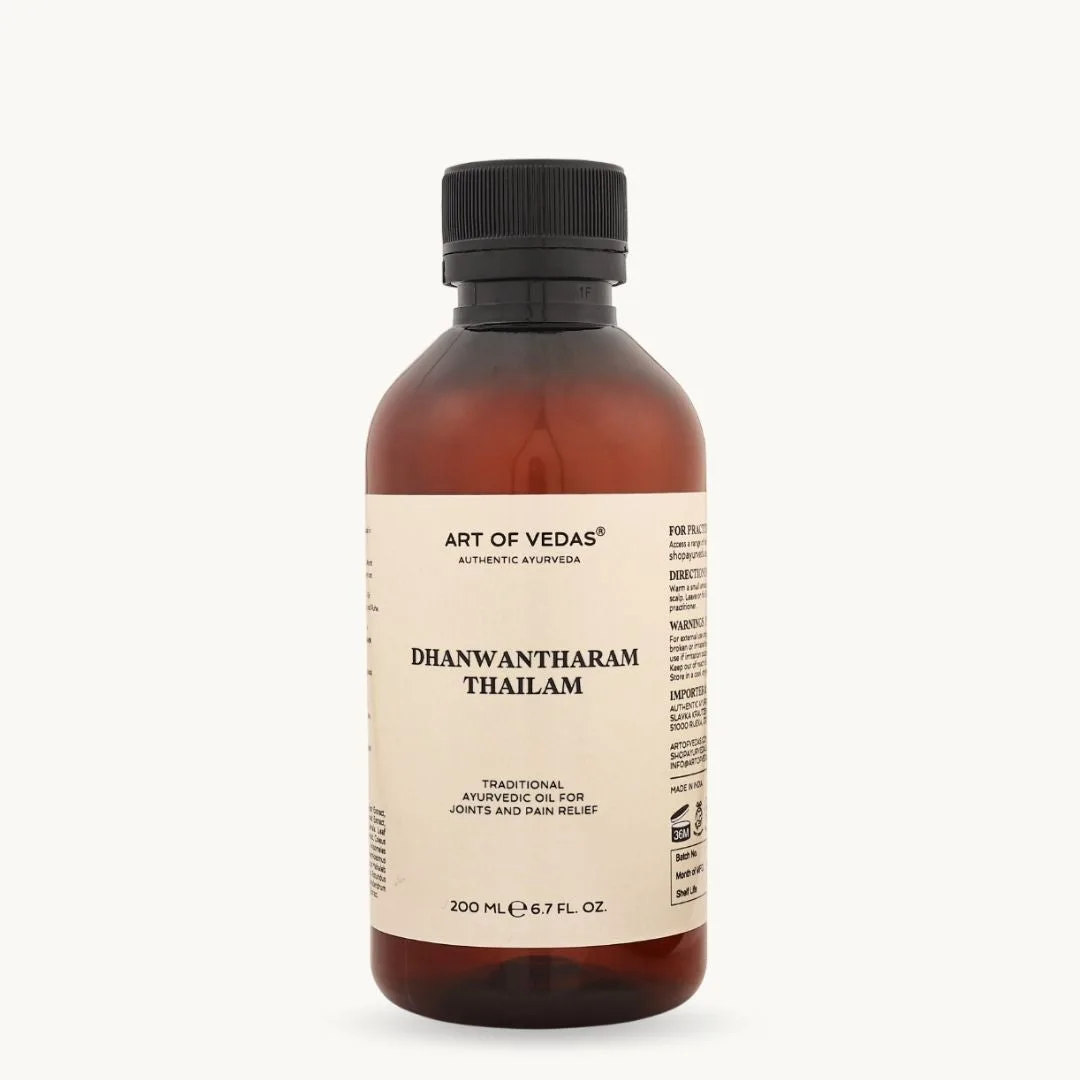
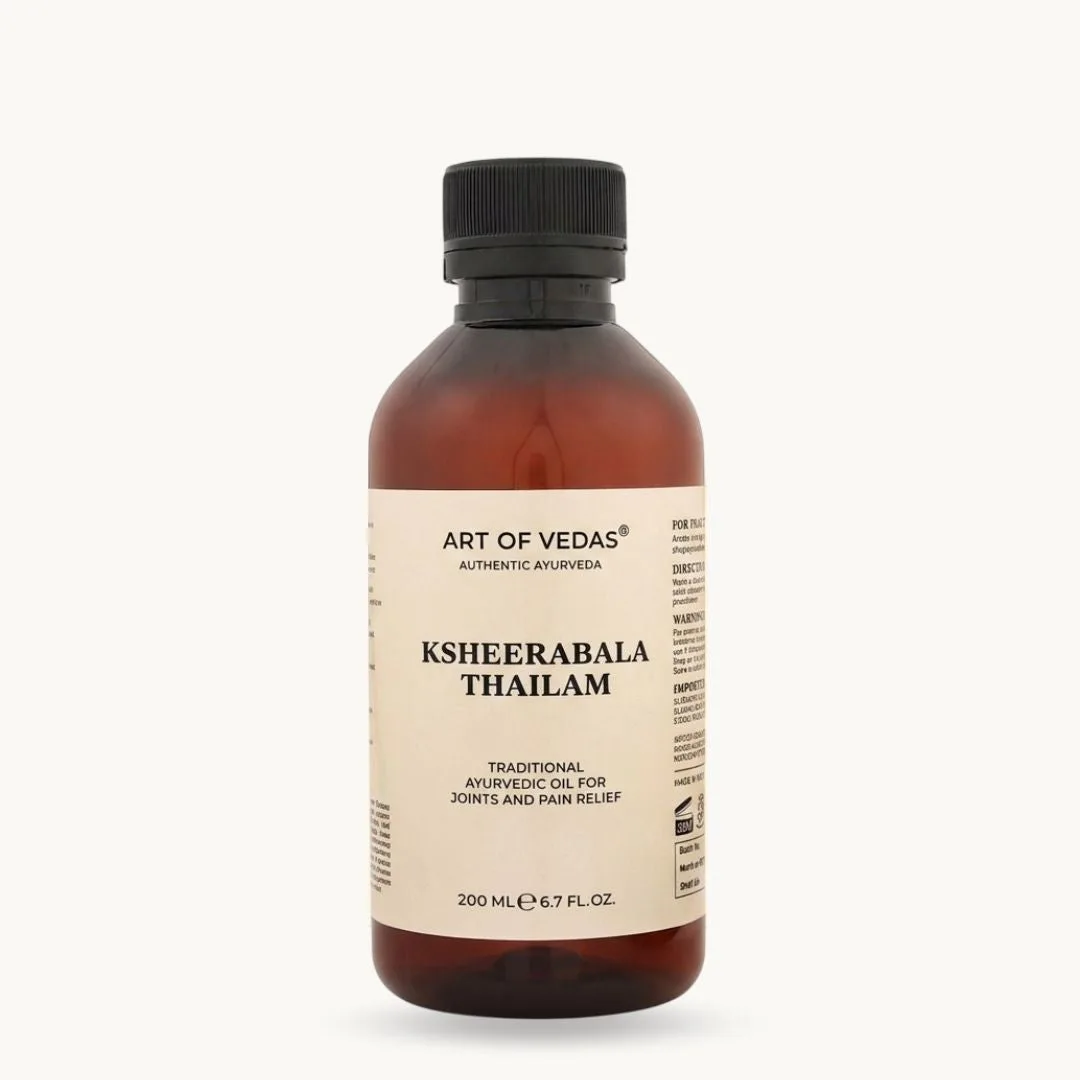
Classical Ayurvedic body oils such as Dhanwantharam Thailam or Ksheerabala Thailam are formulated for the body and are generally too heavy and warming for regular facial use. The classical texts recommend specific facial preparations - Kumkumadi Thailam, Eladi Keram, Chandanadi Thailam - that are calibrated for the more sensitive and nuanced requirements of facial skin.
Explore Art of Vedas Classical Face Oils
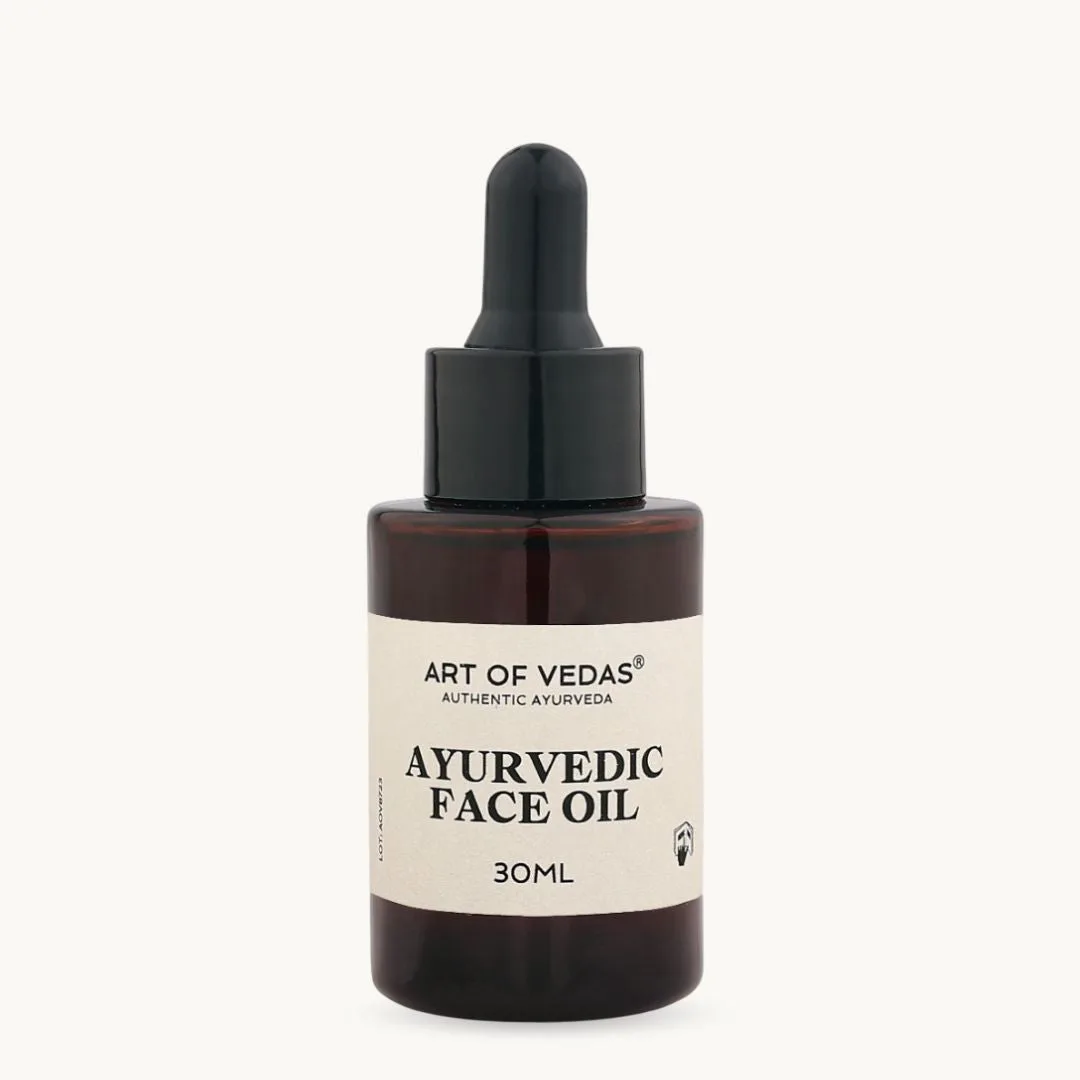
All face oils and classical facial preparations from Art of Vedas are prepared in the traditional manner - using authentic Ayurvedic ingredients and classical formulation methods.
Browse our face care collection, explore the classical Kansa wand facial ritual, or read our broader Abhyanga guide for the full context of classical Ayurvedic oil application. For a comparison of all classical oils, see our guide to comparing classical Ayurvedic oils.
This article is for informational and educational purposes only. The oils and preparations described are traditional Ayurvedic preparations intended as part of a self-care and wellness routine. They are not medicines and are not intended to diagnose, treat, cure, or prevent any medical condition. Consult a qualified Ayurvedic practitioner or healthcare professional for personalised guidance.