This article is part of our AYURVEDIC SKINCARE FOR BEGINNERS guide series.
Important Disclaimer: Traditional Ayurvedic face oils are wellness products for external use only. They are not medicines and do not treat, cure, or prevent any disease or medical condition. All descriptions reflect traditional Ayurvedic indications and general skin wellness observations. For any skin condition requiring medical attention, please consult a qualified healthcare professional.
Search "Ayurvedic face oil" in any European market today and you will find hundreds of options. Brands from India, from Europe, from North America - all claiming to bring the ancient wisdom of Ayurveda to your skincare routine. Some are genuinely traditional. Many are largely cosmetic products with an Ayurvedic name and a handful of herbs. And a few are truly outstanding - classical preparations with the depth, authenticity, and botanical complexity to deliver what traditional Ayurvedic facial care actually promises.
This guide helps you tell the difference. We will cover what makes an Ayurvedic face oil genuinely effective, which ingredients you should actually be looking for, how to match an oil to your specific skin type, and how to use traditional facial oils correctly to get the best results.
What Makes an Ayurvedic Face Oil Different?
The Preparation Method
The defining characteristic of a classical Ayurvedic medicated oil is not simply the ingredients it contains but the way those ingredients are prepared. Classical Ayurvedic face oils are prepared using a method called Sneha Paka Vidhi - a traditional cooking process in which botanical herbs are combined with a base oil (typically sesame) and a water-based herbal decoction, then cooked together at carefully controlled temperatures over many hours.
This process drives off all water from the preparation while simultaneously transferring oil-soluble and heat-activated botanical compounds from the herbs into the base oil. The result is a base oil saturated with a complex mixture of herbal compounds - something that simple cold infusion or essential oil addition cannot replicate.
A conventional facial oil, even one made with excellent natural ingredients, does not go through this extraction process. The difference in therapeutic depth between a properly prepared classical Sneha Paka oil and a conventional facial oil blend is significant. For a full explanation of what genuine traditional preparation involves, and how to identify it in the market, see our quality and authenticity guide.
The Ingredient Philosophy
Classical Ayurvedic face oil formulas were designed around a principle called polyherbalism - the understanding that multiple herbs working together produce effects that no single herb can produce alone. Where modern skincare tends to focus on one or two hero ingredients, classical Ayurvedic formulas use 15 to 30 or more botanical ingredients, each contributing its own specific actions while also modifying and enhancing the actions of the others.
The Base Oil: Sesame
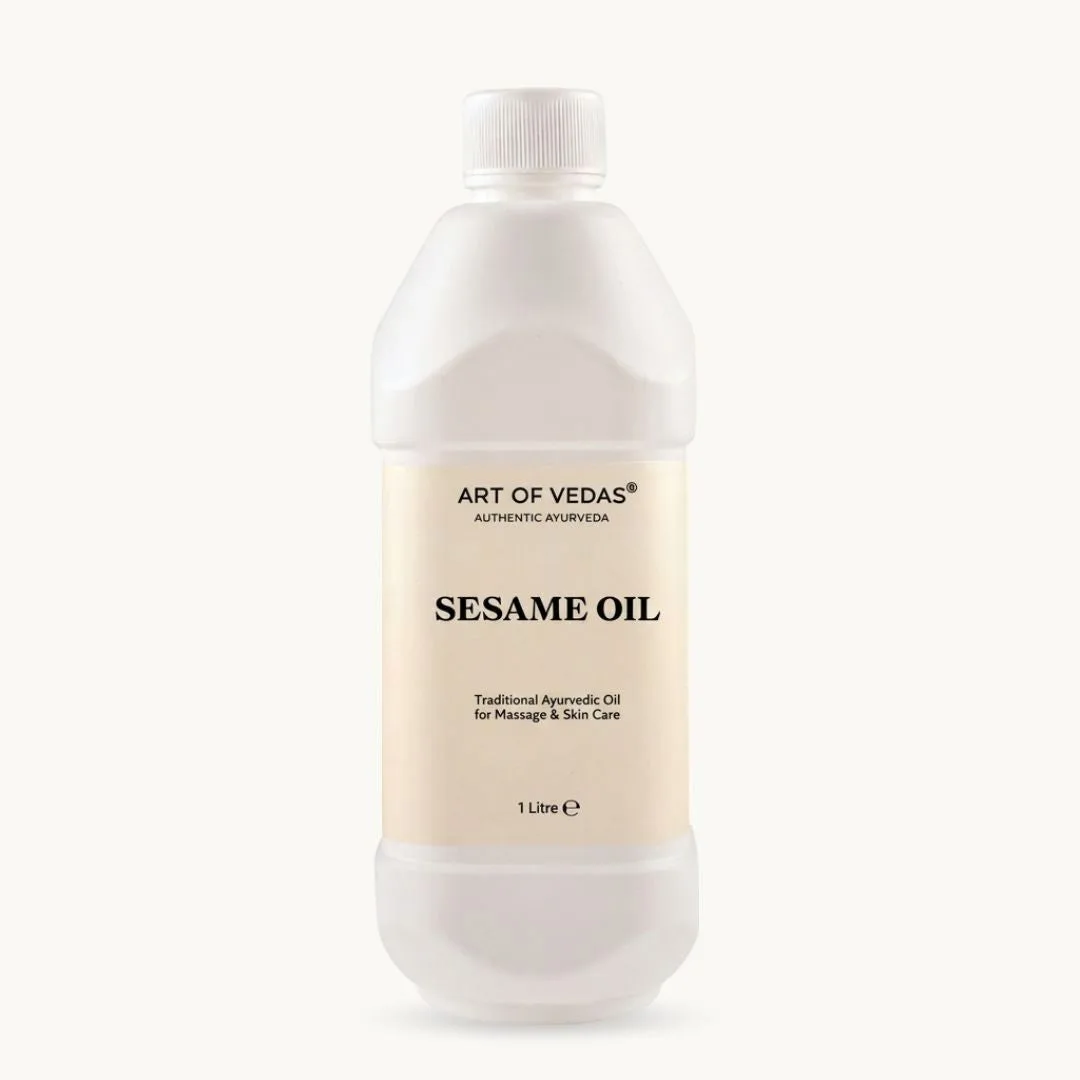
In traditional Ayurvedic medicine, sesame oil (Tila Taila) is considered the supreme therapeutic base for medicated oil preparations. It is rich in naturally antioxidant lignans (sesamol, sesamin, sesamolin), has a fatty acid profile well-suited to most skin types, penetrates the skin effectively, and has what classical texts describe as yogavahi - a capacity to carry and enhance the effect of whatever is combined with it.
The Key Ingredients to Look For
Varnya Herbs - Complexion-Supporting
The Sanskrit term varnya refers to herbs specifically identified in classical Ayurvedic texts as supporting the varna - the brightness, clarity, and evenness of skin colour and complexion.
Saffron (Kumkuma - Crocus sativus): The most widely cited varnya herb in classical Ayurvedic texts. Contains crocin, crocetin, and safranal - compounds with significant antioxidant activity and skin-brightening properties. Its presence in a face oil is a strong indicator of classical varnya intent.
Sandalwood (Chandana - Santalum album): Cooling, anti-inflammatory, and traditionally one of the foundational varnya herbs. Contains alpha and beta-santalol, with demonstrated anti-inflammatory and skin-calming properties.
Manjishtha (Rubia cordifolia): Indian madder, one of the most important herbs in classical Ayurvedic skin care. Rich in alizarin and purpurin antioxidants. Used in Ayurveda as both a varnya herb and a blood-purifying herb.
Licorice (Yashti Madhu - Glycyrrhiza glabra): Contains glabridin, which has been extensively researched for its capacity to support even skin tone.
Priyangu (Callicarpa macrophylla): A classically important varnya herb providing astringent, toning properties alongside complexion-supporting actions.
Antimicrobial Herbs - Skin-Clarifying
The best traditional Ayurvedic face oils go beyond brightening to also address skin clarity through antimicrobial herbs - a category classical Ayurveda identified as krimighna.
Cardamom (Ela - Elettaria cardamomum and Amomum subulatum): The namesake ingredient of Eladi Thailam, cardamom provides significant antimicrobial activity through its essential oil components alongside notable anti-inflammatory effects. Its presence contributes both to skin clarity and the formula's therapeutic aromatic profile.
Tuvaraka (Hydnocarpus laurifolia): A traditional Ayurvedic herb with specific skin-clarifying applications in the classical literature.
Daruharidra (Berberis aristata): Indian barberry, whose bark is rich in berberine - a compound with well-researched antimicrobial, anti-inflammatory, and skin-clarifying properties.
Musta (Cyperus rotundus): Nut grass, a classically important herb with cooling, anti-inflammatory, and skin-clarifying properties.
Anti-Inflammatory and Calming Herbs
Lodhra (Symplocos racemosa): A classical Ayurvedic herb with astringent, toning, and anti-inflammatory properties.
Shaileya (Parmelia perlata): Stone flower lichen, providing anti-inflammatory activity and aromatic fixative properties characteristic of complex traditional Ayurvedic preparations.
The Leading Traditional Ayurvedic Face Oils
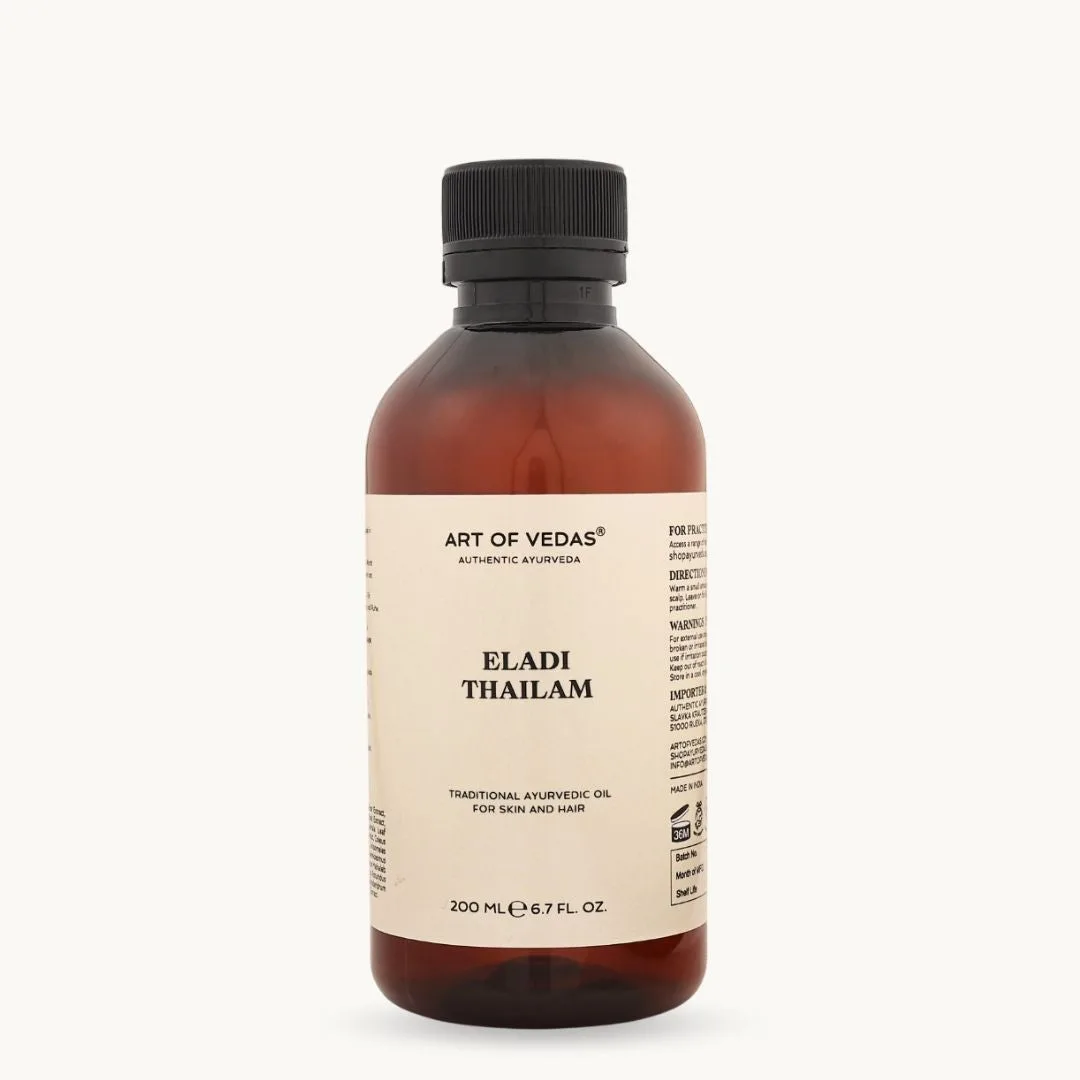
Eladi Thailam - The Comprehensive Daily Formula
Eladi Thailam is a classical traditional Ayurvedic face oil whose formula encompasses 25 or more botanical ingredients spanning all three ingredient categories above: varnya herbs for complexion support, antimicrobial herbs for skin clarity, and anti-inflammatory herbs for calming reactive skin.
Named after cardamom (Ela), Eladi Thailam is specifically documented in the Sahasrayogam and Bhaishajya Ratnavali as a formula for the face - and more specifically for mukhabhyanga (facial Abhyanga), the traditional Ayurvedic daily facial massage ritual.
What makes Eladi Thailam stand out as a daily facial oil is the comprehensiveness of its formula. It is simultaneously a varnya oil (for complexion radiance), a krimighna oil (for skin clarity), a pitta-shamana oil (for reducing heat-related reactivity), and a vata-balancing oil (for deep nourishment and skin barrier support). The result is a single oil that functions as a complete daily facial wellness product - suitable for morning and evening use, compatible with virtually all skin types.
For the full story of the formula, its ingredients, and how to use it, explore our complete Eladi Thailam guide.
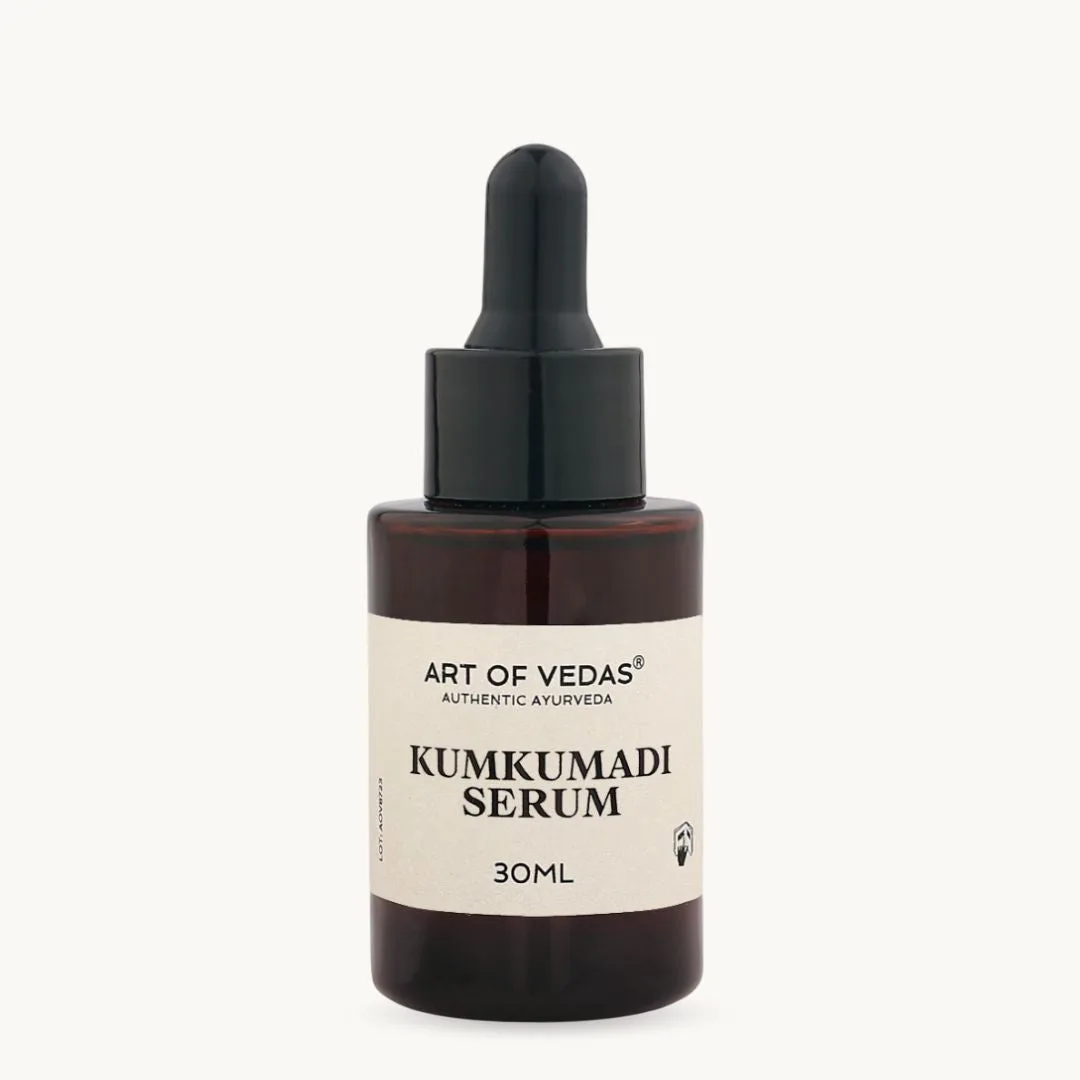
Kumkumadi Thailam - The Targeted Brightening Formula
Kumkumadi Thailam is the other major classical Ayurvedic face oil in the traditional pharmacopoeia. Where Eladi is comprehensive and broad-spectrum, Kumkumadi is more specifically focused - a formula built around a high saffron concentration and targeted primarily at complexion brightening and skin tone support.
For a detailed comparison of both formulas - including which skin types each suits best, the aroma difference, the vegan distinction, and how to use them together - see our Eladi Thailam vs Kumkumadi comparison guide.
Matching the Oil to Your Skin: The Dosha Framework
Classical Ayurveda recognises that different skin types have fundamentally different needs, providing a framework for understanding those differences through the three doshas: Vata, Pitta, and Kapha. For a deep exploration of how to match Ayurvedic face oils to your specific dosha and skin type, see our dedicated Ayurvedic skincare by dosha guide. Here is the essential summary:
Vata skin tends to be dry, delicate, thin, and prone to dehydration and dullness. It needs rich nourishment, deep moisture, and warmth. Eladi Thailam's sesame oil base and comprehensive herb formula make it an excellent choice - use 6 to 8 drops morning and evening, with a slightly warmer-than-usual oil temperature.
Pitta skin tends to be sensitive, reactive, and prone to redness. It needs cooling, calming, anti-inflammatory support above all else. Eladi Thailam's balance of cooling herbs alongside its varnya herbs makes it particularly well suited to pitta skin - use at a cooler temperature and apply gently.
Kapha skin tends to be oilier, prone to congestion and sluggish circulation, and benefits from stimulating, clarifying care. Eladi Thailam's antimicrobial herb content addresses kapha skin's specific needs - use sparingly (3 to 4 drops), on dry skin, evenings only.
How to Use a Traditional Ayurvedic Face Oil: The Fundamentals
Always Warm the Oil
Classical Ayurvedic texts are explicit about this: cold oil is not merely less pleasant - it is less therapeutic. Warm oil penetrates more effectively, activates aromatic compounds more fully, and triggers the parasympathetic nervous system response that is part of Abhyanga's therapeutic mechanism. Place your bottle in warm water for 2 to 3 minutes, or warm the drops in your palms, before every application.
Apply to Clean, Slightly Damp Skin
Traditional Abhyanga is performed after cleansing, on clean skin with slight residual moisture. The slightly damp surface creates a more receptive, permeable barrier for oil absorption. Applying oil to uncleansed skin means the oil sits on top of environmental residue rather than penetrating the clean skin beneath.
Use the Right Quantity
More is not better with traditional Ayurvedic face oils. The correct amount for most skin types is 4 to 6 drops for a regular application, 6 to 8 drops for a full mukhabhyanga ritual. This quantity should be fully absorbed within 15 to 20 minutes.
Massage with Intention
Traditional Ayurvedic face oil application is not a quick rub. It is a massage - the mukhabhyanga practice that classical texts document as a complete facial ritual in its own right. Even a 5-minute version of the practice is significantly more effective than simply dabbing oil on and moving on. For the complete technique, marma point work, and step-by-step guidance, see our facial Abhyanga complete guide.
Pair with the Right Tools
The traditional complement to mukhabhyanga with medicated oil is the Kansa wand - a traditional Ayurvedic massage tool made from a sacred alloy of copper, tin, and zinc. The Kansa wand glides over oil-prepared skin in broad, sweeping strokes, applying consistent, even pressure that fingers cannot replicate. Together, Eladi Thailam and a Kansa wand form the most complete traditional Ayurvedic facial care combination available for home practice.
What to Realistically Expect
Traditional Ayurvedic face oils are not miracle products. They are complex, well-designed botanical preparations that support skin health through daily, cumulative use - and the results they produce are gradual rather than immediate.
In the first 1 to 2 weeks: Most people notice improved skin comfort - less tightness, better moisture retention, and often a calmer, less reactive feel. The skin's surface appearance typically begins to look more hydrated and smoother.
After 4 to 6 weeks of daily use: Changes in skin tone and radiance begin to become visible - a more even, brighter complexion as the varnya herbs accumulate effect. Congestion-prone skin often becomes clearer as the antimicrobial herbs take consistent effect.
After 3 or more months: The cumulative rasayana (rejuvenating, restorative) effect of sustained daily use with a genuine classical formula begins to fully manifest. Skin texture improvements become more evident. The practice itself becomes established as a genuine ritual that supports sleep, stress management, and overall sensory wellbeing.
Building a Complete Ayurvedic Facial Care Practice
The best Ayurvedic face oil is not effective in isolation - it is the centrepiece of a broader Ayurvedic facial care practice.
Daily (5 to 10 minutes): Cleanse, apply warmed Eladi Thailam in upward strokes, brief jaw and forehead work, SPF in the morning.
3 to 4 times per week (15 to 20 minutes): The complete mukhabhyanga ritual - warming oil, full technique with marma point work, closing.
Extend to Nasya: Classical Ayurvedic head care includes Nasya - medicated nasal oil - as a companion to mukhabhyanga. Together they form the complete classical head-care ritual documented in dinacharya.
Add Kansa tools: A Kansa wand used 2 to 3 times per week over Eladi Thailam-prepared skin elevates the practice from effective to exceptional.
Explore the full range: Our complete collection of traditional Ayurvedic Thailams includes oils suited to body Abhyanga, hair care, and other traditional practices - allowing you to build a complete dinacharya rather than a single product ritual.
Frequently Asked Questions
Can Ayurvedic face oils replace moisturiser?
For many skin types, yes - particularly vata and normal-combination skin types. A well-prepared traditional Ayurvedic face oil provides nourishment, barrier support, and occlusion in a single step. For oily or kapha skin types, a light oil-free moisturiser may be preferred alongside a smaller quantity of face oil.
Can I use an Ayurvedic face oil under SPF?
Yes - apply your face oil first, allow 5 to 10 minutes for absorption, then apply SPF over the top. Never apply SPF beneath a face oil, as the oil will dilute and disrupt the SPF film. SPF is always the final step in any morning routine.
Are traditional Ayurvedic face oils suitable for sensitive skin?
Eladi Thailam specifically is well suited to sensitive skin due to its balance of cooling, anti-inflammatory herbs. Start with a smaller amount (3 to 4 drops) and always perform a patch test on the inner forearm for 24 hours before full facial application.
What is the shelf life?
Properly prepared sesame-based Ayurvedic oils have a natural shelf life of 12 to 18 months from production, supported by the natural antioxidant stability of sesame oil's lignan content. Store in a cool, dark place with the cap closed tightly.
Where to Begin
If you are new to traditional Ayurvedic face oils, the clearest starting point is Eladi Thailam. Its comprehensive formula, broad skin type compatibility, entirely plant-based composition, and specific classical documentation for mukhabhyanga make it the most straightforwardly appropriate introduction to traditional Ayurvedic facial care.
Pair it with our facial Abhyanga ritual guide to use it correctly from the first application. Add a Kansa wand when you are ready to go deeper. And explore our full range of traditional Ayurvedic Thailams as your practice grows.
Continue Exploring