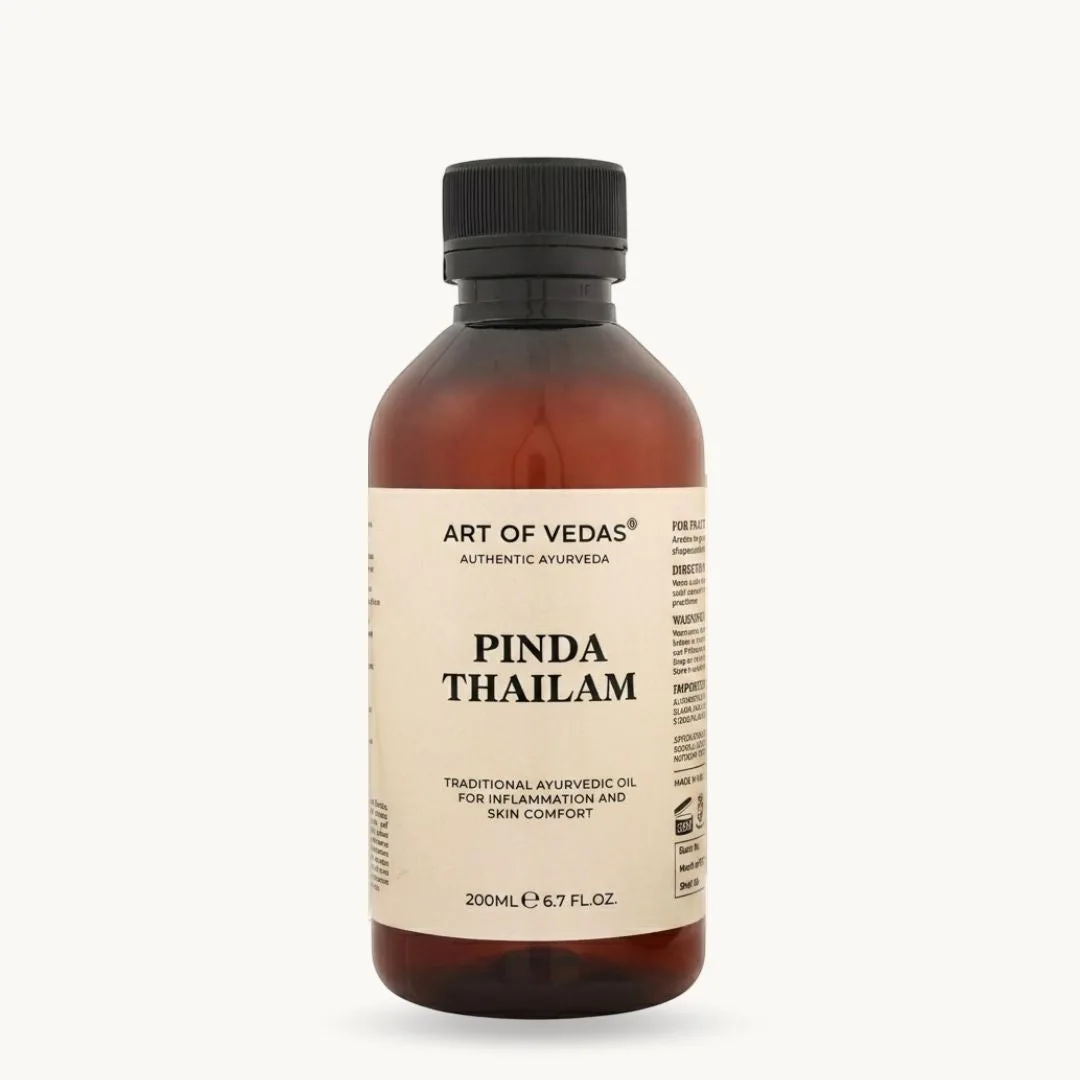
In brief: A copper tongue scraper is a curved strip of solid copper with a smooth edge, used each morning to draw the overnight coating from the tongue. In Ayurveda this step is called Jihwa Nirlekhana or Jihwa Prakshalana and opens Dinacharya, the daily routine. The classical texts name copper among the materials for this tool, and it is the one used most widely today.
Foundations
Copper Tongue Scraper Benefits: What It Is and Why Copper
Reviewed by Dr. Anu Joy, MD (Ayurveda), Ayurveda physician at Art of Vedas
Copper tongue scraper benefits, and copper tongue cleaner benefits in general, are described in Ayurveda in practical terms: the tongue is cleaned before the first sip of water, as part of a calm and regular morning. This page explains what a copper tongue scraper is, why the tradition uses copper and what the daily practice is for. The step-by-step method is in our guide to tongue scraping in the morning routine.
What is a copper tongue scraper?
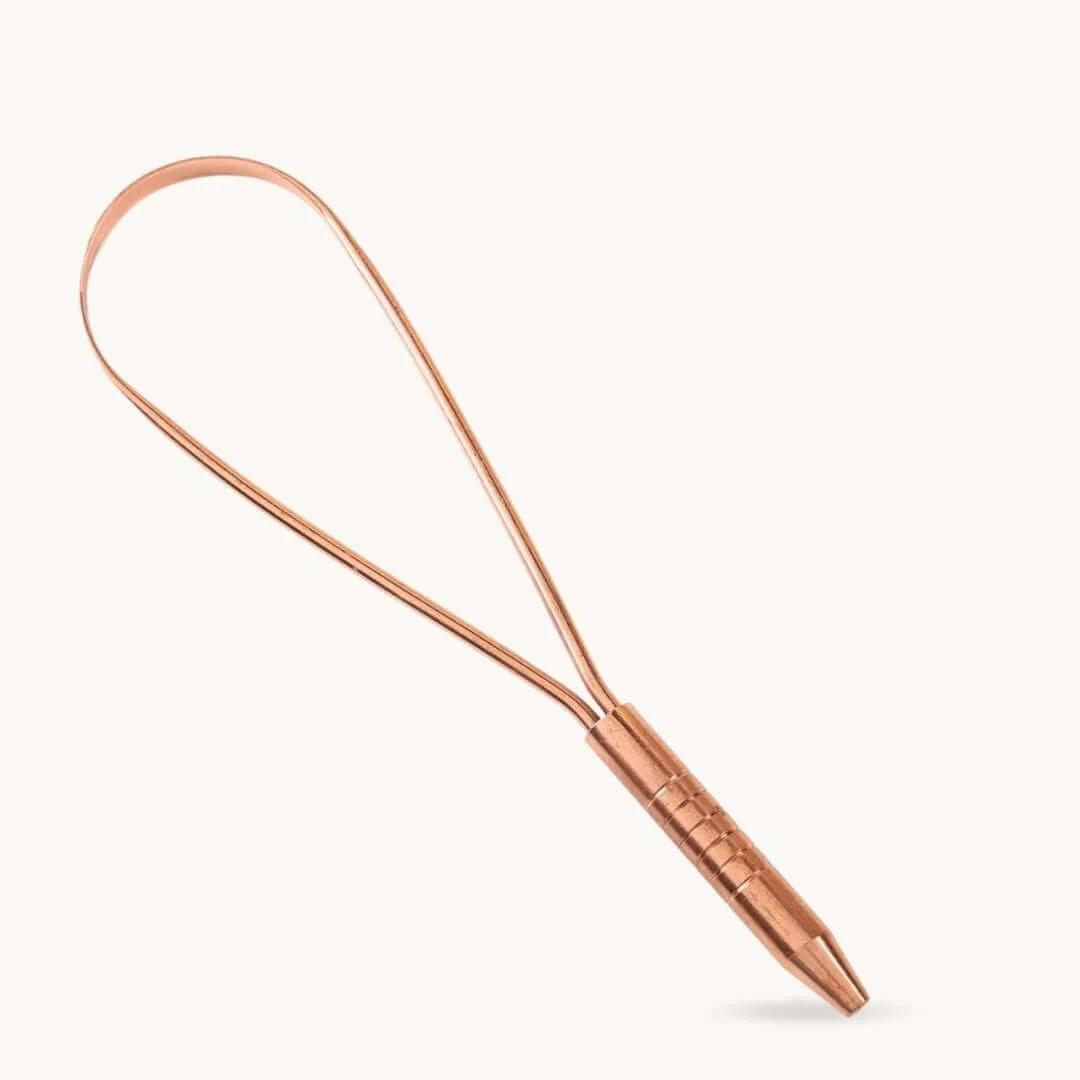
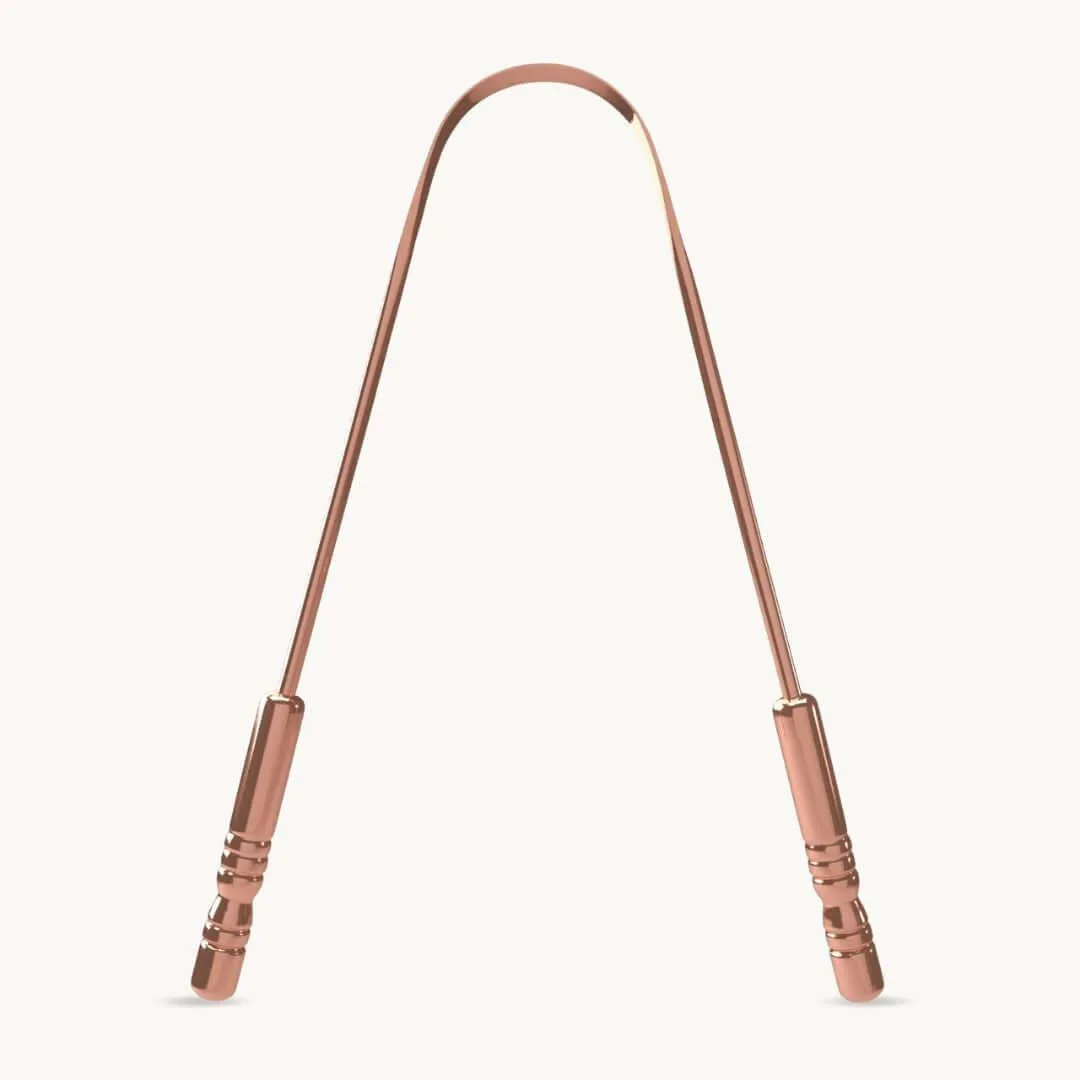
A copper tongue scraper is a narrow, curved tool made of solid copper. Its smooth edge is placed on the back of the tongue and drawn forward in one gentle stroke. Art of Vedas offers two shapes: a teardrop-shaped copper tongue scraper with one handle (14.5 cm long, 32 g) and a U-shaped copper tongue cleaner with a double handle (13 cm long, 30 g). Both are made of 99.8% pure copper, tested and confirmed by an independent laboratory.
Why copper? What the tradition says
The classical texts of Ayurveda, among them the Charaka Samhita, the Sushruta Samhita and the Ashtanga Hridayam, describe tongue cleaning as a daily step and name a curved instrument of gold, silver, copper or tin for it. Copper, Tamra in Sanskrit, is the metal that stayed in everyday use: it is durable, it can be shaped into a smooth edge and it is kept in good condition with simple care. In the classical view Tamra is associated with all three Doshas, Vata, Pitta and Kapha, which is one reason copper is used for daily tools such as the tongue scraper and the copper glass.
The meaning of the Sanskrit terms is explained in our Jihwa Nirlekhana guide. A plain comparison of copper with stainless steel and plastic is on best tongue scraper material.
What daily tongue scraping is for in Dinacharya
In Dinacharya the tongue is cleaned right after waking, before drinking, before oil pulling and before brushing the teeth. The purpose described is simple: the coating that collects on the tongue overnight is removed, so that the day starts with a clean tongue. Classical Ayurveda also pays attention to how the tongue looks in the morning, as part of the attention it gives to the daily routine. Art of Vedas makes no promises about effects on the body. The value lies in the practice itself: a short, regular step that takes less than a minute.
Copper tongue scraper benefits in daily use
- A firm, smooth edge: the curved copper edge follows the shape of the tongue and is easy to rinse between strokes.
- One tool for years: solid copper keeps its shape; with care the scraper lasts several years.
- Simple care: rinse, dry, and refresh the shine with lemon and salt now and then.
- Part of a sequence: tongue scraping is followed by oil pulling, Kavala, and brushing. More in our oil pulling guide.
How to start
Use the scraper once each morning: five to seven gentle strokes from back to front, rinsing the edge after each stroke, then rinse your mouth with water. Use light pressure and do not place the scraper further back than is comfortable. The full method, the order with oil pulling and brushing, and morning or night are covered in our tongue scraping guide. Care is explained in how to clean a copper tongue scraper.
Frequently asked questions about copper tongue scrapers
What are the benefits of a copper tongue scraper? In Ayurveda the copper tongue scraper is the traditional tool for cleaning the tongue each morning as part of Dinacharya. It removes the coating from the surface of the tongue, keeps a smooth edge and lasts for years with simple care. Art of Vedas makes no health claims for it.
Why is copper used for tongue scrapers in Ayurveda? The classical texts name copper among the metals for the tongue-cleaning instrument, and Tamra is associated with all three Doshas. Copper is durable, easy to shape and easy to care for, so it remained the usual material.
Is one handle or a double handle better? Neither is better; they differ in feel. The single handle is guided with one hand and has a narrower edge; the double handle is held with both hands and covers the width of the tongue in one stroke. See one handle or double handle.
Who should ask before using a tongue scraper? Please consult a qualified Ayurvedic practitioner or your doctor before you start if you are pregnant or breastfeeding, for children, or if you have a known sensitivity to metals. Do not use the scraper on injured skin or mucous membranes.