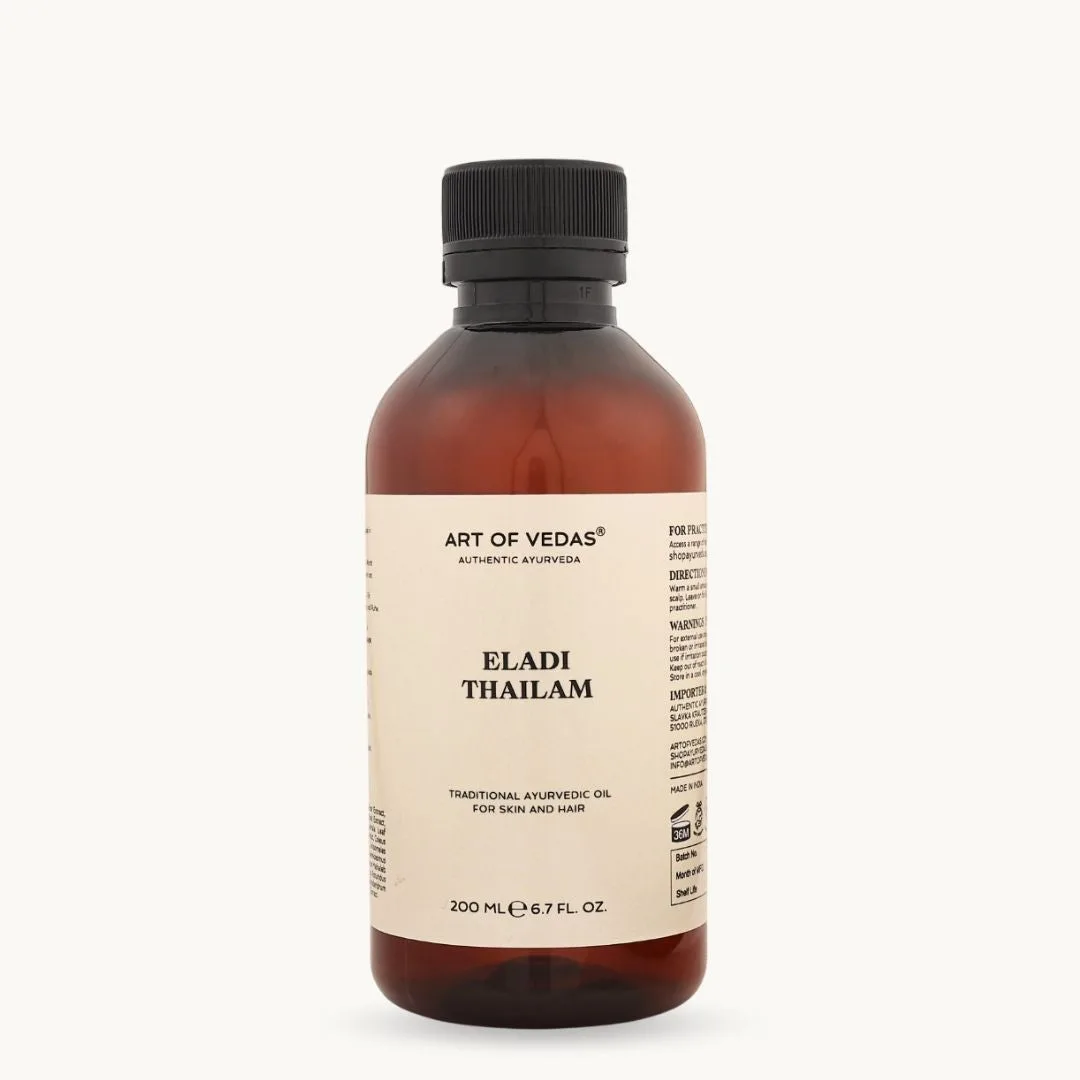
When people compare Eladi Thailam vs Eladi Kera Thailam, the question is rarely about the herbs, which are largely the same, but about the base oil that carries them. Both are classical preparations built on the Eladi group of aromatic botanicals, and both are traditionally used in Ayurveda to support soft, even-toned and comfortable skin. The difference sits in the fat: a sesame base in the standard Thailam, and a coconut (kera) base in the Kera Thailam. This guide explains what that single choice changes, and how the tradition matches each version to a person and a season.
What the Two Oils Share
Both oils take their name from Ela, or cardamom, the lead botanical of the Eladi group described in the classical texts. In each version the same aromatic herbs are processed into the oil so that their qualities are carried onto the skin during gentle massage. Used as an evening face or body oil, both are traditionally reached for when the skin feels dull or uneven and would welcome softening. This complexion-favouring use is covered in our guide to Eladi oil for even-toned, radiant skin. If you are new to the formula altogether, our Eladi Thailam benefits and uses guide sets out the wider picture before you settle on a base.
Sesame Base: The Standard Eladi Thailam
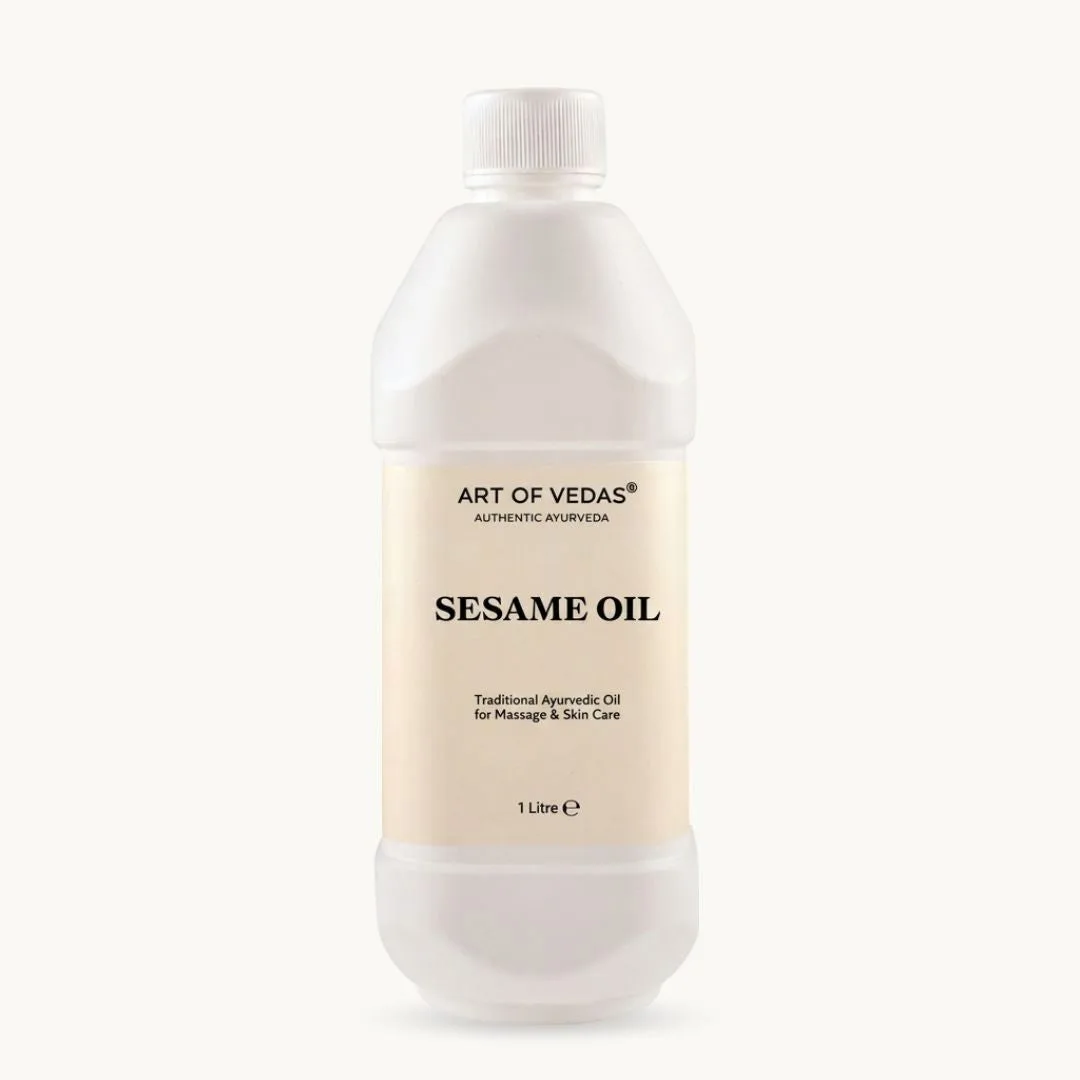
The classical Eladi Thailam is prepared in a sesame oil base, known in Ayurveda as Tila. Sesame is warming by nature and a little heavier on the skin, which is why the tradition favours it in cooler months and for those whose skin tends toward dryness. It absorbs steadily and suits a slower, grounding routine, such as an evening facial application before rest. You can explore the sesame-based version in our range as Eladi Thailam.
Coconut (Kera) Base: Eladi Kera Thailam
Kera is the Malayalam word for coconut, so Eladi Kera Thailam simply carries the same Eladi herbs in a coconut oil base. Coconut is cooling and lighter, and the tradition turns to it in warm weather and for skin that feels heated or easily reactive. It has a fresher finish and quicker absorption than the sesame version, which many find more comfortable through summer. A closely related coconut-based skin oil in our collection is Nalpamaradi Kera Thailam, which shares the same lighter character.
How to Choose Between Them
- Choose the sesame-based Eladi Thailam in autumn and winter, or when skin feels dry and tight.
- Choose the coconut-based Eladi Kera Thailam in spring and summer, or when skin feels warm and oily.
- Prefer a lighter, faster-absorbing finish? The Kera version suits most people.
- Prefer a richer, more nourishing feel for an unhurried evening ritual? The sesame version suits most people.
- For sensitive skin, patch test either oil on the inner forearm before facial use.
The Eladi Group of Herbs
Both oils are traditionally built around the Eladi botanicals. These typically include Ela (cardamom, valued in Ayurveda for its aromatic, refreshing quality), Twak (cinnamon bark, a warming aromatic), Patra (cinnamon leaf, traditionally used to support clear-feeling skin), Naga Kesara (a fragrant flower described in the texts as varnya, or complexion-favouring) and a handful of supporting herbs carried through a milk and decoction process. The formula is then completed in either the sesame or coconut base described above. For the full ingredient walk-through, the benefits and uses guide is the more complete home for the list.
Frequently Asked Questions
Is Eladi Kera Thailam better than Eladi Thailam?
Neither is better in absolute terms. The tradition treats them as seasonal and constitutional variations of one formula. The coconut-based Kera Thailam suits warmer weather and heated skin, while the sesame-based version suits cooler weather and drier skin. Your climate, the time of year and how your skin feels on the day are the practical guides to which one to reach for.
What does kera mean in Eladi Kera Thailam?
Kera is the Malayalam word for coconut. Eladi Kera Thailam therefore means the Eladi formula prepared in a coconut oil base, as opposed to the classical sesame base. The herbal portion of the recipe stays essentially the same; only the carrier oil changes, and that is what gives the two oils their different feel on the skin.
Can I use both oils?
Many people keep both and choose by season, using the lighter coconut version through summer and the richer sesame version through winter. If you prefer to hold only one, pick the base that matches your usual skin tendency and local climate. Introduce any new oil gradually and patch test first, as described in our application guides.
Which base absorbs faster?
The coconut-based Eladi Kera Thailam generally feels lighter and absorbs more quickly, leaving a fresher finish. The sesame-based Eladi Thailam is a little heavier and sinks in more slowly, which many find comforting for a calm evening massage. Warming the oil briefly between the palms helps either version spread and settle more evenly.
Are the two oils used differently on the face?
The method is the same: a few drops warmed between clean palms, then pressed and massaged gently into the skin. Only the choice of base changes with the season. For a step-by-step evening routine that applies to either oil, see our dedicated face oil guide, which covers cleansing, warming and massage direction.
For external use only. Not a substitute for professional medical advice.