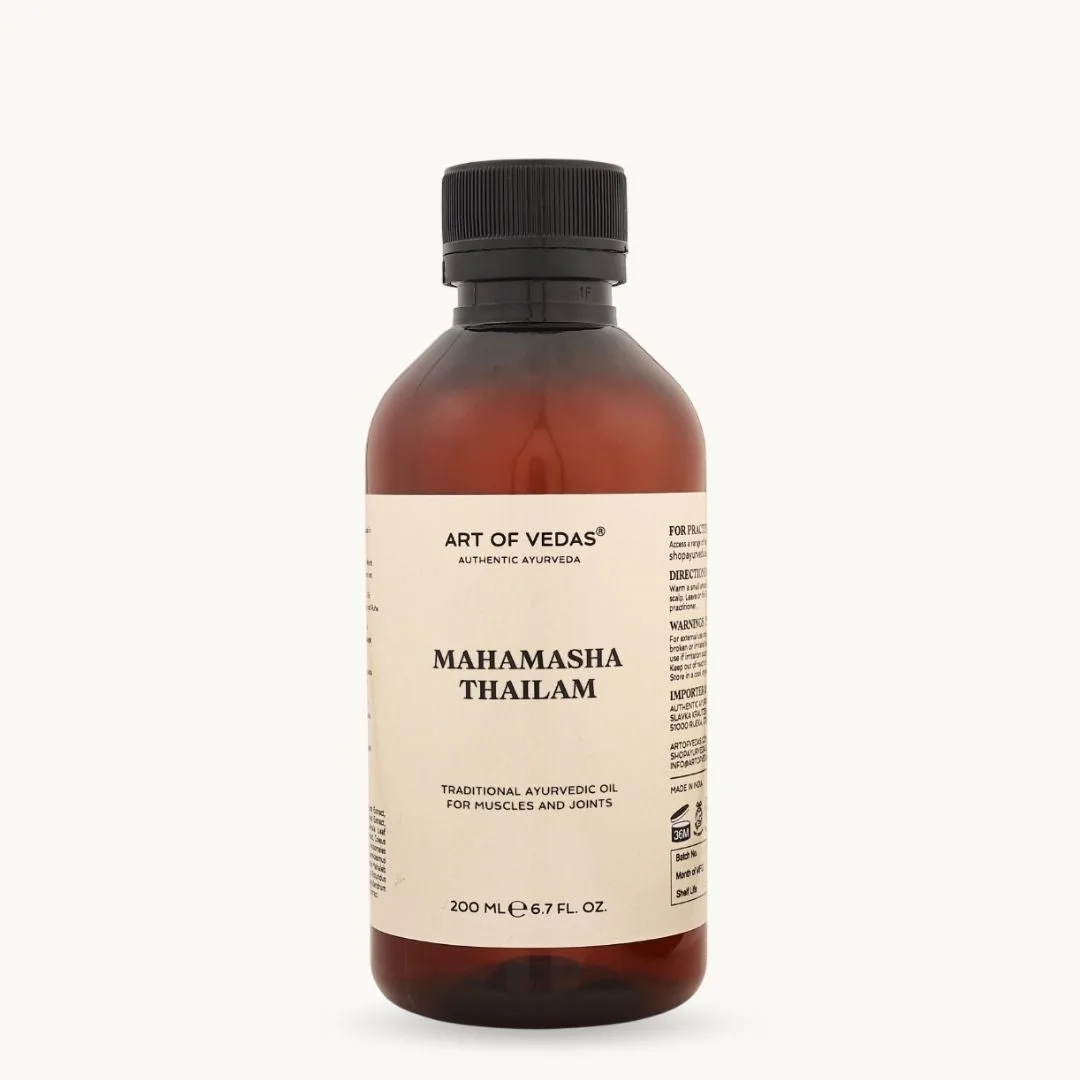
Mahamasha Thailam is one of the great warming oils of classical Ayurveda, named after Masha, the black gram bean that stands at the heart of its recipe. Described in the later classical compendia such as Bhaishajya Ratnavali, it is traditionally used in Ayurveda to support deep warmth, strength and comfort in the muscles and joints when Vata gathers. Where lighter oils whisper, Mahamasha speaks with a full voice: rich, heavy and enveloping.
What Mahamasha Thailam Is
Within the classical family of Vata oils, each member has a temperament. Mahamasha Thailam is the robust one: a sesame preparation cooked with a decoction of black gram and strengthened with the grounding roots of the tradition. Its character is unmistakably warming and unctuous, and the classical texts assign it to situations that ask for exactly this fullness: the cold months, the later years of life, and bodies wearied by exertion. It is a focused tool rather than an everyday cosmetic, which is why the tradition surrounds it with sensible instructions about warmth, rest and moderation.
Masha: The Black Gram at the Heart
Masha is the black gram or urad bean (Vigna mungo), a staple of Indian kitchens and a herb of standing in the classical pharmacy. Ayurveda regards the bean as heavy, warm and deeply nourishing, the same qualities that make urad the substance of winter dishes. In the oil, the bean arrives as a long-cooked decoction: proteins and warmth drawn into liquid, then united with sesame through the slow classical method. Around this core the recipe gathers familiar companions, among them Bala (Sida cordifolia, the strengthening root), the ten roots of Dashamoola (the grounding group of Vata care) and Ashwagandha (Withania somnifera, the restorative Rasayana root), with several classical versions naming a milk decoction stage as well.
Traditional Uses Through the Routine
| Routine context | How the oil is traditionally used |
|---|---|
| Cold-season Abhyanga | Generous warm application to limbs and back on winter mornings |
| Focused muscle care | Slow, patient work over shoulders, arms and thighs after exertion |
| Joint routines | Warm circles at knees, elbows and wrists, followed by rest and warmth |
| Later-life care | Shorter, regular applications where richness is welcome |
Those who bring the oil into their winter offer the same report in different words:
- A deep, lasting warmth that reaches through tired muscles
- The satisfying weight of a truly unctuous classical oil
- Joints that feel eased, mobile and generously cared for
- An earthy, honest aroma that belongs to the season of fires
- Skin left richly nourished against cold, dry air
Application methods, timing and the oil's considerations are treated fully in our companion piece on Mahamasha Thailam uses and considerations.
Mahamasha in the Vata Season
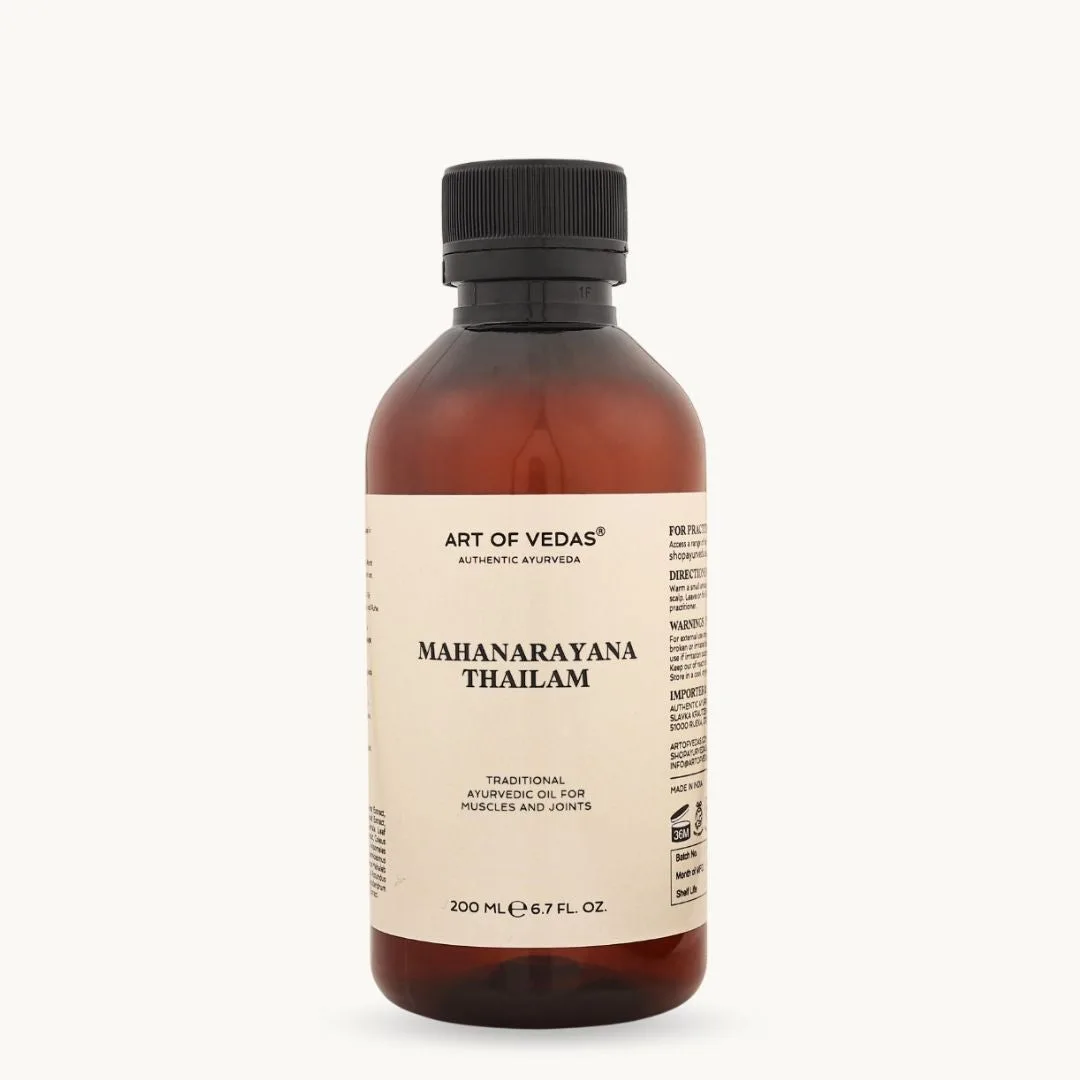
Autumn and early winter, the season of wind, cold and dryness, is when this oil earns its keep. A sensible household rhythm pairs it with gentler companions: plain warm sesame oil for quick daily Abhyanga, Mahamasha for the two or three weekly sittings that deserve depth. Within the classical family, Mahanarayana Thailam is its nearest rival for the same work, slightly less heavy and more aromatic; the family resemblances are weighed in our Dhanwantharam versus Mahanarayana comparison, and the whole seasonal cast is introduced in the guide to the best Ayurvedic oils for the Vata season.
Frequently Asked Questions
What does Mahamasha mean?
Maha means great and Masha names the black gram bean, so the title announces a grand preparation built upon urad. The bean's heavy, warming, nourishing character defines the oil, and the classical method carries those qualities from the cooking pot into the bottle.
How does Mahamasha differ from Mahanarayana Thailam?
They are neighbours with different tempers. Mahanarayana is aromatic and enveloping, the celebrated all-rounder for joints and back. Mahamasha is heavier and more unctuous, the specialist for deep warmth in cold months. Households with both tend to reach for Mahanarayana by default and Mahamasha when winter asks for more.
Is the oil used warm?
Always. Stand the bottle in hot water or warm a portion in a bowl until it feels pleasantly warm at the wrist. Warmth is doubly fitting here, both for the ritual's comfort and for the oil's own warming character, which the tradition never separates from rest and shelter afterwards.
How often should it be applied?
Two or three unhurried sittings a week content most users through the cold season, with lighter oils covering the days between. Those in later life or under a practitioner's care may keep other rhythms. Let comfort lead, and give the oil twenty to thirty minutes on the skin before a warm bath.
Does such a rich oil suit everyone?
Its strength is its heaviness, and not every constitution wants that. Those who run hot or whose skin flushes easily usually prefer the milder members of the family. A patch test before first use and a word with a qualified professional are the sensible first steps with any oil of this rank.
For external use only. This article describes traditional Ayurvedic practice for educational purposes and does not constitute medical advice. Always consult a qualified professional before beginning a new routine, especially during pregnancy, while nursing, or if you have specific concerns.