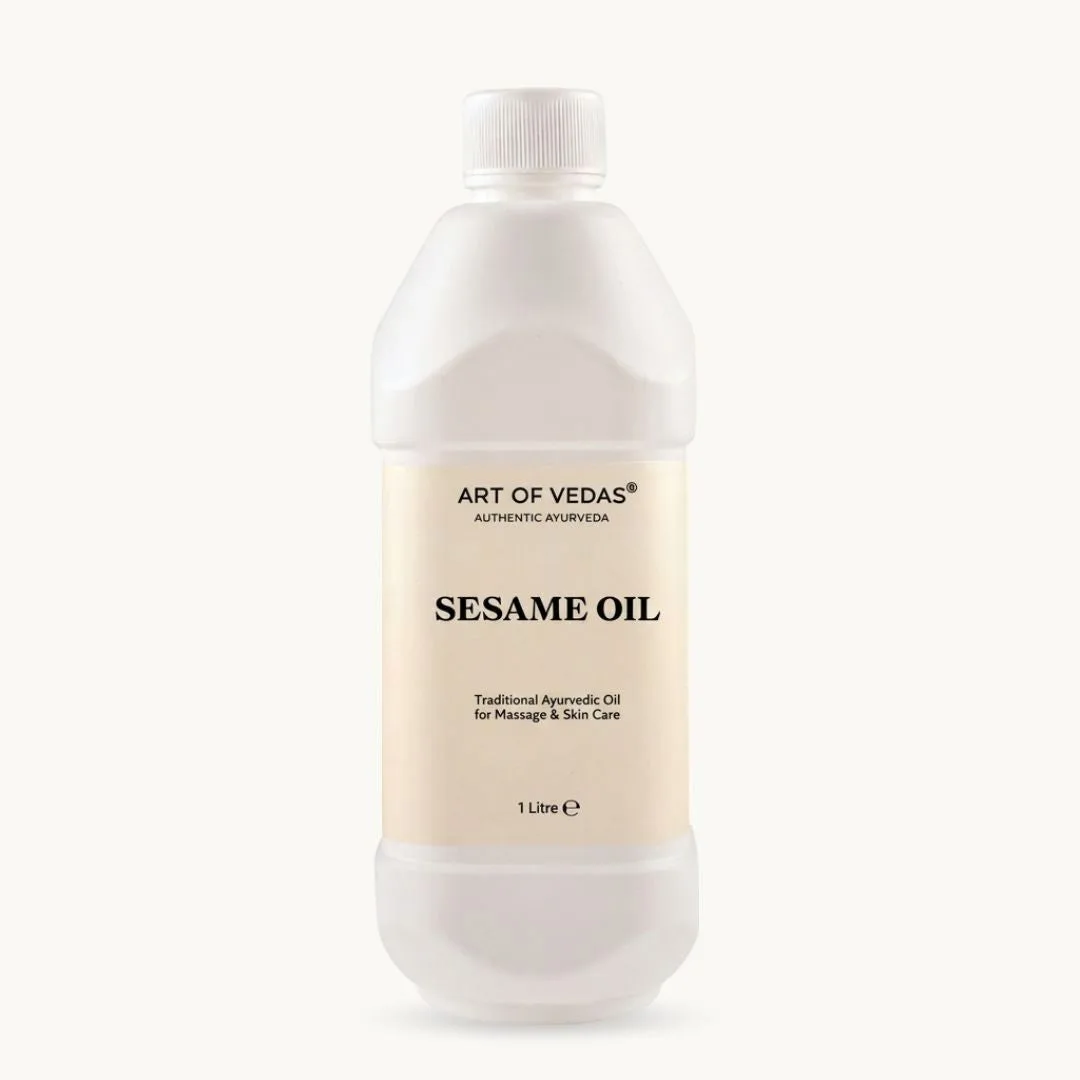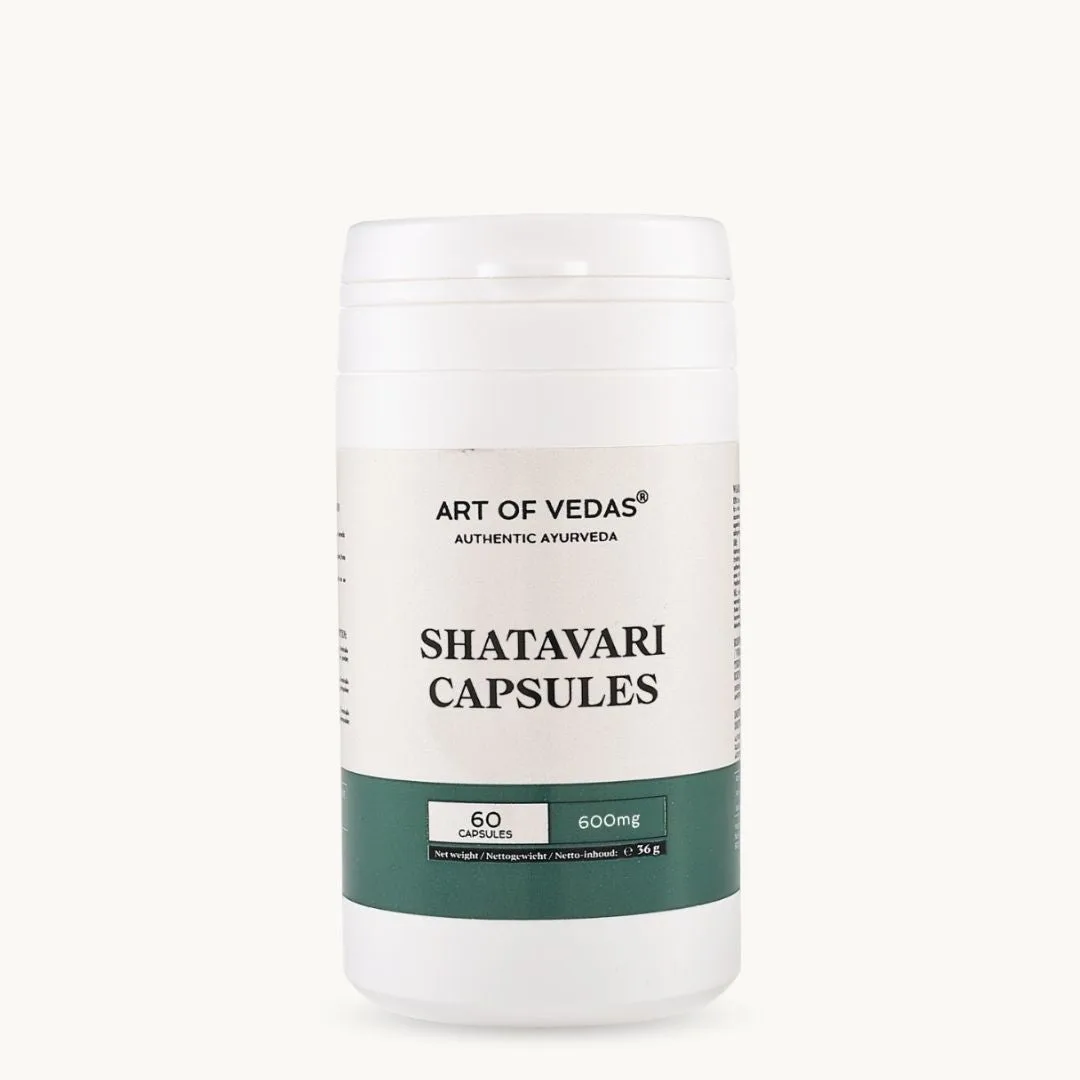
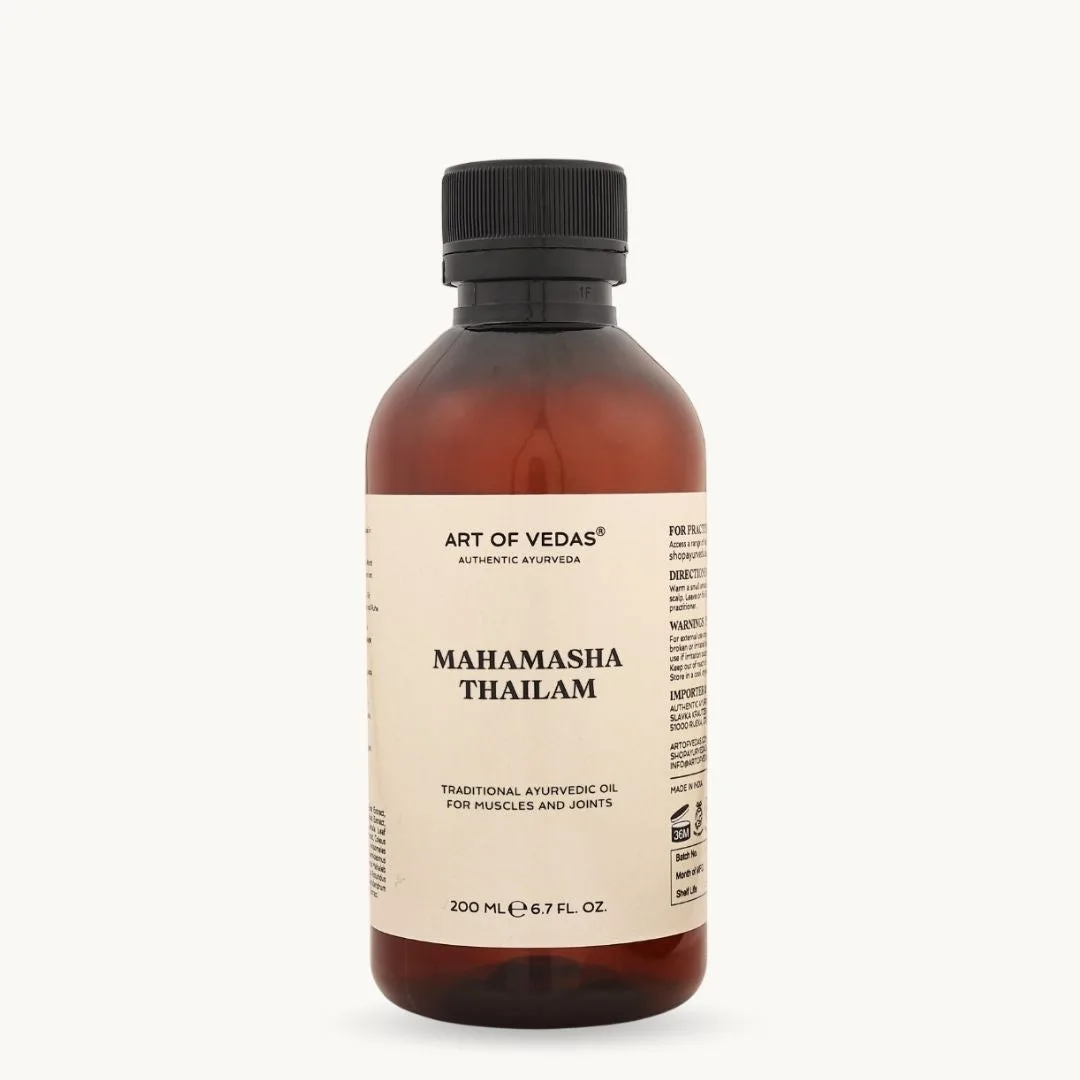
In brief: Mahamasha Thailam (also written Mahamasha Taila, Maha Masha Thailam, Mahamasha Thailam, Mahamasha Tel or Mahamasha oil) is a classical Ayurvedic massage oil built on Masha, the black gram bean. Black gram, the ten Dashamoola roots, Ashwagandha, Shatavari, Guduchi and warming spices are cooked slowly into sesame oil in the classical manner. The finished oil is heavy and warming, classically placed with Vata, and traditionally used for Abhyanga of the muscles and joints in the cold season. This guide covers its traditional uses, its warming character, how to warm and apply it, what to consider before use, and when a lighter oil is the better choice.
Therapies & Oils
Mahamasha Thailam: Uses and Considerations
Reviewed by Dr. Anu Joy, MD (Ayurveda), Ayurvedic doctor of Art of Vedas
Traditional Uses in the Routine
The classical settings for Mahamasha Thailam are consistent across the tradition. It serves the cold-season Abhyanga, applied generously and warm to the limbs and back on winter mornings. It serves focused muscle care after exertion: the gardener's shoulders, the walker's calves, the desk worker's neck, each given slow, patient strokes and time to rest. It serves joint routines at the knees, elbows and wrists, worked in warm circles and followed by warmth and shelter. And it has a long association with later-life care, where its richness is most welcome. The formula's background and composition are described in the complete Mahamasha Thailam guide, and the general method of warm-oil massage in our step-by-step Abhyanga guide.
The Warming Character, Honestly Described
Everything distinctive about this oil follows from its heat and weight. Ayurveda classifies Masha as heavy, unctuous and warming, and the finished Thailam inherits all three. On the skin this reads as a sense of deep, spreading warmth and a rich, clinging texture that outlasts lighter oils. In the right season and on the right constitution this is precisely the point. It also means the oil can feel like too much: in high summer, on skin that flushes easily, or for those of pronounced Pitta temperament, the same qualities that comfort one person may simply overheat another.
- Deep warmth that reaches through tired, hardworking muscles
- A generous, unctuous texture for slow and patient massage
- Comfort and ease around joints through the cold months
- Richly nourished skin in the driest season of the year
Considerations Before Use
The tradition's own good sense deserves plain language. Patch test first: a small application to the inner forearm, observed for a day, is the correct introduction to any potent classical oil. Keep the oil away from broken or irritated skin, and postpone massage altogether when the skin or the person is unwell, deferring to a qualified professional. Respect the heat: if the skin reddens quickly or feels uncomfortably hot, choose a milder oil rather than persisting. Mind the fabric, for a rich oil marks linens, so older towels and unhurried absorption time belong to the ritual. And approach special seasons of life with proper care: pregnancy and the postnatal weeks follow their own tradition with their own oils, described in our guide to Dhanwantharam oil in traditional postnatal care, and always under personal professional guidance.
When Tradition Reaches for a Lighter Oil
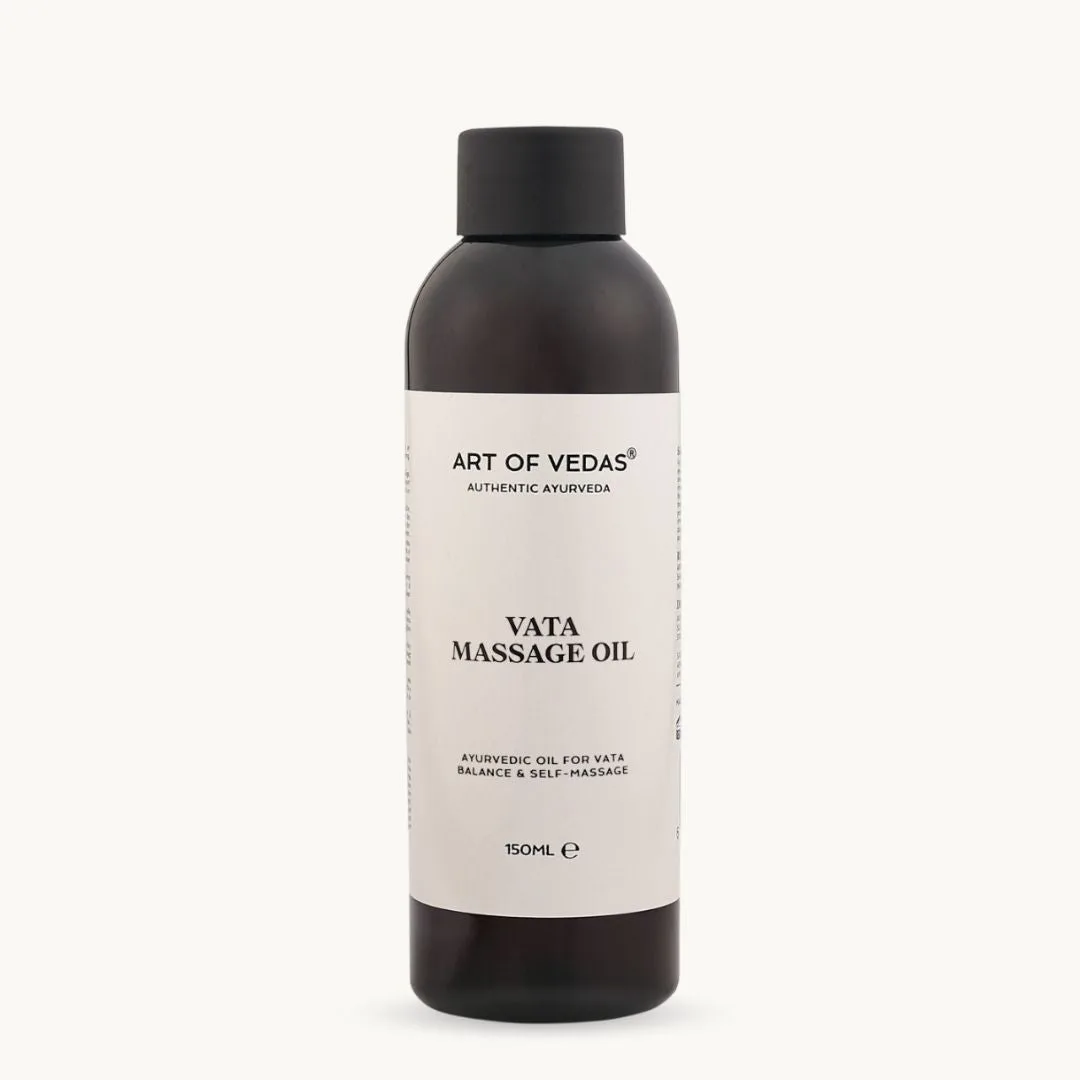
Choosing Mahamasha is a decision about degree, and there are days that call for less. For daily full-body Abhyanga, a lighter blend such as our Vata massage oil keeps the ritual easy and repeatable, reserving the heavy classic for the sittings that deserve it. In warm months, many set Mahamasha aside entirely and return to it with the first cold winds. This is not inconstancy but the tradition working as designed: the oil serves the season, not the other way around.
Frequently Asked Questions
Does Mahamasha Thailam have side effects?
As an external oil used sensibly, it is chiefly a matter of suitability. Its warming, heavy nature can feel excessive on hot-tempered or easily flushed skin, and any cosmetic can disagree with an individual, which is what the patch test is for. Apply it to intact skin only, and seek professional advice where there is any doubt.
Can it be used in summer?
The tradition prefers it in autumn and winter, and most users set it aside in hot weather in favour of milder oils. If summer use appeals, keep applications short and local, avoid the midday hours, and listen to the skin; the oil loses nothing by waiting for its season.
Is it suitable for the face?
No; its weight and warmth are meant for the body. The facial tradition uses altogether gentler preparations, and the face gains nothing from an oil designed for winter shoulders. Keep Mahamasha below the collarbones and give the face its own, milder classics.
How long should the oil remain on the skin?
Twenty to thirty minutes of rest before a warm bath is the classical measure, wrapped warmly and away from draughts. For local applications to a shoulder or knee, the oil may stay longer under warm clothing. Warm rest is part of the recipe, not an optional extra.
Who should avoid the oil, or seek advice first?
Those with reactive, easily irritated skin, those who run notably hot, and anyone pregnant, nursing or under care for a specific concern should speak with a qualified professional before use. This is the same counsel the classical tradition gives for all its stronger preparations, and it costs nothing to follow.
For external use only. This article describes traditional Ayurvedic practice for educational purposes and does not constitute medical advice. Always consult a qualified professional before beginning a new routine, especially during pregnancy, while nursing, or if you have specific concerns.
Frequently asked questions about Mahamasha Thailam
What is Mahamasha Thailam? A classical Ayurvedic massage oil in which Masha, the black gram bean, is cooked into sesame oil together with the ten Dashamoola roots, Ashwagandha, Shatavari, Guduchi and warming spices. It is heavy and warming and classically placed with Vata. The name is also written Mahamasha Taila, Maha Masha Thailam, Mahamasha Thailam, Mahamasha Tel or simply Mahamasha oil.
What is Mahamasha Thailam used for? For Abhyanga, the Ayurvedic oil massage, in the cold season: applied warm and generously to the limbs and back, or worked slowly into the muscles and joints of one area after exertion. Art of Vedas sells Mahamasha Thailam as an oil for external use. A qualified Ayurvedic practitioner can tell you whether it suits your constitution.
What are the traditional benefits of Mahamasha Thailam? The tradition describes Masha as heavy, unctuous and warming, and Mahamasha Thailam inherits all three qualities. On the skin this reads as a deep, spreading warmth and a rich texture that outlasts lighter oils, which is why it is classically reserved for autumn and winter Abhyanga of the muscles and joints and for slow, patient massage. It is an oil for external massage.
How do you use Mahamasha Thailam? Warm the oil, apply it generously with long strokes along the limbs and circular strokes around the knees, elbows and wrists, then rest warmly for twenty to thirty minutes before a warm bath or shower. For one shoulder or knee, massage a small amount of Mahamasha Thailam in and keep the area warm under clothing. Use older towels, as the rich oil marks fabric.
How often can Mahamasha Taila be applied? In autumn and winter, Mahamasha Taila can be used for the daily Abhyanga or two to three times a week for a focused massage of the muscles and joints. Many people set it aside in hot weather and use a lighter oil for daily full-body massage. Ask a qualified Ayurvedic practitioner what rhythm suits you.
Does Mahamasha Thailam have side effects? Used sensibly as an external oil, it is chiefly a question of suitability. Its heavy, warming nature can feel like too much on skin that flushes easily, in high summer or for a pronounced Pitta temperament; choose a milder oil if the skin reddens or feels uncomfortably hot. Do a small skin test on the inner forearm first, and keep Mahamasha Thailam away from the eyes and broken skin.
What is in Mahamasha Thailam? The Art of Vedas oil declares sesame seed oil as its base, then black gram (Masha), the ten Dashamoola roots, Ashwagandha, Shatavari, Guduchi, Jivanti, Manjistha, galangal, deodar, ginger, black pepper, long pepper and other spices, with rock salt and shellac. Because of the shellac, Mahamasha Thailam is not vegan. The full declared list is on the product page and on the label.
Can Mahamasha Thailam be used in pregnancy or for children? Ask your doctor or a qualified Ayurvedic practitioner first. Mahamasha Thailam is for external use only and is one of the stronger classical oils; do a small skin test on the inner forearm before the first full application, keep it off the face, and keep it away from the eyes and broken skin.