For external use only. Not a substitute for professional medical advice. If you have a scalp condition or are experiencing significant hair loss, consult a dermatologist or qualified Ayurvedic practitioner.
Neelibhringadi Thailam: Why This Classical Hair Oil Outperforms Modern Hair Serums
Among the classical hair preparations described in Ayurvedic texts, Neelibhringadi Thailam holds a particular place of respect. It is one of the few formulations cited directly in Sahasrayogam for scalp and hair care, and it has been prepared and used continuously 's Ayurvedic tradition for centuries. Its ingredients are not a modern blend assembled for market appeal - they are a documented classical formula assembled according to the principle that healthy hair begins with a nourished, balanced scalp, and that the scalp is ultimately a reflection of internal dosha balance.
This guide covers what Neelibhringadi Thailam is, what it contains, why the classical ingredients work, how to apply it correctly for maximum benefit, and what to realistically expect. Art of Vedas prepares this Thailam according to the traditional method, with the Sneha Paka Vidhi (medicated oil preparation process) that determines the quality of the final product.
What the Name Tells You
Sanskrit formulation names in Ayurveda are precise. Neeli refers to Indigofera tinctoria - the indigo plant, which is the primary herb in this formulation. Bhringadi derives from Bhringraj (Eclipta prostrata), the second major herb, combined with the suffix indicating this is a family or group of herbs (the Bhringadi group). Thailam means oil. The name tells you the two primary herbs and the preparation form. This precision is characteristic of classical Ayurvedic nomenclature, where the name of a formulation is itself a pharmacological summary.
Classical Ingredients and Their Traditional Properties
Neelibhringadi Thailam is prepared with a decoction of multiple herbs processed with sesame oil as the base. The key constituents and their traditional Ayurvedic properties are as follows:
Neeli (Indigofera tinctoria)
The primary herb in the formulation. Indigofera tinctoria is classified in the Ayurvedic Materia Medica as Tikta (bitter) and Kashaya (astringent) in taste, with Ushna Virya (warming potency) and Katu Vipaka (pungent post-digestive effect). The Ashtanga Hridayam and Sahasrayogam both cite Neeli as having specific action on the scalp and hair follicles. Its traditional use encompasses support for scalp health, reduction of Pitta-type scalp conditions characterised by redness or warmth, and support for hair pigmentation. The blue pigment compounds (indigo derivatives) that give the plant its characteristic colour are present in the processed oil.
Bhringraj (Eclipta prostrata)
Bhringraj is one of the most consistently cited herbs in Ayurvedic hair care across all the classical texts. Charaka Samhita, Ashtanga Hridayam, and Sahasrayogam all describe it as specifically beneficial for the hair and scalp. The Sanskrit name Bhringraj means "ruler of the hair", and its traditional reputation as a scalp tonic reflects centuries of clinical observation. It is classified as Tikta (bitter) and Kashaya (astringent), with cooling Virya and a specific action on the Bhrajaka Pitta (the sub-dosha governing skin and scalp complexion). In Ayurvedic practice, it is used both internally and topically for hair and scalp support.
Amalaki (Emblica officinalis)
One of the three fruits of Triphala, Amalaki is the highest natural source of vitamin C-related compounds in the Ayurvedic Materia Medica. It is classified as Rasayana and is specifically cited for Pitta management throughout the texts. In hair care preparations, it contributes cooling and nourishing properties to counteract excess Pitta in the scalp, which classical Ayurveda associates with premature greying and hair thinning.
Coconut oil (in some formulations)
Some regional preparations of Neelibhringadi Thailam use coconut oil as the base rather than or in addition to sesame. Coconut oil is specifically Pitta-pacifying, with cooling Virya. Sesame oil is Vata-pacifying with warming properties. The base oil chosen determines whether the final preparation is more appropriate for Pitta-type scalp presentations (use coconut base) or Vata-type presentations (use sesame base). Sahasrayogam's classical preparation specifies a sesame base with specific herbal decoctions.
Additional herbs in the classical formula
The full classical formulation includes a range of supporting herbs: Brahmi (Bacopa monnieri) for its cooling and nourishing effect on the scalp and nervous system associated with the hair follicle; various Kashaya (astringent) herbs that support scalp tone; and in some preparations, Manjishtha (Rubia cordifolia) for its Pitta-managing and skin-supporting properties.
What Dosha Pattern Is Neelibhringadi Suited For?
Classical Ayurvedic hair loss and scalp conditions are understood through the dosha lens:
Pitta-type scalp problems present with warmth, redness, inflammation, thinning from the crown, premature greying, and scalp sensitivity. Neelibhringadi Thailam, with its cooling herbs and Pitta-managing action, is specifically indicated for this presentation. The Sahasrayogam text describes it as beneficial for hair that is "becoming sparse" and for "preventing greying" - consistent with the Pitta-excess hair pattern.
Vata-type scalp problems present with dryness, flaking, brittleness, breakage, and a fragile scalp that responds poorly to handling. Neelibhringadi is also beneficial here, but the warming sesame base and nourishing herbs address the dry, depleted quality of the Vata scalp.
Kapha-type scalp problems present with excess oiliness, heavy hair, and slow-growing but thick individual strands. Neelibhringadi is less specifically targeted at Kapha presentations, though it can still be used in lighter applications.
If you are unsure of your dosha or which presentation applies to you, the Art of Vedas dosha assessment is a useful starting point before selecting the most appropriate hair oil.
How to Apply Neelibhringadi Thailam Correctly
The classical application method for hair oils in Ayurveda is described in the Ashtanga Hridayam Sutrasthana and differs significantly from how most people apply modern hair products. The purpose is not to coat the hair shaft but to nourish the scalp and hair follicle, which is where therapeutic action occurs.
Warming the oil
Always warm Neelibhringadi Thailam before application. Place the bottle in warm water for 5 minutes or warm a small quantity in a glass bowl. The oil should be warm but not hot - comfortable against the inside of your wrist. Warm oil penetrates the scalp tissue far more effectively than cold oil, and cold oil application is specifically listed in the Ashtanga Hridayam as counterproductive for Vata-type scalp conditions.
The scalp massage technique (Shiro Abhyanga)
Part the hair to expose the scalp. Apply small quantities of the warm oil directly to the scalp using your fingertips, working systematically from the hairline back to the crown, then down the sides. Once the oil is applied, massage the scalp using small circular movements with the pads of the fingers rather than the nails. The classical Shiro Abhyanga technique uses moderate firm pressure in slow circular strokes covering the entire scalp. This stimulates circulation to the hair follicles, one of the mechanisms by which classical Ayurveda explains the benefit of regular oil massage for hair quality.
The full Shiro Abhyanga technique, including the marma points (Adhipati, Shanka, and Kapala marma) that are specifically addressed in classical practice, is covered in the Ayurvedic scalp massage guide.
Duration and frequency
Leave Neelibhringadi Thailam on the scalp for a minimum of one hour. The Sahasrayogam and Ashtanga Hridayam both indicate overnight application as optimal for hair oils - applying before sleep and washing in the morning allows the herbal compounds maximum time to act on the scalp tissue. If overnight application is not practical, a minimum of two hours is recommended.
For active Pitta-type presentations, daily or every other day application for four to six weeks is the classical intensive protocol. For maintenance, once or twice weekly is appropriate. The Ayurvedic hair care guide provides the full seasonal hair care protocol.
Washing the oil out
Ayurvedic tradition does not recommend using harsh surfactant shampoos immediately after oil application, as these strip all the oil compounds along with the processed herbs. Washing with warm water and a gentle cleanser, or with a shikhakai-based preparation if available, preserves more of the herbal benefit. Apply a small amount of shampoo to the dry hair before wetting it, as this makes oil removal gentler and more complete.
The Role of Scalp Oil in Classical Dinacharya
Scalp oil application is listed in the classical Dinacharya (daily routine) of Charaka Samhita Sutrasthana Chapter 5 as a regular practice with specific benefits extending beyond hair quality. The classical text describes Murdha Taila (head oil application) as beneficial for improving vision, providing restful sleep, preventing headaches and greying of hair, and nourishing the scalp. This reflects the Ayurvedic understanding that Tarpaka Kapha - the sub-dosha responsible for nourishing the brain and sense organs - is directly supported by regular scalp oil application.
Regular scalp oiling is therefore not primarily a cosmetic practice in classical Ayurveda. It is part of the sensory organ care routine that maintains the health of the Kapha governing the head region. See the Dinacharya guide for the full classical daily routine context.
Neelibhringadi Compared to Other Classical Hair Oils
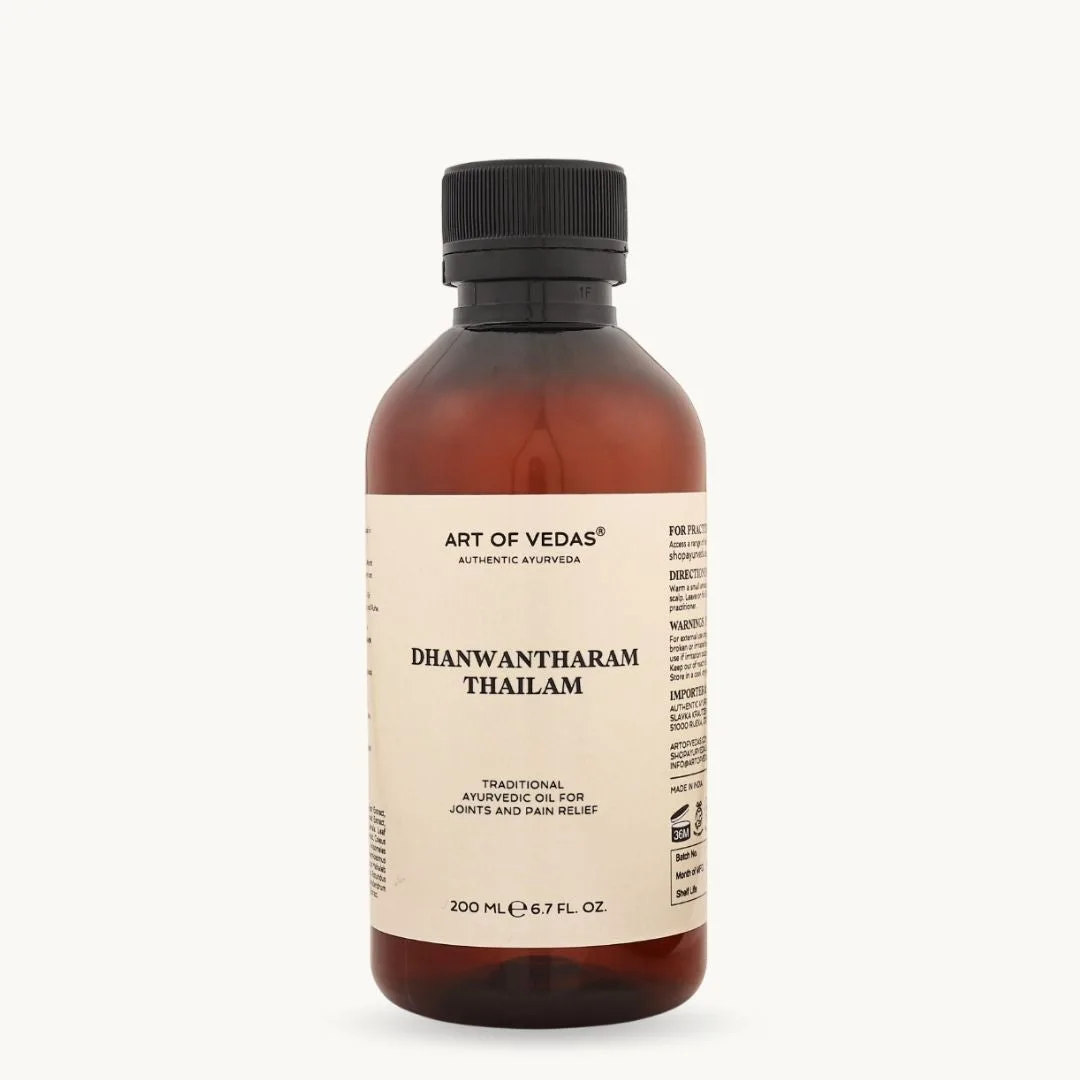
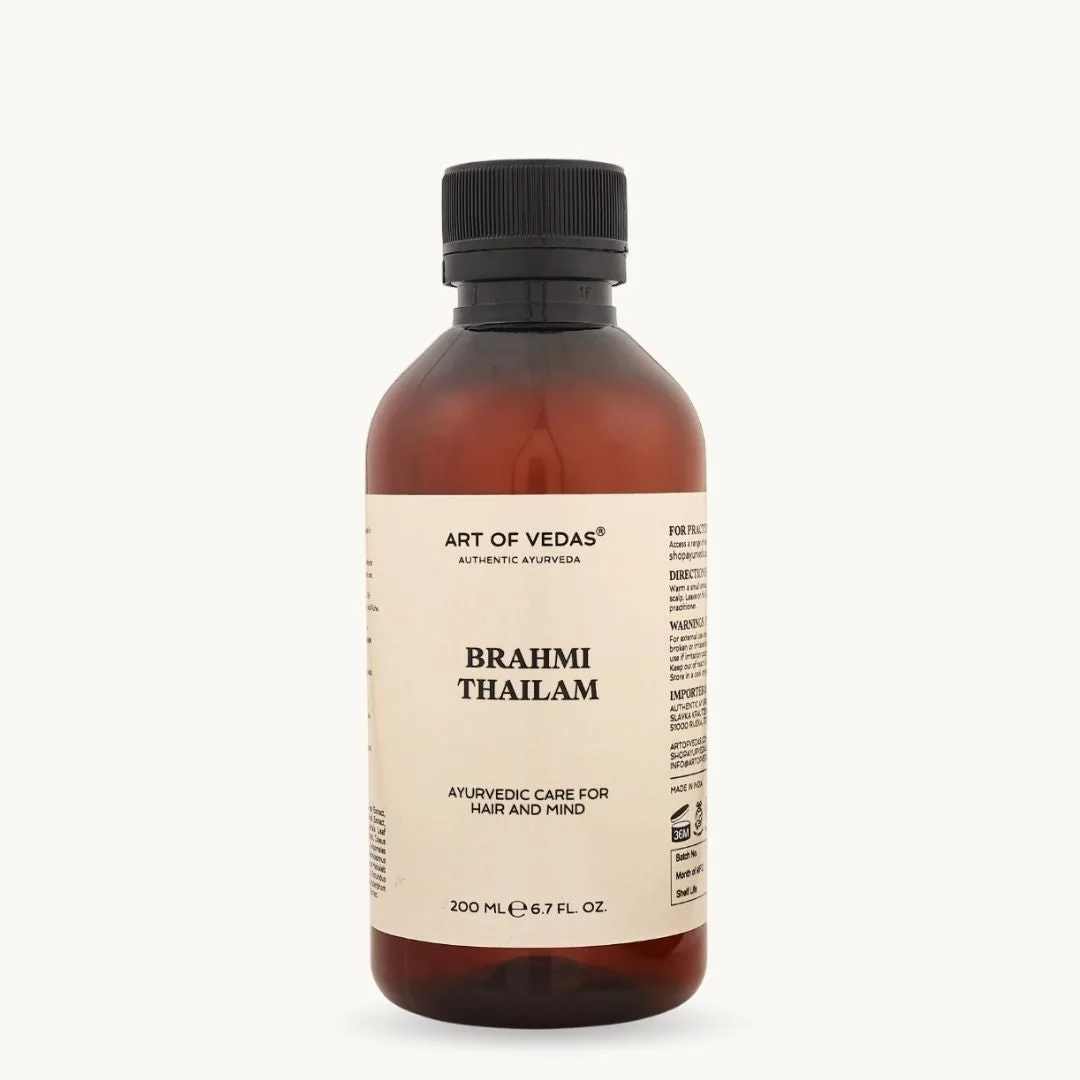
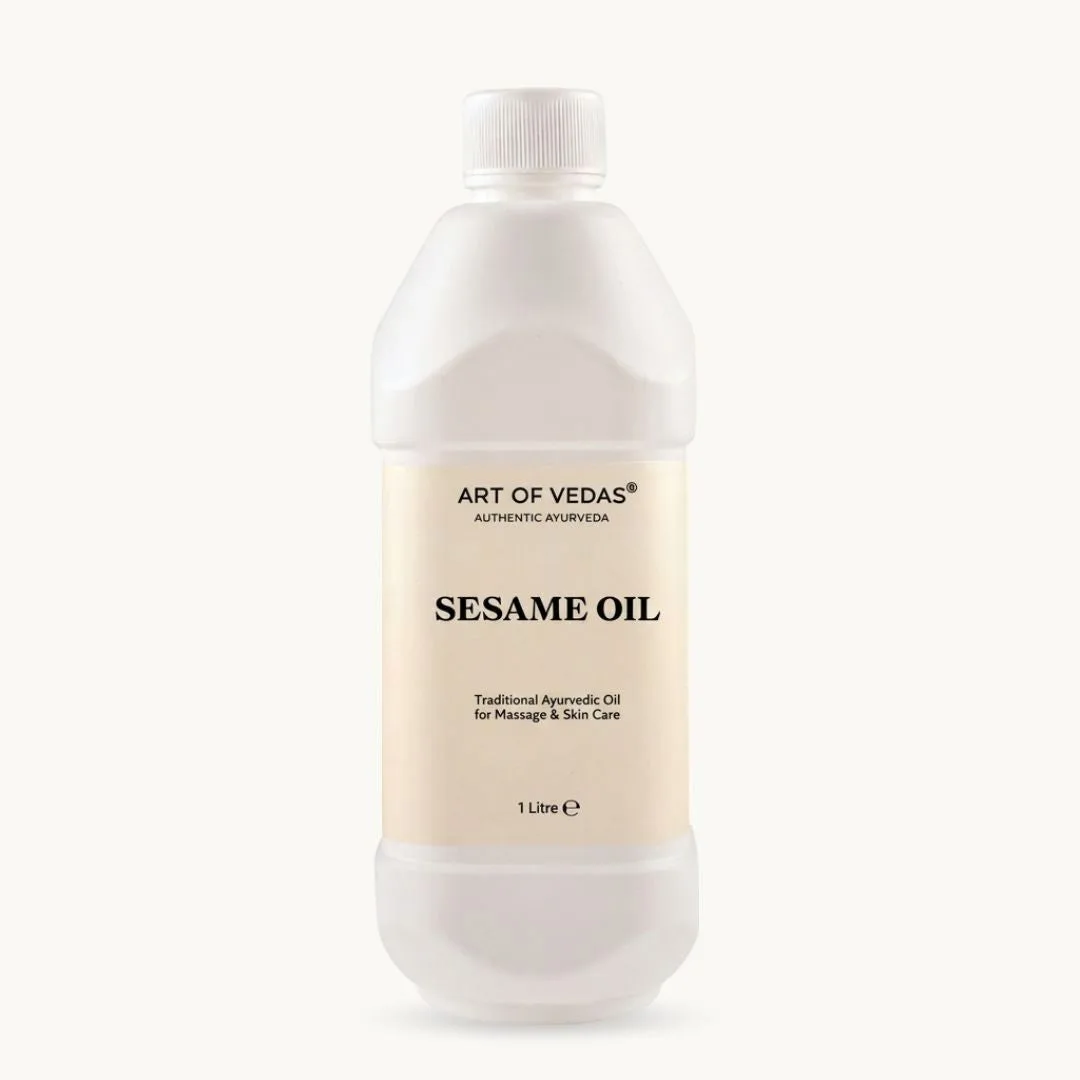
Several classical oils are used for hair in Ayurvedic practice. Neelibhringadi is specifically indicated for Pitta-type scalp conditions and premature greying. Brahmi Thailam (based on Brahmi herb in sesame or coconut oil) is more specifically targeted at the nervous system and stress-related hair loss, as Brahmi's primary action is on the nervous system and mind (Medhya). The Brahmi Thailam guide covers this alternative in detail. For general Vata-type scalp dryness and brittleness, plain sesame oil or Dhanwantharam Thailam applied to the scalp is the standard classical approach. For those with significant scalp concerns, the Kansa scalp massager guide explains how the metal tool is used in classical Shiro Abhyanga to enhance circulation and product penetration.
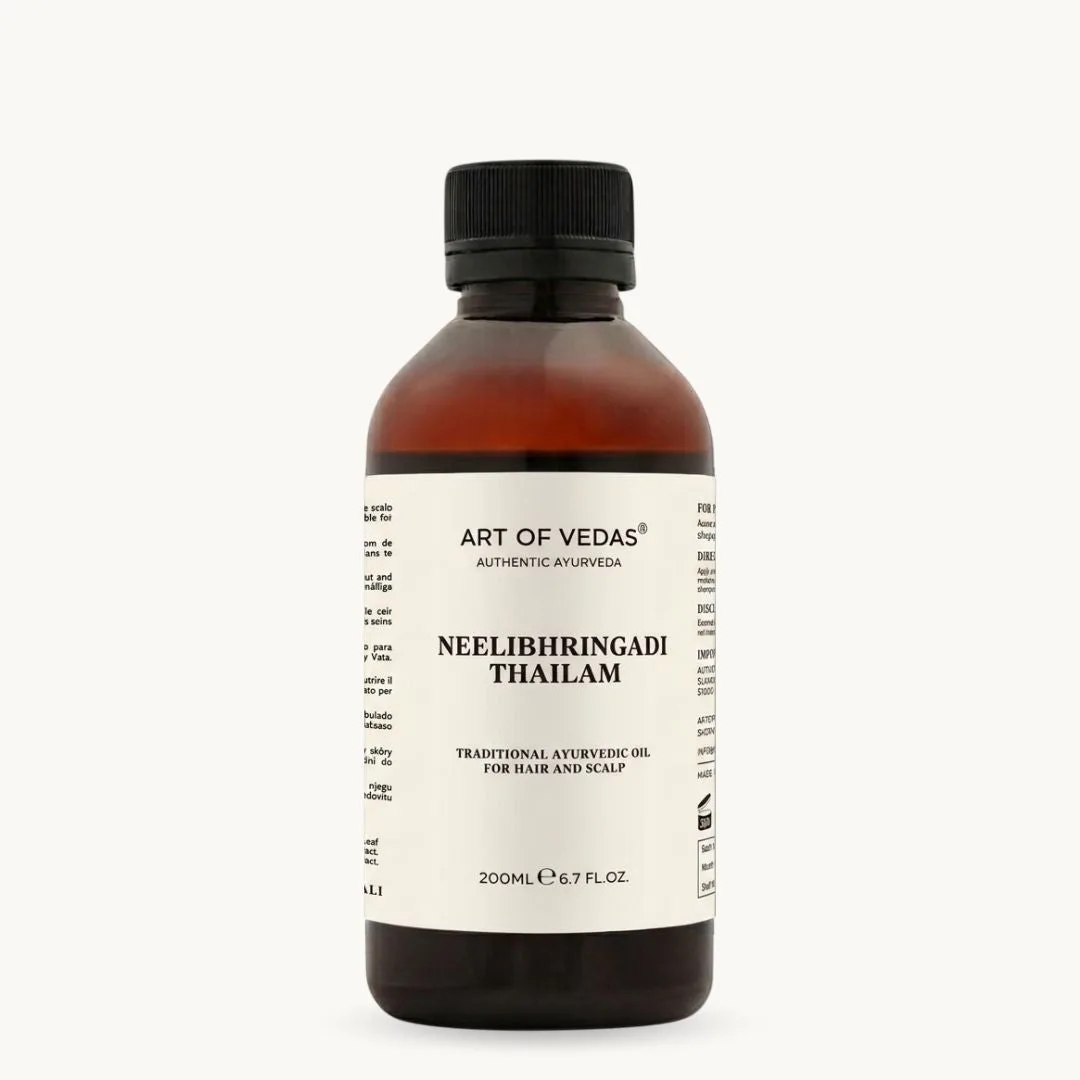
The Art of Vedas hair care collection includes Neelibhringadi Thailam and related preparations. The Neelibhringadi Thailam product page provides specific preparation details and usage guidance for the Art of Vedas preparation.
What to Realistically Expect
Ayurvedic hair care operates on a longer timeline than modern cosmetic products, which act primarily on the surface of the hair shaft. The classical approach works through the scalp tissue and hair follicle, which means changes take place over weeks and months rather than days. A consistent protocol of twice-weekly Neelibhringadi Thaiam scalp massage over six to eight weeks is typically required before noticeable change in scalp condition, hair texture, and hair fall patterns becomes apparent.
The classical texts are precise about this: Rasayana and Snehana (oiling) therapies require sustained practice. Results that are expected quickly from Ayurvedic practice are typically disappointing; results that develop over sustained practice are typically lasting. This is a fundamental difference in philosophy between classical Ayurvedic hair care and cosmetic product approaches.
Frequently Asked Questions
Can I use Neelibhringadi Thailam if I colour my hair?
Yes. The oil is applied to the scalp and root rather than the length of the hair, and it is washed out before or after colouring. There is no classical contraindication for use with hair colouring. However, it is worth noting that Indigofera tinctoria (Neeli) is itself the plant from which natural indigo hair dye is made. Long-term use of Neelibhringadi Thailam is described in classical texts as having an effect on hair pigmentation, but this is from prolonged scalp absorption over months, not from a single application.
Is it normal for hair fall to increase initially?
Brief increases in hair shedding during the first one to two weeks of consistent scalp massage can occur. The mechanical action of scalp massage loosens hairs that are already in the telogen (resting/falling) phase. This is not cause for concern and typically settles within two weeks as the massage protocol becomes established and the hair follicle environment improves. Persistent significant hair loss should always be evaluated by a medical professional.
Can Neelibhringadi Thailam be used on children?
Classical Ayurvedic texts describe Shiro Abhyanga (head oil massage) as beneficial for children and specifically include scalp oiling in the classical Kaumarabhritya (pediatric) protocols. Neelibhringadi Thailam's gentle, cooling herbs are appropriate for children. A lighter application is recommended, and the oil should be at body temperature rather than warm for young children.
What is the difference between Neelibhringadi Coconut Oil and Sesame Oil versions?
Both base oils are used in different regional classical preparations. The sesame base version follows the original Sahasrayogam preparation. The coconut base version, common in certain preparations, has a more specifically Pitta-pacifying (cooling) action due to coconut oil's cold Virya. For a warm climate or Pitta constitution with heat-related scalp conditions, the coconut base is often preferred. For a cold climate, Vata-dominant constitution, or dry scalp, the sesame base is more warming and appropriate. The Art of Vedas preparation follows the classical sesame base method.