In English, Amla is often called Indian gooseberry. The name describes the look of the fruit, round, pale green and faintly translucent, not its botany.
A different family
The European gooseberry is Ribes uva-crispa, a shrub of the Grossulariaceae. Amla is Phyllanthus emblica, a tree now placed in the Phyllanthaceae; older works put it among the Euphorbiaceae. The two share a common name and nothing more.
Two botanical names
Many labels still print Emblica officinalis, an older name for the same species. Phyllanthus emblica is the name in current use, and both point to one plant, which the names guide pairs with its Sanskrit synonyms.
A tree, not a bush
Phyllanthus emblica is a small to medium deciduous tree with fine, feathery foliage. The fruit sits close along the branches, and it is the fruit that the tradition uses, as the fruit guide describes.
On the label
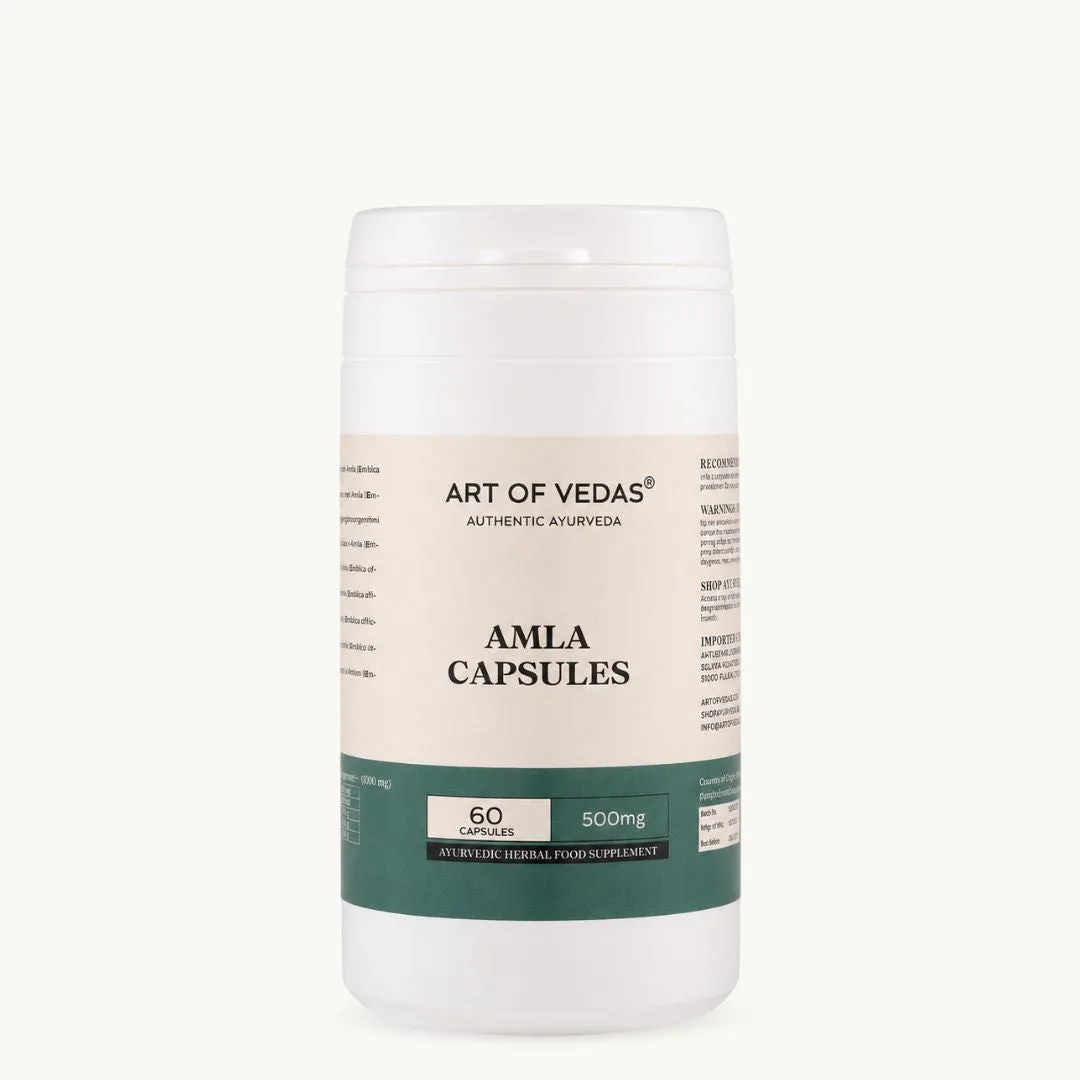
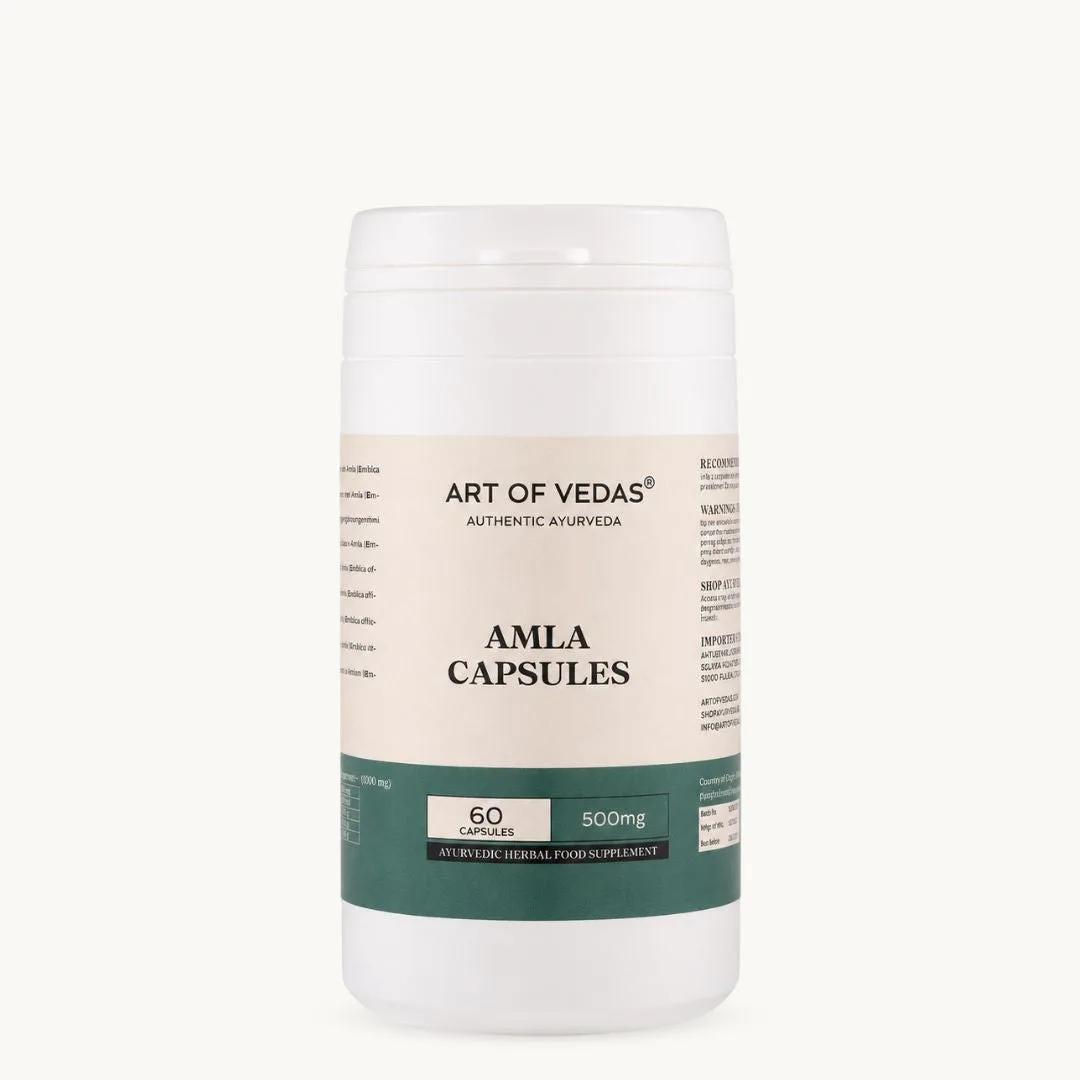
Amla Capsules are a single-herb preparation of Amalaki, identified by its botanical name.
Frequently Asked Questions
Is Amla a gooseberry?
Not botanically. Indian gooseberry is a common name; the plant is Phyllanthus emblica.
Is Emblica officinalis a different plant?
No. It is an older botanical name for the same species.
Which family does Amla belong to?
The Phyllanthaceae, in current classifications.
This article is for educational purposes and describes the classical Ayurvedic record. The products mentioned are food supplements, not a substitute for a varied, balanced diet, and are not intended to diagnose, treat, cure or prevent any disease. Take them under the guidance of a qualified Ayurvedic practitioner.