In brief: Prabhanjanam Thailam (also written Prabhanjanam oil, Prabhanjana Thailam or, by its full classical name, Prabhanjana Vimardanam Thailam) is a classical Ayurvedic massage oil: Bala, Ashwagandha, Shatavari, five of the Dashamoola roots, Devadaru and warming spices such as ginger, cardamom and galangal are cooked into a sesame oil base with castor oil. Its name recalls the Sanskrit word for a strong wind, and the tradition places it with Vata. Art of Vedas offers it in two forms, the liquid Thailam and the thicker, semi-solid Prabhanjanam Kuzhambu. This guide covers what it is, what each form declares, how to choose between them, and how to warm and apply each.
What Is Prabhanjanam?
In classical vocabulary, Prabhanjana names the storm wind, and in Ayurveda the wind is Vata: the principle of movement, cold and dryness. A formula that carries this name announces its intent, and Prabhanjanam has long been prepared for the comfort routines of the Vata register, the season of wind and the constitution that feels it most. Like the other great preparations of the tradition, it is made by the slow classical method, in which base fats are processed with herbal decoction and paste over many patient hours.
The Formula
Prabhanjanam is built on a sesame oil foundation and prepared with warming classical botanicals of the Vata repertoire, following the recipe recorded in the classical compendia. As with all our preparations, the complete composition appears on the product pages of the Prabhanjanam Thailam and the Prabhanjanam Kuzhambu, and we encourage readers to consult the listed ingredients rather than rely on summaries.
Thailam or Kuzhambu: Choosing Your Format
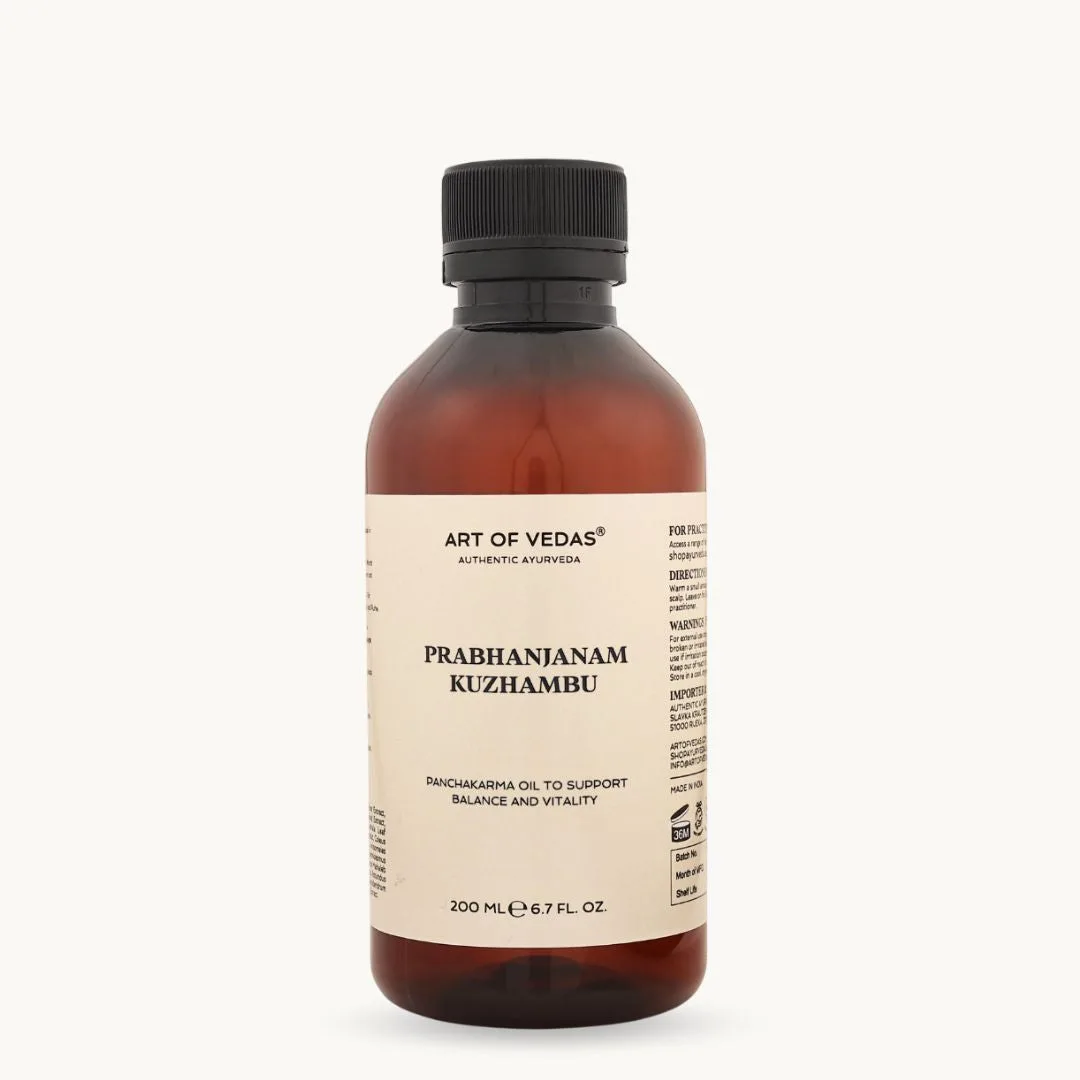
The Thailam is a liquid oil. It spreads readily, suits long strokes and serves larger areas or a fuller Abhyanga. The Kuzhambu is a different object altogether: a semi-solid preparation on a three-fat base, soft under warm fingers yet firm enough to stay precisely where it is placed. It is not an oil, and it does not behave like one; applied to a chosen area, it remains there and absorbs slowly, which makes it the format of choice for targeted, local application. A useful rule from the tradition: reach for the Thailam when the routine covers, and for the Kuzhambu when the routine concentrates. Our full guide to Prabhanjanam Kuzhambu treats the semi-solid form in detail.
The Traditional Place in the Routine
Prabhanjanam belongs to the Vata season and the Vata constitution: the cold, dry, windy months of the European year, and the routines that answer them with warmth and regularity.
- Traditionally chosen for Vata-season comfort routines
- Warming character suited to autumn and winter
- Two formats, liquid and semi-solid, matched to coverage or concentration
- Fits the evening wind-down as naturally as the morning routine
- A classical formula with a recorded lineage
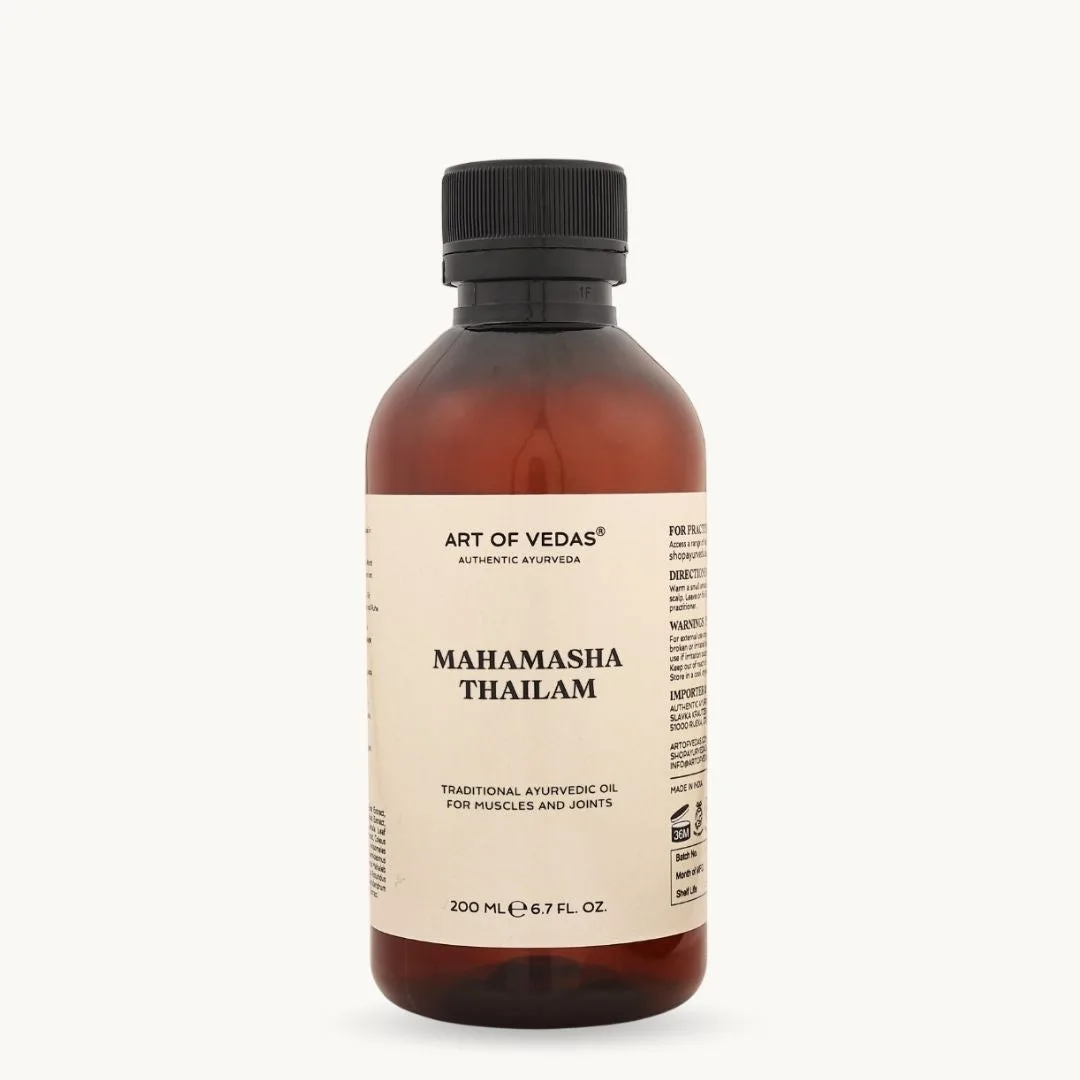
Those comparing the Vata classics will want to read our complete guide to Mahamasha Thailam, the black gram oil of the same season, and our overview of the best classical oils for Vata places Prabhanjanam among its peers.
Frequently asked questions about Prabhanjanam Thailam
What is Prabhanjanam Thailam? A classical Ayurvedic massage oil in which Bala, Ashwagandha, Shatavari, five of the Dashamoola roots, Devadaru and warming spices such as ginger, cardamom and galangal are cooked into a sesame oil base with castor oil. The tradition places it with Vata. It is also written Prabhanjanam oil or Prabhanjana Thailam, and its full classical name is Prabhanjana Vimardanam Thailam.
What does Prabhanjanam mean? Prabhanjana is Sanskrit for a strong or storm-like wind. In Ayurveda the wind is Vata, the principle of movement, cold and dryness, so the name announces where the tradition places the oil. The full name, Prabhanjana Vimardanam, adds Vimardana, rubbing: an oil to be rubbed in. There is no single English word for it; Prabhanjanam oil is the usual English form.
What is Prabhanjanam Thailam used for? For Abhyanga, the Ayurvedic oil massage, applied warm along the limbs and back or worked into the muscles and joints of one area. The tradition reserves it for the cold, windy and dry months, the season of Vata. Art of Vedas sells Prabhanjanam Thailam as an oil for external use; ask a qualified Ayurvedic practitioner whether it suits your constitution.
How do you use Prabhanjanam Thailam? Stand the closed bottle in a bowl of warm water until a drop feels pleasantly warm on the inner wrist, then apply it generously with long strokes along the limbs and circular strokes around the joints. Leave it on the skin for 15 to 20 minutes, then take a warm shower. Daily in autumn and winter, or two to three times a week. Do not use a microwave.
What is Prabhanjanam Kuzhambu, and how does it differ from the Thailam? Consistency, not formula. Prabhanjanam Kuzhambu is the same recipe cooked down further until it sets semi-solid at room temperature, so it stays where it is placed, absorbs slowly and is used in small amounts on one area. Prabhanjanam Thailam is the free-flowing oil for Abhyanga over the whole body or a larger region. Art of Vedas offers both forms in 200 ml.
How do you use Prabhanjanam Kuzhambu? Stand the closed jar in warm water until the Kuzhambu softens, take a small amount, about a teaspoon for one area, and work it in with slow, firm strokes. Leave it for 20 to 30 minutes, keep the area warm, then wipe off the excess and wash with warm water. Scoop with dry fingers or a dry spoon, and keep the jar closed between uses.
What is in Prabhanjanam Thailam? The Art of Vedas oil declares sesame seed oil and castor seed oil as its base, with Bala, Shatavari, moringa leaf, Varuna bark, Arka root, Karanja seed, Sahachara leaf, Ashwagandha, Prasarini, the Dashamoola roots Bilva, Agnimantha, Shyonaka, Gambhari and Patala, Devadaru, Chitraka, chir pine and cardamom, ginger, mustard, dill, galangal and fennel. The full list is on the product page; sizes are 200 ml, 1 litre and 5 litre.
Can Prabhanjanam Thailam be used in pregnancy or for children? Ask your doctor or a qualified Ayurvedic practitioner first. Prabhanjanam Thailam and Prabhanjanam Kuzhambu are for external use only and belong to the warmer classical oils. Do a small skin test on the inner forearm before the first full application, keep them away from the eyes and broken skin, and choose a milder oil if the skin reddens or feels uncomfortably hot.