This product is a food supplement and not intended to diagnose, treat, cure or prevent any disease. For persistent health concerns, please consult a qualified healthcare professional.
What Is Shatavari?
Shatavari (Asparagus racemosus) is one of the most important Rasayana herbs in the classical Ayurvedic tradition. The name itself carries meaning: "she who possesses a hundred husbands" - a classical reference to its traditional role in supporting female vitality, reproductive strength and hormonal balance throughout every stage of a woman's life. The Charaka Samhita classifies Shatavari among the Balya and Vayasthapana herbs, placing it at the centre of Ayurvedic care for women.
In European Ayurvedic practice, Shatavari has become one of the most frequently recommended herbs for women seeking a natural, tradition-backed approach to hormonal health and general vitality. At Art of Vedas, we consider Shatavari an essential component of any classical Ayurvedic wellness routine for women - and increasingly for men, given its broader Rasayana properties.
Classical Pharmacology: Rasa, Virya, Vipaka
The Ayurvedic pharmacological profile of Shatavari is documented consistently across classical texts including the Charaka Samhita, Ashtanga Hridayam and Dhanvantari Nighantu:
-
Rasa (Taste): Madhura (Sweet) and Tikta (Bitter)
-
Virya (Potency): Sheeta (Cooling)
-
Vipaka (Post-digestive effect): Madhura (Sweet)
-
Guna (Qualities): Guru (Heavy), Snigdha (Unctuous)
-
Prabhava (Special action): Stanyajanana (promotes lactation), Vrishya
This pharmacological profile makes Shatavari predominantly Vata-pacifying and Pitta-pacifying. The sweet taste and cooling energy nourish depleted tissues, while the heavy and unctuous qualities ground Vata's inherent lightness and dryness. The Ashtanga Hridayam (Sutrasthana Ch.15) specifically lists Shatavari among the herbs that balance Pitta without aggravating Kapha excessively, though individuals with strong Kapha dominance and Ama (metabolic toxins) should use it with guidance.
Traditional Uses in Women's Health
The classical texts describe Shatavari's role in women's health with remarkable specificity. The Charaka Samhita (Chikitsasthana Ch.30) discusses Shatavari in the context of reproductive health, while the Kashyapa Samhita - the ancient Ayurvedic text devoted to women's and children's health - refers to it extensively.
Hormonal Balance and Menstrual Wellbeing
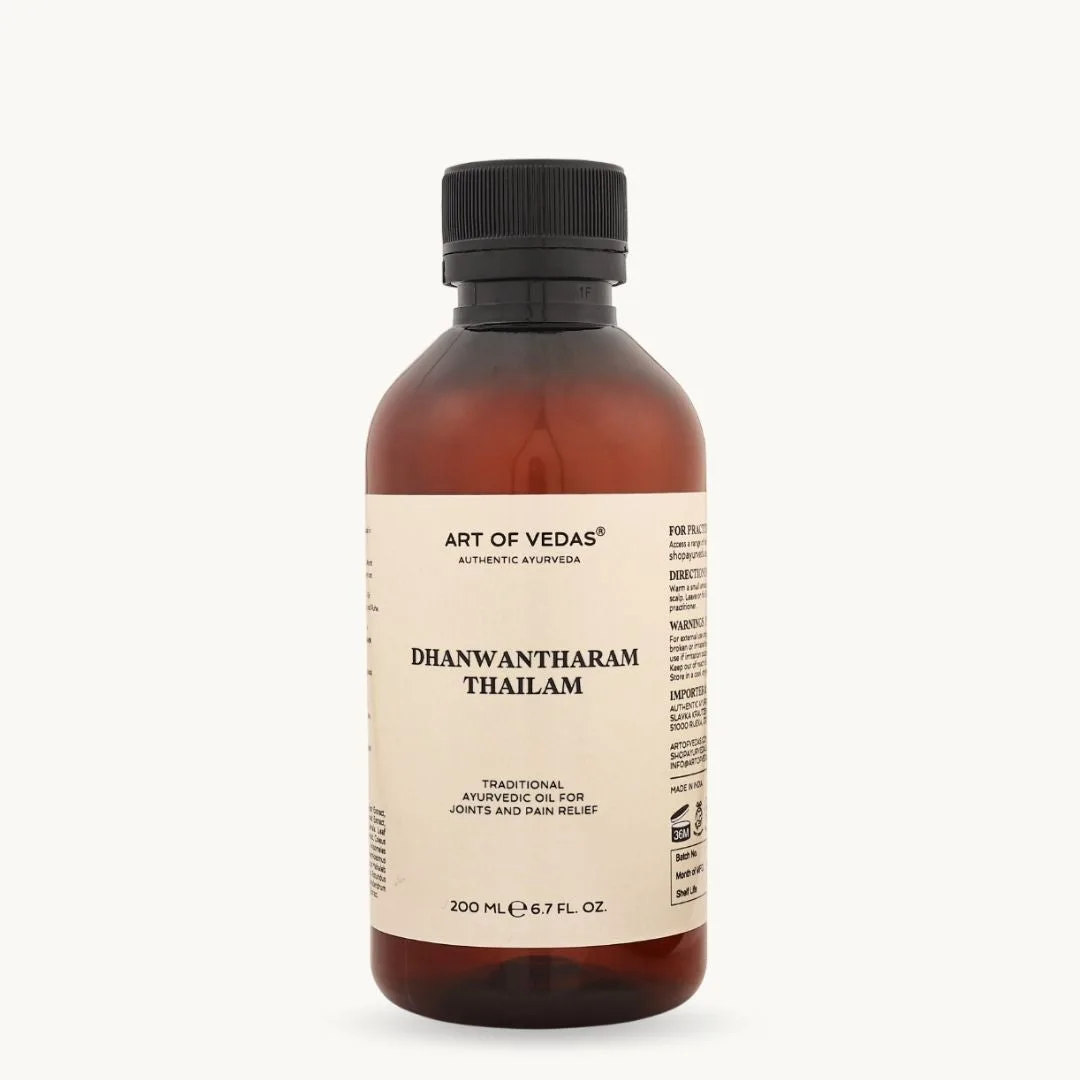
In Ayurveda, the menstrual cycle is governed primarily by Vata (which controls downward movement) and Pitta (which governs the blood and transformation). Shatavari's cooling, nourishing qualities are traditionally used to support both Doshas during the cycle. Practitioners in the Art of Vedas network frequently recommend Shatavari alongside warming oils like Dhanwantharam Thailam for external Abhyanga during the premenstrual phase, creating a classical inside-outside approach to menstrual comfort.
Fertility and Reproductive Vitality
The Charaka Samhita places Shatavari in the Shukrala category - herbs that nourish the deepest tissue layer (Shukra Dhatu), which governs reproductive capacity in both men and women. The classical preparation Shatavari Ghritham (medicated ghee) is specifically described for women preparing for conception. The nourishing, building qualities of this herb support the uterine lining and overall reproductive tissue health according to classical Ayurvedic understanding.
Pregnancy and Postnatal Support
The Garbhini Paricharya (pregnancy care protocol) described in the Ashtanga Hridayam includes Shatavari-based preparations in the monthly regimens. Postnatally, Shatavari is traditionally combined with Dhanwantharam Thailam (externally) and milk-based decoctions (internally) to support recovery, lactation and tissue rebuilding. For a deeper understanding of classical postnatal care, see our guide to Ayurvedic pregnancy and postnatal practices.
Perimenopause and Menopause
As oestrogen levels decline naturally with age, Vata and Pitta often increase. Shatavari's cooling, nourishing Rasayana action is traditionally used during this transition to support the body's adaptation. Classical practitioners describe it as a Vayasthapana herb - one that supports graceful ageing - making it particularly relevant during the perimenopausal years.
Shatavari as a Rasayana: Beyond Women's Health
While Shatavari is most strongly associated with women, it is classified in the texts as a universal Rasayana. The Charaka Samhita (Chikitsasthana, Rasayana Adhyaya) includes it among the herbs that promote longevity, immunity and tissue quality regardless of gender.
The broader Rasayana properties include support for Ojas (the subtle essence of vitality and immunity), nourishment of all seven Dhatus (tissue layers), digestive support through its demulcent action on the gut lining, and respiratory membrane support. For more on the classical Rasayana tradition and how it differs from modern anti-aging, read our complete guide to Rasayana in Ayurveda.
How to Take Shatavari: Classical Preparations
Shatavari Churna (Powder)
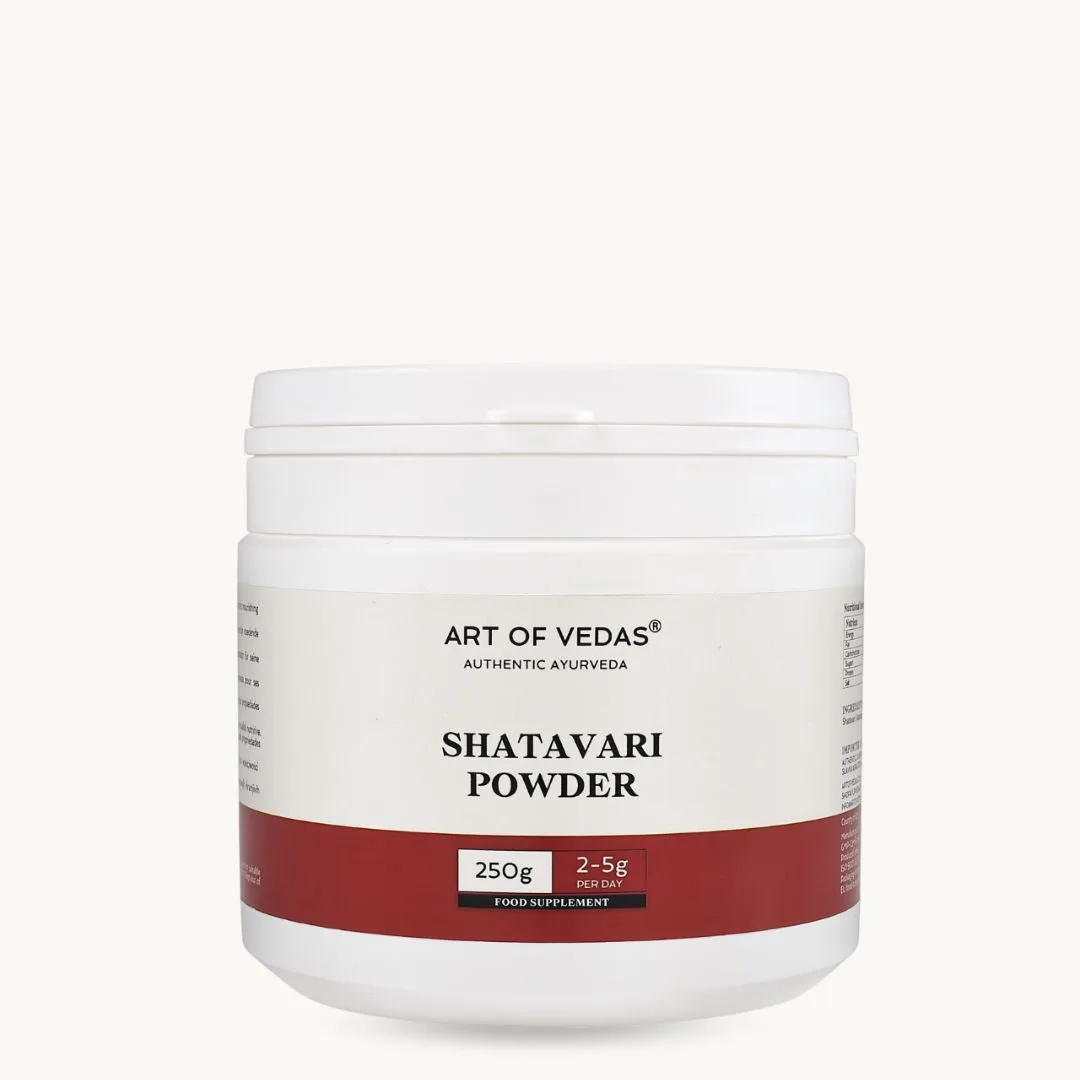
The simplest and most traditional form. Classical texts recommend 3-6 grams of Shatavari Churna with warm water and a small amount of ghee, taken once or twice daily. The milk acts as an Anupana (vehicle) that enhances Shatavari's nourishing properties and improves absorption. For those who cannot take milk, warm water with honey is an acceptable alternative, though the classical preference is clear.
Shatavari Capsules
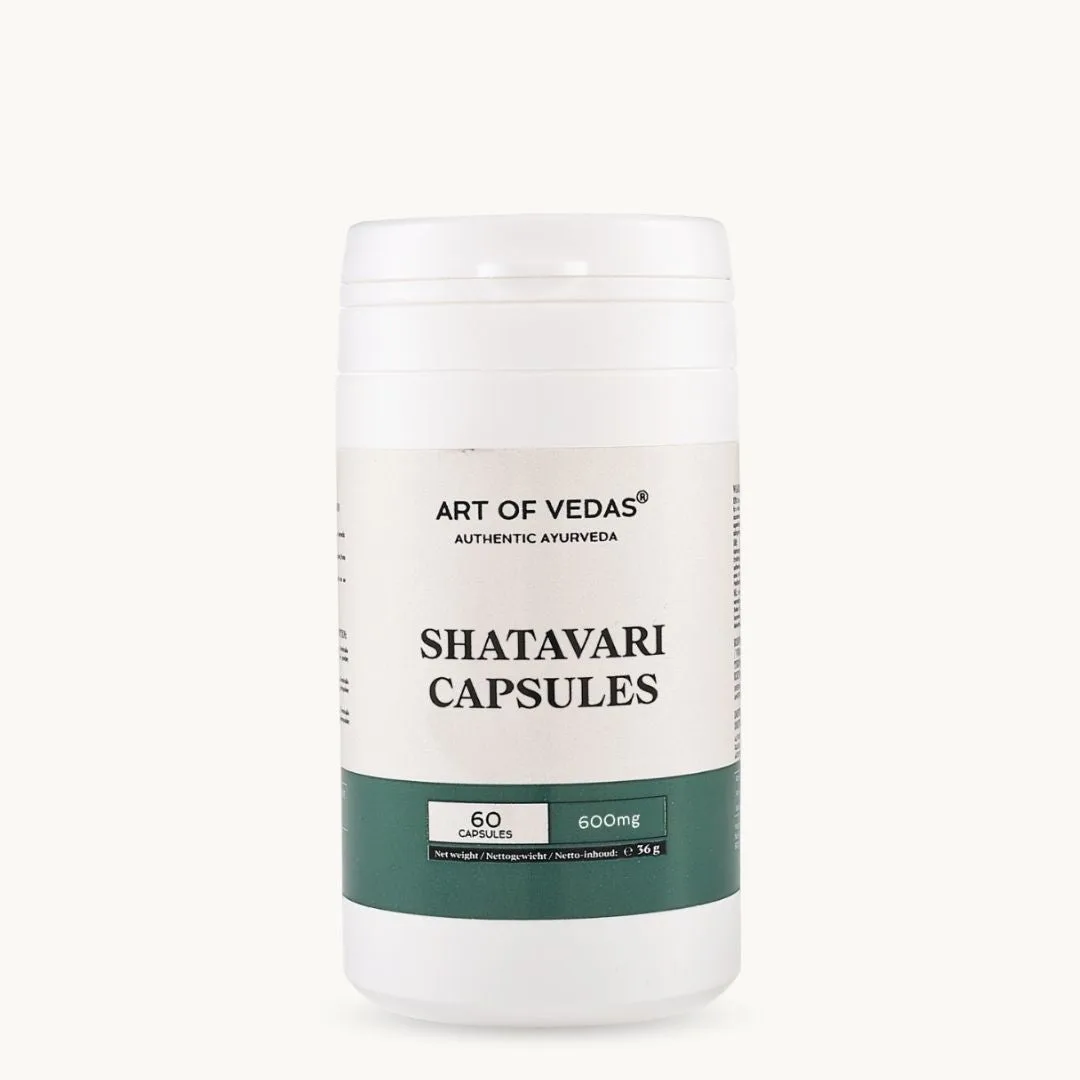
For convenience and precise dosing, Shatavari capsules offer the same herb in a standardised form. Art of Vedas supplements follow classical preparation standards. Take with warm water or milk. The typical recommendation is 1-2 capsules twice daily, though individual dosage should ideally be confirmed with a qualified Ayurvedic practitioner.
Shatavari Ghritham (Medicated Ghee)
The most potent classical preparation. Shatavari processed into ghee following the Sneha Paka Vidhi method described in the Charaka Samhita. This lipid-based preparation enhances bioavailability and is traditionally preferred for reproductive health applications. The ghritham preparations from Art of Vedas follow this traditional methodology.
Shatavari Kalpa (Milk Preparation)
A classical home preparation: Shatavari powder cooked slowly into milk with sugar or jaggery. This is particularly mentioned in the Kashyapa Samhita for postnatal women and nursing mothers.
Who Should Be Cautious
Shatavari is considered one of the safest herbs in the Ayurvedic pharmacopoeia, but classical texts do note specific situations where caution is warranted. Individuals with significant Kapha aggravation or Ama (indicated by a thick white coating on the tongue, sluggish digestion, heaviness after meals) should address the Ama first before beginning Shatavari supplementation. Additionally, those with a known history of oestrogen-sensitive conditions should consult their healthcare provider before use.
The classical principle applies: the right herb for the right person at the right time. A Dosha assessment is always a sensible starting point before introducing any new herb into your routine.
Shatavari Compared to Other Adaptogens
In the Western wellness world, Shatavari is often grouped with "adaptogenic" herbs alongside Ashwagandha and Brahmi. While this comparison has some validity, the Ayurvedic understanding is more nuanced. Ashwagandha is warming (Ushna Virya) and primarily Vata-Kapha pacifying - it is the classical male Rasayana. Shatavari is cooling (Sheeta Virya) and primarily Vata-Pitta pacifying - it is the classical female Rasayana. Brahmi is cooling and primarily targets the mind (Medhya Rasayana). These three herbs are complementary rather than interchangeable.
In clinical practice, Ayurvedic doctors often combine Shatavari with Ashwagandha for comprehensive Rasayana support - the warming and cooling energies balance each other, and the tissue-nourishing effects are amplified. Chyavanprash, the classical Rasayana jam, includes both herbs in its 40+ ingredient formula.
Quality Markers: What to Look For
Not all Shatavari products are equal. The classical texts describe specific quality parameters for the raw herb: the root tubers should be fresh, plump, and white internally. Dried Shatavari powder should have a naturally sweet taste and mild aroma. At Art of Vedas, all Shatavari preparations are carefully selected, processed according to classical preparation methods and tested for purity.
For a broader guide to identifying genuine Ayurvedic products, see our article on how to identify authentic Ayurvedic products.
Frequently Asked Questions
Can men take Shatavari?
Yes. While Shatavari is most closely associated with women's health in the classical texts, the Charaka Samhita classifies it as a universal Rasayana and Vrishya for both genders. Male practitioners commonly recommend it for digestive comfort, immune support and as part of broader Rasayana protocols alongside Ashwagandha.
How long does it take for Shatavari to show results?
Ayurveda takes a tissue-level approach. Since Shatavari works through deep tissue nourishment (Dhatu Poshana), classical practitioners advise a minimum of 4-6 weeks of consistent use before evaluating results. Some effects such as improved digestion may be noticed sooner, while deeper hormonal and reproductive benefits typically develop over 2-3 months of regular use.
Can I take Shatavari during pregnancy?
Shatavari is traditionally included in pregnancy care protocols described in the Ashtanga Hridayam. However, any supplementation during pregnancy should be undertaken only with guidance from both your healthcare provider and a qualified Ayurvedic practitioner. Self-prescribing during pregnancy is not recommended in any medical tradition.
What is the difference between Shatavari powder and capsules?
The herb itself is identical. Powder allows you to mix it with warm water and ghee in the classical manner, which enhances absorption and adds the nourishing qualities of the vehicle. Capsules offer convenience and consistent dosing. Classical practitioners tend to prefer the powder-with-milk preparation for therapeutic purposes and consider capsules acceptable for general daily Rasayana maintenance.
Does Shatavari interfere with hormonal birth control or HRT?
There is no classical Ayurvedic data on this interaction, as these medications did not exist when the texts were written. From a precautionary standpoint, consult your prescribing doctor before combining Shatavari with hormonal medications. An Ayurvedic practitioner can also advise on appropriate timing and dosage to minimise any theoretical interaction.