Shatavari’s name points underground, and so does its use. The part the tradition calls Shatavari is the root.
Tuberous roots
The plant forms a cluster of fleshy, finger-like roots. These are dug, cleaned and dried, and the dried roots are ground into a pale powder.
Root, not shoot
The shoots, stems and leaves are not what a formula means by Shatavari, just as the botany guide notes that the garden vegetable is used for quite a different part.
Why the label matters
A label that names the species without the part has described half the ingredient, as the label guide sets out.
On the label
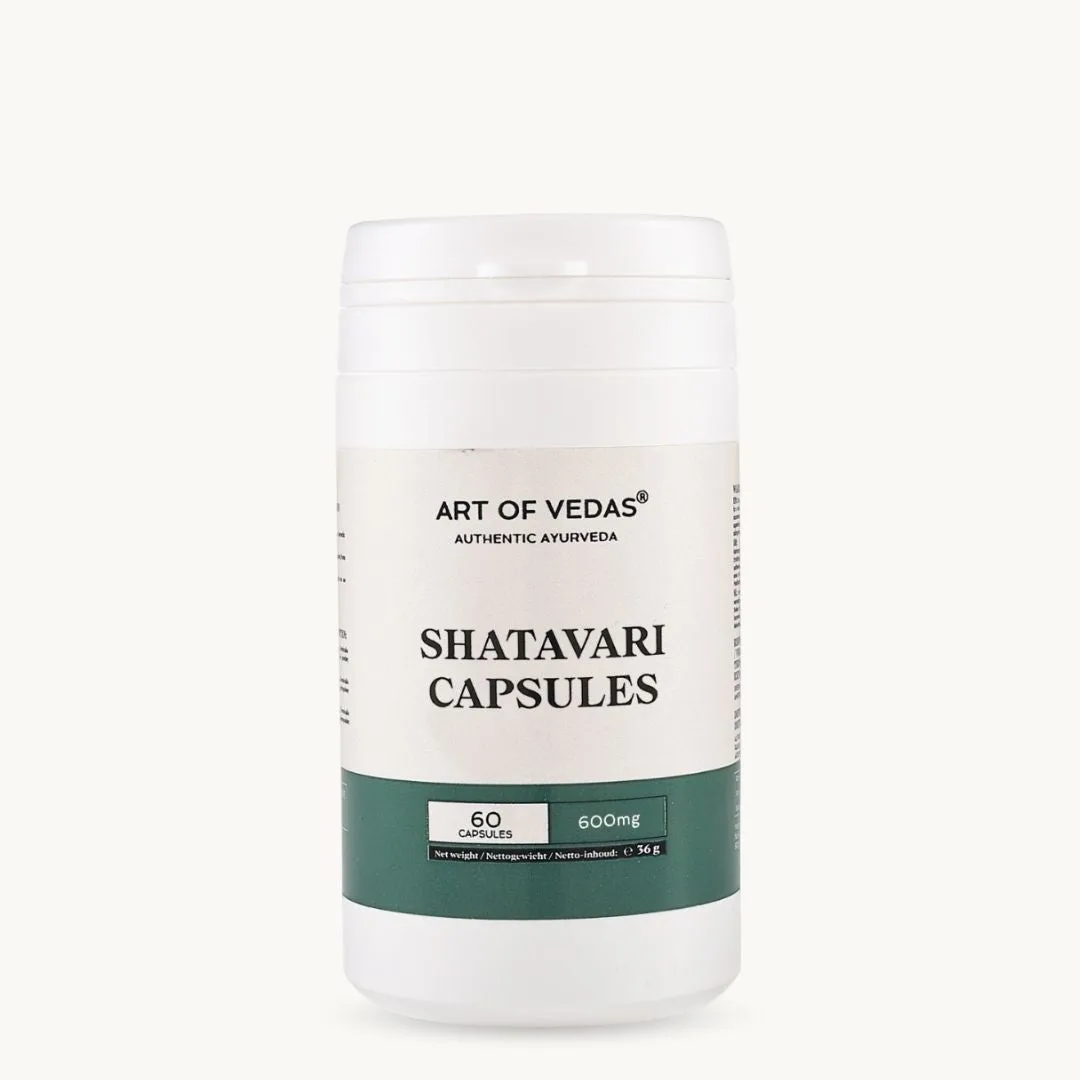
Shatavari Capsules contain Asparagus racemosus root powder in a vegan capsule.
Frequently Asked Questions
Which part of Shatavari is used?
The tuberous root.
How is it prepared?
The roots are cleaned, dried and ground into a powder.
What should the label say?
Asparagus racemosus, root.
This article is for educational purposes and describes the classical Ayurvedic record. The products mentioned are food supplements, not a substitute for a varied, balanced diet, and are not intended to diagnose, treat, cure or prevent any disease. Take them under the guidance of a qualified Ayurvedic practitioner.