In brief: Dhurdhurapatradi Thailam (also written Dhurdhurapatradi Keram, Dhurdhurapatradi Kera Thailam, Dhurdhurapatradi Taila or Dhurdhurapatradi oil) is a classical Ayurvedic oil for the scalp, named after Dhurdhura patra, the leaf of the Datura plant, which leads its recipe. It is cooked into coconut oil, hence the name Keram, and the classical texts place it among the oils applied to the head. This guide explains the name, the classical description, how a scalp oil of this kind is used, why Datura calls for care, and which Art of Vedas oil comes closest.
What Dhurdhurapatradi Thailam is and what the name means
Dhurdhurapatradi is a compound of three parts. Dhurdhura is the Sanskrit name of the Datura plant, patra means leaf, and the ending adi means "and the others": the oil of Datura leaf and the plants that follow it. The leaf juice is the part of the plant the recipe works with.
Dhurdhurapatradi Thailam, Dhurdhurapatradi Taila, Dhurdhurapatradi Thailam and Dhurdhurapatradi oil all name the same preparation. Dhurdhurapatradi Keram and Dhurdhurapatradi Kera Thailam are the more precise names, because the oil is cooked into coconut oil (kera) rather than sesame oil; a bottle labelled Thailam is almost always the coconut preparation.
The classical description
The oil is usually cited from the Sahasrayogam. The classical recipe names Datura leaf, whose juice is cooked into coconut oil, among other ingredients; no full list and no herb count is given here. The method is the usual one for a medicated oil, Sneha Paka: leaf juice and oil are heated slowly together until the water has gone. Our complete guide to traditional Thailams explains it.
Datura belongs to the group the classical texts call Upavisha, plants of strong action used only after proper processing and only where the texts place them. That is why Dhurdhurapatradi oil is a scalp oil and nothing else: applied to the head, in small amounts, never on the body, near the eyes or on broken skin.
Character in Ayurvedic terms
The classical texts describe Datura as warming and sharp and place it with Kapha and Vata. The oil takes its character from the leaf rather than from the base: coconut oil is by itself cooling and light, and here it is the carrier that keeps the strong leaf within bounds. It is therefore one of the sharper scalp oils, not a soothing daily hair oil.
How a scalp oil of this kind is used in practice
Dhurdhurapatradi oil belongs to Shiroabhyanga, the oiling of the head, but it is handled differently from a daily hair oil: it goes on the scalp, not along the hair, and in a small amount. Part the hair in sections, apply the oil with the fingertips to the scalp without working it towards the forehead or the eyes, leave it on for the time a practitioner sets, then wash the hair with warm water and a mild cleanser, and wash the hands.
Coconut oil sets below about 24 degrees; if the bottle has turned solid, stand it closed in a bowl of warm water until a drop feels pleasantly warm on the inner wrist, never in a microwave. The rhythm is a few applications a week rather than a daily routine, and the practitioner sets it. Our Abhyanga guide describes the gentler daily head oiling this oil does not replace.
Who should ask first
Because the recipe is led by Datura leaf, Dhurdhurapatradi Thailam is an oil to use on the advice of a qualified Ayurvedic practitioner, for external use only and for the scalp only. Do a small skin test behind the ear or on the inner forearm before the first application, keep the oil away from the eyes, the mouth and broken skin, and store it out of the reach of children. If you are pregnant, or wish to use any oil on a child, ask your doctor or a qualified Ayurvedic practitioner first. Anyone who reacts to coconut should not use it.
Dhurdhurapatradi Thailam and the Art of Vedas range
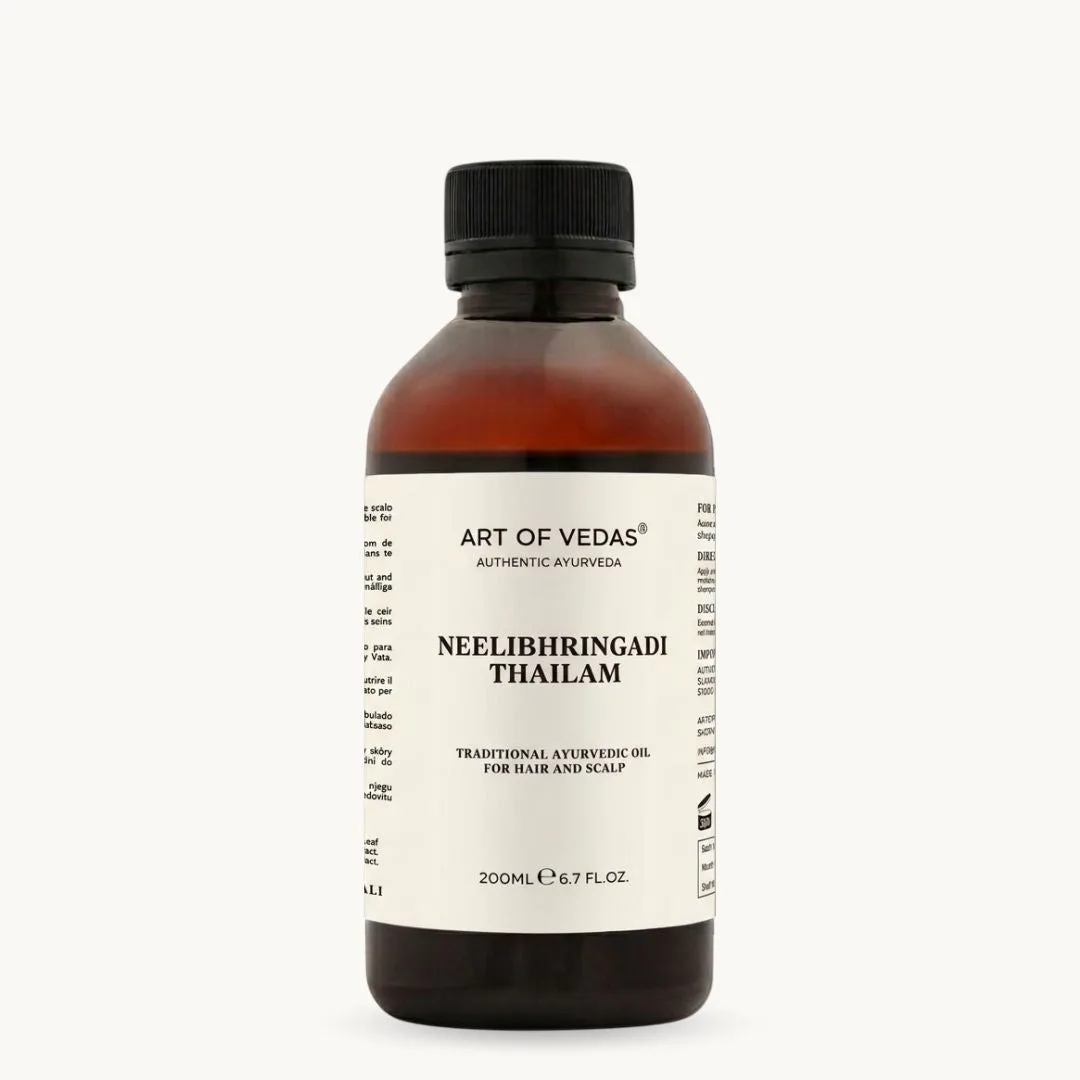
Art of Vedas does not currently offer Dhurdhurapatradi Thailam or Dhurdhurapatradi Keram. The closest oil in our range is Neelibhringadi Thailam, the classical hair oil led by Neeli and Bhringaraj, used for the regular oiling of scalp and hair rather than for a short, targeted application. For the oils we do carry, see our comparison of Ayurvedic massage oils.