A weekly Kansa hair and scalp ritual is one unhurried session in which warm oil is applied along the partings of the scalp and then worked in with a bell-metal tool rather than with the fingertips alone. Fifteen to twenty minutes, once a week, is the rhythm most people settle into, usually on the evening before a wash day.
Kansa is a bell-metal bronze, traditionally cast from copper and tin, shaped here into a comb, a domed massager or a small wand. It is a grooming tool rather than a preparation: it contributes weight, an even glide and a cool surface that keeps pressure consistent, while the oil does the conditioning.
Why use a Kansa tool on the scalp
Oiling the head is among the oldest habits recorded in the Ayurvedic daily routine, where it appears under the name Shiro Abhyanga. Done with the hands alone it is easy to lose rhythm: the fingers tire and the crown receives most of the attention. A bell-metal tool changes that, because the comb teeth or the domed head carry the pressure for you, so the same slow stroke can be repeated from hairline to nape without the hands cramping. The alloy also feels cool against a warm, oiled scalp.
Choosing the tool
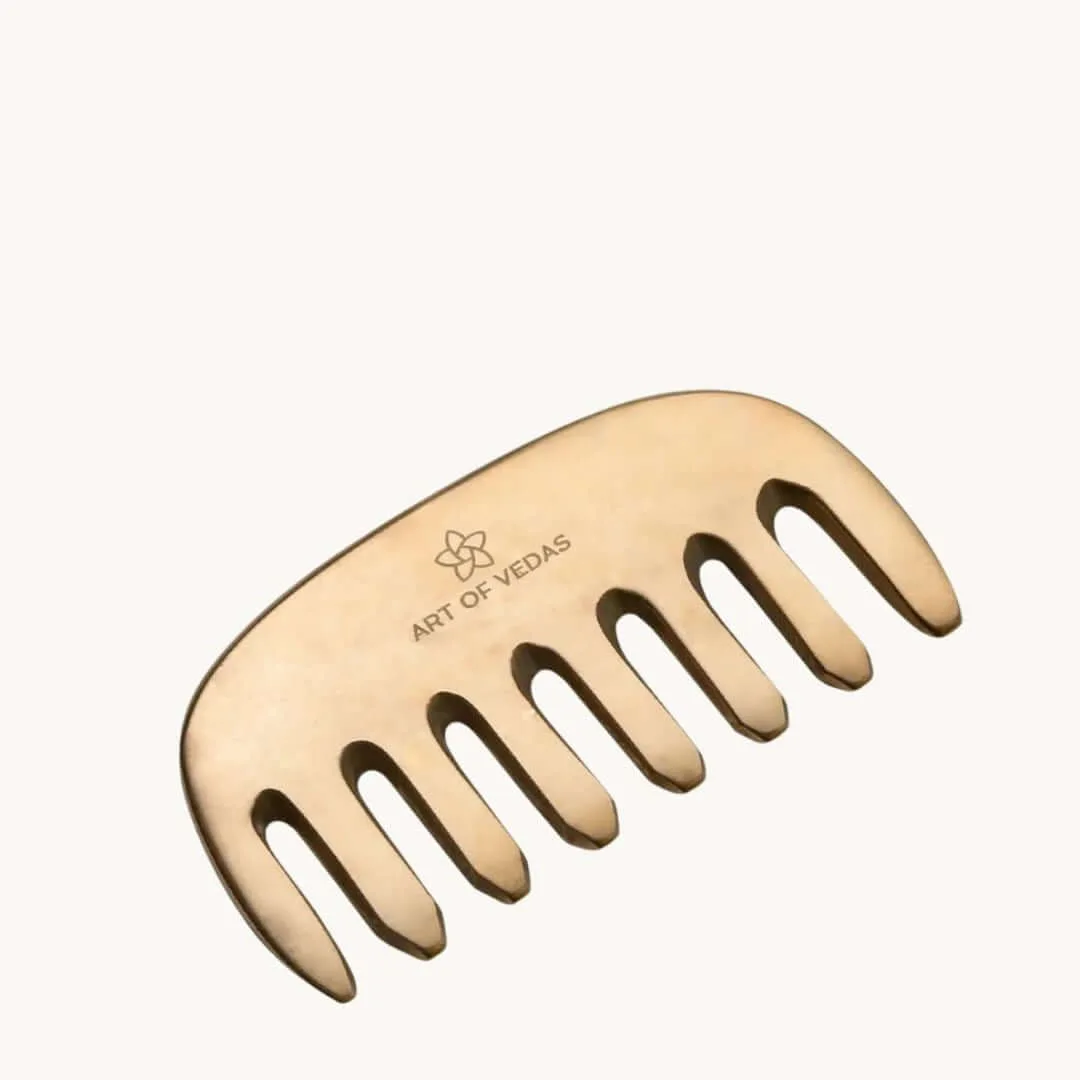
- Kansa comb. Long bell-metal teeth that travel along the partings and down the length of the hair. The most practical choice for a full scalp session, particularly on longer hair. See the Kansa comb.
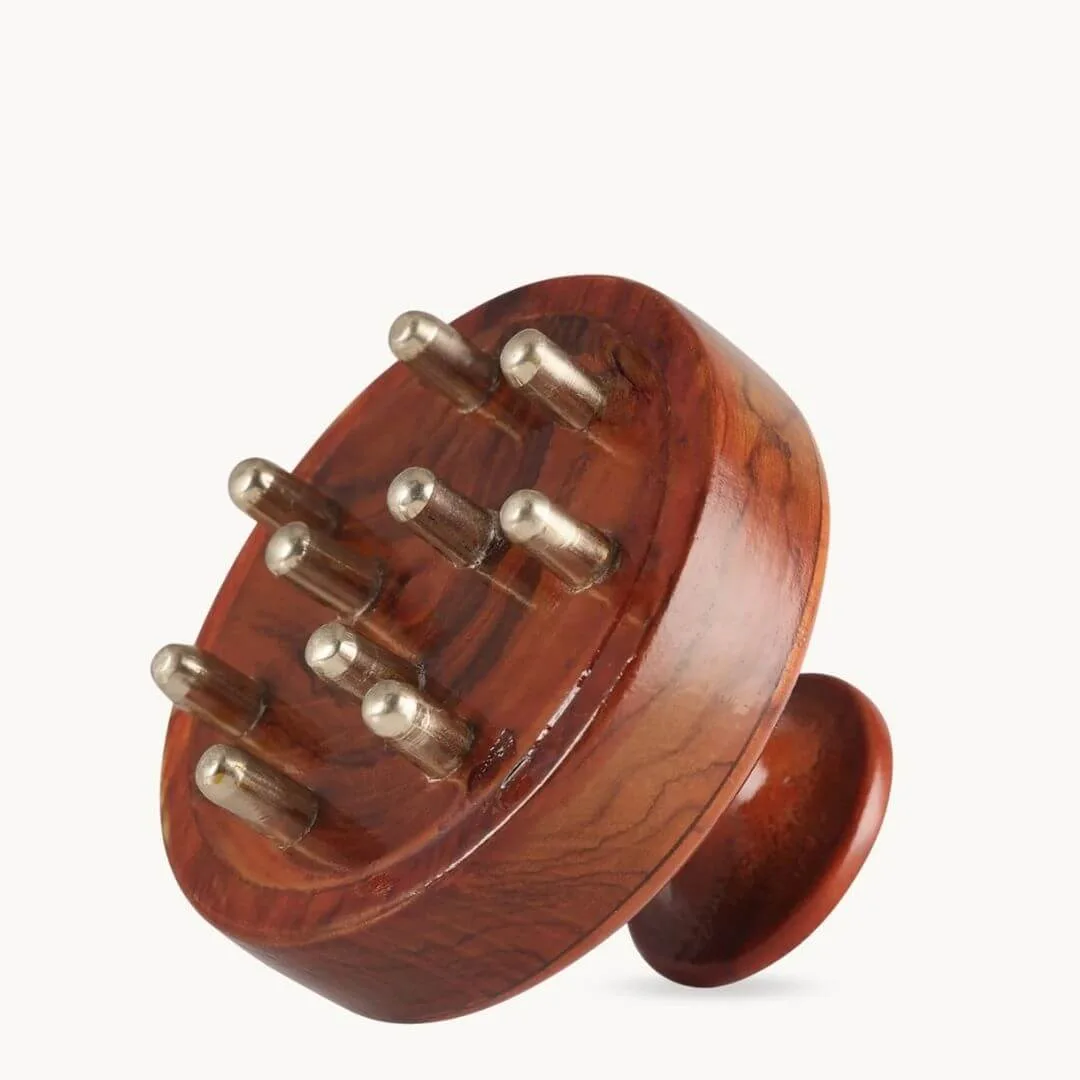
- Kansa scalp massager. A rounded, weighted head for circular work over the crown and the base of the skull. Comfortable on shorter hair.
- Kansa wand. A small domed head on a handle, useful along the hairline, the temples and behind the ears. The same implement is used in facial work, so one tool serves two rituals.
Choosing the oil
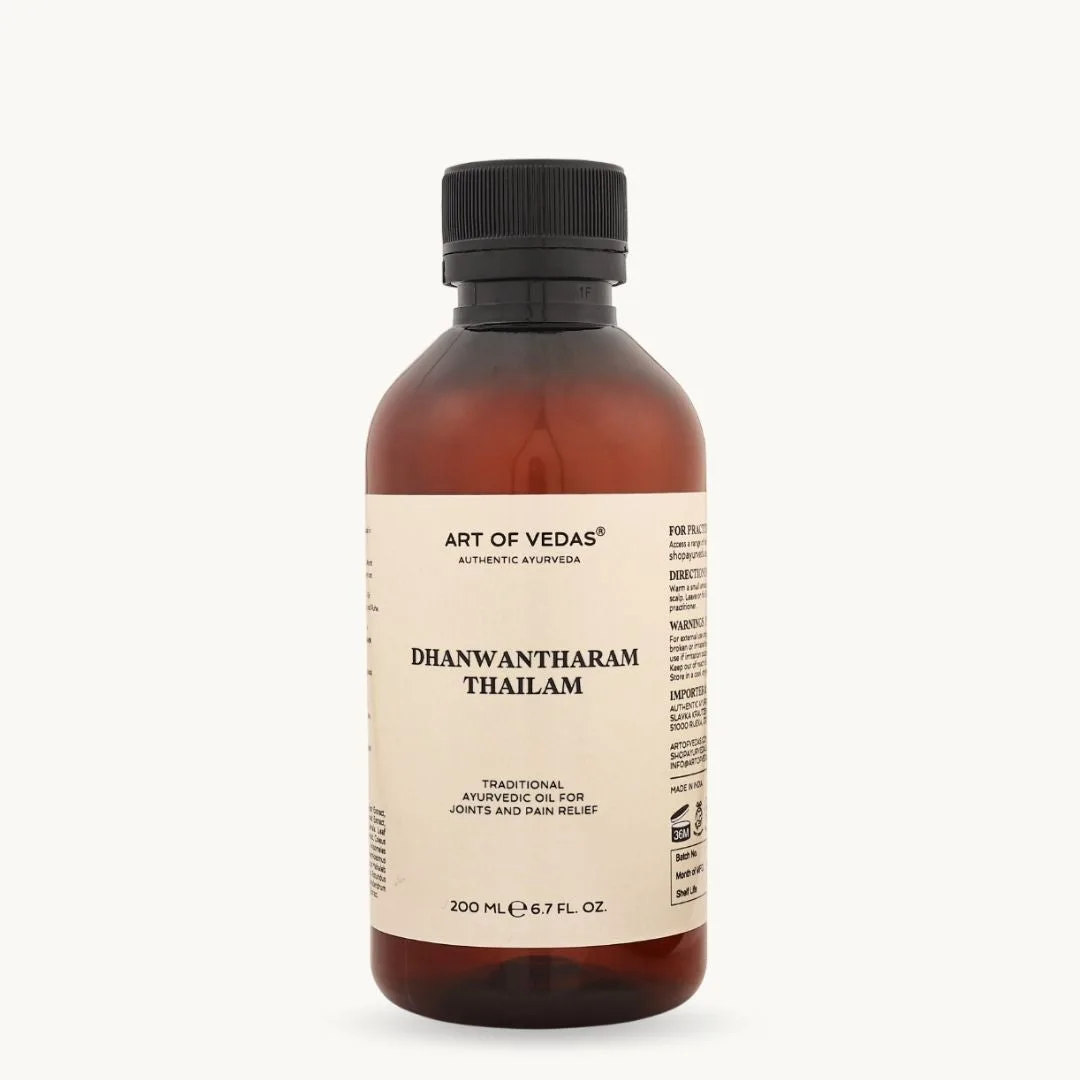
The tool needs a medium, since on dry hair it simply drags. Classical hair oils of the Thailam family are the traditional pairing, among them Neelibhringadhi Thailam. Warm the closed bottle by standing it in hot water for a few minutes rather than heating the oil directly, and test a drop on the inside of the wrist first.
The weekly ritual, step by step
- Set aside twenty minutes. Lay a towel over the shoulders and tie longer hair loosely away from the face.
- Stand the closed oil bottle in hot water for three to four minutes, until the oil is comfortably warm rather than hot.
- Comb the hair through while it is still dry, so the strands are untangled before any oil is added.
- Part the hair down the centre. Pour a little oil into the palm and apply it along the parting with the fingertips. Make a new parting two to three centimetres away and repeat until the whole scalp is covered.
- Take up the Kansa tool. From the front hairline, draw it slowly back towards the crown in long, even strokes, keeping the pressure light and constant. Roughly ten strokes over each section.
- Move to the sides. Work from above the ears up to the crown, then from the crown down to the nape, so every part is covered from two directions.
- Finish with small circular movements at the crown, the temples and the base of the skull, about a minute on each. These are the regions described as Marma points of the head.
- Leave the oil in for at least thirty minutes, or overnight under a cotton wrap, then wash as usual. Two shampoo passes are often needed.
- Wipe the tool clean and dry before it is put away, following the Kansa and copper tool care guide.
Rhythm and duration
Once a week is the standard cadence. Twice a week suits dry, coarse or chemically treated hair and the colder months, while once a fortnight is enough for fine hair that weighs down easily. The session itself should occupy fifteen to twenty minutes of active work; rushing it removes most of the point.
Consistency matters more than intensity. Most people find it easiest to anchor the ritual to a fixed evening, with the wash following the next morning.
Fitting it alongside other Kansa practice
The scalp ritual pairs naturally with the shorter daily Kansa face routine, which uses the same alloy on a much smaller scale. If you already keep a full body Abhyanga, place the scalp work first, since the head is traditionally oiled before the rest of the body.
Frequently Asked Questions
How often should I use a Kansa tool on my scalp? Once a week is the usual rhythm, and twice a week suits dry or coarse hair during colder months.
Can I use a Kansa wand instead of a Kansa comb? Yes, a wand works well along the hairline, the temples and on shorter hair, while a comb covers a long-haired scalp more quickly.
Do I need to use oil with the tool? Yes, the metal needs a medium in order to glide, and on dry hair it drags and pulls.
How long should the oil stay in before washing? Thirty minutes is a practical minimum, and leaving it overnight under a cotton wrap is the traditional option.
Will the tool darken with use? Yes, Kansa is a bronze alloy and develops a darker patina over time, which is entirely normal and reversible.
Is the ritual suitable for coloured or chemically treated hair? Oiling before washing is generally compatible with treated hair, though it is sensible to check with your hairdresser first.
This article is provided for general information and describes traditional practice only. It is not medical advice. Consult a qualified practitioner before use, particularly if you are pregnant, nursing or taking medication.