In brief: Kansa in English is bell metal: a bronze alloy of copper and tin, called Kamsya in Sanskrit. Art of Vedas Kansa is lab tested at approximately 80% copper and 20% tin, the proportion also used for temple bells, singing bowls and traditional Indian cooking vessels. It is not brass, which is copper and zinc. In Ayurvedic practice Kansa metal is used for massage tools such as the Kansa wand, the Kansa Vatki foot bowl and larger body tools. This guide explains the alloy, the grey mark it leaves on oiled skin, the tools and their care.
Kansa Metal in English: Bell Metal, the Bronze of Copper and Tin
Reviewed by Dr. Anu Joy, MD (Ayurveda), Ayurveda physician at Art of Vedas
Kansa metal is the traditional Indian bell metal, a bronze of copper and tin. In English it is called bell metal or bell-metal bronze; in Sanskrit it is Kamsya. In Ayurvedic practice it is neither a herb nor an oil but a material, valued for its weight, its smooth surface and the way it glides over oiled skin. When a Kansa tool is drawn over oiled skin it often leaves a faint grey trace, something people have noticed for as long as these tools have been in use.
This page explains the metal itself. What a Kansa wand is and why the alloy matters for massage is covered in the guide to the Kansa wand, and how to use the wand step by step in Kansa wand massage.
The Alloy
Traditional Kansa is approximately 80% copper and 20% tin: the specific ratio that produces bell metal's characteristic resonance (the same alloy used for temple bells, singing bowls, and traditional Indian cooking vessels). This ratio matters: too much copper produces a softer, more reactive metal; too much tin produces a brittle alloy that lacks the smooth, workable surface needed for massage tools.
The quality of Kansa tools varies significantly. Authentic Kansa is hand-cast or hand-forged from the traditional copper-tin alloy: the surface should be smooth, warm-toned, and dense. Mass-produced imitations may use brass (copper-zinc, which has different properties), plated metals, or impure alloys that do not produce the same skin reaction. The Kansa tool collection at Art of Vedas uses traditionally crafted, authentic bell metal.
Why Kansa leaves a grey mark on the skin
When Kansa meets oiled skin, the copper in the alloy reacts with the fatty acids of the oil and the slight acidity of the skin surface. The visible result is a greyish or dark trace that wipes away with a cloth. Traditional practitioners read the amount of colour in terms of Pitta; it does not mean that anything is wrong with the tool. When the trace is normal, when to pause and how to care for sensitive skin are explained on the page about Kansa wand side effects.
Kansa Tools and Their Applications
Kansa Wand (Facial)
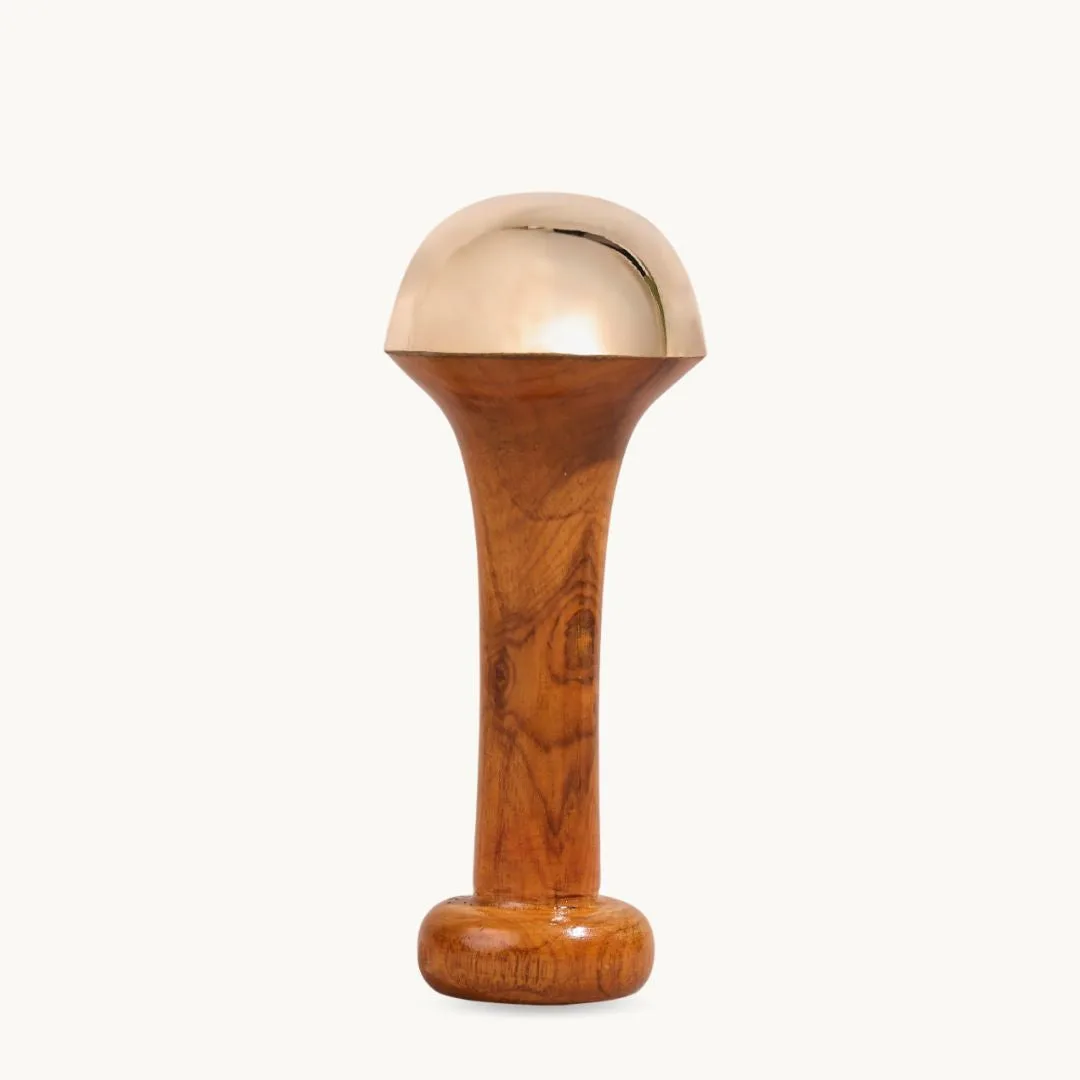
The best known Kansa tool: a small, dome-tipped wand for facial Marma point massage, used with a face oil such as Kumkumadi or Eladi. The Kansa wand facial massage guide covers the facial technique, and the Kansa wand collection shows the available tools.
Kansa Vatki (Foot Bowl)
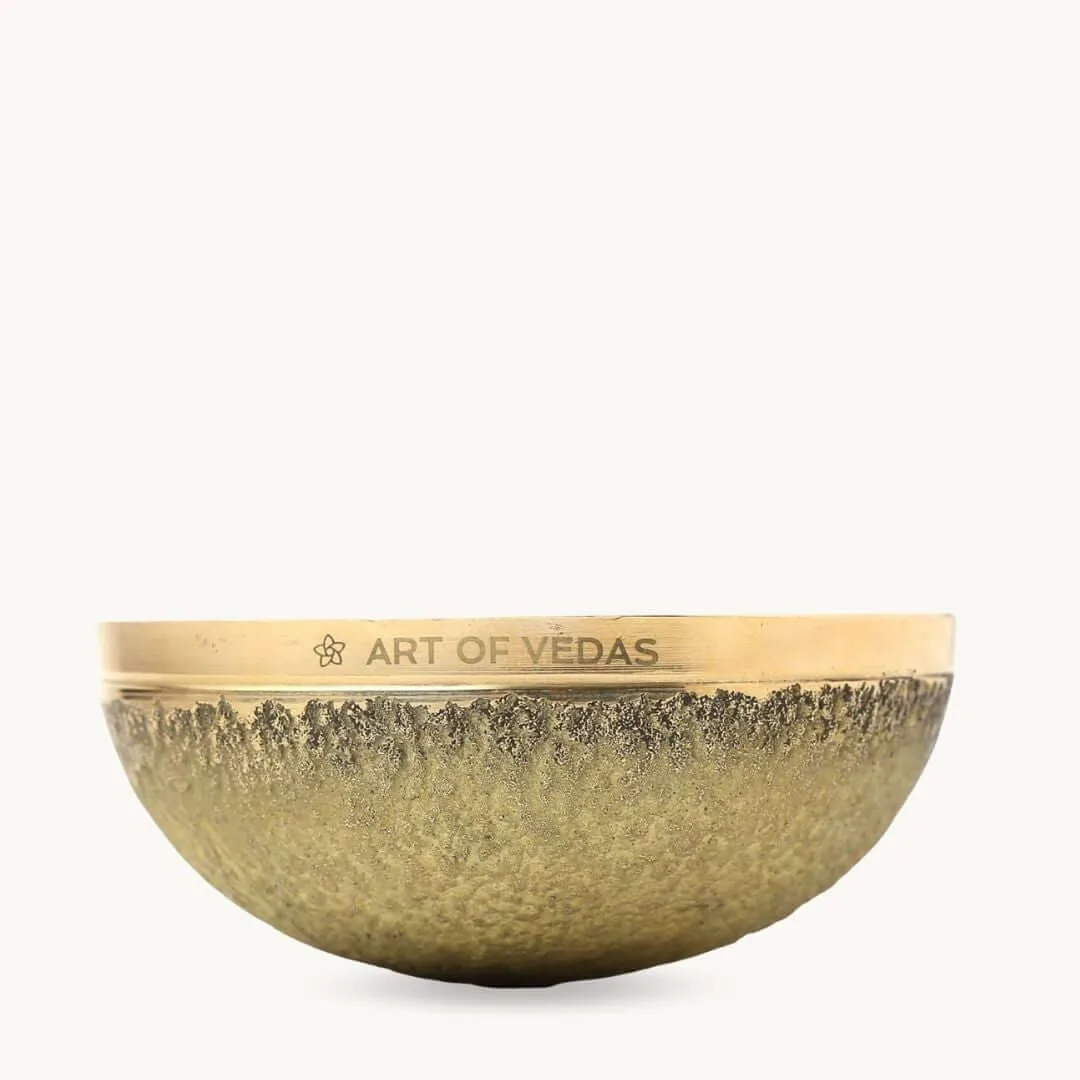
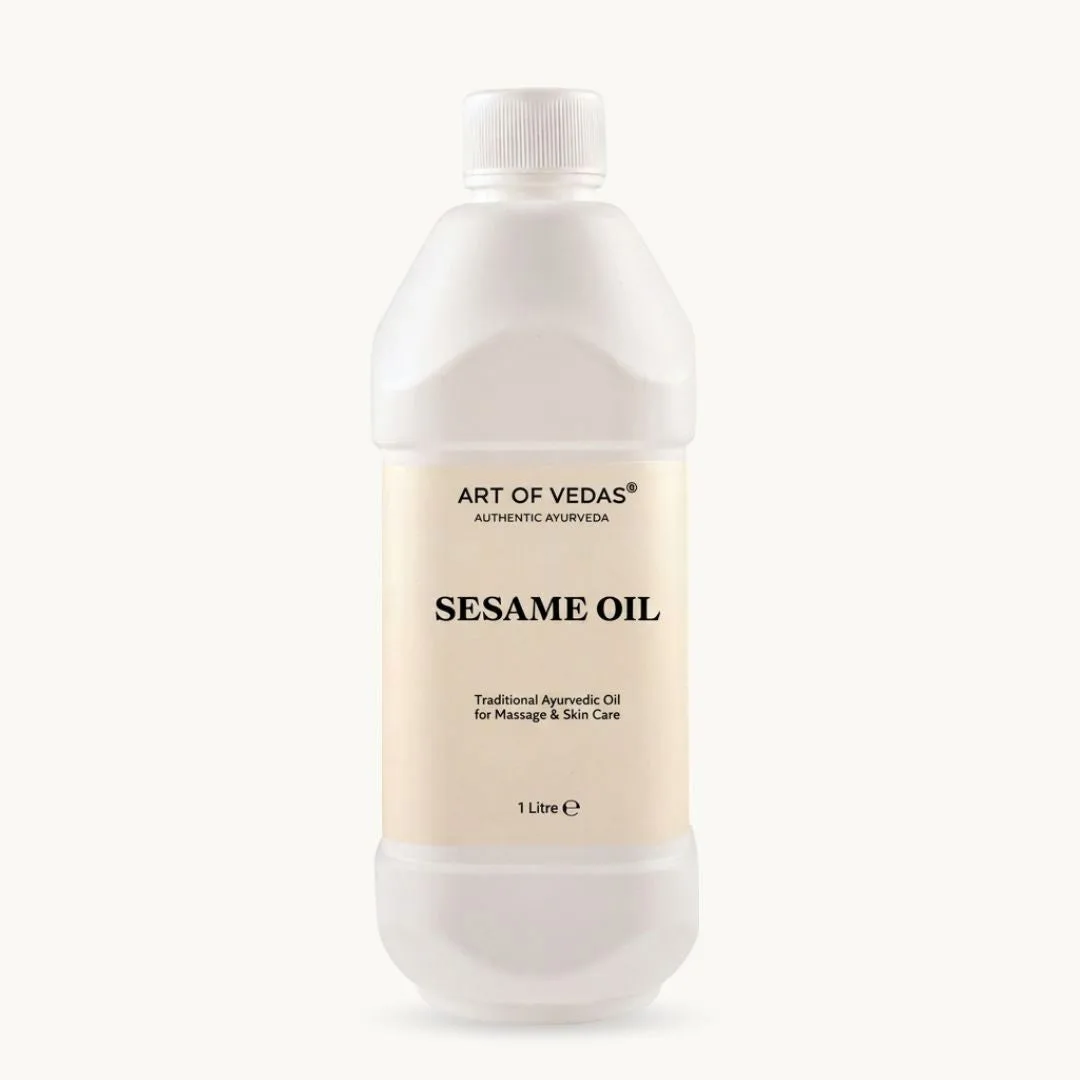
A small Kansa bowl used for Padabhyanga, the Ayurvedic foot massage, with warm sesame oil or a classical Thailam on the soles of the feet, where classical anatomy places the Talahridaya Marma. What a Vatki is and what it is called in English is explained in the Kansa Vatki guide, the evening ritual step by step in Kansa bowl foot massage.
Kansa Body Tools
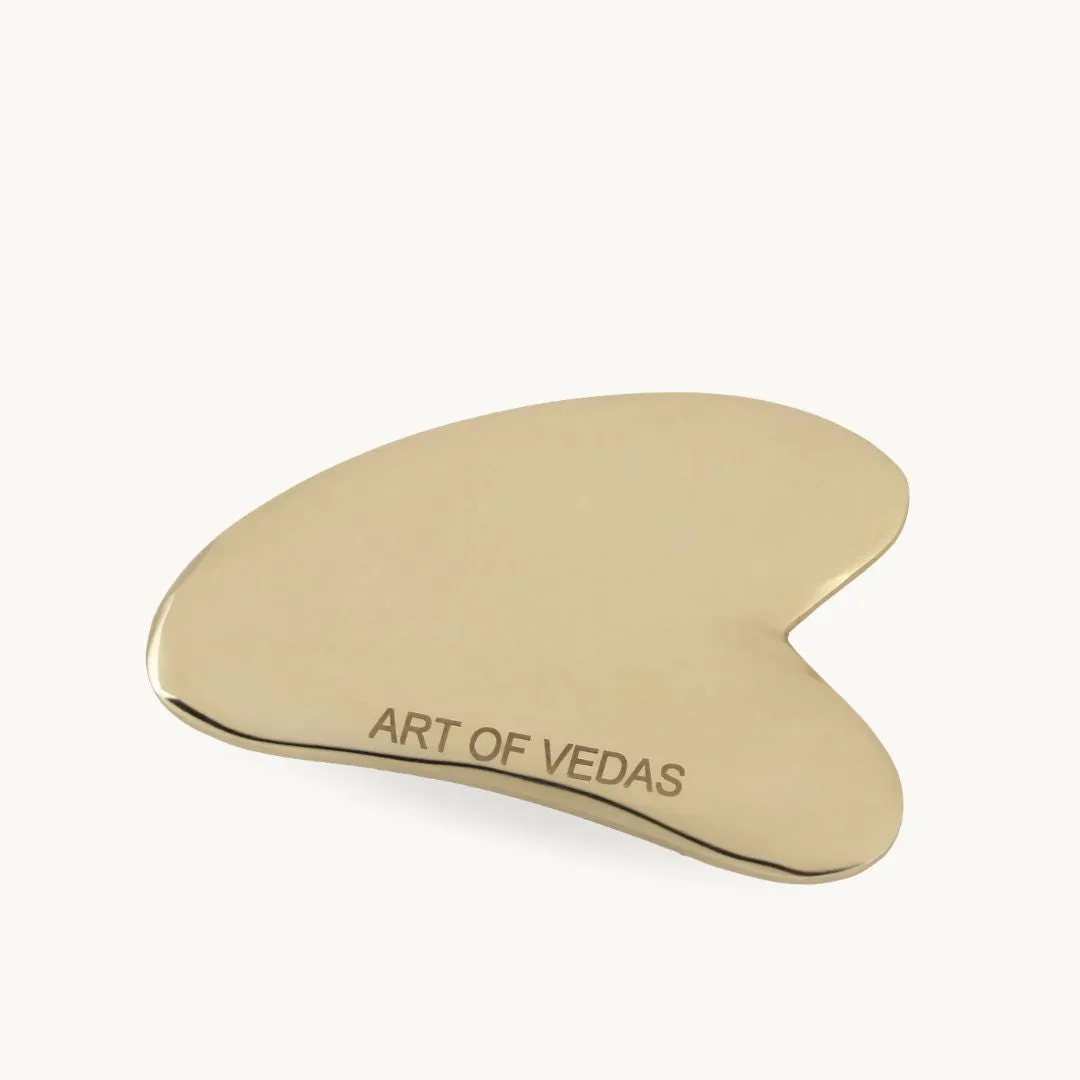
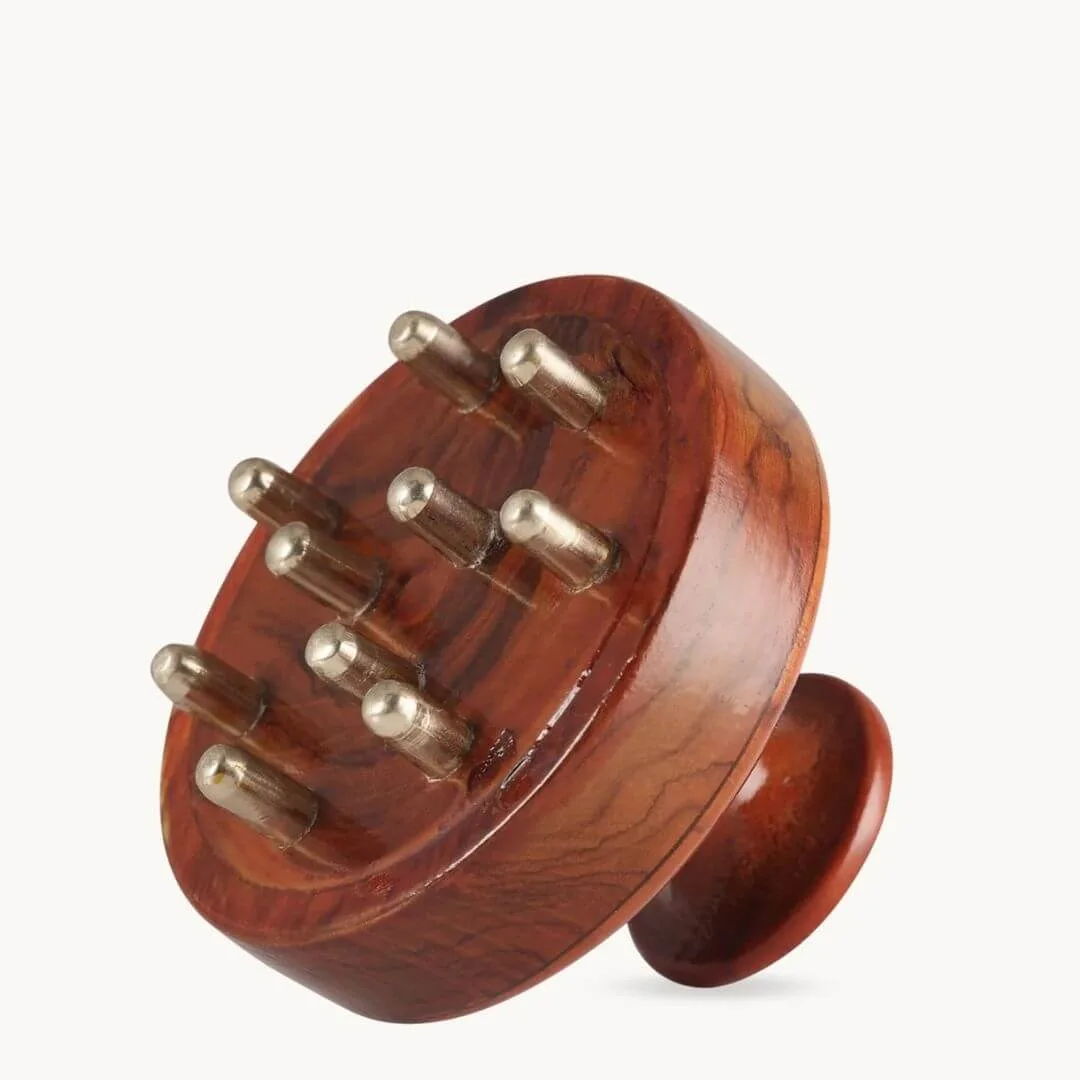
Larger Kansa tools, such as the Kansa Abhyanga wand and the Kansa Gua Sha, bring the same material to full-body Abhyanga. Practitioners who offer professional Ayurvedic massage often add them to the oil massage, working over the limbs, back and shoulders after the oil has been applied.
Integrating Kansa into Your Ritual
Kansa tools integrate naturally into the Dinacharya (daily routine):
Morning: Kansa wand facial massage with your preferred face oil, 3 to 5 minutes before or after cleansing. The skincare routine guide covers the full facial routine.
Evening: Padabhyanga with the Kansa Vatki and warm sesame oil, 5 to 10 minutes before bed, a classical way to close the day with Vata in mind.
Weekly: Full-body Kansa massage during your Abhyanga practice, working over the limbs, back and shoulders after the oil has been applied.
Care and Maintenance
Kansa naturally develops a patina over time: this is normal oxidation, not damage. Clean with lemon juice and salt, or a paste of tamarind, to restore the original lustre. Dry thoroughly after cleaning. Store in a dry place. Well-maintained Kansa tools last indefinitely: traditional families pass them down through generations.
Explore the complete Kansa tool collection at Art of Vedas, or ask a qualified Ayurvedic practitioner how Kansa massage can fit your own routine.
Traditional Ayurvedic practice, described for information. Kansa tools are wellness implements, not medical devices. In pregnancy, while breastfeeding, with sensitive skin or when taking medication, ask a qualified Ayurvedic practitioner or your doctor before use.
Frequently asked questions about Kansa metal
What is Kansa metal in English? Kansa metal is called bell metal in English. It is the traditional Indian alloy of copper and tin, a form of bronze, and its Sanskrit name is Kamsya. The same alloy is used for temple bells, singing bowls and traditional Indian cooking vessels, as well as for Ayurvedic massage tools.
Kansa is an alloy of which metals? Kansa is an alloy of copper and tin. Art of Vedas Kansa is lab tested at approximately 80% copper and 20% tin, a proportion that gives bell metal its resonance. With more copper the metal becomes softer; with more tin it becomes brittle and loses the smooth, workable surface that Kansa massage tools need.
Is Kansa the same as brass or bronze? Kansa is a bell-metal bronze, the copper and tin alloy in its traditional proportion. It is not brass, which is an alloy of copper and zinc with different properties. Plated metals or alloys of uncertain composition sold as Kansa do not give the same surface or the same reaction with oil and skin.
Why does Kansa metal leave a grey mark on the skin? When a Kansa tool is drawn across oiled skin, the copper in the alloy reacts with the oil and the slight acidity of the skin, leaving a greyish or dark trace. Traditional practitioners read the amount of colour in terms of Pitta. The mark is normal and wipes away with a cloth; when to pause is explained under Kansa wand side effects.
Which Ayurvedic tools are made of Kansa metal? The best known Kansa tool is the small dome-tipped wand for facial marma massage. The Kansa Vatki is a small Kansa bowl used with sesame oil for Padabhyanga, the foot massage. Larger Kansa body tools, such as the Abhyanga wand and Kansa body discs, are used during full-body Abhyanga.
How does Kansa fit into the daily routine? Kansa tools fit into the Dinacharya, the daily routine: a facial Kansa wand massage of 3 to 5 minutes with a face oil in the morning, Padabhyanga with a Kansa Vatki and warm sesame oil for 5 to 10 minutes in the evening, and a Kansa body massage once a week as part of Abhyanga.
How do you clean Kansa metal? Kansa metal develops a patina over time; this is normal oxidation, not damage. Clean it with lemon juice and salt, or a paste of tamarind, to bring back the original lustre. Dry the tool thoroughly after cleaning and store it in a dry place. Cared for in this way, Kansa tools are passed down through generations.
Does Art of Vedas sell Kansa metal tools? Yes. Art of Vedas sells the Kansa Scalp and Body Wand and the Ayurveda Kansa Vatki, both made of Kansa bell metal. Kansa tools are wellness implements, not medical devices. For advice on how Kansa massage fits your own routine, ask a qualified Ayurvedic practitioner.