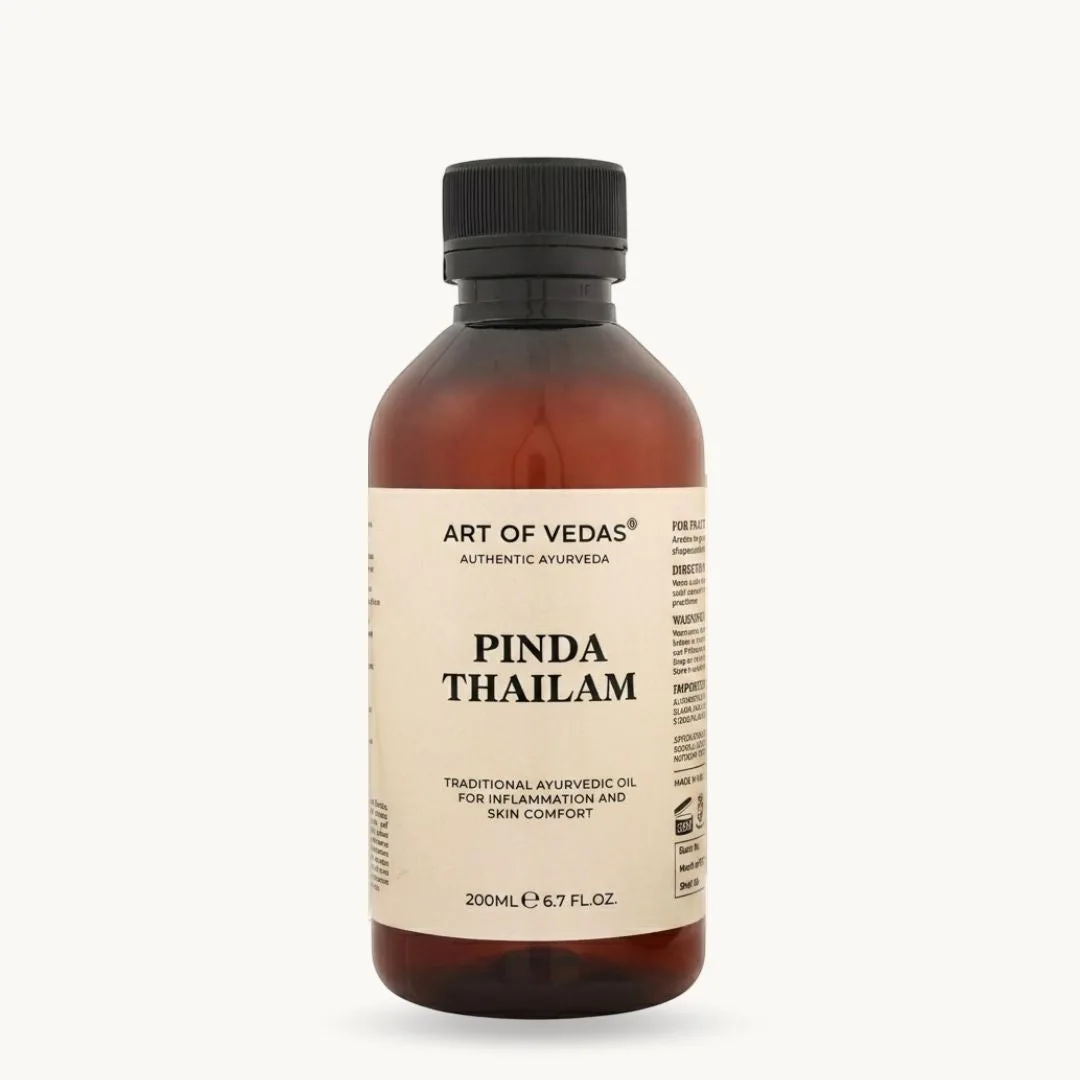
In brief: Ayurvedic medicine is the traditional health system of India, documented for more than 3,000 years in Sanskrit texts such as the Charaka Samhita, the Sushruta Samhita and the Ashtanga Hridayam. It looks at the whole person: the balance of the three Doshas (Vata, Pitta and Kapha), digestion (Agni) and the mind, and it works with daily routine, food, herbal preparations, oils and treatments such as Abhyanga and Panchakarma. In the European Union, Ayurvedic herbal preparations are sold as food supplements or cosmetics, and personal advice comes from qualified Ayurvedic practitioners. See our herbal capsules and classical Thailams.
This article is part of our Ayurvedic Herbs: A Guide to Classical Plants guide series.
Ayurvedic medicine is one of the oldest documented systems of health knowledge in the world. Originating on the Indian subcontinent, its foundational principles have been passed down for over 3,000 years through texts such as the Charaka Samhita, the Sushruta Samhita, and the Ashtanga Hridayam. The word Ayurveda derives from Sanskrit: Ayus means life or lifespan, Veda means knowledge or science. Ayurveda is thus the "science of life".
In Europe, Ayurvedic medicine has attracted growing interest - both as a complementary health practice and as the foundation for natural body care and daily self-care rituals. This guide explains the central concepts of Ayurvedic medicine and provides an overview of its key principles.
The philosophical foundation of Ayurvedic medicine
Ayurvedic medicine is grounded in the understanding that health is a state of balance - between the individual and their environment, between the body's various systems, and between body, mind, and spirit (Sharira, Manas, and Atma). According to Ayurvedic teaching, imbalance does not arise in isolation but at one or more of these levels.
Ayurveda views the person as a whole. The traditional Indian system therefore starts from the question "What is this person's constitution, and what has disrupted their balance?"
The three Doshas: Vata, Pitta, and Kapha
The central concept of Ayurvedic medicine is the three Doshas - Vata, Pitta, and Kapha. They represent fundamental biological forces or functional principles that govern all physiological processes in the body.
-
Vata (air and ether) governs movement, the nervous system, circulation, and all transport processes in the body. People with a dominant Vata tend to be slender, energetic, and creative.
-
Pitta (fire and water) governs metabolism, digestion, body temperature, and transformation. People with a dominant Pitta tend to be focused, passionate, and have strong digestion.
-
Kapha (earth and water) governs structure, stability, lubrication, and building processes. People with a dominant Kapha tend to be solidly built, calm, and enduring.
The individual combination of these three Doshas - known as Prakriti - is fixed from birth and determines a person's fundamental constitution. When the Doshas move out of balance (Vikriti), discomfort arises according to Ayurvedic theory.
The five elements (Panchamahabhuta)
Behind the three Doshas are the five elements (Panchamahabhuta): earth (Prithvi), water (Jala), fire (Agni), air (Vayu), and ether (Akasha). These elements form the fundamental building blocks of all matter - including the human body and the plants used in Ayurveda. The effect of an herb or oil is described in Ayurveda through its elemental composition, its taste (Rasa), its potency (Virya), and its post-digestive effect (Vipaka).
Agni - the digestive fire
Another central concept of Ayurvedic medicine is Agni, the digestive fire. In Ayurveda, Agni is not only responsible for the physical digestion of food but also for processing sensory impressions and emotions. A strong, balanced Agni is considered a prerequisite for good health; a weakened or overactive Agni leads to the accumulation of Ama (undigested residue), which is viewed as the source of many imbalances.
Ayurvedic treatment: the classical approaches
Ayurvedic medicine offers a broad spectrum of therapeutic approaches that are combined individually according to constitution and imbalance:
-
Herbal preparations: Churnams (herbal powders), Kashayams (herbal decoctions), Arishtams (fermented preparations), Ghrithams (herbal ghee preparations), and Vati/Gulika (tablets) prepared according to classical formulations.
-
Massage and external treatments: Abhyanga (full-body oil massage), Shirodhara (forehead oil stream), Kizhi (herbal bolus massage), Basti treatments (localised oil pools), and Nasya (nasal application of herbal oil).
-
Panchakarma: The classical purification programme of Ayurveda, consisting of five specific therapeutic procedures. Panchakarma programmes are conducted under the supervision of trained Ayurvedic physicians or therapists.
-
Diet and lifestyle: Adapting nutrition, daily rhythm (Dinacharya), and seasonal living (Ritucharya) to the individual constitution.
Ayurvedic medicine in Europe
In Europe, Ayurvedic products are sold as food supplements or cosmetics. It is important to note that Ayurvedic products sold in the EU are subject to European food and medicines legislation. Classical Ayurvedic preparations such as Churnas, Arishtams, or Ghrithams are generally classified as food supplements in the EU and may not carry claims to treat or prevent illness.
Art of Vedas offers products prepared according to classical methods. Our oils, herbal preparations, and personal care products are offered as a complement to a healthy lifestyle and as part of a traditional self-care routine - not as medical treatment.
Finding qualified Ayurvedic support
If you are interested in a comprehensive Ayurvedic consultation, we recommend seeking a qualified Ayurvedic therapist or physician with a specialisation in Ayurvedic medicine. There is a growing community of certified practitioners in Europe, many of whom have trained at established Ayurvedic institutions in India or Europe. A professional consultation allows for individually tailored guidance that goes beyond general information.
Note: The Ayurvedic concepts described on this page are intended for general information and education. Ayurvedic products from Art of Vedas are personal care products and food supplements, not medicines. They do not replace consultation with a physician or qualified therapist.
Frequently asked questions about Ayurvedic medicine
What is Ayurvedic medicine? Ayurvedic medicine, or Ayurveda, is the classical health system of India. It describes each person by the three Doshas, Vata, Pitta and Kapha, and supports balance with diet, daily and seasonal routines, herbal preparations, oil treatments and purification programmes. Its knowledge comes from texts compiled more than two thousand years ago.
What are the main forms of Ayurvedic herbal medicine? Classical Ayurveda prepares herbs in many forms: Churnam (powders), Vati and Gulika (tablets), Kashayam (decoctions), Arishtam and Asavam (fermented preparations), Ghritham (herbal ghee), Lehyam (herbal jams) and Thailam (herbal oils for the skin). In Europe the most common forms are capsules, powders and oils.
Are Ayurvedic herbal products legal in Europe? Yes, within the EU rules for each product type: herbs for internal use are sold as food supplements and must meet food law, and oils for the skin are sold as cosmetics with a safety assessment and an EU responsible person. Art of Vedas products follow these rules and carry EU labels.