In brief: Kumkumadi vs Nalpamaradi is a question of base oil, character and routine, not of one oil being better than the other. Kumkumadi oil, which Art of Vedas sells as Kumkumadi Serum, is the saffron-led face oil in a sesame oil base, left on the skin overnight. Nalpamaradi oil, in our range Nalpamaradi Kera Thailam, is the oil of four fig barks and turmeric cooked into coconut oil, cooling in character, applied and then washed off. Dry skin and the cooler months usually lead to Kumkumadi; warm or oily skin and the warmer months usually lead to Nalpamaradi.
Kumkumadi vs Nalpamaradi: the difference at a glance
Both are classical Ayurvedic oils for the skin, and both belong to the Varnya tradition, the classical group of plants associated with the complexion. A classical Thailam is traditionally prepared by Sneha Paka, the slow cooking of plants into oil. The difference between Nalpamaradi Thailam and Kumkumadi Thailam lies in the base oil, the leading plants, the way each is applied, and the skin and season each traditionally suits.
- Base oil: Kumkumadi has a sesame oil base; Nalpamaradi Kera Thailam is cooked into coconut oil.
- Leading plants: Kumkumadi begins with saffron (Kumkuma); Nalpamaradi begins with Nalpamara, the bark of four fig trees, together with turmeric (Haridra).
- Character: the sesame base is warmer and richer; the coconut base is lighter and cooler. The classical texts describe Nalpamaradi as cooling and place it with Pitta.
- Use: Kumkumadi is a leave-on oil for the evening; Nalpamaradi Kera Thailam is usually left on for 15 to 30 minutes and then washed off.
- Classical reference: Kumkumadi is a classical formula of the Varnya (complexion) tradition; for Nalpamaradi the reference usually cited is the Sahasrayogam.
Kumkumadi oil: saffron in a sesame base
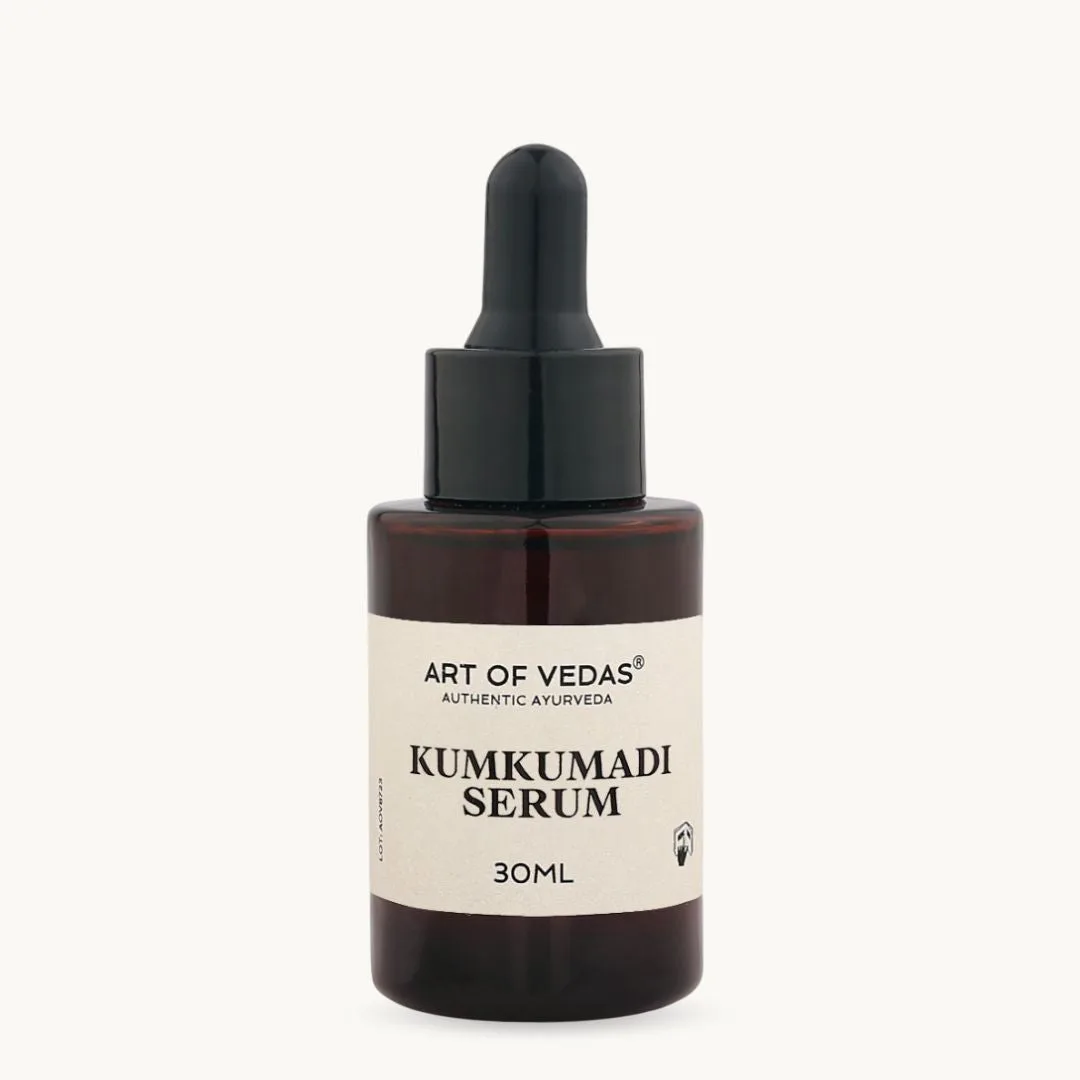
Kumkuma is the Sanskrit name for saffron, and the ending adi means "and the others": Kumkumadi Thailam, also written Kumkumadi Thailam, is the oil that begins with saffron. Art of Vedas sells it as Kumkumadi Serum, a 30 ml bottle for the face. Besides sesame seed oil and saffron, its declared ingredients are liquorice root, lotus flower, Manjishtha root, turmeric root, the bark of two Ficus trees, blue lotus flower and rose water.
Sesame oil (Tila Taila) is the standard base of classical Ayurvedic oils. It is rich, slightly warming and stays on the skin for longer, which is why Kumkumadi is used as the last step of the evening routine and left on overnight. Saffron gives the oil a golden colour and a distinct scent; a slight tint on the skin washes off in the morning. Our Kumkumadi oil guide covers the recipe and the facial massage in detail.
Nalpamaradi oil: four fig barks and turmeric in coconut
Nalpamara is the traditional name for the bark of four fig trees used together: Nyagrodha (Ficus benghalensis), Udumbara (Ficus racemosa), Ashvattha (Ficus religiosa) and Plaksha (Ficus lacor). With turmeric they give Nalpamaradi its name and its golden yellow colour. The recipe exists in two forms: Nalpamaradi Thailam in sesame oil and Nalpamaradi Kera Thailam in coconut oil, Kera being the word for coconut. Art of Vedas sells the coconut form, Nalpamaradi Kera Thailam.
The coconut base is lighter, absorbs more quickly and washes off more easily than sesame. It sets below about 24 degrees Celsius; to liquefy it, stand the closed bottle in warm water for a few minutes, never in a microwave. Turmeric marks pale towels and pillowcases. The two forms, sesame and coconut, are explained in our Nalpamaradi Thailam guide.
What the two oils share
The declared ingredient lists overlap more than the names suggest. Our Kumkumadi Serum also contains turmeric and the bark of Ficus benghalensis and Ficus lacor, two of the four Nalpamara trees. What separates the two oils is the leading plant, saffron in one and the fig barks in the other, and the base oil.
Sesame or coconut: what the base oil means for you
In Ayurveda the base oil brings its own qualities to the finished Thailam, and here it explains most of the practical difference.
- Warmth: sesame is warming, coconut is cooling. Kumkumadi in sesame suits skin that feels cool or dry; Nalpamaradi Kera Thailam suits skin that runs warm.
- Weight and skin feel: sesame is richer and remains on the skin, which suits a leave-on night oil. Coconut is lighter, quicker to absorb and easy to remove.
- Season: the sesame base fits autumn and winter, when cold, dry air dries the skin; the coconut base fits late spring and summer, the warm season traditionally linked with Pitta.
Kumkumadi or Nalpamaradi: which is better for your skin?
Neither is better in general. Kumkumadi or Nalpamaradi, which is better depends on your skin type, the season and how you like to use an oil. As a simple decision guide:
- Dry skin, skin that feels tight or cool (Vata leaning): Kumkumadi Serum, a few drops in the evening.
- Warm skin that heats up quickly in the sun, or skin that turns oily during the day (Pitta leaning): Nalpamaradi Kera Thailam, applied and washed off.
- Oily, heavier skin (Kapha leaning): the lighter coconut form, used sparingly and washed off, usually feels more comfortable; if you prefer Kumkumadi, use it sparingly.
- Normal or combination skin: choose by season, Nalpamaradi in the warm months and Kumkumadi in the cool months.
- Sensitive skin: start with one oil only, in the smallest amount, after a patch test.
- Preference: if you want a leave-on night oil with the scent of saffron, choose Kumkumadi; if you prefer a short oil ritual that ends with washing the face, choose Nalpamaradi.
Price and bottle size are not a good guide to this choice; skin and season are. If you are unsure, a qualified Ayurvedic practitioner can look at your skin and your Prakriti and tell you which oil suits you.
How much and when
- Kumkumadi Serum: in the evening after cleansing, warm a few drops, usually two to four, between the fingertips, press them over the face and neck and work them in with light upward strokes. Leave the oil on overnight and wash the face in the morning. Three evenings a week is a good start.
- Nalpamaradi Kera Thailam: warm three to five drops, massage the clean face with light strokes from the centre outwards, leave the oil for 15 to 30 minutes, then wash it off with warm water and a mild cleanser. Many people do this in the evening so that any yellow tint has gone by morning. Two to three times a week is a common rhythm, daily in the warm months.
- Kansa wand (optional): apply the oil first, then massage with a double-sided Kansa wand in slow, light strokes.
Can you use Kumkumadi and Nalpamaradi together?
Yes, but do not mix them in one application. The simplest way is to alternate: by season, with Nalpamaradi in summer and Kumkumadi in winter, or by day, with Nalpamaradi Kera Thailam on some evenings and Kumkumadi Serum on others. Because Nalpamaradi is washed off and Kumkumadi stays on, some people use Nalpamaradi earlier in the evening, wash it off, and finish with a few drops of Kumkumadi before sleep. Introduce the oils one at a time, so that you know how your skin takes each of them.
Patch test, care and storage
Both oils are for external use only. Before the first use on the face, apply a small amount to the inner forearm and wait 24 hours. Keep the oils away from the eyes and from broken skin, and stop if the skin reacts. In pregnancy, while breastfeeding, for children or if you take medication, ask your doctor or a qualified Ayurvedic practitioner first. Store both bottles closed, in a cool, dry place out of direct sunlight. Saffron and turmeric both colour fabric, so use an old towel and a dark pillowcase.
Related comparisons
If you are also considering Eladi Thailam, see Eladi vs Nalpamaradi Thailam and Eladi Thailam vs Kumkumadi oil. For an overview of the classical face oils, read choosing an Ayurvedic face oil.
Frequently asked questions: Kumkumadi vs Nalpamaradi
What is the difference between Nalpamaradi Thailam and Kumkumadi Thailam? Kumkumadi Thailam is the saffron-led face oil in a sesame oil base, left on overnight. Nalpamaradi is the oil of four fig barks and turmeric; Art of Vedas sells it in a coconut base as Nalpamaradi Kera Thailam, applied and washed off. Sesame is warmer and richer, coconut lighter and cooler.
Kumkumadi or Nalpamaradi: which is better? Neither in general. Dry skin and the cooler months usually lead to Kumkumadi oil; warm or oily skin and the warmer months usually lead to Nalpamaradi oil. A qualified Ayurvedic practitioner can help you decide.
Which is better for oily skin? Usually Nalpamaradi Kera Thailam, because the coconut base is light and the oil is washed off after 15 to 30 minutes. Kumkumadi can be used sparingly.
Which is better for dry skin? Usually Kumkumadi Serum. The sesame base is richer and stays on the skin overnight.
Can both oils be used on the body? Kumkumadi Serum is a face oil. Nalpamaradi Kera Thailam is used on the face and on the body.
Do Kumkumadi and Nalpamaradi stain? Both can tint the skin slightly and mark pale fabric, Kumkumadi through saffron and Nalpamaradi through turmeric. The tint washes off; use an old towel and a dark pillowcase.
Can I use them in pregnancy or for children? Ask your doctor or a qualified Ayurvedic practitioner first. Both oils are for external use only; do a patch test on the inner forearm and wait 24 hours before the first use on the face.