The word used most often in classical Ayurvedic texts for what we might call beauty is Saundarya - a word that encompasses outward appearance, natural radiance, and an overall quality of presence that comes from genuine health. Classical Ayurvedic beauty care is not a cosmetic system in the modern sense. It does not operate primarily on the surface. It is, at its root, a system for cultivating the internal conditions from which Saundarya naturally emerges.
This distinction is more than philosophical. It produces a completely different set of priorities, practices, and products than modern cosmetics - and it produces different results. Classical Ayurvedic beauty practices, sustained consistently, change the tissue quality they work with rather than simply covering or temporarily altering its surface appearance. Understanding why requires a brief look at how classical Ayurveda understands what beautiful skin, hair, and presence actually are.
The Classical Understanding of Beauty
Three Sanskrit concepts are central to the classical Ayurvedic understanding of outward beauty:
Varna - complexion, skin colour, and the overall tone of the skin. In classical pharmacology, a category of herbs called Varnya specifically addresses Varna - they support healthy, even complexion through their action on Bhrajaka Pitta (the sub-dosha governing skin metabolism, colour, and the skin's metabolic activity). Varnya herbs include saffron (Kumkuma), manjistha (Rubia cordifolia), sandalwood (Chandana), vetiver (Ushira), and lotus (Padma).
Kanti - natural lustre, radiance, and glow. Kanti is described in classical texts as the visible expression of Ojas - the refined vital essence produced at the end of the body's tissue transformation chain. When Ojas is adequate, it manifests at the skin surface as a quality of aliveness and luminosity that no topical product can replicate from the outside alone. When Ojas is depleted, even well-cared-for skin loses this quality. The Ojas guide covers the physiology of this connection in full.
Prabha - the subtle glow or aura of the body that classical texts describe as distinct from surface lustre. Prabha is associated with the quality of Ojas in its most refined form and with the overall vitality of the Dhatu (tissue) system. It is visible in healthy children and in those whose internal health is outstanding - a quality that immediately communicates wellbeing beyond what is explicable by surface appearance alone.
These three qualities together constitute the classical Ayurvedic understanding of beauty as an outward expression of inward health - not a substitute for it.
The Four Pillars of Classical Ayurvedic Beauty Practice
1. Tissue Nourishment Through Oil
Daily warm oil application is the most fundamental classical beauty practice for the skin. Sesame oil - the base of most classical Thailams - has a unique place in classical pharmacology: it is simultaneously nourishing (Brimhana), warming (Ushna), penetrating (Sukshma), and skin-supporting. Its Snigdha (unctuous) quality directly counteracts the Ruksha (dry) quality of Vata, which is the primary driver of skin dehydration, roughness, and the loss of suppleness associated with aging.
For body skin, daily Abhyanga with a classical Vatahara Thailam is the practice - applied, massaged in, allowed to absorb, then followed by warm water bathing. Over weeks and months of daily practice, the cumulative effect on skin texture and quality is substantial, because the oil is working at the tissue layer level (Bhrajaka Pitta and Twak, the classical term for skin as a tissue) rather than on the surface alone.
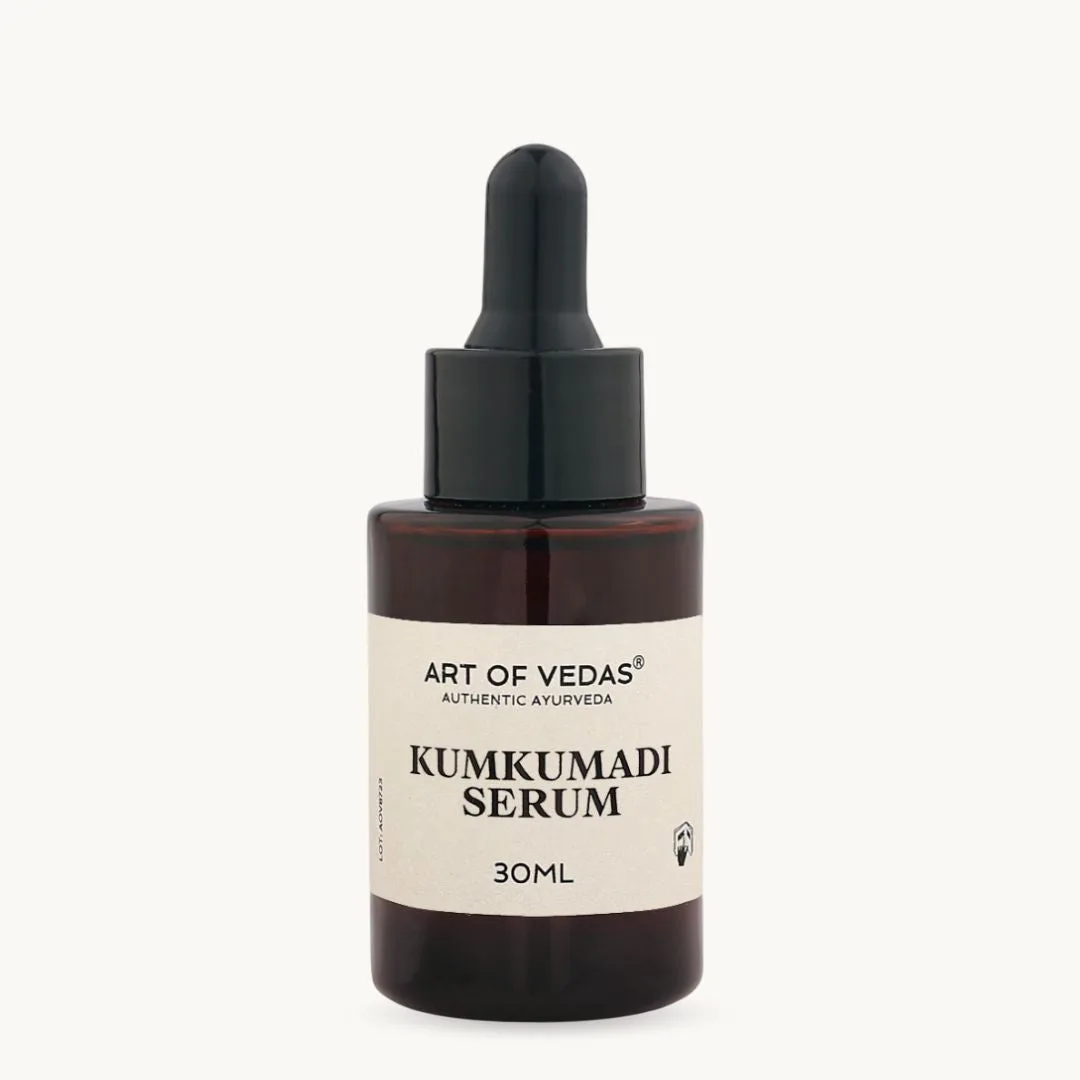
For the face, a specific Mukha Thailam is applied - Kumkumadi Thailam for most constitutions, Eladi for Pitta-dominant or reactive skin. These are not moisturising creams in the modern sense but classical processed preparations in which herbal properties have been integrated through Sneha Paka specifically for the face's tissue and Dosha profile.
2. Complexion Support Through Varnya Herbs
Classical Ayurvedic beauty pharmacology has a specific category of herbs - Varnya (complexion-enhancing) and Tvak Prasadana (skin-clarifying) - designed to support Bhrajaka Pitta's function and the skin's natural metabolic clarity. The most classically significant:
Manjistha (Rubia cordifolia) - one of the most important Varnya herbs in classical texts, specifically described for its action on Rakta (blood tissue) and its support for even complexion through Rakta Shodhaka (blood-purifying) action. In classical reasoning, impurities in Rakta Dhatu manifest at the skin surface as uneven tone, and Manjistha addresses this at the tissue level.
Kumkuma (saffron) - the primary herb of Kumkumadi Thailam. Classified as Varnya and Kanti Vardhaka (lustre-increasing) in classical texts, with a warming quality that supports circulation in the facial tissue.
Chandana (sandalwood) - cooling, Pitta-balancing, and Varnya. Addresses the Pitta component of skin redness, heat, and uneven tone that can arise independently of or alongside Vata dryness.
Ushira (vetiver root) - cooling, astringent, and Pitta-moderating. Balances saffron's warmth in classical formulas like Kumkumadi.
Turmeric (Haridra) - broadly Tvak Prasadana, antimicrobial, and one of the classical Ubtan (cleansing paste) ingredients used in both facial and body care.
3. Marma and Circulation
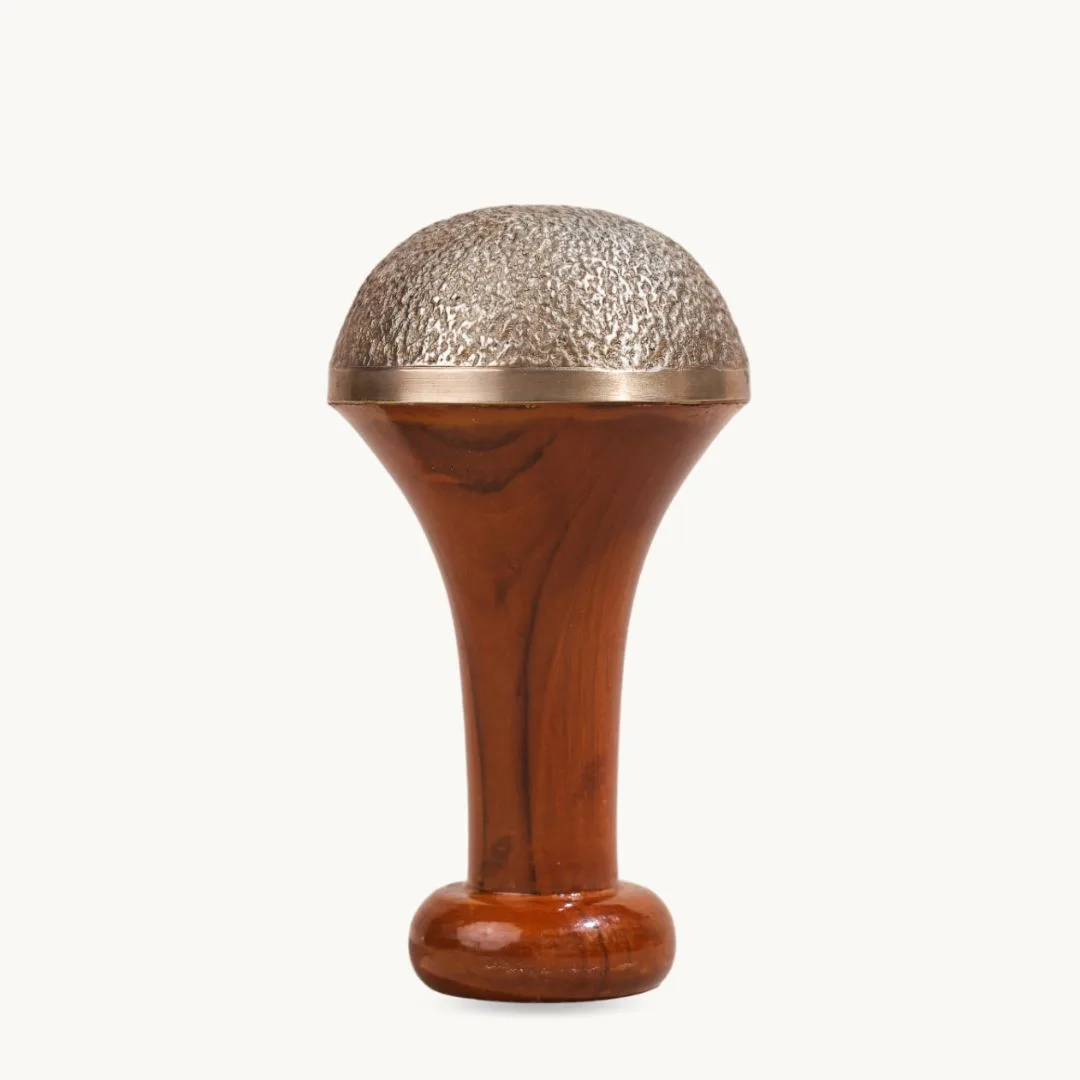
Classical facial beauty practice is inseparable from the marma point system. The face contains a significant concentration of marma - Sthapani (brow centre), Apanga (outer eye corners), Shankha (temples), Hanu (jaw) - and classical Mukha Abhyanga systematically engages these points as part of the practice. Working the facial marma with a Kansa wand and a classical Mukha Thailam supports several mechanisms relevant to appearance: activation of Bhrajaka Pitta at the skin's metabolic surface, stimulation of lymphatic circulation in the face, and the drawing of surface Pitta heat through the Kansa alloy's electrochemical interaction with the skin.
The grey residue that appears on the Kansa dome during facial massage - and diminishes over weeks of regular practice - is classically understood as the removal of surface Pitta acidity. When this pattern changes and the residue decreases, practitioners typically observe improvement in skin tone evenness and the reduction of Pitta-related skin reactivity.
The classical facial tools guide covers the complete tool system and how it integrates into a classical facial practice.
4. Internal Rasayana Practice
The deepest level of classical Ayurvedic beauty care is Rasayana - the classical science of tissue renewal. Rasayana practice addresses the Dhatu (tissue) chain at the level of Rasa (primary fluid tissue), working through all seven tissue layers to support the production of refined Sara (tissue essence) and ultimately Ojas at the end of the chain. Because Kanti (natural lustre) is the visible expression of Ojas, Rasayana practice is the most fundamental classical approach to beauty that no topical preparation can replace.
The Rasayana guide and the anti-aging skincare guide cover the Rasayana framework for beauty in detail.
Classical Hair Care
The classical Ayurvedic approach to hair is an extension of the same framework - the hair is a by-product (Upadhatu) of Asthi Dhatu (bone tissue) in classical anatomy, meaning that the health of the hair ultimately reflects the quality of bone tissue nourishment in the Dhatu chain. This anatomical understanding produces a specific classical approach to hair care: supporting the Dhatu chain that nourishes Asthi, combined with direct care at the scalp level through regular head oiling (Shiro Abhyanga).
Shiro Abhyanga - scalp oil massage - is the primary classical hair care practice. Warm oil applied to the scalp and worked into the roots through firm fingertip massage nourishes the hair at its source rather than coating the shaft after the fact. Classical texts describe consistent Shiro Abhyanga as preventing premature greying and hair loss - both connected in classical reasoning to Vata-driven depletion in the tissue channels that nourish the hair root.
Hair loss is classically understood as having two primary mechanisms: Vata-driven depletion (Ruksha, depleting quality reducing nourishment to the hair roots) and Pitta-driven inflammation (excess Pitta in the scalp tissue damaging the hair root). The appropriate oil and technique adapts to which mechanism is primary.
Scalp Nasya - in classical Panchakarma practice, certain Nasya protocols specifically target the head's tissue channels including those that nourish the scalp. Daily Nasya with the appropriate oil is described as supporting hair health through the head's internal channel system.
Ayurvedic Beauty by Constitution
The classical approach adapts to Dosha, producing different emphases for different constitutions:
Vata Beauty Care
Vata skin - thin, fine-pored, dry, and quick to show dehydration and fine lines - requires the most consistently nourishing approach. Daily Abhyanga with a generous amount of warm Vatahara Thailam, daily Kumkumadi Thailam on the face, consistent sleep and oil pulling, and Rasayana-oriented internal support. The Vata guide covers the constitutional picture.
Pitta Beauty Care
Pitta skin - medium thickness, sensitive, prone to redness and uneven tone, reactive to heat and spice - requires cooling and moderating approaches. Eladi Thailam on the face when Pitta is elevated (more cooling than Kumkumadi). Avoiding intensely warming facial practices in summer. Emphasising the Kansa wand's Pitta-drawing quality. Manjistha and sandalwood emphasis in Ubtan formulas. The Pitta guide covers the full Pitta skin picture.
Kapha Beauty Care
Kapha skin - thick, smooth, with a tendency toward congestion, enlarged pores, and dullness over time - benefits most from stimulating approaches: Garshana before Abhyanga, Ubtan over oil-only cleansing, Kansa facial massage for lymphatic stimulation. Lighter quantities of facial oil than Vata or Pitta skin requires. Turmeric and Manjistha-rich Ubtan formulas. The Kapha guide covers the Kapha skin pattern.
The Daily Beauty Practice: A Summary
The complete classical Ayurvedic beauty practice, integrated into daily Dinacharya:
Morning: Tongue scraping → oil pulling → Garshana (Kapha/spring) → Abhyanga with warm Vatahara Thailam (body) → absorption time → Nasya (3, 5 drops) → Mukha Abhyanga with Kumkumadi/Eladi + Kansa wand (face) → warm water bathing.
Evening: Shiro Abhyanga (scalp oil, 3, 4 nights per week) → Pada Abhyanga (warm oil on soles, nightly).
This is the complete practice. It does not need to be implemented all at once - the traditional body care guide provides the progressive build sequence. The Dinacharya guide integrates the beauty practices into the complete daily routine.
For a constitutional assessment and personalised classical beauty practice recommendation, an Ayurvedic consultation with one of our AYUSH-certified Ayurvedic doctors provides a complete classical evaluation.
This guide presents classical Ayurvedic knowledge for educational purposes. The practices described are traditional self-care approaches and are not medical advice. They are not intended to diagnose, treat, cure or prevent any disease.