The modern approach to body care is largely product-focused: a cleanser, a moisturiser, perhaps a serum, applied to isolated areas in a sequence driven by formulation logic - what layer goes under what, what active ingredient needs what pH, what should be applied to damp versus dry skin. The classical Ayurvedic approach is structured differently at its foundation. It begins not with products but with a physiological framework - the Dosha theory, the Dhatu tissue layers, the daily rhythm of Agni and Prana - and the practices of classical body care flow from that framework as practical expressions of it.
Dinacharya - the Ayurvedic daily routine - is not a morning beauty ritual in the conventional sense. It is a set of practices designed to align the body's physiology with the natural cycles of the day: to settle and support what needs settling, to stimulate what needs stimulating, and to nourish what tends to become depleted through the activities of daily life. The body care component of Dinacharya - the practices that involve physical contact with the body - is the subject of this guide.
The Classical Framework: Why Daily Practice
Classical Ayurvedic texts are emphatic on the point of consistency. The Ashtanga Hridayam states that daily practice is superior to occasional intensive intervention: the body's Dosha balance, tissue quality, and overall resilience are shaped most fundamentally by what happens every day, not by periodic treatments. This is a different model from how most Europeans relate to body care - where the intensive treatment (spa day, intensive course, professional procedure) is seen as the significant event and daily care is maintenance between events.
In the classical model, the relationship is inverted. The daily practice is the primary work; professional or intensive treatments (Panchakarma, seasonal Rasayana, professional Abhyanga) are enhancements to a foundation of daily self-care rather than replacements for it. This has a practical implication for how to approach building an Ayurvedic body care practice: start daily, start simply, and build consistency before sophistication.
The Classical Morning Sequence: What It Covers
The classical Dinacharya morning sequence addresses the body systematically. For body care specifically, the components are:
1. Tongue Scraping (Jihwa Nirlekhana)
The first physical act of classical Dinacharya - before eating or drinking - is scraping the tongue. Classical texts describe the tongue as the organ through which the body externalises overnight Ama (metabolic residue), and the coating that accumulates on the tongue surface during sleep is, in classical reasoning, that Ama made visible and accessible.
A copper tongue scraper drawn firmly from the back of the tongue to the tip 7, 10 times removes the coating and, in classical understanding, clears the first and most accessible Ama before it can be reabsorbed. Copper is the classical material - its Pitta-balancing and antimicrobial properties are described in classical Ayurvedic material science as making it superior to other metals for this purpose. The colour and thickness of the coating provides daily information: light and thin indicates good Agni, thick and white indicates Kapha-type Ama, yellowish indicates Pitta involvement, dark or grey indicates Vata-driven Ama.
2. Oil Pulling (Kavala Gandusha)
Oil pulling - holding and gently swishing warm oil in the mouth for 5, 15 minutes - is the classical Ayurvedic oral cleansing practice that follows tongue scraping. Sesame oil is the traditional primary choice; coconut oil is an alternative used in some traditions for its cooling quality.
The classical rationale spans oral health (the oil draws bacteria and metabolic waste from gum pockets and tooth surfaces), support for the digestive system (the oral cavity is the beginning of the digestive channel, and its preparation sets the tone for Agni's function through the day), and, through the vagal nervous system connections of the oral environment, a general settling and preparing function for the nervous system.
The complete Kavala Gandusha guide covers the technique, oils, and the classical framework in detail.
3. Garshana - When Applicable
For Kapha constitutions and during the spring season, Garshana (dry silk massage) precedes oil application. The raw silk gloves, used with moderate stimulating pressure in directional strokes from extremities toward the heart, mobilise stagnant Kapha in the lymphatic channels, activate Bhrajaka Pitta (the sub-dosha governing skin metabolism and complexion), and prepare the skin surface to receive oil far more effectively than applying oil directly.
Garshana is not for every constitution or every season - it is primarily a Kapha and spring practice. For Vata and autumn, Abhyanga without the preceding dry massage is the more appropriate approach, as Garshana's Ruksha (drying/stimulating) quality would be counterproductive when Vata is already dry and depleted.
4. Abhyanga - The Central Practice
Abhyanga - warm oil full body self-massage - is the single most important and most universally applicable practice in classical Ayurvedic body care. The Ashtanga Hridayam places it among the most fundamental daily health practices, describing its cumulative effects on skin, nervous system, joints, sleep, and overall Vata balance. No other single daily practice covers as much physiological ground in the classical framework.
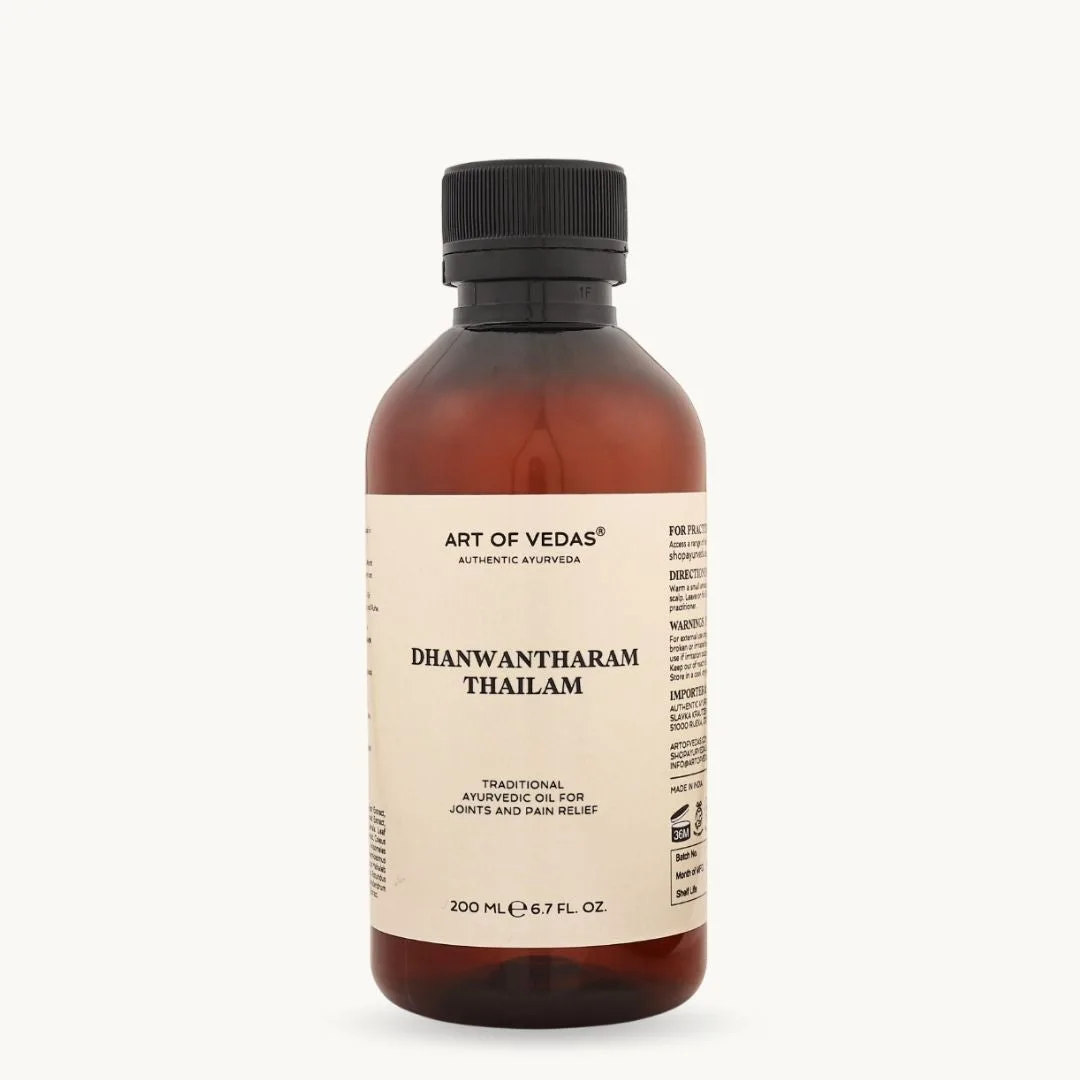
The oil. A warm classical Vatahara Thailam - Dhanwantharam Thailam is the classical standard for general daily Abhyanga. The oil is warmed (not hot) before application, either by placing the bottle in warm water or using an oil warmer. The oil selection guide covers how to match the Thailam to constitution and season.
Technique. Apply oil generously to the entire body, working with long strokes along the limbs (in the direction of hair growth, toward the heart) and circular strokes at the joints. Give particular attention to the marma points - the vital energy junctions at the soles of the feet (Talhridaya), the crown of the head (Adhipati), and the major joints. Spend extra time at the feet, head, and lower back - the body's three primary Vata locations.
Duration and absorption. Classical texts describe the ideal Abhyanga as lasting 15, 20 minutes, followed by a rest period of at least 5, 10 minutes to allow oil absorption before bathing. The absorption period is not incidental - it is when the oil's properties are penetrating from the skin surface into the deeper tissue layers. Bathing immediately after applying oil shortens this process and reduces the practice's effectiveness.
Bathing after Abhyanga. Classical texts recommend bathing with warm water after the absorption period - not hot water, which over-strips the remaining surface oil and can aggravate Pitta, and not cold water, which constricts and prevents further absorption. A gentle cleanser or Ubtan (herbal powder paste) removes excess surface oil while leaving the absorbed layer intact.
5. Facial Abhyanga and Kansa Practice
The face is addressed separately from the body in classical Dinacharya - with its own oil preparation, its own technique, and the specific attention that the concentration of marma points and sense organs in the head region requires.
Nasya - the application of warm oil drops to the nasal passages - is the classical daily practice for the head's internal channels. The nasal passages are the primary pathway through which Prana enters the head, and daily Nasya with the appropriate oil supports the head marma, the sense organs, and the entire upper respiratory pathway. The Nasya guide covers the technique, oils, and classical indications in full.
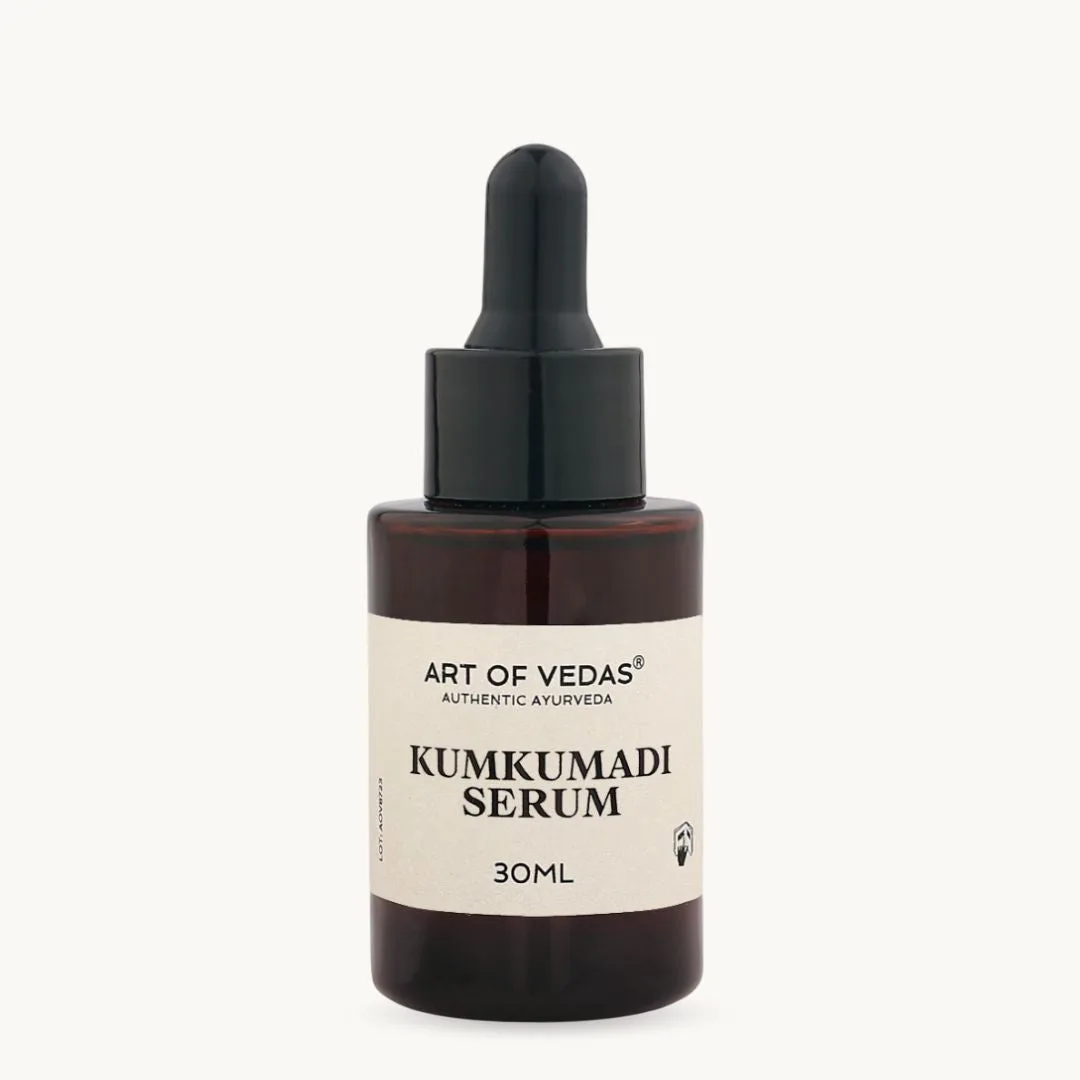
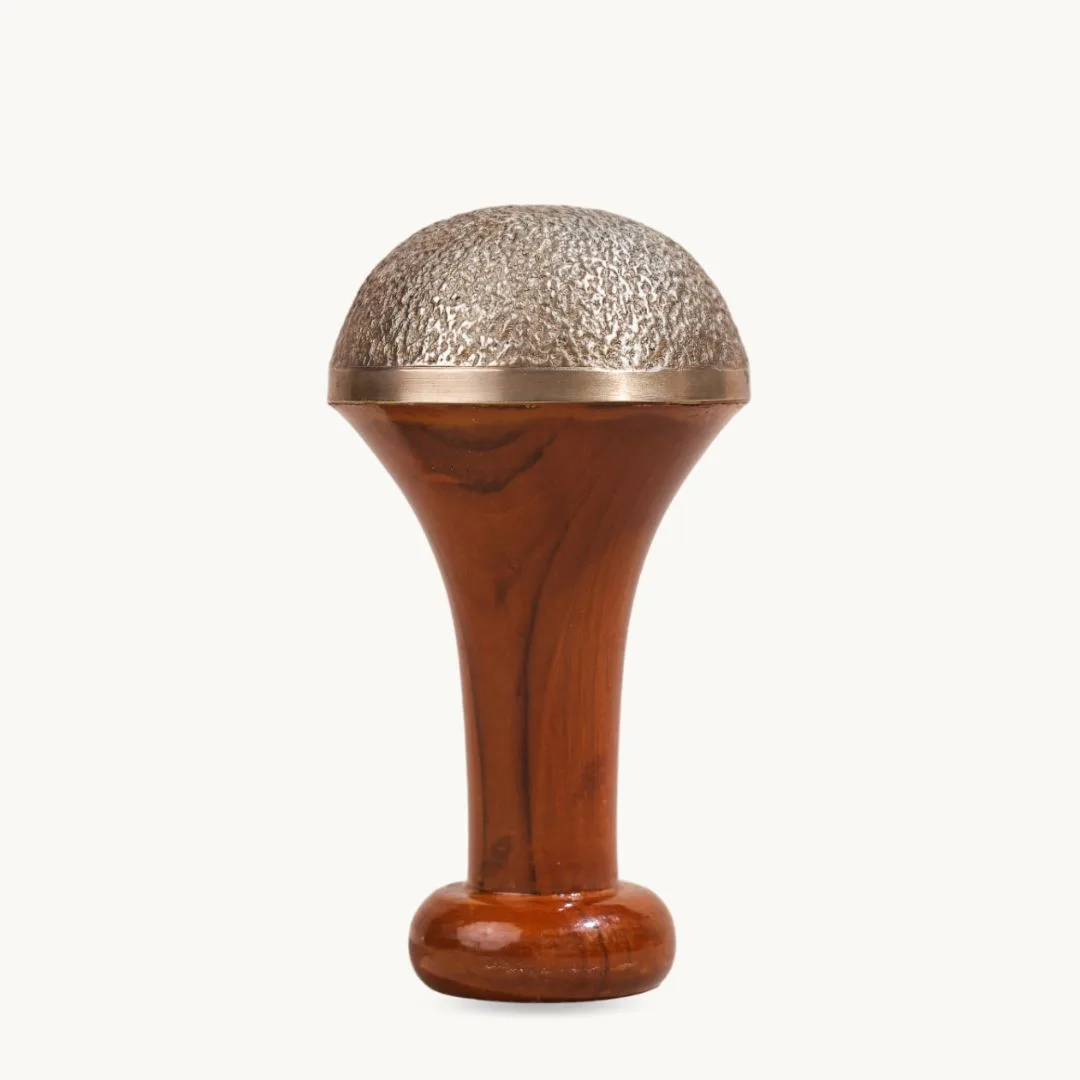
Mukha Abhyanga - classical facial oil massage - uses a Mukha Thailam (face oil) applied and worked into the skin with fingertips or, most classically, a Kansa wand. Kumkumadi Thailam is the classical saffron-based face oil for Varnya (complexion enhancement) and Kanti (natural lustre). The Kansa wand's structured movement through the facial marma points - Sthapani, Shankha, Apanga, Hanu - combined with the Kumkumadi oil constitutes the most complete classical Mukha Abhyanga practice.
Evening Body Care: The Closing Practice
Classical Dinacharya includes evening practices as well as morning ones. For body care, the most important classical evening practice is Pada Abhyanga - warm oil applied to the soles of the feet before sleep.
The Talhridaya marma at the centre of each sole is one of the most Vata-rich marma points in the body, and warm oil applied here is one of the most directly Vata-settling, sleep-supporting practices in the classical repertoire. The Ashtanga Hridayam describes regular Pada Abhyanga as preventing roughness, stiffness, and dryness in the feet and lower limbs, and as supporting the nervous system's transition into sleep. The experience is consistent with the classical description: 5 minutes of warm oil on the soles before bed produces a perceptible shift toward stillness in most people.
If daily morning Abhyanga is not yet established as a practice, nightly Pada Abhyanga is the simplest entry point into classical oil self-care - it requires very little time, uses a small amount of oil, and delivers one of the most immediate and perceptible effects of any classical practice.
Building the Practice: A Progressive Approach
Classical Dinacharya as described in texts is comprehensive - the full sequence takes 45, 60 minutes in the morning. This is not realistic as a starting point for most people, and the classical tradition itself acknowledges that building the practice progressively over time is more sustainable than attempting the full sequence from the start.
A sensible progression:
Week 1, 2: Begin with tongue scraping (30 seconds) and warm water on waking. These two practices alone, done daily, begin to engage the classical framework at its most accessible entry points.
Week 3, 4: Add oil pulling during the morning routine (10 minutes - can be done while otherwise preparing for the day).
Month 2: Add Abhyanga 3, 4 mornings per week. Begin with 10 minutes and a small amount of oil, building to a fuller practice as the routine settles.
Month 3 onward: Add Nasya, facial Abhyanga, and begin refining the Abhyanga technique. The self-massage tools guide covers the tools that support a complete practice.
The Dinacharya guide covers the full classical morning sequence with timing and integration guidance.
Adapting to Constitution and Season
The daily body care practice adapts to constitution and season - this is not a fixed protocol but a responsive one:
Vata constitutions benefit most from consistent daily Abhyanga, generous oil application, emphasis on the head and feet, and the addition of Nasya. In autumn, increase the warmth of the oil and the thoroughness of the practice. The Vata guide and autumn guide cover the Vata-specific detail.
Pitta constitutions continue Abhyanga but may prefer room-temperature or slightly cooled oil in summer, avoiding the most intensely warming Thailams during Pitta-aggravating seasons. Facial practice emphasises Eladi over Kumkumadi during Pitta periods.
Kapha constitutions benefit from adding Garshana before Abhyanga, using lighter oil quantities, and emphasising stimulating rather than deeply nourishing qualities. Spring is the season for the most active Kapha practice.
For a personalised Dinacharya designed for your constitution, current state, and practical life constraints, an Ayurvedic consultation with one of our AYUSH-certified Ayurvedic doctors provides a complete classical assessment and tailored daily practice recommendation.
This guide presents classical Ayurvedic knowledge for educational purposes. The practices described are traditional self-care approaches and are not medical advice. They are not intended to diagnose, treat, cure or prevent any disease.