This article is part of our AYURVEDIC SKINCARE FOR BEGINNERS guide series.
The information in this article is provided for educational purposes and reflects traditional Ayurvedic knowledge. It is not intended as medical advice and should not replace consultation with a qualified healthcare professional.
In brief: Dry skin is not primarily a topical problem in classical Ayurveda - it is a systemic Vata imbalance that manifests on the skin's surface. Topical moisturisers address the surface while leaving the underlying cause in place; the classical approach addresses both the systemic Vata imbalance and the skin directly, through specific oils that penetrate the tissue layers rather than sitting on top. This guide covers the complete classical framework and practical approach.
Dry Skin: Why Vata Creates Dryness and What Classical Ayurveda Does About It
The modern approach to dry skin is almost entirely topical. Moisturisers, serums, and occlusives are applied to the skin's surface to replace or seal in moisture. When they are washed off or absorbed, the dryness returns. The cycle continues indefinitely because the products are addressing a symptom rather than the condition that produces the symptom.
Classical Ayurveda describes dry skin differently. The Charaka Samhita and Ashtanga Hridayam classify skin dryness - Ruksha Tvak - as one of the primary manifestations of excess Vata dosha in the body. Vata's qualities are dry, light, mobile, cold, rough, and subtle. When Vata is elevated, these qualities express in the body's tissues. The skin, being the largest organ and one of the primary sites of Vata's expression, tends to reflect Vata excess early and clearly.
The practical implication is significant: if dry skin arises from systemic Vata elevation, then addressing only the surface while leaving elevated Vata in place will produce, at best, temporary improvement. The classical approach works at both levels simultaneously - reducing systemic Vata through diet, lifestyle, and internal herbs, and nourishing the skin tissue directly through oils that penetrate the tissue layers rather than sitting on the surface.
Why Vata Creates Dryness: The Classical Mechanism
The Charaka Samhita describes Vata as composed of the qualities of air and space, and its primary characteristic as Ruksha - dry. When Vata is elevated in the body, this drying quality spreads through the channels (Srotas) and affects the tissues they nourish. Skin - Tvak - is classified as a site of Vata's expression, and the Ashtanga Hridayam specifically describes dry, rough skin as among the first signs of Vata excess to appear.
The mechanism in classical terms involves the depletion of Sneha - the quality of unctuousness or oiliness that classical Ayurveda associates with healthy, nourished tissue. Sneha in the body maintains the smooth functioning of all tissues, keeps the channels lubricated, and supports the skin's integrity. Excess Vata, with its drying and depleting qualities, progressively reduces Sneha in the tissues it affects. This is why classical Ayurveda's primary therapeutic approach to Vata - Snehana, meaning the internal and external administration of oil - directly counters the quality of dryness that Vata creates.
Seasonal factors are relevant here in a way the classical texts address specifically. Vata dosha increases naturally in the autumn and early winter - a period characterised by cold, dry air, wind, and the transition toward shorter days. The Charaka Samhita's seasonal guidance (Ritucharya) for this period emphasises the consistent application of warm oil to the skin as a seasonal protective practice, precisely because this is when Vata naturally increases and its drying effect on the skin is most pronounced. This classical seasonal observation aligns directly with the clinical reality that skin dryness worsens for most people in autumn and winter.
The Classical Approach to Dry Skin: Snehana Inside and Out
The classical Ayurvedic approach to Vata-pattern dry skin operates at two levels simultaneously: internal and external Snehana (oleation). Both are described as necessary for lasting results; external application alone does not fully address the systemic depletion of Sneha that underlies the condition.
Internal Snehana involves the regular consumption of appropriate fats that nourish the tissues from within. The Charaka Samhita and Ashtanga Hridayam both reference ghee (clarified butter) as the primary internal fat for Vata conditions - its sweet taste, cooling potency (despite being a fat), and specific affinity for the deeper tissues make it particularly relevant to the internal nourishment that persistent dry skin requires. Taking a small amount of warm ghee daily - in the morning on an empty stomach, or with warm food - is a classical practice described in texts for Vata-related tissue depletion.
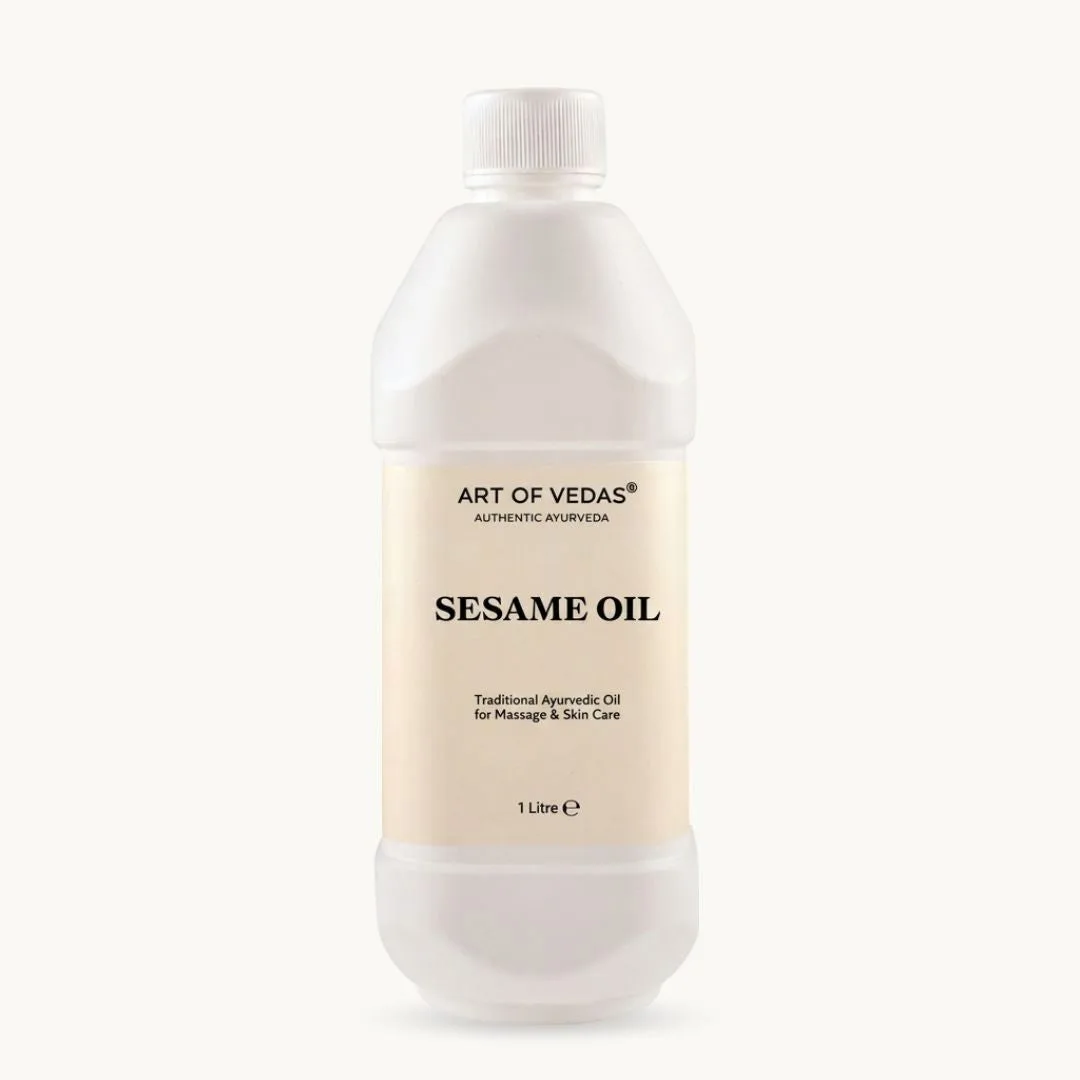
Sesame oil is the classical external oil of choice for Vata. The Charaka Samhita and Ashtanga Hridayam both specifically identify sesame as the best oil for reducing Vata - its warming potency, heavy quality, and nourishing properties directly oppose Vata's cold, light, and dry characteristics. For dry skin specifically, sesame provides the fatty acid profile and classical potency most relevant to skin tissue nourishment. Its penetrating quality means it is absorbed into the skin tissue rather than sitting primarily on the surface.
Classical Abhyanga - warm oil self-massage - is the primary practice recommended in the Charaka Samhita's Dinacharya (daily routine) for Vata management and skin health. The Sutrasthana states that daily Abhyanga produces smooth, soft, strong skin, delays the appearance of ageing, and nourishes the musculoskeletal and nervous tissues through sustained practice. For someone with Vata-pattern dry skin, establishing a daily Abhyanga practice with warm sesame oil or a classical medicated Thailam is described as the single most effective intervention. See our complete guide to Abhyanga at home.
Classical Oils for Dry Skin: Which Thailam to Choose
Classical medicated oils - Thailams - provide the base oil's Vata-balancing properties together with the specific actions of herbs processed into the oil. For dry skin, Thailams based on sesame oil with herbs that support skin tissue nourishment are the classical choices.
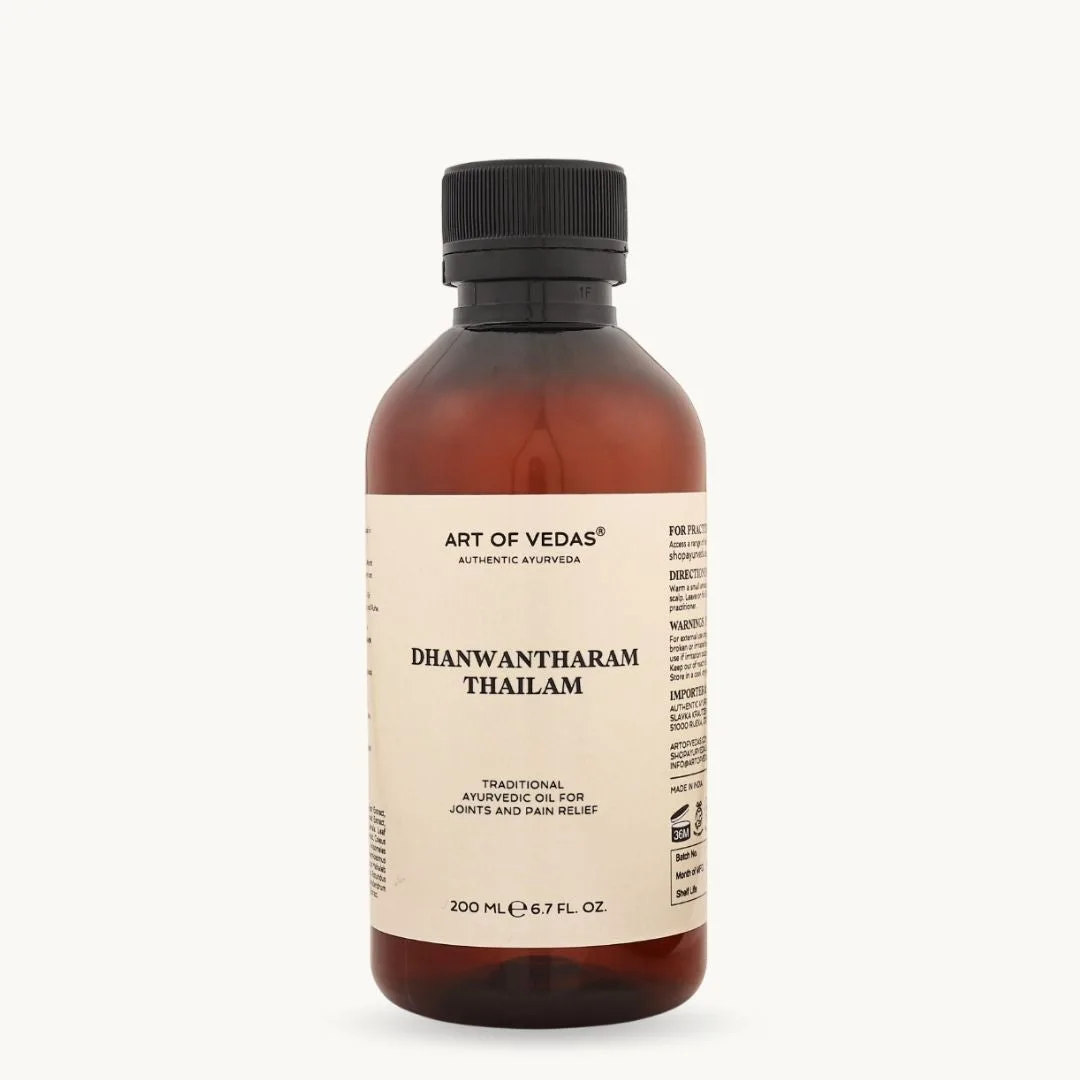
Dhanwantharam Thailam is the most widely used classical sesame-based Thailam in Ayurvedic tradition. The Sahasrayogam describes it as having specific relevance to Vata conditions, supporting the musculoskeletal and nervous tissues, and being appropriate for general Abhyanga use. Its deeply nourishing quality makes it relevant to the kind of Vata-pattern dry skin that involves a systemic depletion of tissue moisture rather than merely surface dryness.
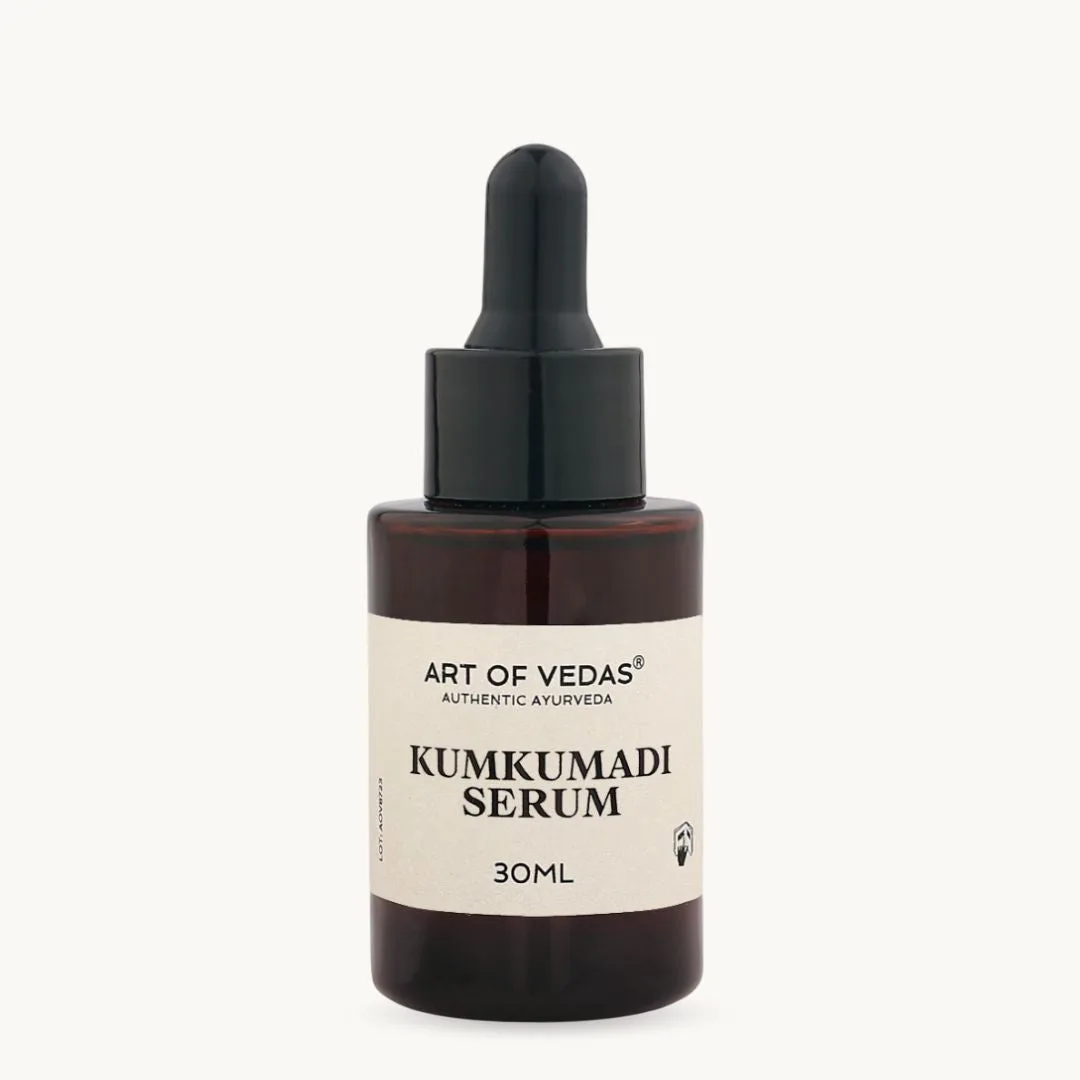
For the face specifically, classical texts reference preparations using lighter bases. Kumkumadi Thailam - a classical preparation referenced in the Ashtanga Hridayam - uses a sesame oil base processed with saffron, sandalwood, and a range of other herbs, and is described as having Varnya (complexion-supporting) and skin-nourishing properties. See our guide to Kumkumadi oil.
Browse the full Art of Vedas Thailams collection and body care collection for classical oils suited to dry, Vata-pattern skin.
Internal Herbs for Vata and Dry Skin
Internal herb support for Vata-pattern dry skin works primarily by reducing systemic Vata and nourishing the depleted tissues. The classical herbs most relevant to this pattern are Ashwagandha, Shatavari, and Amalaki.
Ashwagandha's warming, Balya, and Vata-reducing properties make it directly relevant to the systemic depletion that underlies persistent Vata-pattern dry skin. Its nourishing action on the deeper tissues includes Meda dhatu (fat tissue), which is the tissue most directly related to the body's natural internal lubrication. See our guide to Ashwagandha.
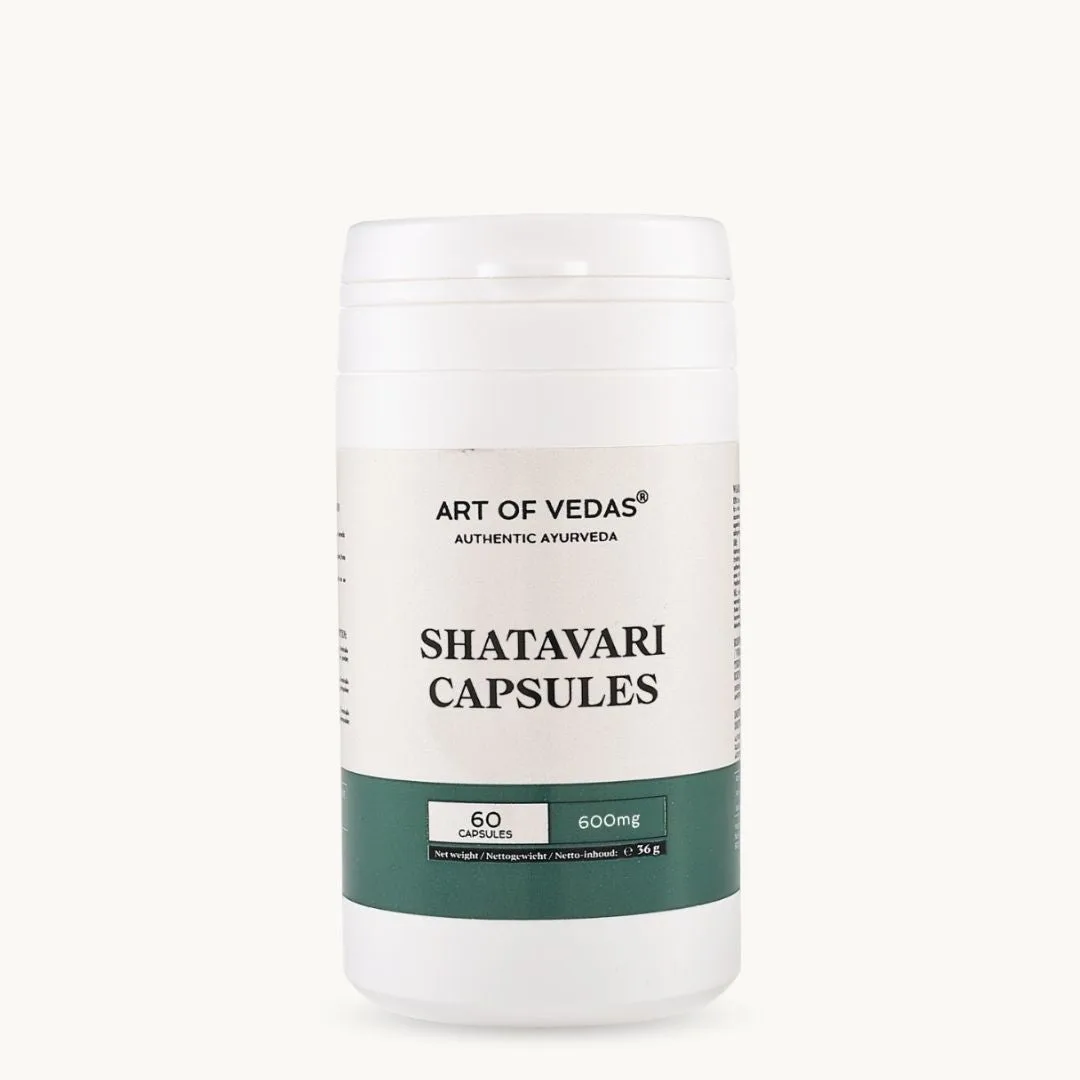
Shatavari's cooling and deeply nourishing Rasayana action on Rasa and Rakta dhatu provides tissue-level nourishment complementary to Ashwagandha's more physically strengthening action. Classical texts describe Shatavari as having specific Snehana properties - increasing the quality of unctuousness in the tissues. See our guide to Shatavari.
Amalaki's Rasayana properties, combined with its high stable vitamin C content supporting collagen synthesis, address the tissue-quality aspect of skin health from within. The Charaka Samhita describes Amalaki's sustained use as supporting Tvak (skin) quality among all seven dhatus. See our complete guide to Amalaki.
Frequently Asked Questions
Why does Ayurveda say dry skin is a Vata problem?
Vata is defined by qualities including dry, light, cold, and rough. The skin is a primary site of Vata's expression. When Vata is elevated, its drying quality depletes Sneha - unctuousness - in the tissues, producing the dry, rough quality that manifests on the surface. The classical approach works at both levels: reducing systemic Vata and nourishing the skin tissue directly.
Which oil is best for dry skin according to Ayurveda?
Sesame oil is specifically identified in the Charaka Samhita and Ashtanga Hridayam as the best oil for reducing Vata. Its warming, heavy, and nourishing properties directly oppose Vata's dry and cold nature. Classical Thailams such as Dhanwantharam provide the sesame base together with specific processed herbs. For the face, lighter preparations like Kumkumadi Thailam are referenced in classical texts.
Can diet affect dry skin in Ayurveda?
Yes - cold, raw, and dry foods increase Vata's drying quality in the tissues. Classical dietary guidance emphasises warm, cooked, moist foods; appropriate fats including ghee and sesame oil; and the sweet, sour, and salty tastes that reduce Vata. Internal Snehana - a small amount of warm ghee daily - is described as nourishing the tissues from within in a way topical application alone cannot achieve.
Is Abhyanga good for dry skin?
Yes - the Charaka Samhita describes daily Abhyanga as producing smooth, soft, strong skin. For Vata-pattern dry skin, warm oil massage is described as the most effective direct skin intervention, combining direct tissue nourishment with systemic Vata reduction. Classical guidance suggests allowing the oil to absorb before bathing rather than washing off immediately.
Explore Dry Skin Care at Art of Vedas
Browse our Thailams collection including Dhanwantharam Thailam for daily Abhyanga, and our body care collection. Related reading: Abhyanga at home, Vata type diet and routine, Kumkumadi oil guide, and Ayurvedic skincare guide.
For external use only. Not a substitute for professional medical advice.