This article is part of our Ayurvedic Hair Care: The Classical Guide to Shiro Abhyanga and Hair Oils guide series.
The information in this article is provided for educational purposes and reflects traditional Ayurvedic knowledge. It is not intended as medical advice and should not replace consultation with a qualified healthcare professional.
In brief: Ayurveda and hair loss: the classical texts describe hair thinning and shedding under the name Khalitya and link it mainly with excess Pitta, heat, carried to the scalp by Vata. The Ayurvedic approach is a cosmetic hair care routine: regular Shiroabhyanga (warm oil massage of the scalp) with classical hair oils such as Neelibhringadi Thailam or Bhringraj Hair Oil, a cooling, nourishing diet, enough sleep and less heat on the hair. Hair loss can have many causes, so sudden or patchy hair loss belongs with a doctor first.
Hair Loss and Ayurveda: The Classical Understanding of Khalitya That Dermatology Misses
Hair loss can have many causes, from heredity and hormones to nutrition, stress and medication, and finding the cause is the work of a doctor. This guide does something different: it describes how the classical Ayurvedic texts understood hair and the scalp, and which care routine they describe. It is a description of tradition and of cosmetic hair care, not a medical explanation and not a promise of any result.
Classical Ayurveda discusses hair thinning and shedding under the term Khalitya. The Charaka Samhita and the Ashtanga Hridayam relate it mainly to excess Pitta, the Dosha of heat, carried towards the scalp by Vata. In this framework, hair is nourished through the tissue chain of the body: the texts describe it as an Upadhatu (secondary tissue) of Asthi Dhatu (bone tissue), and they associate Pitta heat in the Rakta Dhatu (blood tissue) with dry, weakened hair.
Whatever one makes of the classical framework, its practical side is a daily and weekly routine: attention to food and heat, rest and sleep, and the regular care of the scalp with warm oil. These are the habits the texts describe, and they are the part of the tradition that Art of Vedas offers today as hair care.
Khalitya in the Classical Texts: Causes and Mechanisms
The Charaka Samhita discusses Khalitya among the patterns it links with excess Pitta. The classical description names several factors that increase Pitta: a lot of hot, sharp and pungent food (chili, fermented preparations, alcohol and sour food in excess), sustained anger and mental intensity, strong sun on the head, and harsh preparations on the scalp.
The Ashtanga Hridayam distinguishes three classical terms for the hair: Khalitya (thinning and shedding), Palitya (greying) and Indralupta (patchy loss of hair), each with its own Dosha profile in the classical theory. Khalitya is described as mainly Pitta, Palitya also as Pitta, and Indralupta as involving Vata, Pitta and Kapha together. Patchy hair loss is a matter for a doctor; the classical names are given here only to explain the texts.
The Sahasrayogam, a classical compendium of formulations, records a number of hair oils used in Kesha (hair) care. In the classical approach, the daily care of the hair belongs to Dinacharya, the daily routine: diet, rest and the regular application of a suitable oil to the scalp.
The link between Asthi Dhatu and hair is a distinctive part of the classical framework. The Charaka Samhita describes hair as a by-product of Asthi Dhatu, so in this theory the quality of the hair reflects the state of the deeper tissues. For this reason the classical texts discuss hair together with nourishment and daily routine, not only with what is applied to the scalp.
The Role of Scalp Oils: Classical Shiroabhyanga
The application of warm oil to the scalp, Shiroabhyanga, receives specific attention in the Charaka Samhita and the Ashtanga Hridayam as part of the daily routine. The texts describe regular scalp oiling as nourishing for the hair and the scalp, calming for Vata and Pitta in the head, and pleasant for the senses.
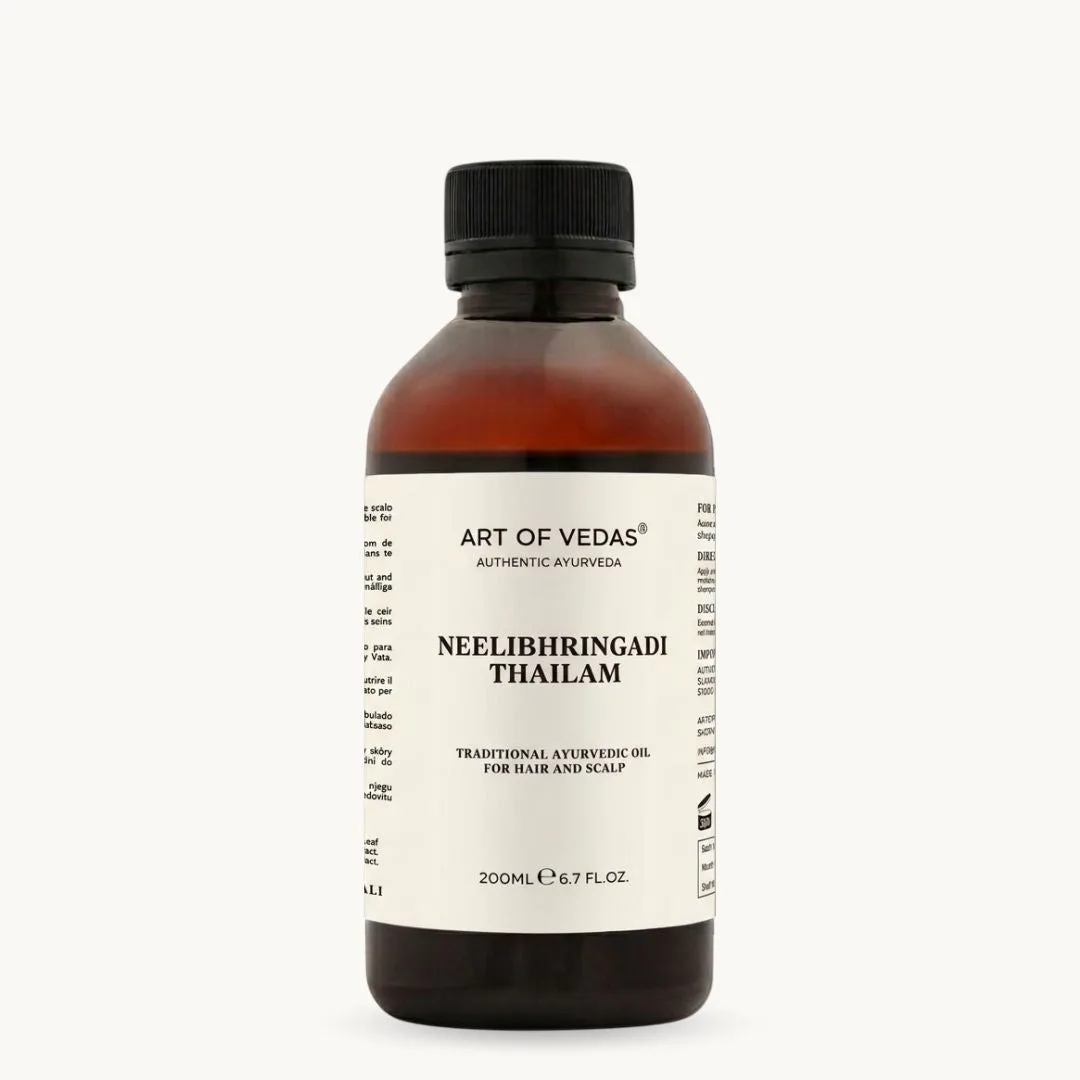
Neelibhringadi Thailam is the classical oil most often named in Ayurvedic tradition for the care of the hair. The Sahasrayogam records this preparation of Neeli (Indigofera tinctoria), Bhringaraj (Eclipta prostrata) and other herbs, prepared with coconut milk in a sesame oil base, as a cooling hair oil in the Pitta pattern. Bhringaraj carries two classical descriptions, Keshya (nourishing to the hair) and Kesharanjana (associated with the hair's natural colour), which is why it appears in so many classical hair oils. See the Art of Vedas hair care collection for Neelibhringadi Thailam and other classical hair oils.
The classical method is a gentle massage into the scalp and the hair roots, enough time for the oil to be absorbed (several hours or overnight), and washing with a mild cleanser. The texts stress that the oil should be warm rather than cold, as warmth is described as calming Vata in the scalp.
Herbs in the Classical Khalitya Texts
Because the classical framework links Khalitya with Pitta, the texts also discuss cooling herbs and foods alongside scalp care. The herbs below are named here for their place in the classical literature; no effect on hair growth or hair loss is claimed for them.
Bhringaraj (Eclipta prostrata) appears in classical texts both in scalp oils and in internal preparations, always in the context of Kesha (hair) care. Its cooling potency and its Keshya classification make it the herb most closely associated with the hair in the classical literature.
Amalaki (Indian gooseberry) is described in classical texts as cooling and as a Rasayana, a herb for the long-term care of the tissues, which is why it appears in many classical hair preparations. See our complete guide to Amalaki.
Shatavari is described in classical texts as nourishing and cooling for Pitta, with an affinity for Rasa and Rakta Dhatu, the tissues the classical framework connects with Khalitya. See our guide to Shatavari.
Food supplements are not a substitute for a varied and balanced diet and a healthy lifestyle, and no claim about hair growth or hair loss is made for them.
Diet and Lifestyle in the Classical Pitta Pattern
The classical texts pair scalp care with a diet that avoids the Pitta-increasing factors they name. In practice this means less alcohol, fewer fermented preparations, very spicy and very sour food; more sweet, cooling and nourishing food; time for rest instead of sustained mental overwork; and some protection of the scalp from strong sun.
The classical texts also give sleep a place in the care of the hair: poor sleep is described as weakening Ojas and, through it, the quality of all seven Dhatus, including Asthi and its Upadhatu, the hair. Regular, sufficient sleep is therefore part of the classical routine. See our guide to sleep in Ayurveda.
Frequently Asked Questions
What does Ayurveda say about hair loss?
Classical Ayurveda calls hair loss Khalitya and describes it as Pitta heat reaching the hair roots, with Vata and Kapha involved in some patterns. The traditional response is a routine: scalp oiling, a cooling diet, calm and regular sleep. It is cosmetic hair care and does not replace a medical check of the cause.
How is Ayurvedic hair oil used?
Warm two to three teaspoons of oil, part the hair and massage it into the scalp with the fingertips for five to ten minutes, then leave it on for at least an hour or overnight and wash with a mild shampoo. Ayurveda recommends this Shiroabhyanga two to three times a week.
What is Khalitya in Ayurveda?
Khalitya is the classical Ayurvedic term for thinning and shedding of the hair. The classical texts relate it mainly to excess Pitta in the Rakta Dhatu (blood tissue) and connect the hair with Asthi Dhatu (bone tissue), describing hair as a by-product of Asthi. The traditional response is a care routine of scalp oiling, diet and rest, alongside, not instead of, a medical check of the cause.
Which Ayurvedic oil is best for hair loss?
Neelibhringadi Thailam is the classical oil most often named in Ayurvedic tradition for the care of the hair in the Pitta pattern. The Sahasrayogam records it as a preparation of Neeli and Bhringaraj with coconut milk in a sesame oil base. It is traditionally used in Ayurveda as part of scalp care, to nourish the scalp and the hair; it is a cosmetic oil, and no result on hair loss is promised.
What foods cause hair loss according to Ayurveda?
The classical texts name the foods and habits that increase Pitta: alcohol, fermented preparations, very spicy and pungent food and too much sour food, together with sustained anger and mental overwork. Their recommendation is to reduce these and to favour sweet, cooling and nourishing food. This is the classical view of diet; hair loss itself can have many causes that only a doctor can assess.
Can Ayurveda stop hair loss completely?
No. Ayurveda does not promise to stop hair loss, and no oil or herb can be relied on to do so. Classical Ayurveda describes a traditional routine of scalp oiling, a cooling diet and enough sleep as part of hair and scalp care, and it is used in that spirit. Persistent, sudden or patchy hair loss should be checked by a doctor or a dermatologist, who can look for the cause.
Explore Hair Care at Art of Vedas
Browse the Art of Vedas hair care collection for Neelibhringadi Thailam and classical scalp oils. Related reading: Amalaki complete guide, Pitta imbalance guide, sleep and Ayurveda, and Neelibhringadi Thailam guide.
For external use only. Not a substitute for professional medical advice.